

ISRAEL & JEWISH LIFE
Back in 2016, when I made Aliyah, I made myself one promise: to live in Israel. To truly live, not just to reside. There is a very specific meaning to those words. The difference between living and residing is real.
Residing in a place doesn’t require attachment. Moving to Miami, San Francisco, Paris, or LA might just be about salary, economics, studies, or other opportunities. But living somewhere means something deeper, a connection, a purpose. Like having a family. When we call a place “home,” it takes on a completely different meaning. That’s how I decided to make my Aliyah, to live in Israel with the goal of returning to my homeland. A homeland I didn’t know much about. Because honestly, if you think that visiting the Kotel, Geula, and Machane Yehuda means you know Israel, well… no!
If you really want to know Israel, you need to understand it deeply. You need to go from place to place, retrace the path of our people, feel the energy of the land in your veins. Connect to our history. Touch the Kotel and feel that your hand is resting on stones that millions of other Jews have touched for thousands of years. You become part of a long, unbroken chain of generations. There is nowhere else in the world like it.
So after a year of intense biblical studies in the Old City of Jerusalem, I decided to go walking across Israel. I applied to a tour guiding school and discovered the most beautiful land, with the richest history of all. No doubt, I am proud to call it my homeland. As a Jew, living in Israel never felt more right. It’s a connection that’s hard to explain, but it gives a hint as to why people are willing to give their lives for this place.
It’s fair to say that some places in Israel are more special than others. Hebron is one of those places. Hebron is one of the five holy cities of Israel, recognized for thousands of years. To define this city is to realize that it has everything needed to be the most symbolic city in Jewish history.
It’s a place that holds a spiritual, religious and historical dimension, a place of prayer and inspiration. This is the place with the oldest Jewish history in the world.
Its story begins with Abraham Avinu and maybe even earlier, with Adam himself.
And it’s also an archaeological site, with a structure that has stood for 2000 years, the most complete and ancient Jewish monument preserved in perfect condition.
There is no other building in the world like it. Over 2000 years old, still in use for the exact same purpose from generation to generation even by the Muslims. The building was never destroyed or rebuilt, just added onto over the centuries. You can still see mosque structures from the Mamluk period, a Crusader wall, but the core of the building hasn’t changed since the time of Herod. We know Herod was a great builder but he wasn’t inspired by holy places when building new monuments and cities. So why did he put time and money into the old Hebron? The reason is really simple. A good king that wants to politically dump his citizens needs to see what is important to the people. He couldn’t only build Cesarea (a city made for games in the image of Rome) - he had to show the people of Judea that he cared for what they thought was important.
Sadly, after the destruction of the Second Temple, the place was taken over by foreign powers and no Jews were allowed to visit — until 1967, the Six Day War.Older Israelis still remember; Jews weren’t allowed to go to the Western Wall, the Mount of Olives, or to the Cave of Machpela in Hebron. They lived in the cities but couldn't get access to those dear and holy places.
Despite those restrictions the Jewish presence in Hebron never stopped. After the destruction of the Temple, Hebron remained a major center of Jewish life — despite persecution by the Romans. Over time, Jews lived in Hebron, sometimes just a few, sometimes in larger communities.
In 1929, a terrible massacre took place. Many Jews were murdered by their Arab neighbors. That led to the evacuation of the Jewish community. It returned in 1930, but was once again evacuated in 1936 during the Arab Revolt. After Israel’s War of Independence, Hebron came under Jordanian rule. Still no entrance allowed to the Cave. Only after the Six Day War in 1967 did the Jewish community return again and finally it happened, we took over Ma’arat Hamachpela and made it ours.
I feel so privileged to walk through the streets of old Hebron and take the time to reflect on the miracles that happened here and to know the stories of the brave Jews who refused to give up on Ma’arat Hamachpela and made it all possible. Thanks to them, we’re able to visit the only place that directly connects us to our ancestors. Their sacrifice defines Hebron for us today.
But why is Hebron so important to the Jewish people? Why is our history connected to this city?
The archeological history of Hebron goes back over 5000 years but it really starts with Adam Harishon. The Zohar says that Ma’arat Hamachpela is the entrance from Earth to Gan Eden. Adam himself, at the end of his life, came to Hebron, recognized the scent of Gan Eden, and dug the cave, hoping to find its entrance. Chazal say that Adam and Chava are buried there but they aren’t the only ones who saw the power of this place. Let’s go back to the sources. In the book of Genesis, we learn that Avraham Avinu bought the cave of Machpela from Ephron the Hittite in order to bury his wife, Sarah (Genesis, chapter 23).
Why did he choose this specific place? According to Chazal, Avraham saw a divine light and smelled the scent of Gan Eden inside the cave.That’s why he decided to make it a family grave and that’s how our patriarchs and matriarchs were buried there, one after the other. It’s incredibly special to have a direct connection to the ancestors who are the very foundation of our people. The heart of our bloodline. The Jewish people cherished this place throughout time. Even Herod the Great had to build it a structure to honor the beliefs of his people about the place. This is a connection that we’ve been culturing for thousands of years. Our connection to Hebron is prior to Jerusalem. How many people in the world can have the proud privilege to say this.
Back to the Six Day War - the miracle. Jews are finally allowed into the cave. Thanks to Rabbi Goren, Rav Harashi leTsahal, Jews now have the right to enter and pray in Machpela. He personally made it happen. He made sure Jews could even have access to the Muslim part of the Ma’ara for 10 important days of the year. Which means access to Ohel Yitzhak.
Those ten days eventually led to another miracle.
While in 1967 Jews were celebrating the liberation of cities, sacred and historic sites across the land, historians and archaeologists were making discoveries, especially in Jerusalem. But something similar was happening in Hebron. People were fascinated by the city and began peeling back the layers of history buried beneath the ground. Every part was being studied except one: the actual cave of the Patriarchs.
Did we have access to the graves? Not really.
The only way in — to this day — is through Ohel Yitzhak, the Muslim section of the cave since 1967.
A narrow underground tunnel lies beneath the hall where the monuments of Yitzhak and Rivka stand.
But getting in isn’t so simple.
Let’s start with some basic questions:
How can we dig under the building of Machpela? The Waqf (the Islamic religious authority) is in charge of the site. They hold the keys and control everything that happens inside.
And is it even a good idea to disturb the patriarchs at their place of rest?
Is it halachically permitted?
And what about the mysterious stories of people who dared to go down into the cave and never came back?
It’s true, for centuries, stories of mystical disappearances have surrounded the cave. One of the most famous stories is about Rabbi Abraham Azoulay, who lived in Hebron and was called upon by the Turkish ruler of the time. The ruler had accidentally dropped his sword into the underground tunnel. After sending more than ten soldiers to retrieve it,and none returned, he turned to Rabbi Azoulay. The rabbi entered the cave himself. Inside, he had a vision of Avraham Avinu. He begged to stay — to be taken into Gan Eden right then and there.
Avraham Avinu told him, “Not today. Come back tomorrow, and I’ll take you.”
The next day, Rabbi Azoulay passed away in his sleep.
For a long time, there were many reasons to believe that entering the cave was dangerous.
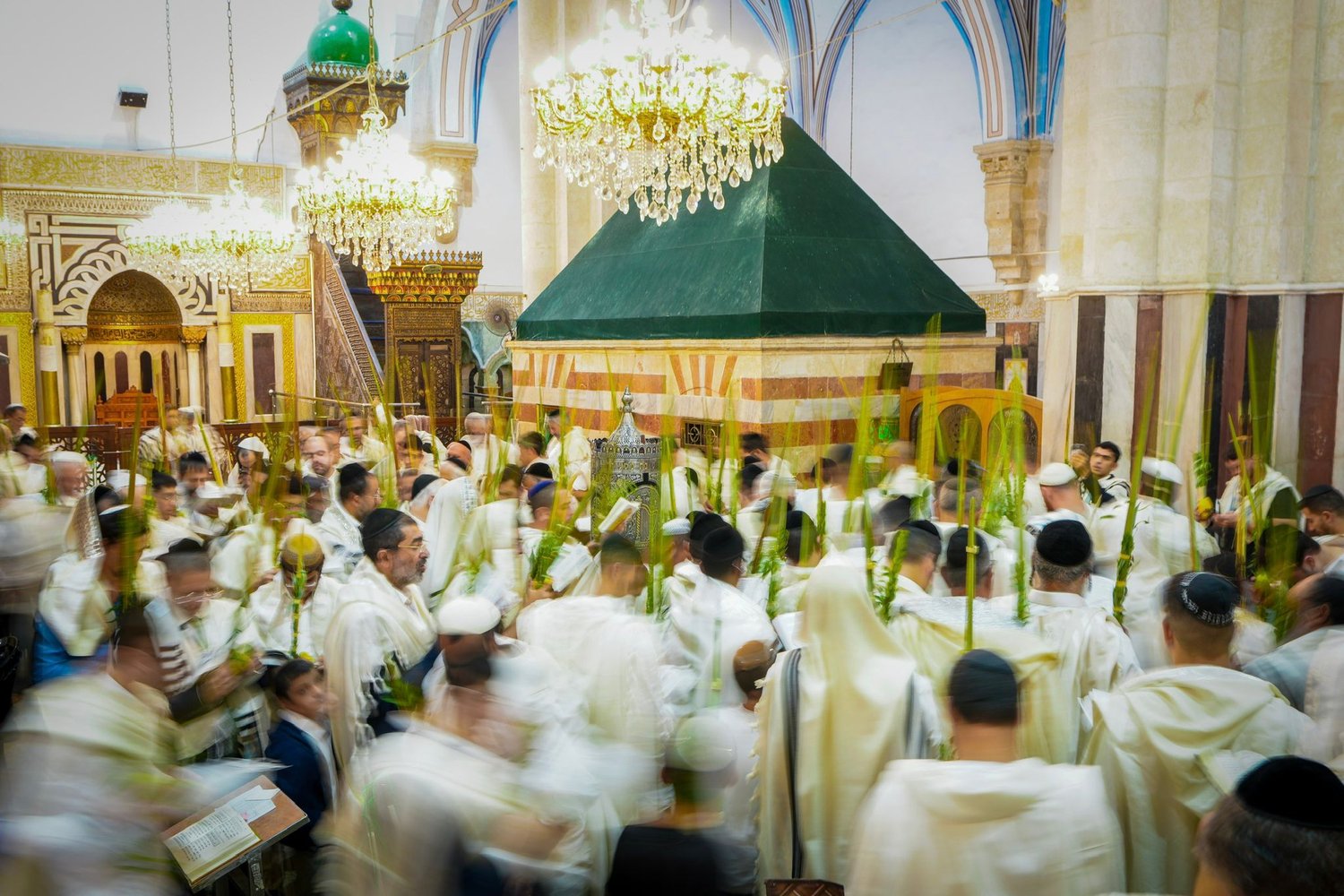
But still, in 1981, during the holy month of Elul, a small team of archaeologists and historians from Midreshet Hebron decided to go in and finally see what was underground led by professor Noam Arnon. They went in on a night of Selichot, just before Rosh Hashanah, one of the few nights Ohel Yitzhak is open. They used the noise and crowds of the prayers to cover their actions. While the Jewish people were praying and singing “Anenu....Elokei Abraham...”, cleaning their souls Erev Rosh Hashana, they went down and found two caves — Ma’arat Hamachpela, meaning “the double cave.” They dated the first to the First Temple period and the second to the Bronze Age, matching the timeline of Avraham Avinu. After some digging, measurements, and photographs, they reached the next level, where they believed the patriarchs were actually buried.
But time was up. The sun was rising, and they had to leave before the Muslims arrived.
When asked today if they regret not going further, they say they were protected the whole time and that it wasn’t meant to be.
We can’t ignore that 2000 years later — we’re back. There are so many stories surrounding Machpelah.
Every generation adds a new belief, a new event. This cave where Adam and Eve are said to have exited Gan Eden after the sin, is maybe the best place to connect with Hashem in those special days of Elul; not only to celebrate the brave Jews that never gave up but also to remember that we are not giving up today either. Each year of the jewish history is the continuation of our path of life. I used to read the stories about our people throughout the ages, the wars, the miracles, and think how incredible it must feel to live through these events, to be part of History-but it is exactly what we are doing for the past two years. Two years of actions from brave Jews, two years of miracles, two years where we are making History. We are History!
May we all meet, this year, in Ohel Yitzchak for the great Slichot of Erev Rosh Hashana! Let's open our hearts to Hashem and beg him to look down on us and to answer to our prayers and let us connect to him in the purest and simplest way possible. Like Father and daughters. Our prayers are the most powerful ones; the heart of a woman opens in a special way. We can make the change.
AM ISRAEL CHAI and Shana Tova to all.
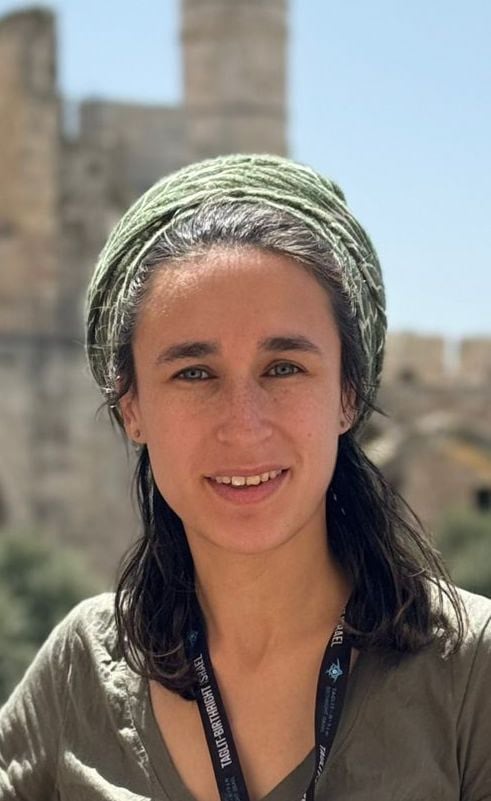
Yael Partouche is a passionate licensed private tour guide in Israel. She fell in love with Israel 15 years ago and decided to make it her “Home”. In 2011, she became a Zionist ambassador taking part in developing a Zionist community during a Shlichut Mission in Buenos Aires, Argentina.
Her goal is to show to the world the real meaning of Israel as a Jewish state. The key to understanding this country is the people, the food and the traditions. Visiting Israel with her means discovering, enjoying, but most of all having a meaningful experience no matter who you are. Specializing in religious sites, religious history and geopolitical tours, she loves to connect them all and show a bigger picture by taking sources from the Tanach and bringing them to life.
She carries a deep love for Am Yisrael, Torat Israel, Eretz Israel and wants others to experience what it means to be part of such a special people in such a special land.
Book a tailor-made experience with Yael at yaelpar87@gmail.com / +972587480883 / Instagram: @yael_partouche_travelle
Services available in English, Spanish, French, Hebrew.
Hebron Photo by Avi Jacob
Enjoyed this article?
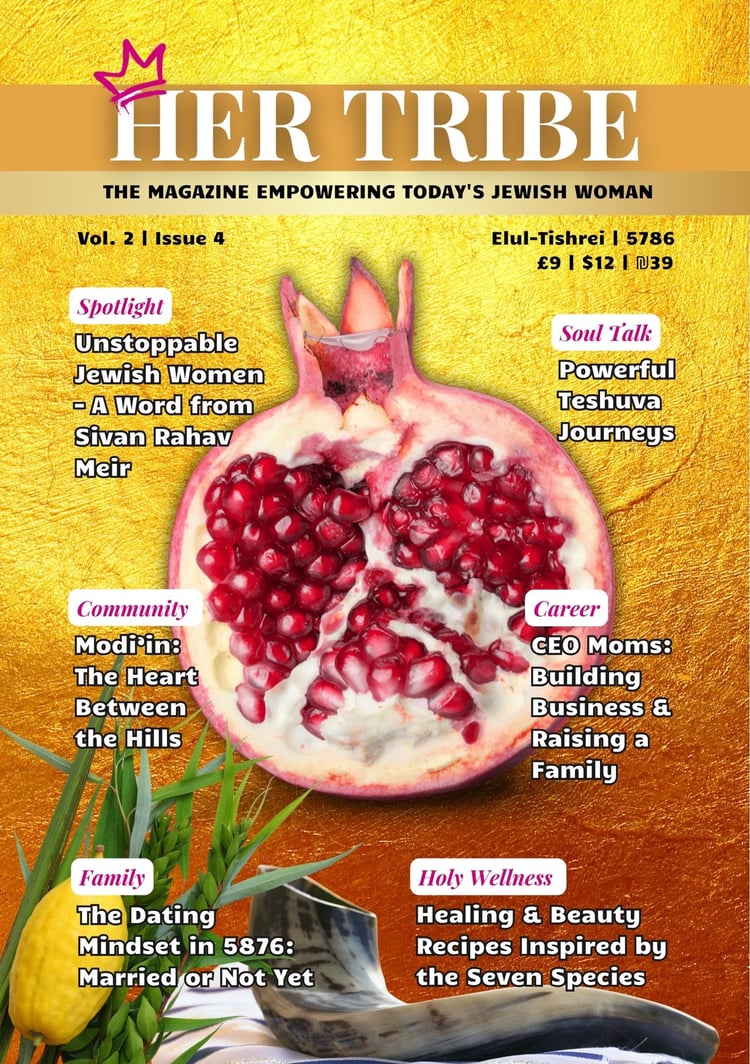
This article originally appeared in Her Tribe Magazine Elu/Tishrei 5786.
Continue reading inspiring stories, Jewish wisdom, personal journeys and meaningful conversations in the complete edition.


Comments ()