
JEWISH HOLIDAYS I ROSH HASHANAH
For as long as I can remember, my husband and I have hosted Meditative Rosh Hashanah
Seders for our students and retreat participants – women drawn to the serene atmosphere of
Bat Ayin, its soulful, intentional tefilah, and the unique spiritual energy of the Siegelbaum
Rosh Hashanah Seders.
Although my husband and I are purebred Ashkenazim, I have always felt drawn to the more
mystical Sephardi customs – such as giving tzedakah on behalf of souls reincarnated in flowering fruit trees on Rosh Chodesh Nissan, conducting mystical Tu b’Shevat Seders, and practicing the Ben Ish Chai’s Friday night myrtle meditation ritual.
Growing up in an assimilated Jewish family in Europe, my childhood Rosh Hashanah experience was limited to dipping a juicy apple into the sweetest honey. I didn’t understand how munching on honey-dipped apples could influence a sweet year, nor did I know that the Shulchan Aruch mentions the custom of eating symbolic foods and reciting a unique prayer over each one. Even if I had known, I wouldn’t have grasped the deep spiritual significance of this ritual.
Chazal teach: “A sign has reality” (Babylonian Talmud, Horayot 12a). I have since learned that
everything in the physical world has a corresponding spiritual counterpart. Signs reflect the inner spiritual forces and Divine intentions that shape what unfolds in our lives. The tradition of eating foods whose names allude to blessings we long to receive – while reciting prayers for those very blessings – is far more than a way to keep children engaged. These signs actively influence our reality, becoming channels to connect with its underlying spiritual energies.
At the time of creation, the Hebrew letters – the spiritual forces of all reality – were revealed and available to tap into. Since eating sustains life, the first humans in Gan Eden – before the fall – drew nourishment from the very letters of Torah. But eating from the Tree of Knowledge
introduced a mixture of good and evil into the world.
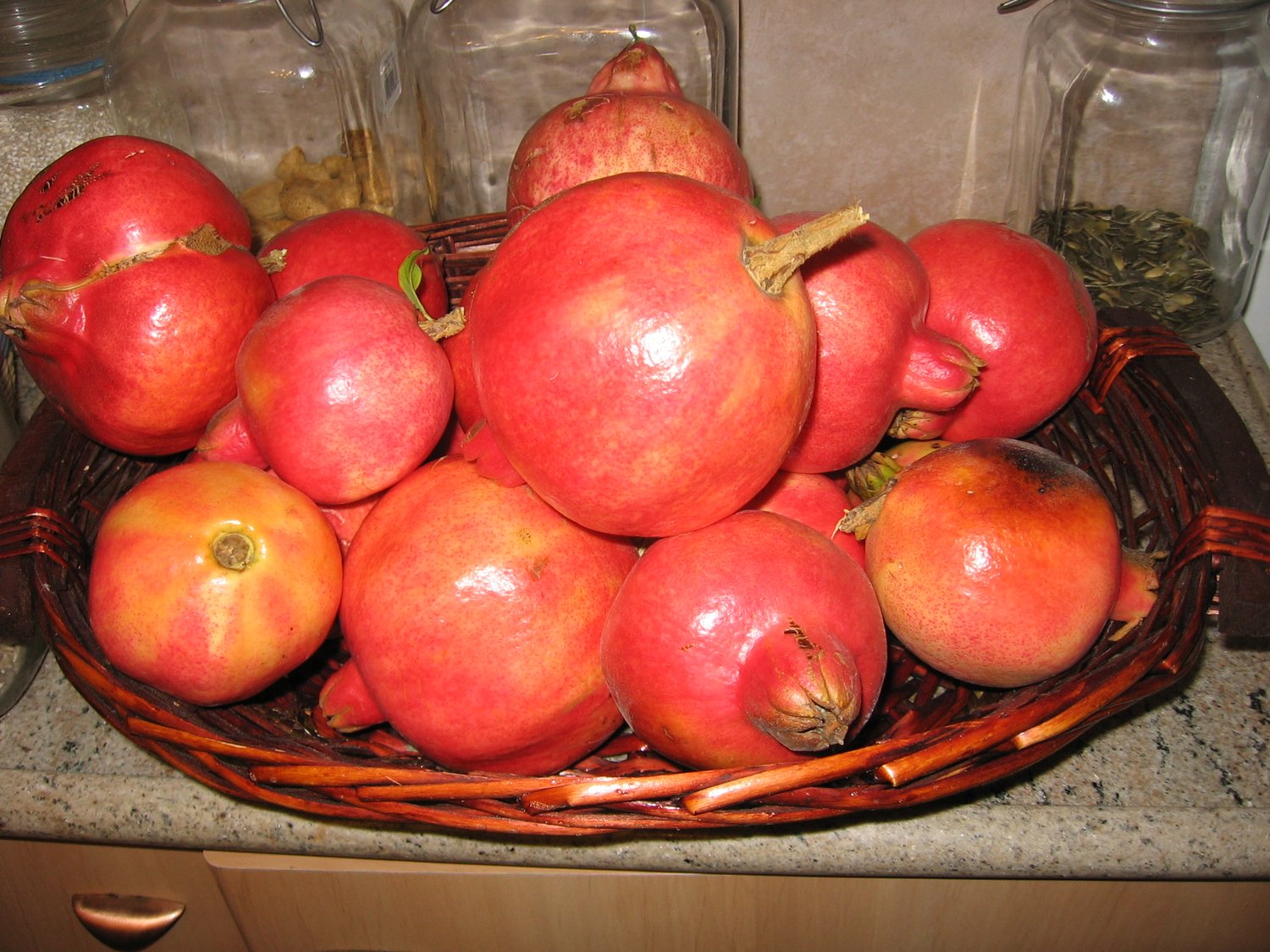
Photo: Courtesy of Rebbetzin Chana Bracha Siegelbaum
On Rosh Hashanah, when celebrating the day humanity was created, we are granted the opportunity to return to that original purity – to taste only the good. The names of the foods we eat reveal the root of their spiritual energy. For example, when we eat something called a “head,” its name reflects a spiritual root that allows us to become the head – to rise and grow into confident leadership.
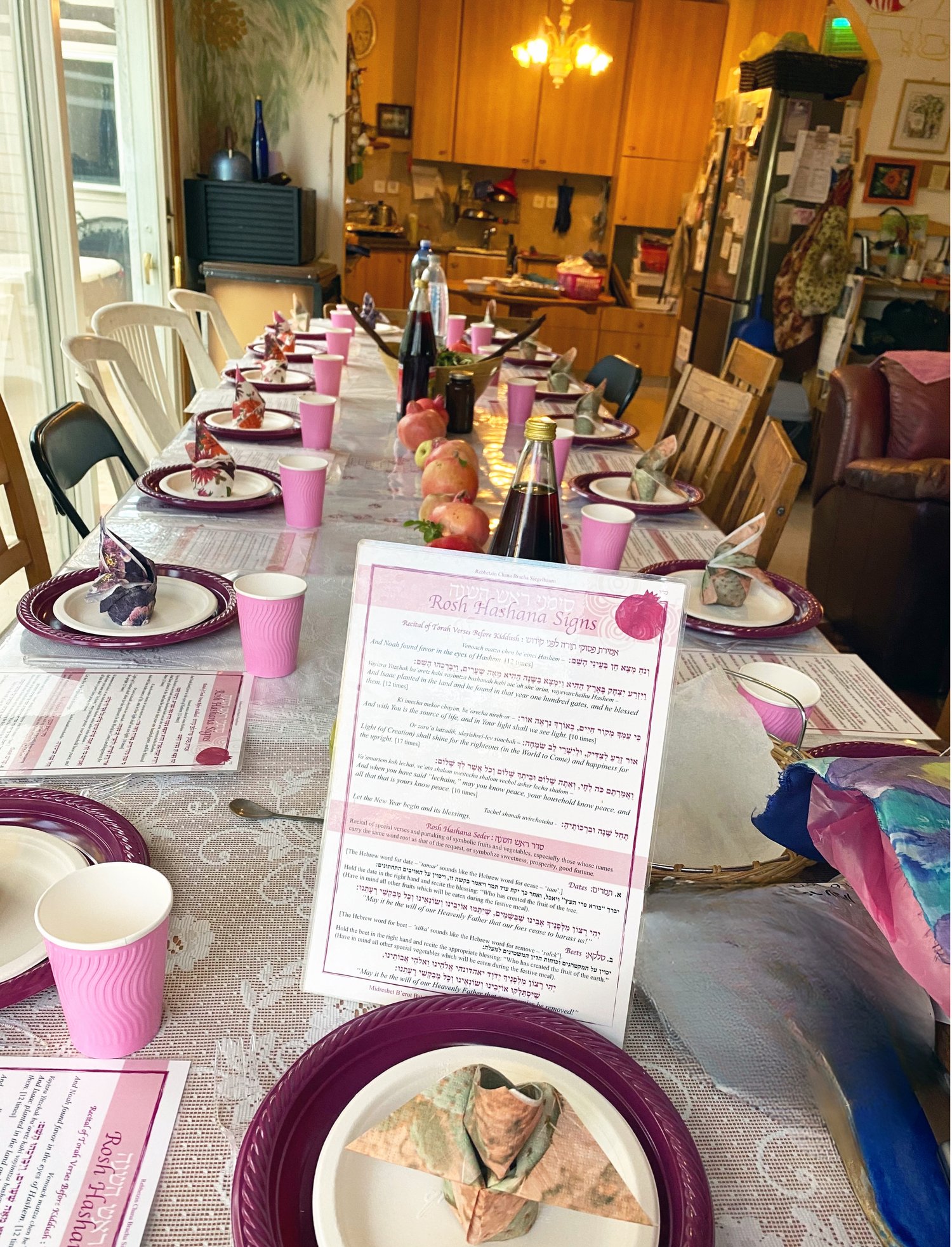
Each of the simanim of the Rosh Hashanah seder holds deep meaning. I encourage you to learn and practice them. You may contact me to receive your own Rosh Hashanah Seder placemat with prayer rituals and explanations. Here I like to share a special story about a unique ritual we practice at our Rosh Hashanah table. I’m not sure of its original source, but it has been confirmed many times: whoever eats a Fish Eye at the Siegelbaum seder table gets married within the year. There are so many incredible stories of women who mustered the courage to eat a Fish Eye at our Rosh Hashanah table and met their soulmate that very year. It even worked for a mother who had been fervently praying for her son to get married. That mother was me.
On Rosh Hashanah three years ago, I looked long and hard at the fish head with its bulging
eyes, wondering whether I could actually bring myself to eat such a repulsive thing. But in my
deep yearning to see my son happily married, I overcame myself, gathered my courage, and
decided I could do it. As I prepared for the unpleasant task of chewing the slimy, unattractive Fish Eye, Hashem gave me a flash of insight: I could simply swallow it whole, like taking a
pill, without ever feeling its awful texture between my teeth. I filled my glass with water,
closed my eyes, and prayed from the depths of my heart that my son would find his soulmate.
I washed down the Fish Eye – and on the third of Elul the following year, I danced with
overflowing joy at my son’s wedding.
Photo: Courtesy of Rebbetzin Chana Bracha Siegelbaum
The sacred signs of Rosh Hashanah help us sweeten the דִּינִים/dinim – judgments – and become portals for a blessed year. When we give signs – simanim – to one another and to Hashem we recall the signs Rachel gave to Leah. Out of deep love and selflessness, Rachel revealed the secret signs between her and Ya’acov to spare her sister from embarrassment. Through these simanim, she elevated both herself and Leah to a place beyond words – to a realm that preceded speech – where only the language of signs existed.
On Rosh Hashanah, we too can elevate our relationships to that primal level – beyond speech, and become simanim of love, compassion, and connection. The signs we give to Hashem express how much we yearn to improve ourselves. The signs we give to each other express our deep desire to see one another inscribed in the Book of Life.
Every year, as Rosh Hashanah evening unfolds, Rachel whispers softly to each of us: “Give the simanim to the Master of the Universe! Even if He sees that you (Knesset Yisrael) are not yet perfect – not quite the bride He envisioned this year – it’s already too late. You’ve won Him over with the signs you whispered on Rosh Hashanah night” (Lev Hashamayim, The Signs of Rosh Hashanah, pp. 43-46).
To step into the new year, we must embrace ideals greater than ourselves – a higher calling
that transcends ego, so that we can rein in our lower urges and live a life of meaning and
soulful achievement. As the new year dawns, we lift our eyes and hearts beyond the hardships
of the past and place our trust in Hashem’s compassion, praying for a year of healing,
redemption, and abundance:
תִּכְלֶה שָׁנָה וְקִלְלוֹתֶיהָ – תָּחֵל שָׁנָה וּבִרְכוֹתֶיהָ
“Let the year end along with its curses; let a new year begin with its blessings!”
Rebbetzin Chana Bracha Siegelbaum, a native of Denmark, is the founder and director of Midreshet B’erot Bat Ayin: Holistic Torah for Women on the Land. She holds a Bachelor of Education in Bible and Jewish Philosophy from Michlala Jerusalem College for Women, and a Master of Arts in Jewish History from Touro College. Rebbetzin Chana Bracha develops curricula that emphasize women’s spiritual empowerment through traditional Torah values. She is the author of several books, including: Women at the Crossroads: A Woman’s Perspective on the Weekly Torah Portion; Ruth: Gleaning the Fallen Sparks; The Seven Fruits of the Land of Israel with their Mystical & Medicinal Properties; The Nameless Chicken from Judea; Parasha Meditations for Spiritual Renewal and Strengthening Communication with the Creator and The B’erot Bat Ayin Songbook with Guitar Chords and Torah Tidbits. She also practices and teaches EmunaHealing, a unique approach to spiritual healing through emunah, tefilah, and energy work. Rebbetzin Chana Bracha lives with her husband in the Judean Hills of Israel.
info@berotbatayin.org
Enjoyed this article?
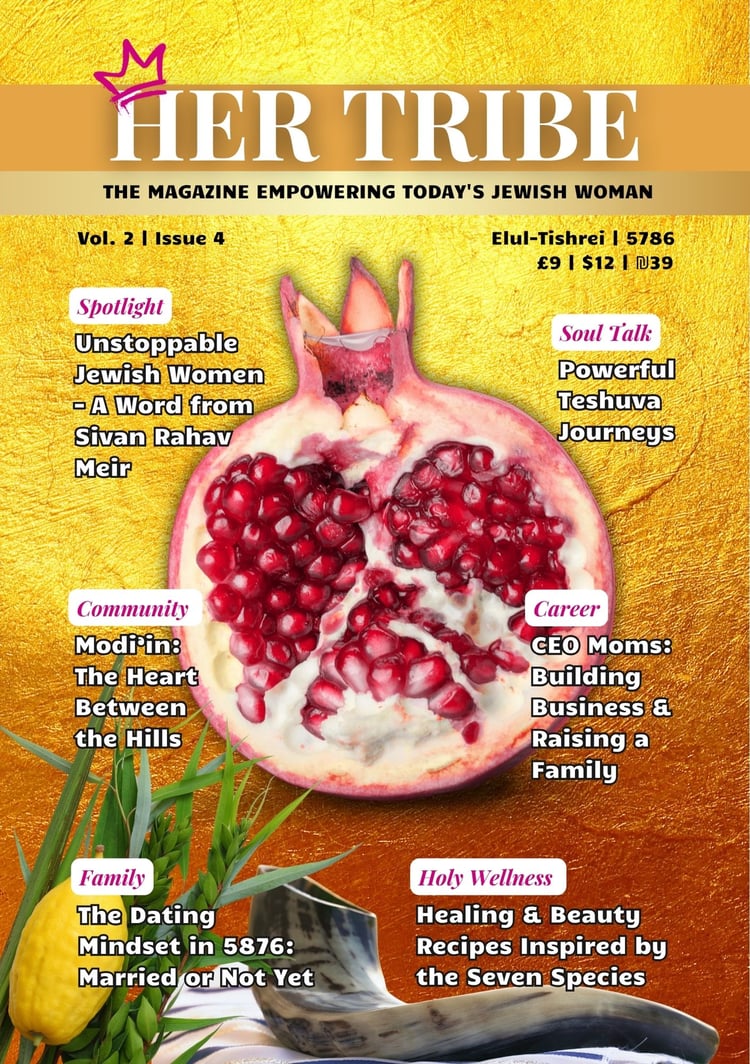
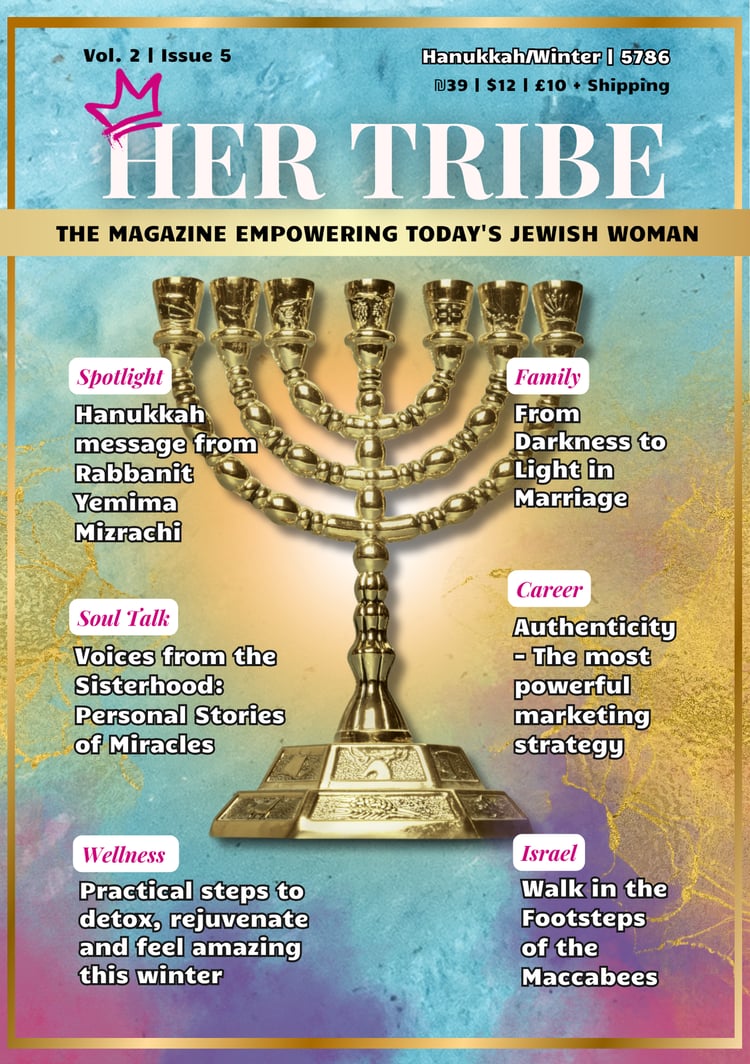
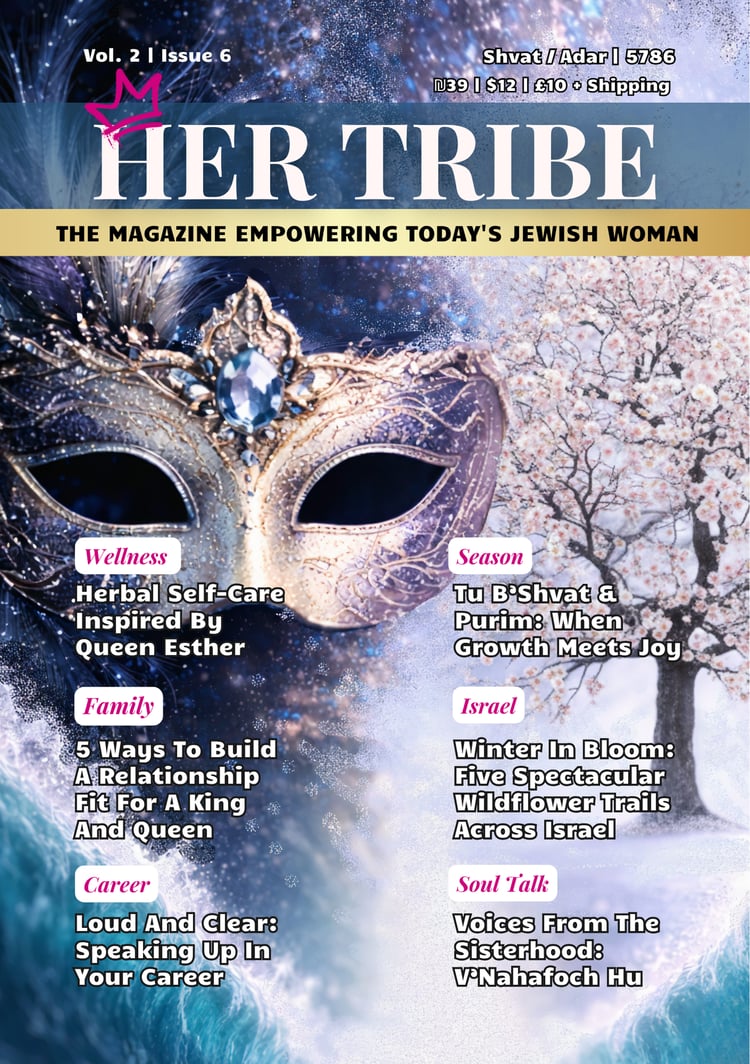
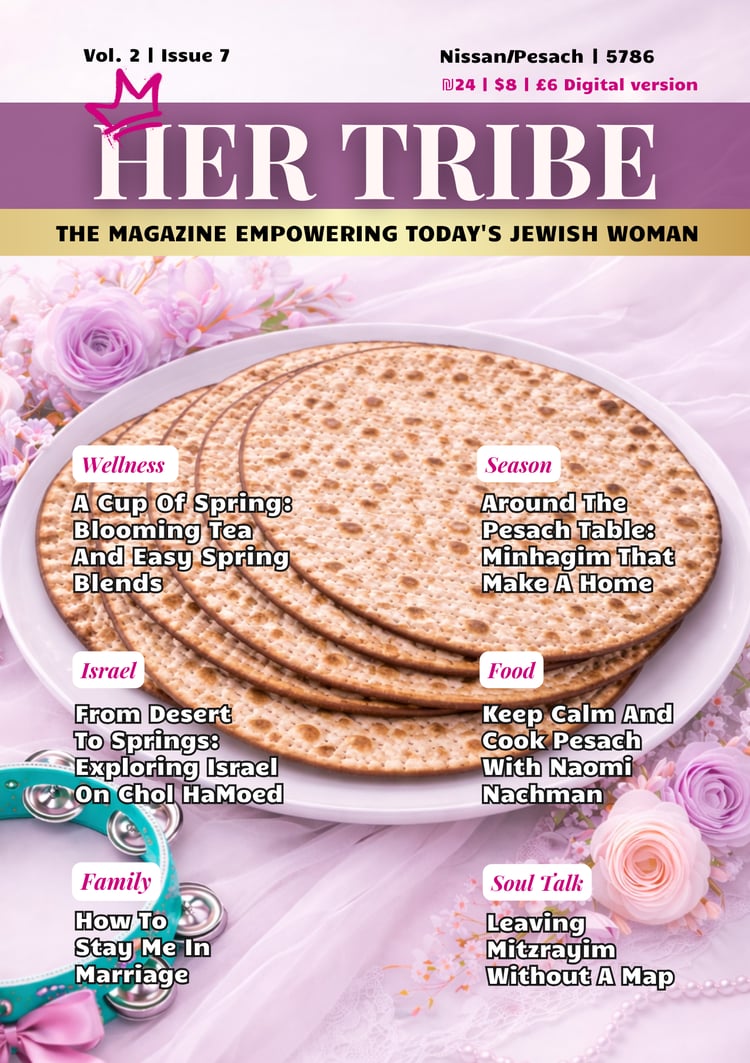
This article originally appeared in Her Tribe Magazine Elu/Tishrei 5786.
Continue reading inspiring stories, Jewish wisdom, personal journeys and meaningful conversations in the complete edition.
Comments ()