
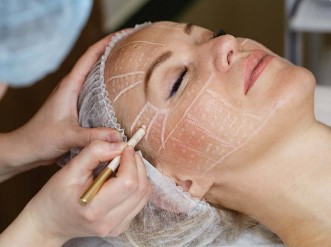
Surgical facial rejuvenation has seen remarkable progress over the past several decades as anatomical understanding has deepened. In earlier eras of cosmetic surgery, traditional techniques focused primarily on the surface, pulling the skin tightly across the facial framework and removing the excess. This superficial approach placed continuous tension on the skin, an organ that is naturally elastic and prone to stretching under load. Over time, that constant tension resulted in widened surgical scars, unnatural earlobe distortion, and the characteristic pulled appearance that made past cosmetic surgery easily detectable. Modern surgical practice has completely moved away from skin-only tension, recognizing that natural, enduring rejuvenation requires repositioning the deeper muscular architecture of the face. This fundamental shift in surgical philosophy has transformed the industry, allowing practitioners to deliver results that look completely authentic and untouched by surgical instruments.
The foundation of modern surgical correction is the Superficial Musculoaponeurotic System, widely known as the SMAS. This continuous layer of fibrous and muscular tissue lies beneath the subcutaneous fat and controls the structural contour of the mid-face, jawline, and neck. As time passes, the SMAS layer stretches and loosens, carrying the attached fat pads and skin downward. Achieving authentic rejuvenation requires releasing the deep retaining ligaments that anchor this layer to the facial skeleton. By freeing these retaining structures, the surgeon can reposition the entire composite flap of muscle, fat, and deep tissue upward as a single, harmonious unit, correcting gravitational descent directly at its anatomical source. This anatomical reset ensures that the structural tension is carried by strong, resilient tissues rather than the delicate outer layer of the skin.
Performing an advanced deep-plane facelift in Honolulu requires comprehensive surgical mastery and an exact understanding of facial nerve pathways. The deep-plane approach involves careful dissection beneath the muscular SMAS layer, safely protecting delicate motor nerves while achieving a complete structural release. Because the structural elevation is supported entirely by this deep fascial system, the overlying skin experiences zero tension. Once the underlying framework is securely anchored in its youthful position, the skin simply drapes smoothly over the restored foundation. This tension-free closure is the fundamental reason deep-plane procedures avoid the artificial look of older techniques, allowing natural facial expressions to remain fluid and unhindered. Protecting the natural mobility of the face ensures that patients can smile, speak, and express emotion without any unnatural stiffness or restriction.
The aesthetic outcomes of deep structural repositioning are distinctly natural and balanced. By elevating the mid-face fat compartments vertically, the procedure naturally restores youthful cheek volume without the need for excessive synthetic fillers. The jawline becomes sharp and well-defined, while deep nasolabial folds are softened from within. Because the skin is never pulled thin, it preserves its natural thickness, vascular health, and texture. Friends and family notice a remarkably rested and refreshed look, but the physical signs of surgery remain entirely invisible. The goal of advanced facial surgery is to help patients look like a rested, youthful version of themselves, free from any artificial appearance. This level of refinement allows individuals to keep their surgical history entirely private, sharing their aesthetic journey only with those they choose.
Meticulous incision placement and careful closure techniques further guarantee an undetectable outcome. Incisions are carefully hidden along the natural curves of the ear cartilage and positioned within the hairline. Using fine sutures and precise edge alignment allows the incisions to heal into faint, discreet lines that are virtually imperceptible. This refined surgical approach demands extensive training and patient dedication, but the results are significantly more durable and natural than those achieved by superficial methods. Understanding the anatomical advantages of deep-plane techniques allows patients to make well-informed decisions, choosing procedures that provide lasting elegance and genuine rejuvenation. By trusting their face to highly specialized surgeons who prioritize deep structural integrity, patients secure a timeless, graceful result that endures beautifully for decades.
Conclusion
Modern facial rejuvenation achieves superior results by addressing the deep muscular structures rather than placing tension on the skin surface. By releasing retaining ligaments and elevating the deep SMAS layer, surgeons restore natural facial balance and clean definition. This tension-free approach ensures undetectable, long-lasting outcomes that allow individuals to age with grace and confidence.
Call to Action
Discover how precise deep-plane surgical techniques can restore your facial contours naturally and discreetly. Contact our practice today to schedule a detailed consultation with our experienced surgical team and discuss an individualized approach to your rejuvenation goals.