
Vac-cines have been touted for decades as a safe and effective way to protect us from disease. They are credited with preventing countless illnesses and saving millions of lives. However, discussions about vac-cinations don’t include the drawbacks and potential harms of vac-cinating. These things are very important to take into consideration when considering vac-cinating. So, keep reading to learn all there is to know about vac-cines.
The Touted Pros of Vac-cinating:
- Disease Prevention: Vac-cinations are designed to stimulate the immune system to produce antibodies against specific pathogens. They help prevent the spread of infectious diseases.
- Herd Immunity: When a significant portion of a population is vac-cinated, it creates herd immunity. This protects individuals who cannot be vac-cinated due to medical reasons or those whose immune systems are weakened.
- Effective and Safe: Vac-cines undergo rigorous testing before approval, ensuring they are both effective and safe for the general population. They have significantly reduced the prevalence of once-common diseases.
- Cost-Effective: Vac-cinations are a cost-effective public health intervention compared to the expenses associated with treating vac-cine-preventable diseases and their complications.
- Global Impact: Vac-cination campaigns have led to the eradication of diseases like smallpox and the near-elimination of others, showcasing their global health impact.
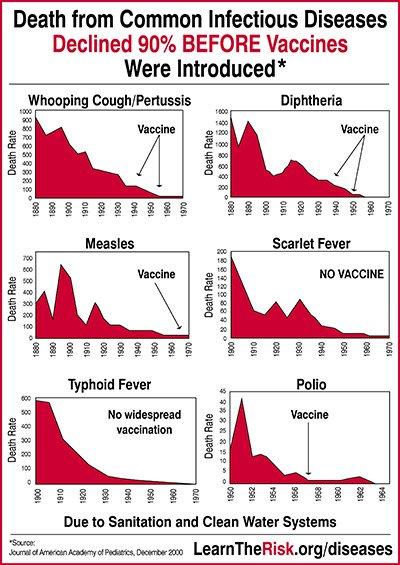
I have many issues with the statements above. Diseases were said to be irradicated by vac-cines. However, every disease that has a vac-cine had been declining before vac-cines were introduced. Then the vac-cines took credit. Over the years people just seemed to forget about the past and have been listening to the “safe and effective” line of total propaganda. They are neither safe nor effective.
The level of safety testing that is required for medications is not applied to vac-cines. They are not required to show long-term health results. It is also not required for vac-cines to go through safety testing side by side with an insert placebo. This is because they are classified as “biologics” as opposed to “medications”.
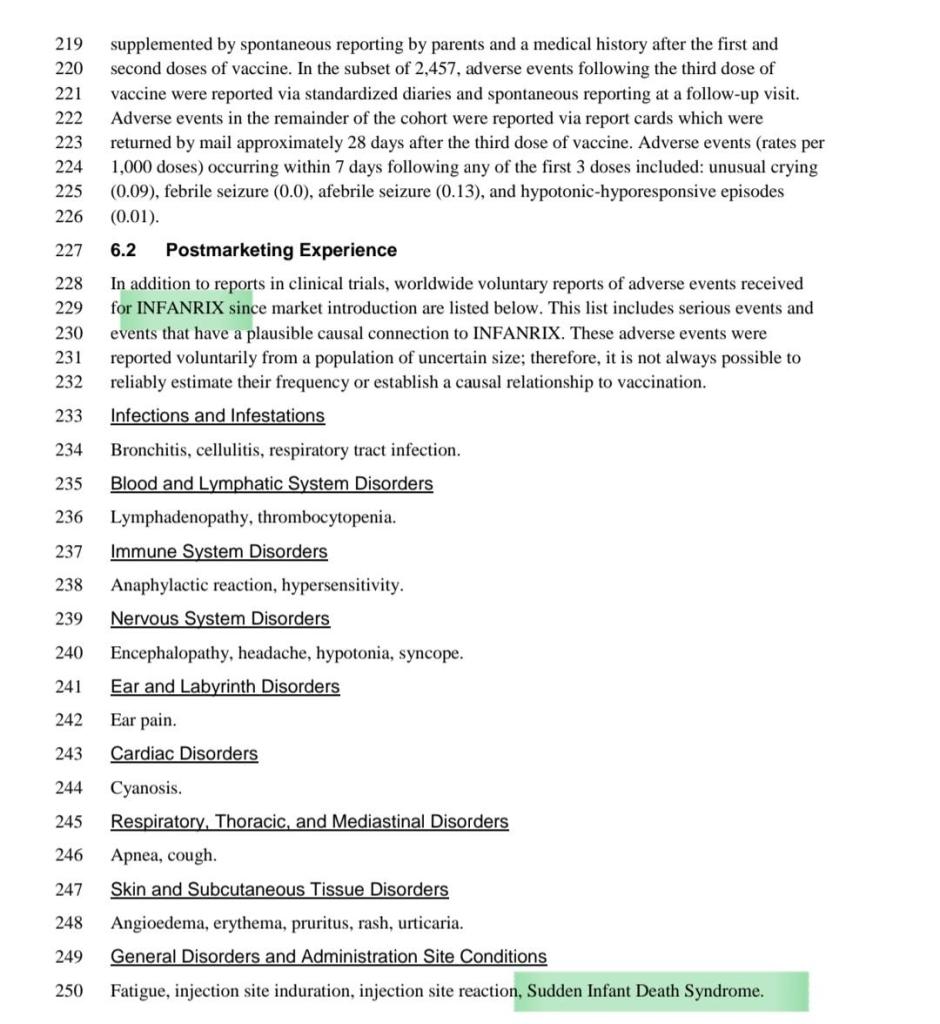
In fact, the package insert for every vac-cine clearly states, “[this vac-cine] has not been assessed for carcinogenicity, mutagenicity, or impairment of fertility.”
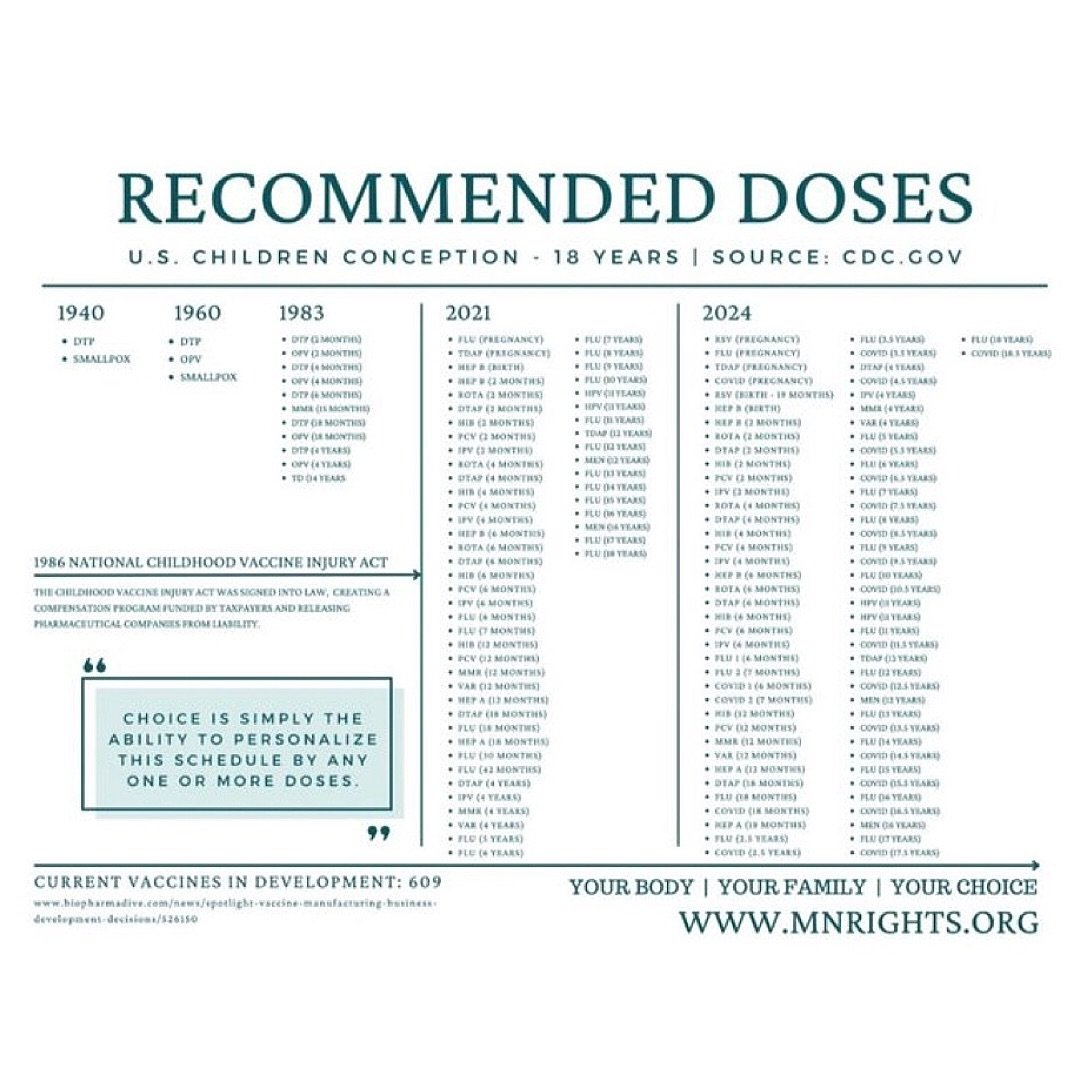
Take a look at how the vac-cine schedule grew larger after the 1986 Act was passed. Remember that it protects the vac-cine producers, not the people who receive them.
It is also important to note that over 50% of the funding for both the FDA and the CDC’s Advisory Council on Immunization Practices comes from pharmaceutical companies.
If you didn’t already know. The FDA approves vac-cines for use and the CDC determines which vac-cines are added to the schedule.
That my friends, is called “conflict of interest.”
And to further add to this…the FDA does not do independent testing of what they approve for use. I did some digging on the FDA website and found how the process works. The process is not what I thought it was! When a pharmaceutical company wants approval for a product then they submit an application to the FDA with all of the information of the product (in this case vac-cines). The FDA then reviews the data submitted and makes a determination from there. What is the incentive for the pharmaceutical companies to submit real and accurate date for the vac-cines when they are not held liable for vac-cine injuries?
Does any of this scream safe to you?! Because finding this out just led to more questions for me.
Vac-cine Information and Articles
Here you can find vac-cine manufacturer’s inserts for each vac-cine, which again clearly states in section 13.1 that, “[this vac-cine] has not been assessed for carcinogenicity, mutagenicity, or impairment of fertility.” How much do you really know about vac-cine safety? Most peopiiple are never offered to see the manufacturer inserts before being inoculated.
See inserts here for all vac-cines
The Excipients in Vac-cines
The “bulking agents” in vac-cines are claimed to be the inert portions that do not have any effect on you. Within that list are the disease antigens (viruses or bacteria) that have been weakened or killed. They can be highly toxic although they claim they do not cause any harm. Especially to certain groups of people such as children, elderly, and those who are immunocompromised or have other comorbidities. If you would like an example, take aluminum. The amount of aluminum in vac-cines is toxic and builds up in the brain. There is no safe limit of aluminum in the body. There is literally no function in the body that uses aluminum. That doesn’t sound like a harmless ingredient to me. Here is a list of the inactive ingredients in each vac-cine:
Excipient Lists can be Viewed Here
The Laws Regarding Vac-cines for School Attendance
Notice on this website that it states “recommendations” often. This is because no one can force vac-cinations on anyone. Also know that mandates are not law. You still have the right to decline even if they are mandated. It is important for you to know your rights and the choices that you have. There are exemptions you can fill out if you would like to forego your child getting vac-cinations and they would still be able to attend school. You can view this information per state here:
Navigate the Requirements for School Here
Signed Into Law
In 1986, Ronald Reagan signed the National Childhood Vac-cine Injury Act (NCVIA) into law. This law created the VICP. The VICP protects the pharmaceutical company from liability related to vac-cines. If someone suffers from a vac-cine injury, they can’t bring a lawsuit against the manufacturer/pharmaceutical company. Instead, they must make a claim to the government, and then, they MAY receive compensation.
The VICP Has Paid $3.9 Billion in Compensation
Since it was founded several decades ago, the VICP has paid out $3.9 billion in settlements. Over 17,000 petitions have been evaluated, and over 6,000 people have won compensation for vac-cine injuries and death. However, the government is very reluctant to admit fault on behalf of the vac-cine manufacturers.
According to the Department of Health and Human Services (HHS), 80% of the compensation that has been awarded has come through negotiations. HHS has not admitted that the vac-cines were responsible for injuries in these situations.
The highest number of settlements have been awarded in cases involving the influenza vac-cine. However, this may also be related to the fact that more doses of this particular vac-cine are distributed every year. While many other vac-cines are only recommended to be received once in a lifetime or once every ten years, the influenza vac-cine is recommended to be received annually.
The VICP Was Created in the Wake of Numerous DPT Settlements
In the 1970s and 1980s, many people suffered vac-cine injuries related to the diphtheria, pertussis, and tetanus (DPT) vac-cine. Many of these injured individuals were able to successfully bring lawsuits against the vac-cine manufacturers. Although the government hasn’t officially acknowledged error, these families won settlements in court. This indicates that indeed there was a connection between this vac-cine and the injuries that ensued.
Lawsuits
In the wake of these lawsuits, many pharmaceutical companies shied away from making the DPT vac-cination. At one point, only a single company was making the vac-cine. The government was worried about accessibility and potential public health issues, so they decided to create the VICP to protect the pharmaceutical companies and to encourage them to keep making vac-cines.
Pharmaceutical companies themselves have claimed that vac-cines are made unavoidably unsafe. So, with them having protection against injuries you need to ask, what gives them the incentives to really make them safe. Vac-cines are very profitable. Hence why the schedule has grown so much over the years.
Signed Into Law
In 1986, Ronald Reagan signed the National Childhood Vac-cine Injury Act (NCVIA) into law. This law created the VICP. The VICP protects the pharmaceutical company from liability related to vac-cines. If someone suffers from a vac-cine injury, they can’t bring a lawsuit against the manufacturer/pharmaceutical company. Instead, they must make a claim to the government, and then, they MAY receive compensation.
The VICP Has Paid $3.9 Billion in Compensation
Since it was founded several decades ago, the VICP has paid out $3.9 billion in settlements. Over 17,000 petitions have been evaluated, and over 6,000 people have won compensation for vac-cine injuries and death. However, the government is very reluctant to admit fault on behalf of the vac-cine manufacturers.
According to the Department of Health and Human Services (HHS), 80% of the compensation that has been awarded has come through negotiations. HHS has not admitted that the vac-cines were responsible for injuries in these situations.
The highest number of settlements have been awarded in cases involving the influenza vac-cine. However, this may also be related to the fact that more doses of this particular vac-cine are distributed every year. While many other vac-cines are only recommended to be received once in a lifetime or once every ten years, the influenza vac-cine is recommended to be received annually.
The VICP Was Created in the Wake of Numerous DPT Settlements
In the 1970s and 1980s, many people suffered vac-cine injuries related to the diphtheria, pertussis, and tetanus (DPT) vac-cine. Many of these injured individuals were able to successfully bring lawsuits against the vac-cine manufacturers. Although the government hasn’t officially acknowledged error, these families won settlements in court. This indicates that indeed there was a connection between this vac-cine and the injuries that ensued.
Lawsuits
In the wake of these lawsuits, many pharmaceutical companies shied away from making the DPT vac-cination. At one point, only a single company was making the vac-cine. The government was worried about accessibility and potential public health issues, so they decided to create the VICP to protect the pharmaceutical companies and to encourage them to keep making vac-cines.
Pharmaceutical companies themselves have claimed that vac-cines are made unavoidably unsafe. So, with them having protection against injuries you need to ask, what gives them the incentives to really make them safe. Vac-cines are very profitable.
If you want an easy to understand guide that includes facts about vac-cines I got you!
Who is this E-book for?
Parents, or anyone really, who want to learn more about vac-cines. This is a hot topic in today’s world as so much information has come out that is questioning the safety of vac-cines. If you have questions and want answers, then this e-book is for you! It gives you unbiased facts, not opinions. You can always choose to vac-cinate later on, but you can’t unvac-cinate so arm yourself with knowledge and make a decision you can feel good about.
Click here for access to the digital vaccine guide
Disclaimer: All the content here is solely for informational purposes only. It is not intended to be medical advice, diagnosis or treatment. Always seek the advice of your medical practitioner if you have concerns. The information, suggestions or remedies mentioned on this site are provided without warranty of any kind; whether expressed or implied. This information is provided so that you can make truly informed decisions.