
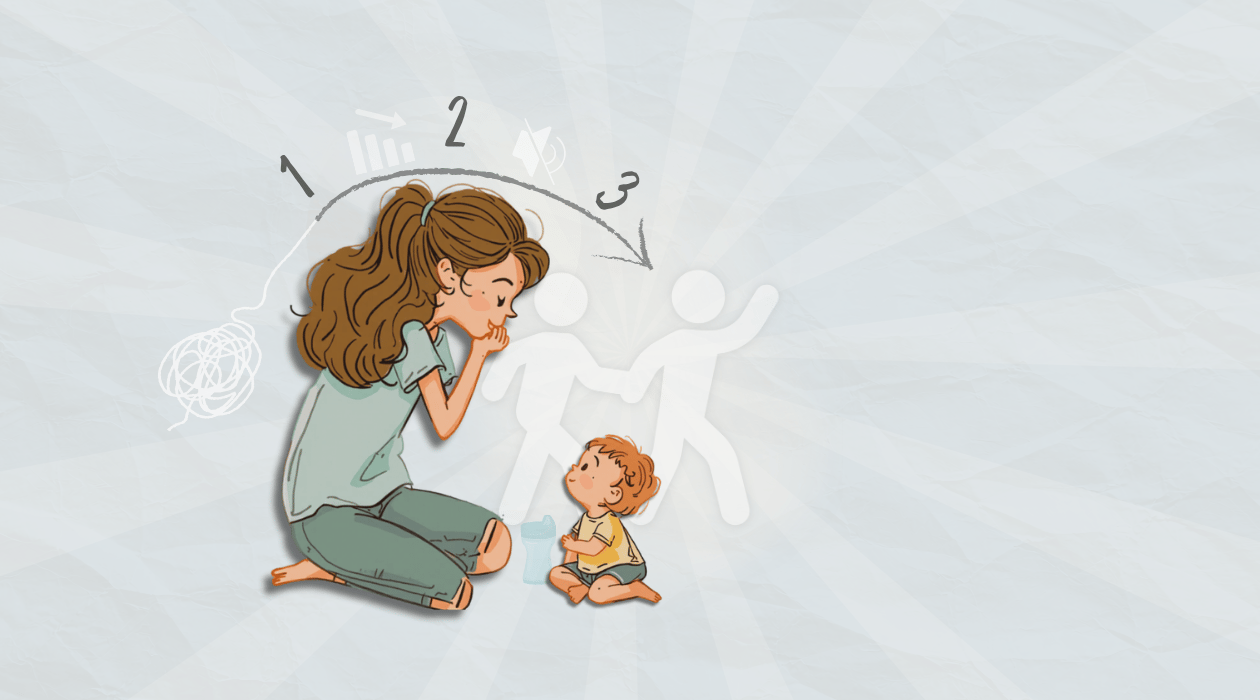
If it seems your toddler is extra forgetful, melting down over things that should be easy, and only following your rules sometimes, you’re not imagining it—but if you think your kid is just being a jerk, they’re not — and understanding why this is can change everything.
Because what you might be seeing is your toddler's working memory getting overloaded, a very real and very normal thing that can happen during this time of early brain development.
To understand what’s happening, how it affects your toddler, and how you can support this skill, let’s break it down.
What Is Working Memory?
Working memory is the brain’s ability to hold information for a very short time and use it.
It’s what allows you to:
- Remember what you were about to do when you walk into a room.
- Hold a thought in mind long enough to finish saying or acting on it.
- Follow a few steps without stopping and restarting.
- Keep track of what matters while ignoring distractions.
For adults, this system runs quietly in the background. We usually only notice it when it’s overloaded or stops working.
For toddlers, working memory is still under construction — limited, fragile, and easily overwhelmed.
Right now, your child's working memory is:
- Very limited in capacity.
- Easily disrupted.
- Highly sensitive to everyday things like stress, fatigue, hunger, and excitement.
So, the frustration you're having with them might be more about what’s going on in their head than about who they actually are.
Why Toddler Working Memory Gets Overloaded So Easily🌀
Your toddler’s early working memory can usually only hold one small piece of information at a time — on a good day, sometimes two.
It’s a skill they’re still building, which strengthens gradually with practice.
It gets overloaded when:
- They get too many instructions at once.
- There are distractions in the environment (loud noise, toys, screens).
- They're feeling overemotional (frustration, excitement, stress).
- They're hungry or tired.
- Adults rush and pressure them, talk quickly, yell, or lash out at them.
Once their working memory becomes overloaded, the brain loses its grip on what's in there—so information drops out.
What you experience is the end result of that overwhelm — the behavior it causes.
⚠️Working Memory Overload as Behavior
When working memory is overwhelmed, you might experience this as:
- Not listening — They heard you, but couldn’t hold onto the instruction long enough to act on it.
- Forgetting rules they do know — The rule exists in their mind, but too many other things are competing for that particular space in their brain at that moment.
- Meltdowns that seem to come out of nowhere — Cognitive overload often slides into emotional overload.
- Starting tasks and abandoning them — Short-term memories are still slippery, so the steps don’t always “stick.”
For parents who are already tired, overwhelmed, or don't know about brain development, it’s easy to mistake these behaviors as "bad" or an attitude problem.
How This Can Make You Feel🤨
These kinds of working memory behaviors — when you don’t understand them — can make parenting feel much harder and more frustrating than it needs to be.
When your child struggles with working memory, you might feel:
- Ignored
- Disrespected
- Exhausted by having to "make" them do everything all the time
- Frustrated, on edge, or constantly "simmering" and ready to explode
Understanding what’s happening with their development can help you shift the story in your head from “They’re driving me crazy” to “Their brain is overloaded—and I can find ways to support them.”
That shift alone can lower stress for both of you.🪷
How To Support This Development Instead Of Letting It Bug You🪲
During my 10 years in daycare, I developed some simple techniques to help support my toddlers' working memory development and make my life with them a little less frustrating.
Here are my top three strategies, all rolled into a nice little method that's easy to remember and follow — and to make it even better, I've created a cheat sheet you can print out and hang on your fridge to remind you until it becomes second nature.
Try This Method:
Limit → Lower → Lead
1. Limit (the number of instructions)🫷
Give one clear step at a time to start.
Why it works: Working memory can only hold a small amount at once. If your child really struggles, just give them one step to complete at a time.
When information starts to "stick," try stacking another instruction on top of the first, and give them hints to keep going if they forget.
How to do this:
Say one short, concrete instruction in the affirmative (use DO language instead of DON'T language).
Then pause.
Let them finish before adding another.
- Instead of: “Put your cup in the sink, throw out your garbage, wash your hands, and come sit down.”
- Try: “Put your cup in the sink.”⏸️ Pause. After they finish that task,⏯️ "throw out your garbage," and so on.
If they can handle two instructions:
- Try: "Put your cup in the sink and then throw out your garbage."
- If the second instruction "slips," try: "Where do you think your juicebox should go?"🔄️
2. Lower (the volume)🔉
Try to stay calm even when you get irritated, and learn to manage your own emotions so they don't spill over onto your child.
Why it works: Stress chemicals shut down the prefrontal cortex — the part of the brain responsible for working memory. 🌀
For toddlers, stress doesn’t just interrupt memory in the moment; it interferes with how those circuits strengthen and develop over time.
If you constantly get mad when they forget things, the stress they feel makes it harder for their brain to strengthen those memory circuits over time.
How to do this:
- Repeat instructions calmly.
- Avoid raising your voice or adding urgency.
- Reset the task instead of criticizing the behavior.
🪷Your calm adult nervous system actually helps keep your toddler’s thinking system online.
3. Lead (with cues)🧭
Instead of cluttering their mind with more words when they're already overwhelmed, try directing their attention to something that silently and visually jogs their memory.
Why it works: 👀Visual input "sticks" when spoken information "slips"— more chatter in an already overloaded toddler mind makes concentration harder.
How to do this:
- Point to the object or location of what they should be doing.👉
- Use simple picture charts showing steps for routines and hang them near where they'll do the activity.📊
- Physically walk them through the action just enough to get them restarted.
This gives their eyes and body a chance to help their brain get back on track with what they were working on.
And here's a little something special just for you, to help remember the lesson:
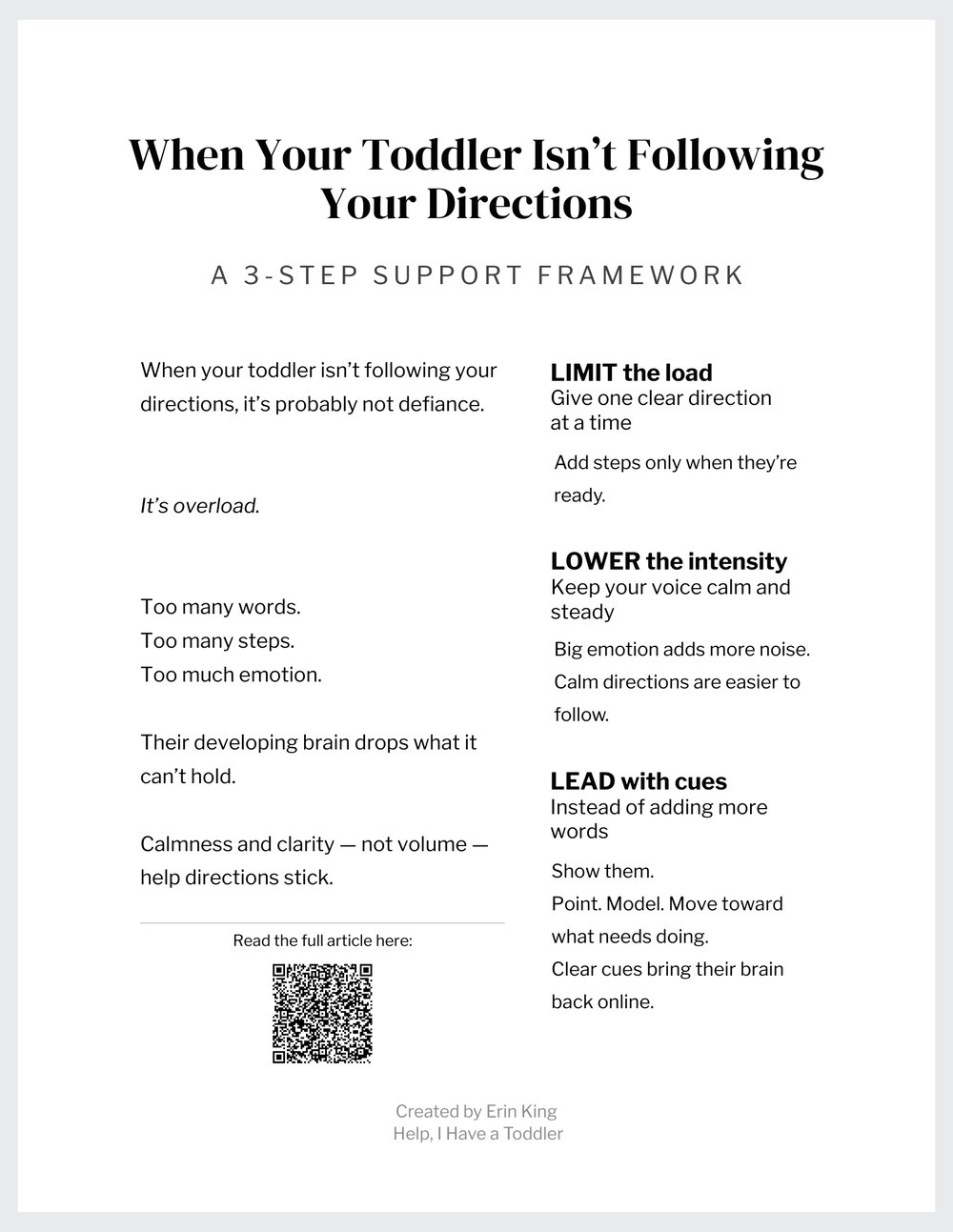
You won't find this in my regular resources section; this is a special private link just for toddler moms who read this post. A gentle reminder to print and post on your fridge.💗
I know you want fast solutions, and this can help you stay on track.
CLICK HERE for exclusive access to your very own FREE "How to Get Your Toddler to Listen and Follow Directions Cheatsheet."
What To Remember🎗️
Many toddler “listening problems” aren’t behavioral problems—they’re capacity problems.
👉Your child isn’t failing.
Their brains are learning how to hold, organize, and use information.📚
If you can remember to:
- Adjust your expectations.
- Change how you give instructions.
- Take a deep breath.😌
You'll be able to support that growth and make your child's—and your—day easier.
You don’t need to be perfect.
You just need to try to meet your toddler where they are.
You’ve got this, Toddler Mama. 💛
And I've got you.
👉If you want to delve a bit deeper into this subject in a fun and easy way, start here with my "Prefrontal Cortex Schoolhouse" series:
The Working Memory Cloakroom — Where Your Child’s Brain Keeps Its Daily School Supplies
🎆To find out how your feelings and emotions affect your toddler's nervous system, read this:
Do My Feelings Affect My Toddler's? How your emotions shape your child’s behavior and nervous system
✔️To learn to get better at co-regulation through awareness and intention, get this FREE resource created to guide you daily through gentle reflection:
Mindful Mama: Awareness Tools For Co-Regulation
📖To take your personal journey even deeper, add this to your daily routine:
31 (5-Minute) Morning Journal Prompts For Toddler Moms: Co-Regulation Edition
🤬To understand why your toddler makes you so angry and get ideas on how to manage it better, start here:
Why Does My Toddler Make Me So Angry? Science says there's a reason for this, and I have strategies that help.
😌For a FREE resource to support you towards parenting past anger with awareness and intention, start here:
The Mindful Mama Reset: Awareness Tools for Mom-Rage Dysregulation & Recovery
🪷To take your personal journey even deeper, add this to your daily routine:
31 (5-Minute) Morning Journal Prompts For Toddler Moms: Mama Meltdown (Dysregulation) Recovery & Resilience
🎉🎉🎉And be sure to browse all the free resources on this site that can help with many other toddler-parenting topics.