
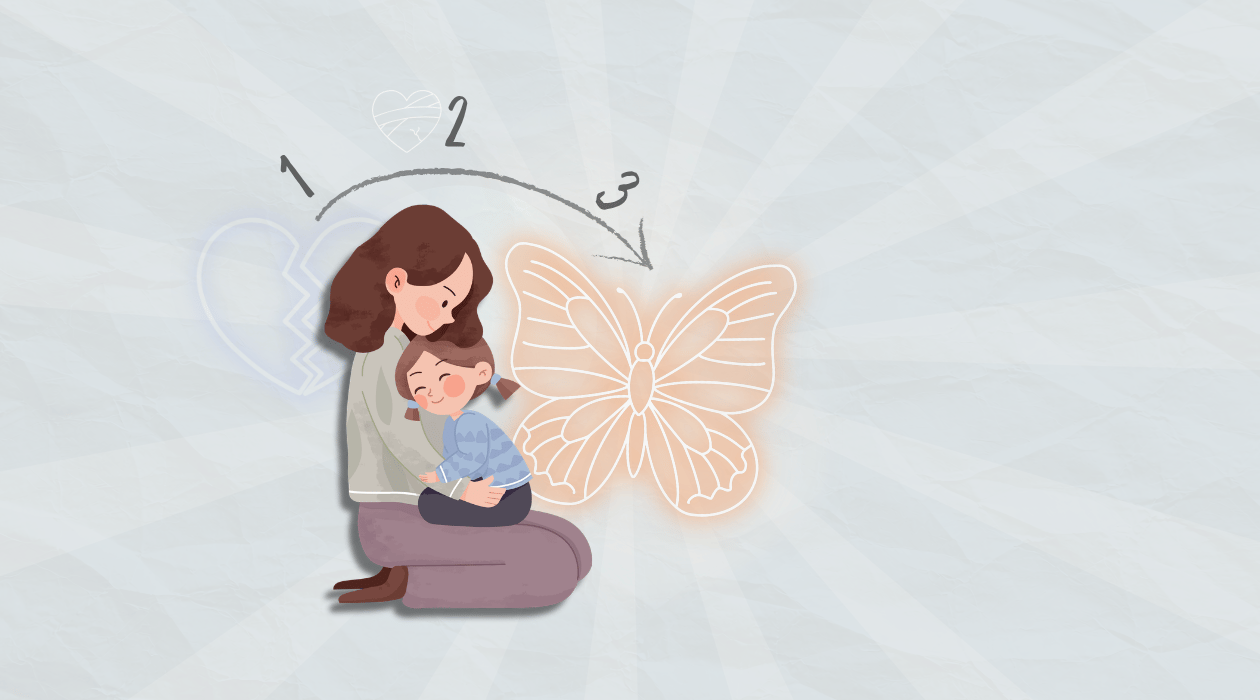
Having a playmate reject your child can feel shockingly personal.
If your toddler has ever come home from preschool or a playdate and said, “They said they don’t want to play with me,” or “They don’t want to be my friend anymore,” and you felt that rejection hit harder than you expected, you're not alone your toddler's experiences can trigger deep, emotional responses that can be surprising and even overwhelming.
Just know this: ➡️➡️➡️ You're not broken, and you're not alone — and this simple 3-step method can help you support your child through these moments without overreacting or making them bigger than they need to be.
Because here's the truth, (brace yourself):
👉 That moment can actually hurt your feelings more than theirs.
And how you respond to these bumps in the social road shapes how your child learns to deal with rejection and how they feel about themselves.
Why This Can Feel So Big To You
(Even When Your Toddler Seems Fine)
Toddlers are just beginning to navigate social life. They're experimenting with preferences, honesty, boundaries, and belonging—without much emotional filter.
When your kid's friend says, "I don't want to play with you," they may be just saying what's on their mind in that moment.
They're being literal — and probably just saying how they're feeling in the moment.
And even if they are being mean, that's a reflection on the other child, not yours.
But as a parent, your nervous system doesn't feel it that way.
Because you're so emotionally connected to your child, these moments can stir up old memories of being left out or embarrassed that still feel raw — causing your body to react like it's happening all over again.
It's that emotional flashback that can make you react with more emotion than your toddler actually brought to the moment.
Here’s a really important thing to understand:
👉 Your toddler learns what situations mean by watching how you react to them.
They look to you for cues about what’s serious, what’s scary, and what’s manageable.
So your reaction doesn’t just comfort them in the moment — it actually teaches them how to understand what just happened.
If you react like the situation is devastating or threatening, your child’s brain learns, “This is a big, scary thing that should really hurt me.”
But if you take a breath and respond calmly, you show them that even uncomfortable moments can be handled and moved through.
The experience itself doesn’t change — the meaning you attach to it does.
And here’s the reality every parent eventually runs into:
- You can’t make other kids be kind.
- You can’t stop a child from being mean or excluding someone.
- And you can’t stand beside your child all day, every day, managing every interaction they have.
But you can help your child build something much more important.
You can help them learn, from the inside, that:
- Other people will sometimes make hurtful choices — and that's on them.
- Nobody ever "deserves" meanness.
- A mean person is someone you don't want to play with anyway.
- Social rejection doesn’t have to damage your confidence or sense of self.
- You get to choose how you react to hurtful or uncomfortable situations.
When you handle these moments calmly and clearly, you help your child understand that having someone not want to play with them doesn’t mean they’re broken — and that’s a skill they’ll use for the rest of their life.
This isn't about minimizing their feelings.
It’s about staying calm through a hurtful moment so your child doesn’t turn it into a story about themselves.
To help you do this, I've created a simple 3-Step Method to Teach Resilience so your child can create their own story instead of reliving yours.
Use this method when uncomfortable social moments trigger old emotions, so you can be the parent you didn't have:
Regulate ➡️ Reframe ➡️ Rejoin
Step 1: Regulate
(Your Nervous System First)
When something like this triggers a strong emotional and physical reaction in you, the first step is simple — settle yourself down first:
- Take a deep breath.
- Slow your mind down.
- Notice that you've switched into fight-or-flight, and remind yourself that there is no immediate threat — this is an old feeling, not something that's actually happening right now to you.
- Remind yourself that this moment is about supporting your child — you don't have to address your issues right now.
You can always come back to how this affected you later.
This is not the moment to fix, analyze, label, or explain anything — if you're feeling triggered, trying to do those things might make this experience even more emotional and overwhelming — for you and them.
What you want to do right now is get grounded so you don’t pass your stress on to your child.
👉Here’s why this matters:
- Toddlers don’t automatically think rejection means something is wrong with them.
- They might feel disappointed, and it might activate their primal need to be seen.
- But they haven't necessarily turned that feeling into an identity.
That belief is learned.
If you get angry, upset, or confrontational, your child’s brain will read the situation as an emergency — even though it isn’t.
Your reaction tells them how much they need to be invested in this moment.
What you want is for them to see that it's no big deal.
What this looks like in real life:
- Calm your body first — Take a slow breath. Unclench your jaw. Relax your shoulders and hands.
- Keep your tone neutral — Speak calmly. Don’t sound upset or alarmed.
- Don’t rush to conclusions or speak for your child — Avoid accusations or emotional assumptions. A simple, neutral response works best: “That’s too bad. It sounds like she was having a bad day.”
- Stay grounded and move forward — “Let’s go home / grab lunch/head to the car. You can tell me more if you want.”
When you stay calm, you show your child one really important thing:
👉 Even if this is disappointing — it’s not a huge deal.
And that sets the tone for what comes next.
Step 2: Reframe
(the situation to shift ownership)
Once you’ve gotten yourself regulated, you can gently reframe the experience—without overteaching.
You might want to have a calm conversation over lunch, or a snack later, just to see where the experience landed for them. You might be surprised to find out that they've already forgotten about it.
If it's still on their mind, then you broach it gently through casual conversation — don't make it a huge "thing," — make it a side note in a bigger conversation.
You want your child to understand that they are never to blame for other people's choices. Behaviors belong to the person who makes the choice—not to the person who experiences it.
A few ideas you can pass on to help them move through the moment without self-blame are:
- Not everyone will like you or want to play with you — and that’s okay.
- You won’t like everyone either — and that’s also okay.
- You can’t control other people’s choices — and everyone, including you, is allowed to make their own choices.
- You don't have to like everyone, but you do have to be kind, even to people you don't like (something I always stressed to my daughter).
- You can choose how you respond to what other people do and say — because you control your own actions and behavior.
- If someone is mean to you, it says something about them — not you.
Handling it this way helps your child understand that rejection doesn’t have to take their power away — they get to decide how they respond and how they let it affect them.
Step 3: Rejoin
(keep showing up)
Toddlers live very much in the moment — and they’re surprisingly good at moving on. That’s something many parents don’t realize.
If somebody doesn't want to play with your kid, chances are, your kid will just move on to another friend or group.
So, if you don’t emotionally lock this moment into your child’s mind, chances are they won’t either.
But when a social situation with your child triggers your unresolved feelings, it can make you want to shield them by keeping them away from other children.
It can be tempting to want to avoid playdates or group settings altogether when this happens. But avoiding social situations because you think it protects your child actually deprives them of some important experiences they need to learn how to bounce back.
Because the truth is, your toddler is probably much better at bouncing back from this than you think — and sometimes, better than you are.
Trusting that and letting them move forward are the best ways to help resilience take root.
Toddlers are remarkably good at adapting.
When something stops working socially, they often:
- Find new friends
- Shift play partners
- Move forward naturally
So if you keep them from trying again, they might not get the chance to practice bouncing back and making new friends.
Instead, trust that your child will find their people and, with your guidance and calm intention, learn to steer clear of mean people.
And here's a little something special just for you, to help remember the lesson:
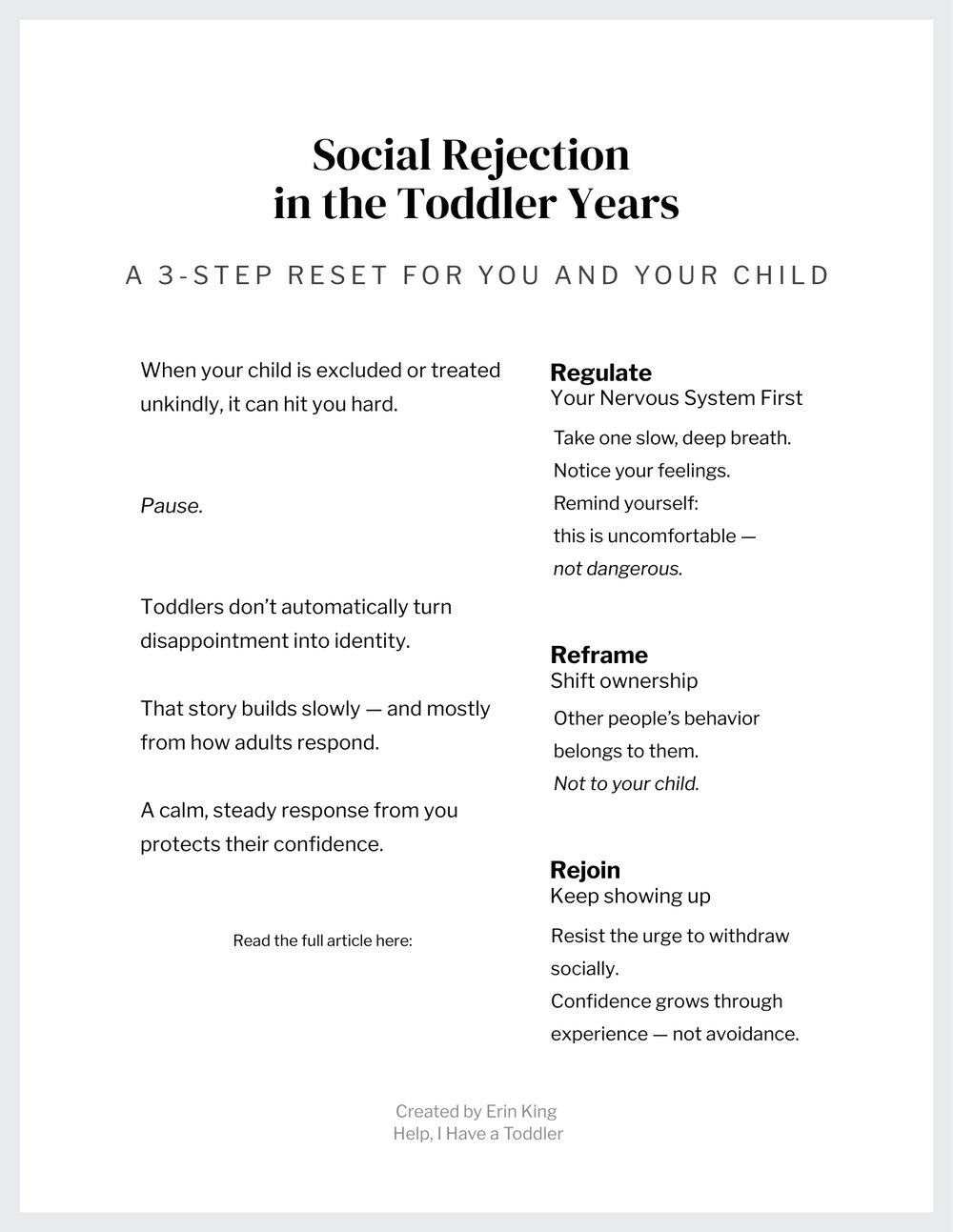
You won't find this in my regular resources section; this is a special private link just for toddler moms who read this post. A gentle reminder to print and post on your fridge.💗
I know you want fast solutions, and this can help you stay on track.
CLICK HERE for exclusive access to your very own FREE "How to Help Your Toddler When Another Kid Is Mean (even if you're upset too) Cheatsheet."
The Bottom Line
Your toddler learns what to hold onto by watching what you hold onto.
When you don’t make a big deal over a social rejection, a run-in with a mean kid, or a playdate that didn’t go as planned, your child learns that, sure, these moments are disappointing — but they're manageable.
If you don’t turn it into a “thing,” your child can file it away as:
“Sometimes this happens — and I can handle it.”
That’s resilience.
Because the truth is, you can’t protect your child from rejection — and you’re not supposed to.
That's not your job.
Your job is to build them up from the inside out. To help them grow a sense of self-worth that can handle a friend whose interests change, or the occasional kid who acts like a jerk.
You don’t have control over other children’s choices.
But right now — at this important stage of your child’s development — you do have control over one thing: Whether or not your child learns that someone else’s rejection defines their worth.
And when you keep these moments in perspective, you teach them that it doesn’t.
When you:
- Pause and regulate yourself.
- Reframe the situation so that the responsibility for the behavior lands on the right person.
- And you encourage them to move on with their head held high and their self-esteem intact.
You plant the seeds of a powerful lesson deep inside your child's developing mind that says:
- Rejection isn't dangerous
- Feelings are manageable
- Other people's choices don't determine who you are
- You always have control over how you respond
And by doing this, you're also telling them: "I will always have your back. You are strong, worthwhile, and loved."
That's how resilience starts — quietly, in ordinary moments, with a parent who chose to pause.
And suddenly, without even realizing it, you're giving your child what you never got:
- Emotional safety
- Personal power
- The freedom to keep being themselves
...and sometimes when we raise our children up in ways that we never were, we heal ourselves just a little bit along the way.
You've got this, Toddler Mama.💛
And I've got you.
📜If you want to go deeper into this subject, read these:
📖If you want to explore how toddler parenting can trigger old emotional wounds, read this:
🪷And for more insightful blogs about toddler parenting and your emotions:
- Do My Feelings Affect My Toddler's? How your emotions shape your child’s behavior and nervous system🧠
- Why Does My Toddler Make Me So Angry? Science says there's a reason for this, and I have strategies that help.
🎁🎁If you'd like some free resources to help you work on your big feelings in a toddler-centered way, check out these:
- The Mindful Mama Reset: Awareness Tools for Triggered Moments FREE Download
- The Mindful Mama Reset: Awareness Tools for Mom-Rage Dysregulation & Recovery FREE Download
- Mindful Mama: Awareness Tools For Co-Regulation FREE Download