
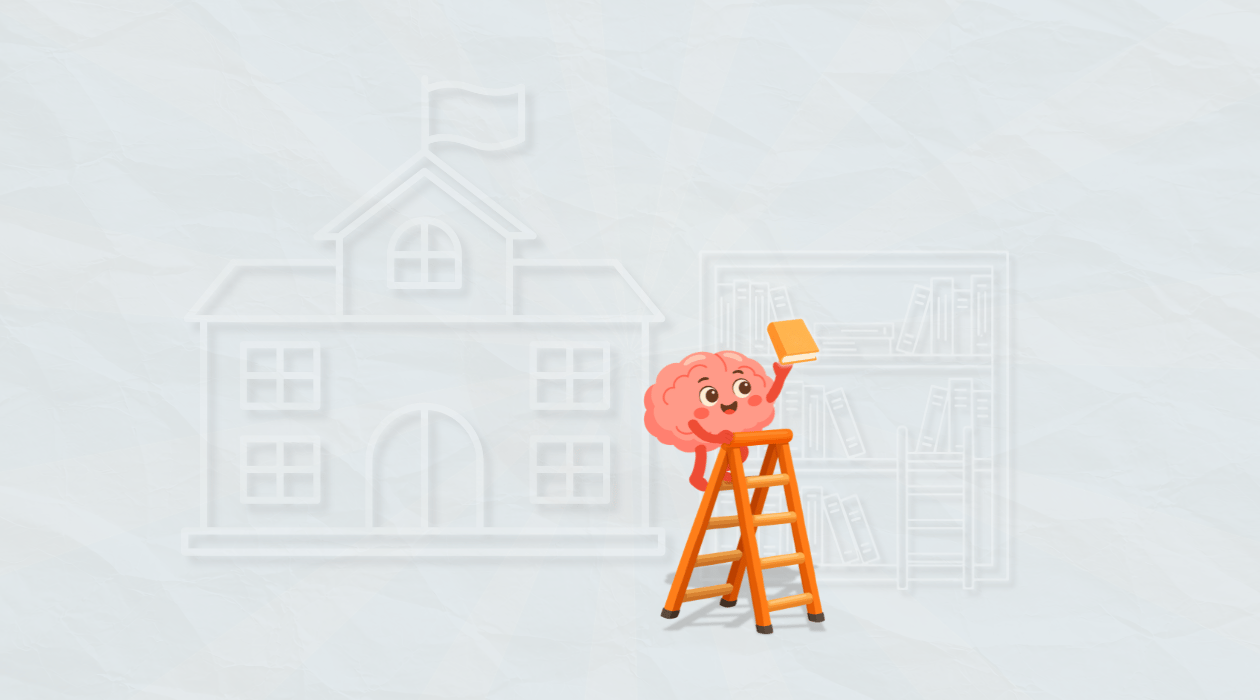
Part 8 of the Toddler Brain “Schoolhouse” series.
If you’ve been following along on our tour of your toddler’s growing brain, you already know that the “schoolhouse” is a very busy place.
So far, we’ve visited:
•The amygdala — the factory-set alarm system built to keep your baby safe
•The prefrontal cortex classrooms — where skills like impulse control and decision-making are learned (and why emotional processing is internal homework you can’t do for them)
•The working memory cloakroom — where short-term information is kept for immediate use
•The hippocampus mailroom — where daily experiences are sorted and organized
•The hippocampus night crew — who are hard at work while your toddler sleeps, sorting, organizing, and processing the day’s experiences
And now we arrive at the next stop on our tour.
Because once those experiences have been sorted and processed, we need to find out…
Where do the ones that stick actually go?
Where Those Experiences Get Stored
Picture a busy, thriving library on campus where the important records are kept. All of this information is constantly being updated, reorganized, and added to over time.
This is where your toddler stores what they’re learning about you, the world, and themselves every day.
This place thrives on organization, logic, and systems to create an archive that your child will revisit for the rest of their lives.
It's an area they’re building inside themselves every day, with your help.
These archives are found in the cerebral cortex.
This is where long-term memories live.
It’s where knowledge builds.
And where their understanding of the world slowly takes shape.
Not all at once.
But piece by piece.
Memories Don’t Arrive Fully Formed
You might not realize this, but your toddler’s experiences don’t instantly turn into fully formed memories, ready to go on the library shelves.
They don’t go straight from “happened” to “fully understood.”
When an experience packet arrives in the hippocampus, it’s treated like incoming mail.
Think about the mail you get. Whether it’s paper or electronic, you don’t automatically save everything that comes in.
You go through it first.
You look at it, decide what’s important, and go from there.
It’s the same for your toddler when it comes to their brain deciding what to keep long-term.
Some experiences happen once and don’t make much of an impression; those get let go.
Others get flagged as important.
Those are the ones the brain pays closer attention to.
They’re reviewed, and if they’re highly emotional or repeated, they gradually become patterns your child starts to recognize and use.
And that’s how the “books” that will eventually live in the schoolhouse archives begin to take shape.
But this doesn’t happen all at once.
These books are written page by page.
Information that comes into the mailroom, even a few times, doesn’t necessarily get flagged right away.
At first, those packets are fragile, easily lost, and forgotten.
This is because the mailroom, like the rest of the schoolhouse, is still new and under construction.
It takes time to learn what’s important and what’s not.
That’s why each experience needs to be:
- Revisited.
- Reused.
- Reinforced.
So the brain can get a handle on what to keep and what to throw away.
Why Repetition Is Everything
This is where repetition comes in.
Every time your toddler repeats something — a word, a behavior, a skill, even a mistake — they’re not just “doing it again.”
They’re building patterns that will eventually be organized and stored in the archives.
You might hear it like this:
- “Up! Up! Up!”
- “Mine! Mine! Mine!”
- “Again! Again!”
Or see it like this:
- Dropping the same toy 100 times in a row onto the floor.
- Acting out when told no about something.
- Doing something you’ve told them not to...again...and then watching your reaction.
And yes, it might feel… a bit relentless...and confusing...and frustrating...and infuriating.
But that’s the reality of parenting in the toddler years.
Because from your toddler’s perspective, something very important is happening.
Their brain is saying: “This matters, and I need more of this to understand what it means.”
Why Toddlers “Forget” and Try Again
This is also why toddlers can seem like they’re “just not listening” or “doing it on purpose”.
Every toddler parent experiences this:
- You set a boundary.
- They seem to understand.
- Then they do the exact same thing five minutes later.
And the cycle continues...
From your perspective: They should know this already! I just showed them/told them/yelled at them about this.
Now they’re just “being bad.”
But what’s actually happening for your toddler is this:
An experience packet arrives in the mailroom.📦
If it only shows up once, it probably won't be kept.🗑️
If emotion is attached, it may get flagged as important — but that doesn’t mean it’s fully understood.❗
If your response was big but unclear, your toddler may feel the intensity without fully understanding the lesson.⁉️
So the brain keeps working on it.
It needs more examples.
- More repetition.
- More chances to connect what happened with what it means.
So your toddler goes back and tries again…
Not because they want to make you mad.
But to strengthen the memory.💪
Because this is how the brain turns experience into understanding.
Practice Makes Permanent
We’ve all heard the old saying, “practice makes perfect.”
But in toddlerhood, “Practice makes permanent” is probably more accurate.
Because for them, repetition strengthens the connections in their brain.
Each time your child does something repeatedly, the pathway they’re creating in their brain becomes a little easier to access next time.
If your toddler:
- Climbs the same step over and over.
- Says the same word 20 times in a row.
- Asks you the same question 100 times.
- Repeats a behavior even after you’ve corrected it.
— What you’re seeing is the archives being built in real time.
And it’s a messy process that takes a lot of work.
It’s not instant, it’s not meant to be (have you ever mastered something the first time you tried it?), but it is very effective, especially when your parenting supports it.
From Effort to Automatic
Because over time, something really powerful is happening inside your toddler:
- Self-control that once took huge effort...
- Actions that used to need constant reminders...
- Rules that used to need regular reinforcing...
All start to look like the behaviors that most of us take for granted.
At first, your toddler has to process how concepts like:
- Don’t hit.
- Use gentle hands.
- Wait.
- Take turns.
...show up in real life.
And that’s hard.
It requires support such as reminders, repetition, and yes, sometimes consequences.
But as those experiences are repeated and reinforced, they slowly begin to be transferred into long-term storage…
They begin to stick:
- The brain starts to recognize patterns.
- Connections become stronger.
- Responses become faster and more automatic.
And understanding becomes behavior.
The Hidden Work Behind “Testing”
Let’s talk about something that can feel especially frustrating: boundary testing.
Your toddler does something they’ve clearly been told not to do.
- Again.
- And again.
- And again.
For you, it feels like they’re:
- Pushing.
- Challenging.
- Even ignoring you.
But inside the mailroom, something else is happening behind the scenes.
The brain is trying to build a reliable record in the archives by asking:
- “Is this always true?”
- “Does this rule stay the same?”
- “What happens every time I do this?”
And it does this the only way it knows how — by creating real experiences it can learn from.
Yes, they need to hear your words, but they need to hear them in a way that matches what they’re experiencing.
And the best way to support this process is by giving consistent answers.
How Consistency Builds the Archives
Every time you respond the same way to the same behavior, you’re helping your toddler’s brain connect the dots.
You’re giving the brain consistent information so it can organize experiences in ways that make sense.
When enough of the same experiences happen, they begin to become part of the permanent records.
But when responses change — sometimes yes, sometimes no, sometimes ignored, sometimes a big reaction — those records become harder to build.
The brain doesn’t know which version to store.
So it keeps going back to test it again.
Not because your toddler is trying to make things difficult.
But because their brain is trying to make sense of things.
A Simple Way to Think About It
If you take just one thing from this stage of the tour, let it be this:
Your toddler is not trying to frustrate you.
They’re trying to understand.
That means:
- Every “again!” is your toddler trying to figure out the pattern.
- Every repetition is another page being written.
- Every “test” is them looking for a clear answer.
And all of this adds up to the ever-growing body of knowledge in the archives.
The Long Game of Learning
Your toddler is right in the middle of a very complex, hidden construction project.
They’re building a library to last a lifetime and filling it, one page at a time.
And they’re not done.
Not even close.
At this stage, a lot is going on behind the scenes, which means sometimes stuff gets lost, emotions run high, and the building process can get tedious and overwhelming.
Not just for your child — but for you as well.
If you can give them — and yourself — a little grace, that compassion can go a long way.
Because understanding doesn’t happen overnight.
It builds:
- Through experience.
- And repetition.
- Over time.
A New Parenting Perspective
So the next time your toddler:
- Repeats the same word for the hundredth time.
- Tests a boundary you know you’ve already handled.
- Practices something over and over again.
…take a breath.
Zoom out.
And remember what’s actually happening inside their brain:
- The mailroom is sorting.
- The night crew is processing.
- And the archives are slowly being built.
This is what learning looks like in the toddler years:
- It’s slow.
- It’s messy.
- And yes—it’s repetitive.
But it’s also how understanding is formed.
So instead of fighting it, rushing it, or reacting to it…learn to support it.
- Stay consistent.
- Keep your responses clear.
- And give your toddler the chance to repeat what they need to learn.
Because every time you do…
You’re helping those scattered experiences turn into something solid.
Something they can use.
Something that will guide them long after this stage is over.
Because right now, your child isn’t just “doing it again.”
They’re building the archives that will shape how they understand—and move through—the world for the rest of their lives.
Find the first in this series here:
The Prefrontal Cortex Part 1: The Internal Schoolhouse That's Under Renovation
Want to put the lessons in this series into practice? Start with these free resources:
- The Grounded Toddler: 7 Days To More Skilled And Centered Parenting
- The Grounded Toddler: 7 Day Routine Reset Plan