
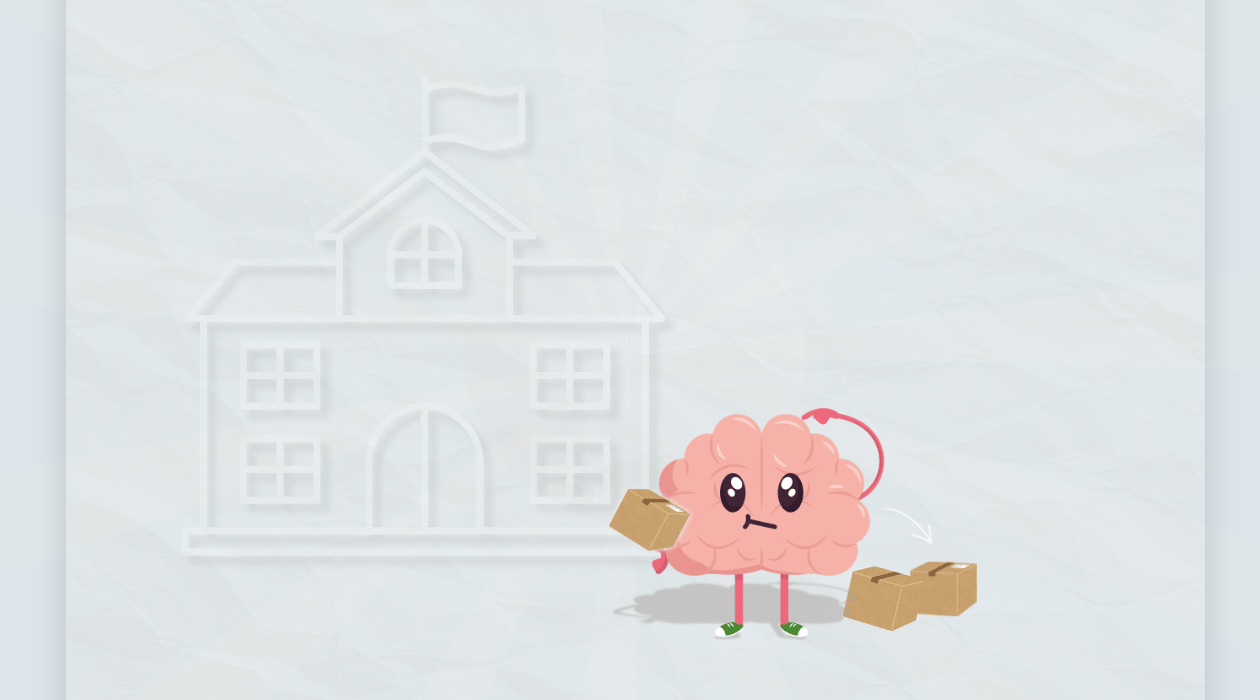
Part 6 of the Toddler Brain “Schoolhouse” series.
If you’ve been following this series, you already know that your toddler’s brain is going through some major changes — like a schoolhouse that's under construction.
In the last article, we visited the Working Memory Cloakroom, where the brain temporarily stores the information it needs right now.
The cloakroom holds memories for very short periods, helping your child remember things like:
- “I’m not allowed to throw that toy right now.”
- “Mom said we’re leaving the park soon.”
- “My cup is on the table.”
But what happens to these experiences after your toddler's brain is finished using them?
Where do they go next?
To answer that question, let's head over to another busy part of your child's developing brain: the hippocampus.
This structure lies deeper in the brain, behind and below the prefrontal cortex, and serves as the brain’s memory-sorting center.
The hippocampus works closely with the developing prefrontal cortex, taking in, sorting through, and remembering new information.
Memories begin forming in the hippocampus, where the brain turns everyday experiences into memory “packages” that can later be sent to long-term storage.
So let’s take a closer look at how memories are formed, organized, and processed in the hippocampus — the schoolhouse mailroom.
The Hippocampus: The Sorting Room That Turns Your Toddler's Experiences Into Memories
Every day, your toddler has thousands of experiences:
- Something funny happens
- A toy breaks
- A rule is tested
- A parent reacts
These experiences are like mental packages arriving at the school, and the hippocampus is their first stop.
This is where the brain figures out:
- What's important
- What's relevant
- How to organize them
- What gets put into long-term storage
And like any busy receiving office, the packages are always coming in.
- Some are important
- Some are junk
- Some need to be routed somewhere else
...And some get lost
Because there’s an important but hidden detail here that's worth understanding.
Your toddler's mailroom crew is still in training for this job.🤔
Why Toddler Memories Can Be So Unreliable
Many people do notice that something's "off" about their toddler's memory, but can't quite put their finger on what it is.
They see the weird inconsistencies, but when filtered through their adult expectations, this can leave parents feeling frustrated, confused, and even angry.
Your child might remember:
- Exactly where you hid the cookies
- The one time you let them jump on the couch
- A song they heard once in the car
But somehow they forget:
- A rule you explained five times
- A threat you made yesterday when they didn't listen
- Something you just said a few minutes ago
This doesn’t mean your toddler is ignoring you.
And it doesn’t necessarily mean they’re trying to manipulate you or be "bad".
Most likely, it's just that their memory sorting system — which is still developing — is dropping the ball here and there, and there are reasons for this.
At this age, the hippocampus tends to focus on experiences that are:
- Emotionally intense
- Repeated often and consistently
- Linked to things like safety, relationships, or novelty
In other words, the brain doesn’t automatically store everything — especially the things you say.
It stores what feels important.
Toddlers Learn Through Patterns, Not Instructions
The hippocampus is especially interested in patterns.
If something happens once, the brain might overlook it.
But if the same experience happens again and again, the hippocampus starts to notice.
It begins asking questions like:
- Does this always happen after that?
- Does this behavior always get that reaction?
- Is this something I can count on happening?
- Does everyone do this?
- What should I do to make this happen or not happen?
And toddlers use cause-and-effect to get those answers.
For example, if your toddler throws food once and nothing happens, the brain may treat that experience as unimportant. It’s just one piece of information among thousands that day, so it may never become a memory at all.
But if every time food is thrown, mommy calmly takes the plate away and says, 'No,' and gives a consequence, that creates a notification in the mailroom.
If that same package keeps arriving and piling up, the mailroom will want to take the most important parts and put them into storage so it can stop receiving them and stop taking up unnecessary space.
The toddler brain is built for efficiency, so when it recognizes a pattern, it jumps on it and processes it differently than random packages.
When experiences repeat in the same way, the hippocampus begins to recognize a pattern. Those packets get grouped together and classified as important.
To stop having to process the same packages over and over, the hippocampus marks the pattern as important and prepares it for long-term storage.
Once that happens, the toddler can stop throwing their food on the floor because the memory packages associated with that action have been processed and sent to the long-term storage facility.
And that behavior pattern ("We don't throw food on the floor.") becomes part of the brain’s growing memory storehouse.
What happens now is that the behavior stops because the other one (the learned behavior) has subconsciously become the new normal—the habit.
As a parent, you might think your child has just magically stopped this behavior for no reason.
The truth is that you’ve built up enough mental “packages” for your child's hippocampus to move that thing they’ve learned into long-term storage.
Why Repetition Matters So Much
This is why toddler parenting can feel so tedious and frustrating.
You're constantly repeating the same thing over and over:
- The same rule
- The same boundary
- The same reminder
And it can feel like nothing is sticking, especially if you don't understand how important consistent messaging is at this age.
Every repeated experience sends another copy of the same message to the hippocampus mailroom.
And with enough repetition, the brain starts to recognize the pattern.
That’s how memories begin to form.
Not from lectures, or long, wordy explanations, but from consistent experiences over time.
And there is another way for experiences to get extra attention in the school's mailroom.
Emotions Are The "Priority Post" Of The Schoolhouse Mailroom
The hippocampus works closely with another part of the brain that you met earlier in this series — the amygdala, the brain’s alarm system.
When an experience carries a strong emotional charge, the amygdala flags it as important.
And the hippocampus pays attention.
This is why toddlers will remember emotionally intense moments much more clearly than your calm words.
This is because the brain treats these emotional experiences like priority mail.
Emotional experiences get special treatment in the mailroom.
They move to the front of the line and are much more likely to be processed and remembered.
This is why, sometimes, when the amygdala mislabels something as dangerous, it's important to make sure that you — as parent and overseer from the "school board" — help the brain re-sort that package before it gets filed as a long-term memory.
You do this by letting the brain relearn that what they think is dangerous or scary (like sleeping in their own bed) is actually safe.
In my experience, the best way to do something like this is to let them safely work through their big feelings and, from the inside out, come to the conclusion that there's nothing to be afraid of. Letting them do this internal work themselves has so many benefits, from emotional regulation to courage and learning to respect rules and boundaries.
It can be hard to allow this important internal homework to get done, but it's work that you can't do for them, as much as you wish you could.
✴️✴️For more reading on that topic, read these next:
Emotional Regulation — The Homework You Can't Do For Them, (part 3 of the Prefrontal Cortex Schoolhouse Series)
Is It Ever Okay to Let My Toddler Cry? 😬💛 A daycare pro’s mom-to-mom guide to decoding toddler tears with calm and confidence.
Is Helicopter Or Free-Range Parenting Better?🤔 Or is there a third option that makes more sense?
The Mailroom Isn’t the Library
The hippocampus doesn't permanently store the information packets it receives.
It's a processing and routing center.
Many of the experiences being sorted in the mailroom eventually need to be transferred to long-term storage, and that's a lot of heavy lifting for your toddler's developing mind to do on top of everything else it's accomplishing right now.
So try to give them a little grace; a little compassion can go a long way when you're in the throes of yet another meltdown or a toddler's blank stare.
Keeping these two ideas in mind can help you parent more intentionally and calmly:
- You can make this process much smoother for your child by being consistent and clear in your responses, and the consequences you set for the questions their actions and behaviors are asking.
- If your child has a “stuck package” that the amygdala has flagged incorrectly, your job is to let them work through the experience safely so the brain can reclassify it.
So if the hippocampus is the mailroom where organization and classification happen...
Where do they go for long-term storage?
Coming Next: The Schoolhouse Night Shift & Archives
Soon, we’ll tour the cerebral cortex — where long-term memories are stored.
This is where the brain builds its growing collection of knowledge about the world.
But the process of moving memories from the mailroom to the archives doesn’t happen instantly.
Much of this process happens during sleep, when the brain quietly reviews the day’s experiences and decides what to keep.
So next, we're going to take a peek at what happens when the schoolhouse closes for the night.
Grab your coffee as we hang out with the night shift.
Because while your toddler sleeps, the sorting crew is still hard at work — going through the day’s packages to decide what's important.
Their job is to decide what's worth sending to the schoolhouse archives.
Our next stop on the Toddler Brain Tour is the night shift — where the sleeping toddler brain sorts through the day’s experiences and decides what lessons are worth keeping.