
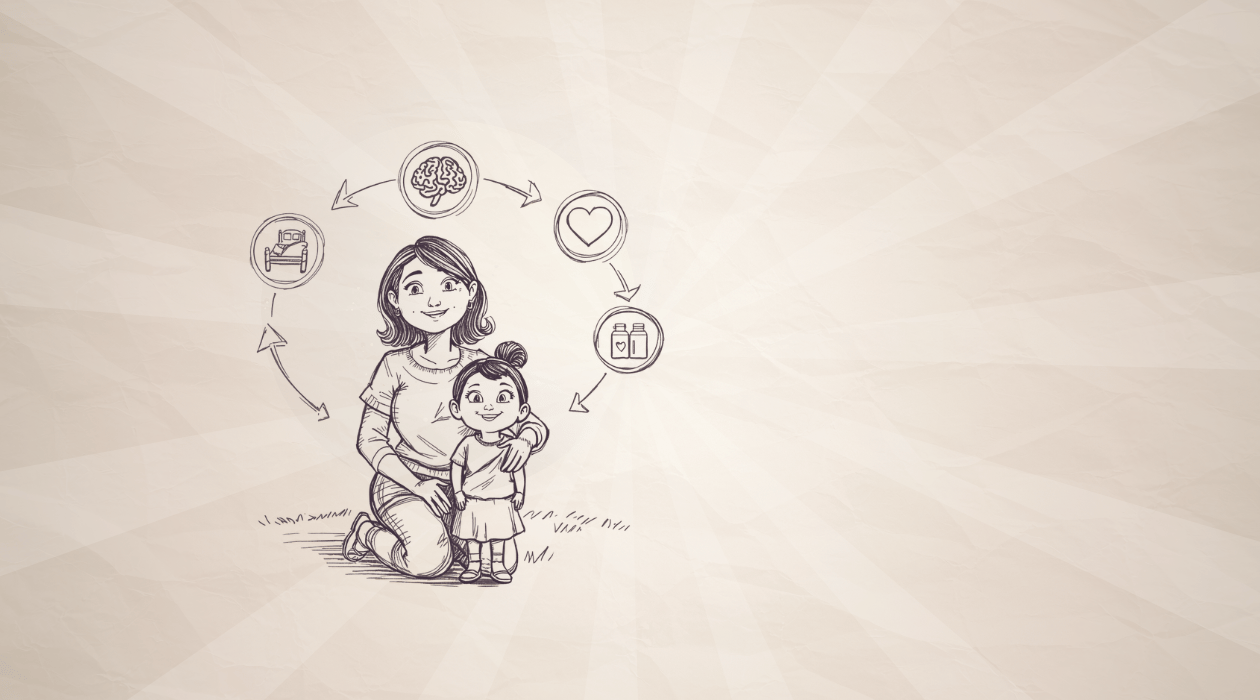
Do you ever wonder why some kids are happy, calm, and a joy to have around, while others… aren’t?
The difference isn't in how much their parents love them; everyone loves their children the same amount (which is the most you can - right?).
How a child is as a person has more to do with how skillfully their parents can put that love into action.
😊The key is in how a child is parented.
For 10 years, I spent 50 hours a week with toddlers — more waking hours than their parents. So I wasn’t just a babysitter; I was a co-parent and took that role seriously.
I learned to get the best from every child. I honed my skills and tested every method. I kept what worked and ditched what didn’t until I had a toolbox of very effective tools.
🌼I instilled empathy, patience, and resilience. I taught my tiny clients critical thinking and social awareness, and if you think toddlers can’t learn those things, think again.
Behavior is just a set of habits practiced over time. We know habits shape adult lives (best-selling books like The Power Of Habit and Atomic Habits tell us this is true) —so, why wouldn’t habits shape your toddler’s life too?
Following this logic, it only makes sense that the habits you have in your parenting will directly affect the habitual behavior of your toddler.
🧘♀️So, the better your habits, the better theirs will be - Am I right?
Therefore...
If you can develop a more skilled and centered parenting style, your toddler's behavior should reflect this.
Luckily, I can help.
If you’re tired of winging it and want some parenting practices that actually work, here are seven strategies I used again and again — with real, lasting results.
These are the keys to everything from sleep and potty training to behavior and social development.
But skillful parenting isn't just for them. It can center you when toddler life gets tough (and it will).
And like any skill, it can be learned.
The real question is: Are you Ready to level up?
If You Are, Here Are:
7 Ways To Become A More Skilled And Centered Parent:
1. Stick To Your Guns, Even When You’re Exhausted
You’re exhausted at the end of the day. I get it.
We all have times we’d like to tune our child out, pretend we’re not seeing what we’re seeing, or give them what they want (even after we’ve said no ten times). It certainly feels more convenient in the moment to ignore bad behavior. To give them what they want, to shut them up, and to get them off your back.
But you will be a more skillful parent if you resist the urge to let things slide.
Because consistency is the mother of all teachers, and it can backfire on you if you're not careful.
When you randomly give in (or worse, you always give in after you've said no), you muddy the lesson you’re trying to teach and show your child that if they push the boundaries enough, they can get what they want.
This means that the next time you say no, instead of respecting your answer, they’ll remember that last time, when they upped the ante and got you to cave.
Do this enough, and the behavior will escalate to the point that they’ll be throwing tantrums every time you say no because they know you have a breaking point, and if they just outlast you, they can get there.
Remember, the only way to teach them that you mean what you say is to act like you mean what you say - every time.
2. Instant Karma Is Best For Toddlers
Always be sure to give logical consequences for bad behavior and do it straight away, don’t wait until later (for example, if your child is climbing on a counter, take them straight off and put them right into a time out.)
This way, they can make the connection between the action and the consequence, because if a toddler can’t put the two together in their mind, they won’t learn the lesson.
I can’t stress this enough: it’s crucial that you catch them in the act and reinforce a consequence straight away. This teaches them that what they are doing is a bad idea, and you can’t “positive reinforce” some things; some things need a negative consequence to reinforce the lesson that it’s a bad idea.
If you don’t like the idea of giving a time-out or making your little one feel bad, even when they need the feedback, that’s more about you than them, so you might want to do some work on why that is.
Because you can’t go back to a toddler two hours later and discuss something if they didn’t make the connection in the moment.
They don’t have the ability to make that type of connection to something that happened hours before just by discussing it.
You have to create a frame of reference first, something for them to remember, something that stands out in their mind.
Instant Karma in the moment does this.
3. Try Not To Get Defensive - Ask For And Listen To Advice With An Open Mind
Parenting is hard; it can make you feel like you’re always being judged, and that can make you defensive, especially if your child has behavioral habits that aren’t great.
But if you’re not open to new ideas and feedback, you may be missing out on valuable information.
Sometimes, other people see what we can’t in our lives, especially in parenting.
We parent from such a personal and often triggered place that sometimes it’s hard to see the forest for the trees.
This doesn’t mean you have to agree 100% with other people’s suggestions or opinions.
It just means being open to the possibility that maybe you don’t know everything, you might benefit from an outside opinion, and somebody else might actually have some decent advice.
The ability of someone else to look at your situation from angles you can’t see might give you some fresh perspective when unpacking and understanding your toddler.
Just sayin’.
4. Always Be Learning
Watch what the people whose kids you like are doing.
Try to learn from everything you see.
When you see something you don’t like, try to figure out what’s causing that behavior.
Don’t be afraid to ask questions when you see someone who looks like they’ve sorted something that has you stumped.
I remember learning something from a woman dealing with her kids in a park when my daughter was about one. Her communication style was amazing, and her kids listened to her without her having to ask twice or raise her voice. Her method (which to her was just how she talked) became a staple in my daycare toolkit.
Her style was so gentle but authoritative, and the way she worded what she said was a revelation to me.
I was so amazed at the way she dealt with her kids that it changed how I parented and how I live.
If I hadn’t been on the lookout for ways to improve, I might never have noticed her.
5. Become An Observer
Genuinely understanding your child comes from everyday observations; you learn about your toddler by watching them.
Interpret the feedback you get from your child’s behavior and use it as a guide to help with your parenting.
Toddlers have no filter, so they always react directly to how you manage them. If you’re leading them well, they’ll be happy and calm.
If you are consistent with rules and routines, the tantrum phase should pass more quickly than if you present a confusing picture of the world and how to act in it.
Even a child with issues will be calmer when you create a world that makes sense for them.
How will you know if you’re giving them what they need? Their behavior will tell you.
I’ve had children with all manner of issues, and once they settled in, many of the issues either disappeared or calmed right down.
It can be done, but it all starts with you. If you’re not doing the right things, they’ll tell you by acting out.
So think of their behavior not as something they’re doing to make you angry or “get back at you”, but as their only way of communicating how they’re feeling about how you’re parenting them.
The rule of thumb with toddlers is always, if the behavior is improving, you’re doing something right; if it’s getting worse, there’s something important you're missing or not quite getting right.
It’s just that simple.
So, try to observe with detachment.
You also need to remember that toddlers are manipulative, and it’s easy to reinforce bad behavior.
If they get what they want when they act out, that behavior will escalate, so if there is escalation around an issue, you might want to see if you’re giving it an unintended payoff.
This is where observation comes in handy.
By observing their behavior in this way, you can begin to understand where you might want to fine-tune or switch gears with your parenting.
While you’re at it, try to observe your own behavior and habits as well.
6. Have Routines
Why is this important?
Routines make us feel safe.
Routines are especially important for children, particularly toddlers.
They learn to order their minds by having an ordered environment. They feel secure when they have a predictable life.
Toddlers need calm and consistency to be able to understand how the world around them works and how they fit into it.
Chaos breeds fear and anger and stunts development.
Having routines built into their lives to keep their children calm and on track.
And finally…
7. Keep The Bigger Picture In Mind
Try to remember that everything you do now is preparing your child to go out in the world.
Some days are full of sunshine and lollypops, and other days, you can feel like you’re trapped in your own special hell. Sometimes, you feel like you’ve got it all figured out, and at other times, not so much.
The ability to look at the big picture allows you to ride the highs and lows.
Try to understand that struggle is just a part of the roller coaster ride from the minute you see the plus sign on that little stick.
Take the ups with the downs, and don’t get too upset about the things that don’t matter.
Know that if your children seem happy and well-adjusted, then they are happy and well-adjusted.
Know that if there are no big red flags, everything is okay.
Nobody has more love for their child than you. But some parents have better skills — and those can be learned.
Every day won’t be perfect, but your intention and effort matter more than perfection ever could.
These seven shifts aren’t about being a “better” parent — they’re about becoming a more skilled and centered one. The kind of parent who leads with love, holds boundaries with confidence, and models the calm you want your child to grow into.
Life with your toddler is a magical journey. Use these tools to help you become a more peaceful, purposeful, and present parent.
You’ve got this, Toddler Mama. 💛
And I've got you!
And if you want to get more intentional about your parenting, I've got you covered:
...And how about a FREE RESOURCE to help you get started?
💫 The Grounded Toddler: 7 Days To More Skilled And Centered Parenting
Free Printable Habit Tracker + Reflective Journal Pages
✨ Morning Pages for Toddler Moms: Skilled & Centered Parent Edition ✨
A 31-day printable journal that helps you parent with confidence, awareness, and intention—one question at a time. Use this easy journal if you're ready to 👉Stop wasting precious time and get your mornings working for you.