
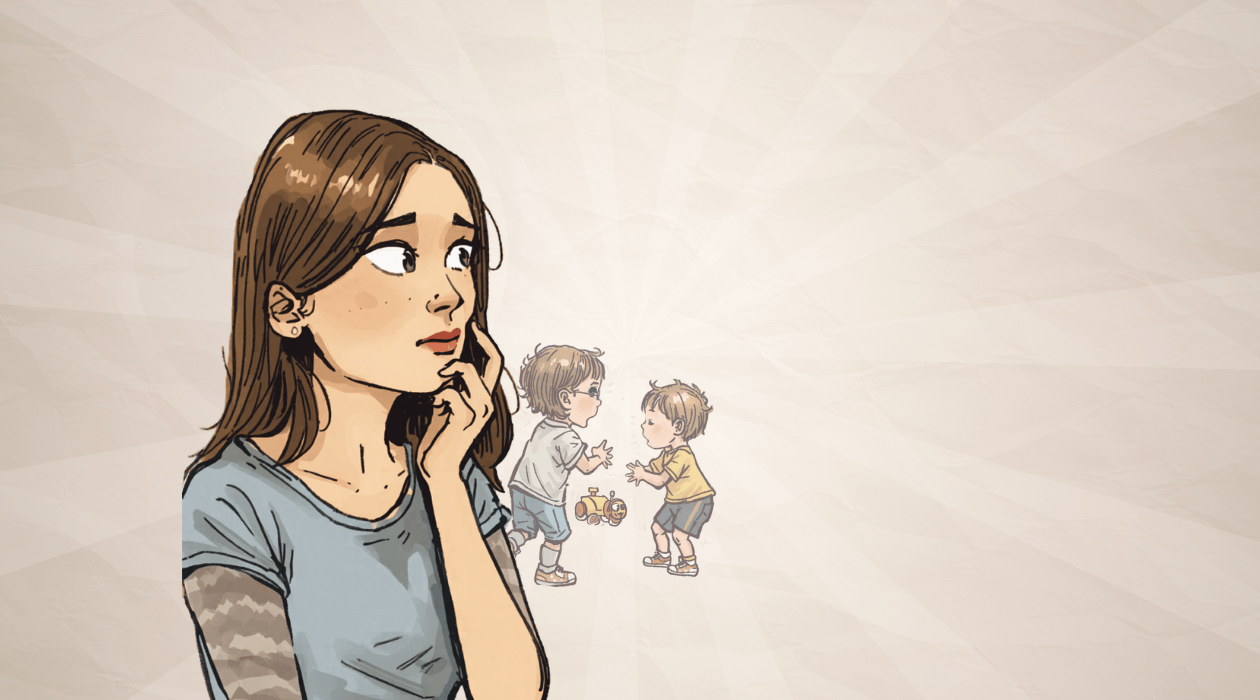
Let’s talk about something you might be wondering but are afraid to ask out loud:
“Is it normal for my toddler to be this bad at playing with other kids?”
The short answer is: Yes. 100% yes.
But don't think you're off the hook.
Most toddlers suck at playing with other kids—at least at first, when they're very young.
But that doesn’t mean they’re destined to be a bad person.
It just means their social skills are still under construction 🏗️.
Toddlers are intensely social, curious, and eager to belong. But they aren’t born with the skills to be good at friendship, sharing, or even noticing how their behavior affects others.
That other stuff? They have to learn it.
👉 Yes! It has to be taught. Over and over. With patience, structure, consequences, and repetition.
You might not realize this, but the part of your toddler’s brain that handles self-control, empathy, and understanding consequences (the prefrontal cortex) is still under construction. Think of their baby brain like a brand-new computer—it's got excellent hardware, but all those social skills?
That's software that still needs to be installed… one update at a time.
...And here's something to help you with those updates (just make sure you finish reading this blog post, to understand exactly how these tips support your child's developing brain):
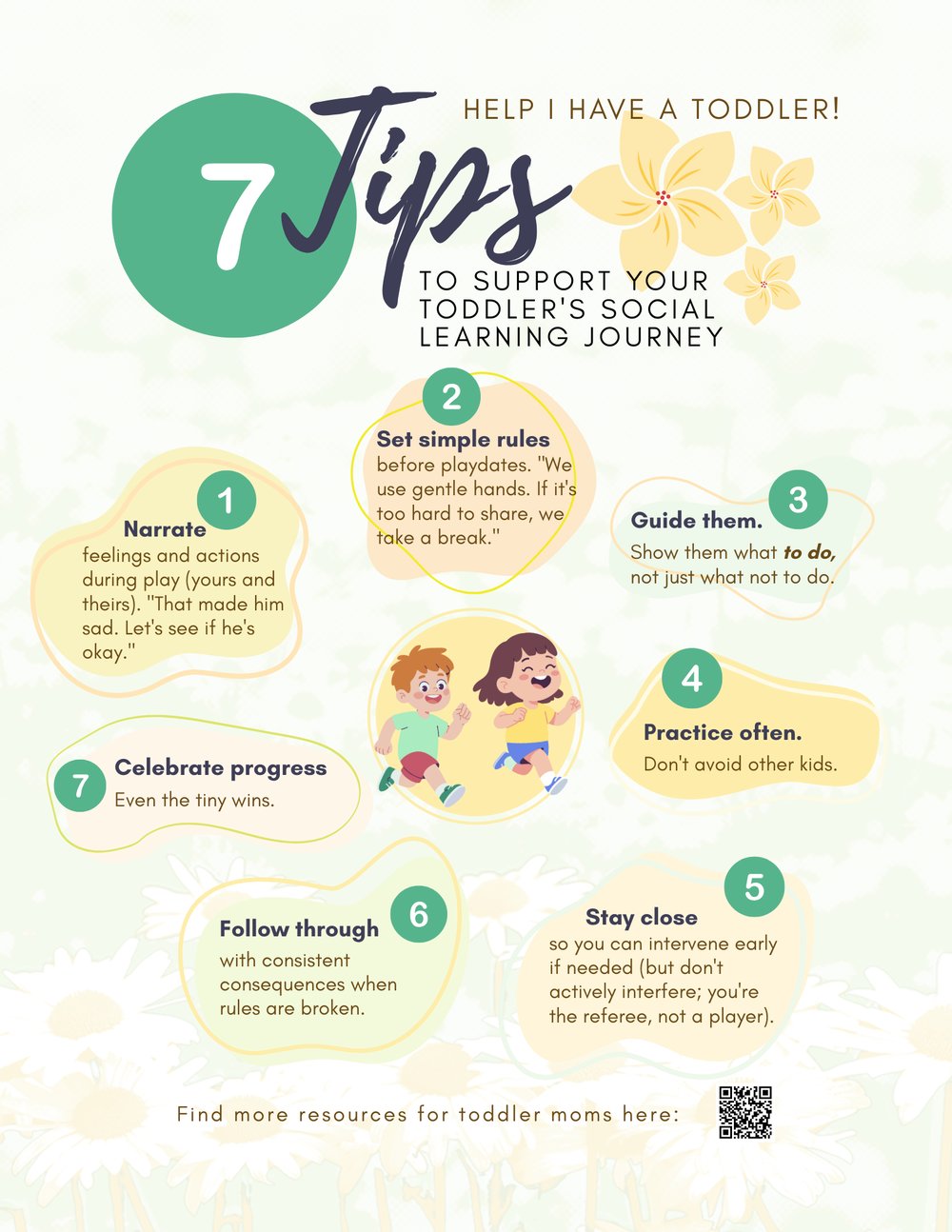
You won't find this in my regular resources section; this is a special private link just for toddler moms who read this post.
I know you want fast solutions, and this can help you stay on track.
CLICK HERE for exclusive access to your very own FREE "7 Tips To Support Your Toddler's Social Learning Journey" printable cheat sheet.
👶 Your Toddler's Brain: A Work In Progress!
Between the ages of 1 and 4, your toddler’s brain experiences massive growth and development. When your child was born, their brain was about a quarter (1/4) the size of an adult's brain. During the first year, it doubled in size. By age three, your child's brain is about 80% developed; by age five, it is about 90% grown.
So yeah, there’s a lot going on with your toddler’s brain right now.
They’re taking in unbelievable amounts of information to equip their developing brain with all the tools it will need to navigate life.
Your toddler's brain is working hard to create connections between the approximately 100 billion neurons (brain cells) it was born with. So, your toddler's job isn't to create new brain cells, but to connect the ones they have to form a working internal picture of the world that makes sense - an internal map they'll follow for the rest of their life.
Think of the toddler's brain as a huge connect-the-dots puzzle with millions of dots (the neurons) and no numbers. They have no memories or experience of the outside world, so there's no way to know how to connect them at first.
And if that's not hard enough, they have to get practically all of this done before the age of five. (No pressure!)
Every single thing they experience helps build the neural pathways that shape how they think, feel, and interact with others.
We can think of their brain development like adding ingredients to make a dough, and each moment is an ingredient, something that, once it becomes integrated, can't be removed.
All the love, limits, mistakes, and magic are mixing together to form the person your toddler will one day become from the inside out.
And all of their important social development is happening right now.
This is the phase where their brain starts upgrading—from running on instinct and raw emotion (hello, amygdala😒) to slowly learning how to think ahead, manage impulses, and care about others (thanks, prefrontal cortex😃).
They’re connecting the dots on how to:
- Regulate emotions 🌀
- Recognize and imitate social behavior 👀
- Communicate wants and needs 🗣️
- Understand rules and boundaries 🚧
- Develop empathy ❤️
But all of these abilities come online gradually—and with lots (and lots) of failure along the way.
Because it's a lot to take in for them - literally.
🤝 Is My Toddler A "Bad Friend"?
Does your child:
- Snatch toys without a thought
- Laugh when someone cries
- Push, hit, or bite when frustrated
- Completely ignore another child’s feelings
If they do, relax, they're not a bad friend, and they're not destined to be a bad person, either.
They do these things because they haven't developed the impulse control yet to stop themselves from being hurtful, and they also haven't learned to connect their actions to other people's feelings.
This is totally normal and can be swapped out for more caring behaviors during these formative toddler years.
But only if we teach them.
🎓 Social Skills Are Learned, Not Born
Just like we help our kids to learn to walk, talk, and eat with a spoon…
➡️ We also need to help them learn to:
- Share
- Take turns
- Apologize
- Recognize feelings in others
- Ask for help
- Handle conflict productively and nonviolently
Because here's the kicker, they don’t learn these things from just watching other kids. But they do learn them from consistent adult guidance and real-life experience.
So you will have to do some proactive parenting to help your toddler learn these social skills.
🧪 Practice Makes Toddler Progress—That's Why Life Feels So Messy
Think of your toddler as a little scientist🔬testing social rules:
❓What happens if I hit?
❓What happens if I take something?
❓What happens if I scream?
They don’t know what’s “appropriate” until someone teaches them what’s okay and what’s not.
That’s your job.
😳Even when it’s awkward.
😴Even when you’re tired.
😠Even when it feels like they should “know better” by now.
🤰When You Had Your Child, You Entered Into An Unwritten Contract To Teach Them These Things - Whether You Knew It Or Not.👈
And if you don't want to honor that contract because it's too hard or you don't "believe" in "parenting," trust me, your toddler will still absorb whatever information they can get, whether you want them to or not.
They'll still pick up social skills (they do this automatically; you can't shut that part of them off). Those dots are getting connected one way or another.
But if you don't want to teach them, be prepared for them to learn to survive by the laws of the jungle and become someone who might just be socially inept, aggressive, easily frustrated, and mean.
Because they might just get hard-wired to live from a place of fear, greed, and selfishness, which are the only things they knew as babies.
If they don't get the proper social input they need from you, their brain will just wire itself with whatever information it can scrape together. 💻🖱(If you think that's okay, try taking your car in to get serviced by the fifteen-year-old kid who does the detailing. Wait, that's crazy? Who'd do that? Exactly.)
Opting out of parenting during these challenging toddler years might seem like you're making your life easier, but it will be much harder in the long run.💣
Trust me, I've seen it. People who think they can cut corners on parenting with toddlers always have huge problems with their kids later.
What if you want to parent more proactively but have no idea how?
That's where I come in, I've got your back.
👩👧👦So, How Do You Parent To Socialize Your Toddler?💗
After 10 years of working with toddlers (and knowing what I've learned from my Montessori training), there are a few strategies that work if used consistently.
Here is the most important one:
🚦 Reinforce Rules and Follow Through With Consequences
Your toddler doesn’t just need opportunities to practice social skills—they also need clear expectations and consistent consequences to help those lessons stick.
- Keep your rules simple: “No hitting.” “We wait our turn.” “Use kind words.”
- Reinforce them every time with calm, loving firmness.
If a rule is broken, follow through with a logical consequence:
- “You hit, so now we take a break from playing.”
- “If it’s too hard to share, this toy is done for now.”
Boundaries actually make toddlers feel safe, because they also come to understand that the same rule that protects their friends will also protect them. This was a good teaching point that I used at my daycare when a child didn't like a rule.
I could explain that no, they couldn't hit their friends, but their friends also couldn't hit them - it worked both ways.
As a toddler adjusts to the rules (and it is a big adjustment for them) and matures, they can come to understand that the rules have meaning and are in place for a reason.
In my opinion, most, if not all, rules that we have in society and in life as people are there to keep us safe.
That's why we don't hit each other, even when we're mad, why we stop at red lights, why we don't take what's not ours and so on.
I had a mantra that I taught the daycare kids as soon as they could talk, and I said it to the babies even before they could talk:
💗 "The Rules Keep Us Safe. I Have Rules Because I Love You."💗
I would say to them, especially if I had to put them in a time out, "The rules keep us safe, if you break the rules, you're not safe, and neither is anyone else."
That's how I laid the foundation that rules weren't there to oppress them, but to keep all of them safe, even the one breaking the rules. Because if a child was doing something dangerous, it was probably against my house rules.
This leads me to my next tip(s)...
Toddlers adjust to rules faster when they see a rule hold no matter what they try to do to get you to back down. When they learn that no matter what they do, the boundary holds, they stop testing and simply accept that a rule is in place. That's just part of "what we do." (Or don't do.)
And, the clearer the message, the easier it will be for a toddler to absorb it.
If you laugh at something they do one day and then scream at them for the same thing the next day, your toddler will become confused and frustrated because of the mixed message.
Remember, their brain is trying to pick up on patterns, and when you don't give them a consistent pattern, their brain doesn't have anything to grab onto.
So, if you want them not to do something (like hitting, for example), then you have to catch them, call them out straight away (so they know which exact action is getting the consequence), and give a consequence every time.
This way, they eventually associate the behavior with the consequence and internalize that pattern (hit = consequence), to subconsciously remind them that it's not a good idea to do that thing.
This is how you teach a toddler to control their impulses; they learn what they live, and the message must be clear.
It must be repeated over time, and you have to be totally committed to being consistent.
If you do this, you will move past the painful part (meltdowns, defiance, boundary testing) of the process faster.
It's easy to get frustrated yourself, because nobody told you it would be this hard, am I right?
Take heart!
💥 If It Feels Hard, You’re Not Necessarily Failing. This Is Just the Process.
If your toddler is struggling with social stuff, that doesn’t mean:
- You’ve done something wrong
- Your child is mean or selfish
- They’re not ready to socialize
- You need to isolate them from others
It just means they’re a toddler.
And social skills take time, repetition, and experience.
If you're showing up, setting boundaries, and giving them chances to practice, that's half the battle.
The rest is just time; stick with it and be consistent.
🛠️ What Else Helps?
Here are a few more tips to support your toddler’s social learning journey:
- Narrate feelings and actions during play (yours and theirs). “That made him sad. Let’s see if he’s okay.”
- Set simple rules before playdates. “We use gentle hands. If it’s too hard to share, we take a break.”
- Guide them. Show them what to do, not just what not to do.
- Practice often—don’t avoid other kids.
- Stay close so you can intervene early if needed (but don't actively interfere; you're the referee, not a player).
- Follow through with consistent consequences when rules are broken.
- Celebrate progress, even the tiny wins. 🎉
💛 Final Thoughts: Raising Good Humans Takes Time
Toddler social skills?
They’re messy.
They come in bursts—fits and starts, trial and error.
Most days, it’s two steps forward and one full-body tantrum back.
But every meltdown…
Every toy snatch…
Every shouted “NO!”...
👉 Is a teachable moment.
A chance to guide, model, and shape the kind of human your child will grow up to be.
Do they need to be perfect?
Of course not. Think about the people you enjoy most in life—what makes them great?
They’re probably just easy to be around. They notice others. They’re kind.
✨ That’s social skill in action.
And guess what? That’s what you’re building right now.
So the next time you’re giving your toddler the 100th reminder or consequence of the day, take a breath and remind yourself:
💡 This work matters. And it’s going to pay off.
The toddler phase doesn’t last forever (even if it feels like it might).
But the lessons you’re teaching?
Those last a lifetime.
You’re not just surviving toddlerhood—
💪 You’re raising a good human.
And you're doing it with purpose, love, and intention.
✨ Want more support like this? Have a look around this website for more helpful blogs just for toddler moms.
Explore more blog posts, and download free tools designed to help you feel strong, grounded, and confident—no matter how chaotic life with a toddler gets.
You’ve got this, mama.
And I’ve got you. 💛
And if you’re looking for a resource to help you take a deeper dive into this topic, have a look at this FREE resource I’ve built just for this purpose: The Mindful Mama Reset: Awareness Tools for Teaching Toddler Social Skills FREE Download.
This 4-part printable toolkit is designed to help you:
✅ Track and reflect on your child’s social behaviors in real time
✅ Understand why certain moments feel so hard (and what to do about it)
✅ Stay calm and consistent — even when things get chaotic
✅ Feel proud of your parenting, even on the messy days
My free gift to you!🎁🎁🎁