

When we think about the health benefits of nature, we often picture hiking through the woods, sitting beside a stream, walking barefoot through the grass, or simply breathing fresh air beneath a canopy of trees. But connecting with nature doesn't have to end when we walk through the front door.
The spaces we live in can incorporate pieces of the natural world too. Houseplants, stones, crystals, wood, dried flowers, shells, branches, herbs, natural fibers, water features, and even colors and textures inspired by the outdoors can help create an environment that feels calmer, warmer, and more restorative.
This idea is closely related to biophilic design, an approach to designing spaces around our innate connection with nature. And while decorating with nature isn't a substitute for getting outdoors, it can give us small, repeated experiences of that connection throughout everyday life.
Why Humans Feel So Good Around Nature
Human beings spent the overwhelming majority of our history living in close contact with the natural world. Modern life, by comparison, is incredibly indoor-centered. We work beneath artificial lights, stare at screens for hours, drive instead of walk, and often spend most of the day surrounded by manufactured surfaces.
Yet our nervous systems haven't suddenly stopped responding to natural environments. Research on exposure to nature has associated it with benefits such as reduced stress, improved mood, greater feelings of restoration, and better attention. Even simply viewing natural scenery can have psychological effects.
That means the environment surrounding you isn't merely decoration. Your home can become part of your wellness practice.
Plants: Living Décor That Changes the Feeling of a Room
Plants are perhaps the easiest way to bring nature indoors because they are literally living pieces of the natural world.
A room containing greenery can immediately feel softer and more inviting. Caring for plants can also become a small mindfulness ritual: noticing new growth, touching the soil, pruning leaves, watering them, and observing how they respond to light and changing seasons.
Some people also enjoy growing useful plants such as mint, basil, rosemary, thyme, aloe, or other herbs. In that case, the plant becomes more than decoration—it creates an ongoing relationship between your home, your food or herbal practices, and the natural world.
Houseplants shouldn't be treated as magical indoor air purifiers; ordinary household conditions don't usually contain enough plants to dramatically clean the air. Their strongest everyday wellness benefits may instead come from the visual, emotional, sensory, and nurturing connection they provide.
Rocks, Stones and Crystals: Bringing the Earth Into Your Space
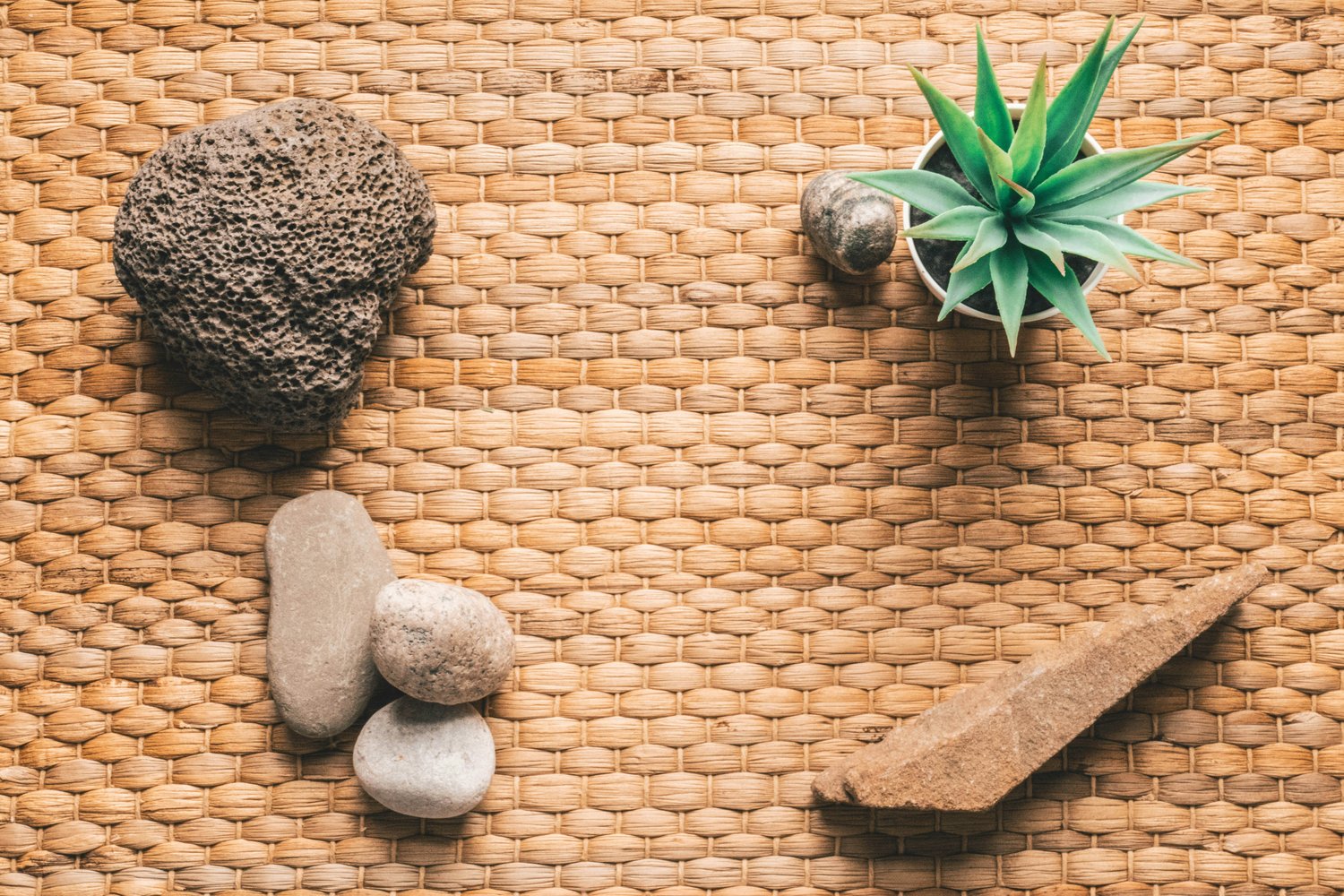
Plants aren't the only way to decorate with nature. Rocks collected during meaningful hikes, smooth river stones, geodes, shells, driftwood, pinecones, or interesting pieces of bark can make beautiful décor. Unlike mass-produced decorations, natural objects often contain irregular shapes, textures, colors, and patterns that remind us that beauty doesn't have to be perfectly symmetrical.
A stone picked up during a memorable adventure can also become a physical reminder of the experience. You may look at that little rock sitting on your shelf and immediately remember the mountain, river, forest, or trail where you found it. Suddenly, it isn't just a rock anymore. It's a memory anchor.
For people who use crystals spiritually, they may also assign personal intentions or symbolic meanings to particular stones. Whether you approach them spiritually or simply appreciate their natural beauty, they can become meaningful elements of a restorative space.
Natural Materials Create a Different Sensory Experience
Consider the difference between touching a plastic tabletop and running your hand across unfinished wood. Natural materials offer texture. Wood grain, woven jute, cotton, linen, bamboo, stone, clay, cork, wicker, wool, dried grasses, and other organic materials create sensory variety that highly manufactured environments sometimes lack.
You don't have to turn your home into a cabin in the woods. Even small touches—a wooden bowl, stone coaster, woven basket, clay planter, linen blanket, or branch displayed in a vase—can introduce natural shapes and textures.
The goal isn't perfection. It's connection.
Natural Colors Can Help Create a Restorative Atmosphere
Nature rarely screams for our attention, yet it contains incredible color. Forest greens. Earthy browns. Stone gray. Sand. Deep botanical shades. Soft floral colors. Sky blues. Sunset oranges and purples. Bringing those colors into your environment can help create a visual atmosphere inspired by places where many of us naturally feel grounded. And you don't necessarily need actual natural objects everywhere. Artwork depicting forests, mountains, plants, oceans, or wildlife can also provide visual reminders of nature when living plants or outdoor views aren't practical.
Create a Nature Corner
One of my favorite concepts is creating a small nature corner somewhere in your home.
It doesn't need to be elaborate.
Choose a table, shelf, windowsill, dresser, or quiet corner and combine a few meaningful natural elements. You might include a plant, stones collected from hikes, a piece of wood, dried herbs or flowers, a candle, a small water feature, or photographs you've taken outdoors.
Make it personal.
If hiking is where you feel most alive, display something that reminds you of the trail. If herbs are part of your wellness practice, incorporate dried herbs, living plants, or beautiful jars containing your herbal blends. If water relaxes you, introduce imagery or gentle sounds reminiscent of streams or rainfall. You are essentially creating a tiny visual reminder of the environments that make you feel restored.
Engage More Than Your Eyes
Nature isn't only something we see. We hear birds, wind, rain and running water. We smell soil, flowers, herbs and trees. We feel sunshine, cool air, rough bark and smooth stones. A nature-inspired home can engage several senses too.
Open the doors or windows when weather and air quality allow. Listen to rainfall or nature sounds. Grow fragrant herbs. Display flowers. Incorporate natural textures you can actually touch. Let sunlight into your space whenever possible.
These seemingly small experiences can make an indoor environment feel much less disconnected from the living world outside.
Your Home Can Become Part of Your Wellness Routine
Holistic health isn't only about what we eat, how we exercise, which herbs we use, or how much sleep we get. It's also about the environments we repeatedly expose ourselves to.
A cluttered, harsh, overstimulating environment can feel completely different from one intentionally designed around comfort, greenery, natural textures, meaningful objects, and sensory calm. That doesn't mean your home needs to look like an Instagram-perfect botanical sanctuary.
Start with one plant.
Bring home an interesting rock from a hike where collecting is permitted.
Put your seashells in a glass bowl.
Display a beautiful branch.
Grow herbs in your kitchen.
Use wood, stone, clay, baskets, or natural fabrics instead of automatically choosing plastic.
Create a shelf filled with little reminders of places you've explored.
Over time, your home begins telling a different story.
Bring Nature Indoors—but Keep Going Outside
There is one important distinction: bringing nature into your home complements time spent outdoors; it doesn't replace it.
A houseplant cannot give you a forest hike. A landscape photograph cannot provide sunlight, fresh air, physical movement, changing terrain, wildlife encounters, or the enormous sensory experience of actually standing in nature. Instead, think of the two as partners.
Go outside and experience nature fully. Hike. Garden. Sit beside the water. Walk through the woods. Watch the sunset. Pay attention to the seasons. Then bring pieces of those experiences home with you.
When your indoor environment reflects the natural world, your connection with nature doesn't have to disappear simply because you've closed the door.
The Holistic Takeaway
Wellness doesn't exist only inside the body. It also exists in the relationship between your body, your mind, your environment, and the world around you.
Decorating with plants, rocks, wood, herbs, flowers, natural textures, outdoor photography, and meaningful objects from nature can help create a home that feels more grounded, restorative, and alive. You don't need to live in the forest to invite some of the forest into your life.
Sometimes wellness begins with something as simple as a plant beside your bed, a collection of stones from your adventures, or a little piece of the Earth sitting on your shelf reminding you:
You are part of nature, too. 🌿
— Holistify Me
Holistic wellness for the mind, body, and soul.
Comments ()