

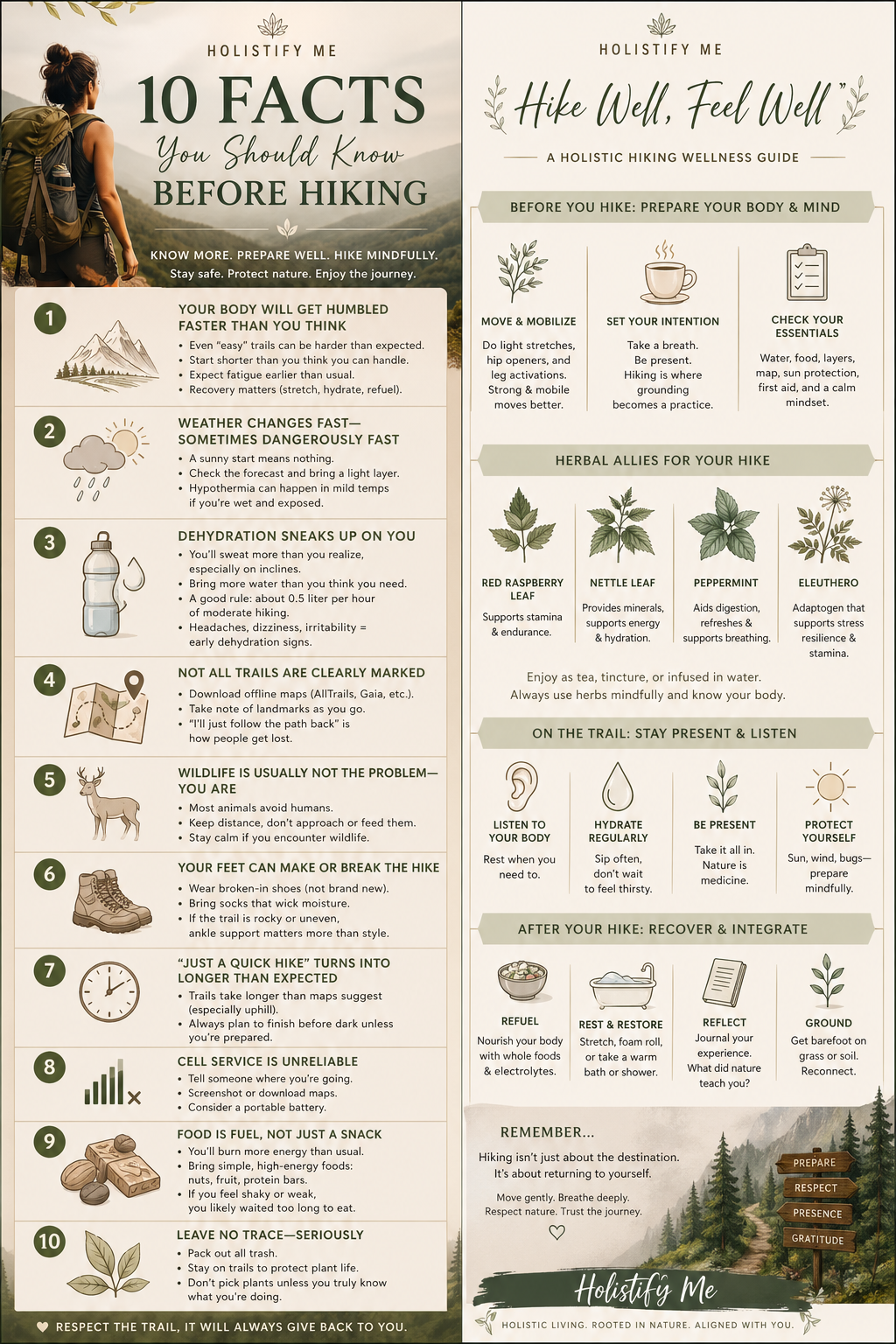
Hiking looks simple on the surface—walk in nature, enjoy the view—but people get into trouble because they underestimate it. Here are the facts that actually matter before you head out:
1. Your body will get humbled faster than you think
Even “easy” trails can feel hard if you’re not used to uneven terrain, elevation changes, or long distances. Muscles you don’t normally use (ankles, hips, stabilizers) will get worked.
- Start shorter than you think you can handle
- Expect fatigue earlier than usual
- Recovery matters (stretch, hydrate, refuel)
2. Weather changes fast—sometimes dangerously fast
A sunny start means nothing. Temperature drops, rain, and wind can hit within an hour.
- Always check the forecast and bring a light layer
- Hypothermia isn’t just a winter issue—it can happen in mild temps if you’re wet and exposed
3. Dehydration sneaks up on you
You’ll sweat more than you realize, especially on inclines.
- Bring more water than you think you need
- A good rule: about 0.5 liter per hour of moderate hiking
- Headaches, dizziness, and irritability = early dehydration signs
4. Not all trails are clearly marked
People assume trails are foolproof. They’re not.
- Download offline maps (apps like AllTrails)
- Take note of landmarks as you go
- “I’ll just follow the path back” is how people get lost
5. Wildlife is usually not the problem—you are
Most animals avoid humans. Issues happen when people get too close, feed them, or panic.
- Keep distance, don’t approach—even if it feels “safe”
- Stay calm if you encounter something (like your bumblebee situation—you handled that instinct well)
6. Your feet can make or break the hike
Blisters, poor ankle support, or bad traction can end your day early.
- Wear broken-in shoes (not brand new)
- Bring socks that wick moisture
- If the trail is rocky or uneven, ankle support matters more than style
7. “Just a quick hike” turns into longer than expected
Time gets underestimated constantly.
- Trails take longer than maps suggest (especially uphill)
- Always plan to finish before dark unless you’re prepared
8. Cell service is unreliable
Don’t count on your phone saving you.
- Tell someone where you’re going
- Screenshot maps or download them
- Consider a portable battery
9. Food is fuel, not just a snack
You’ll burn more energy than usual.
- Bring simple, high-energy foods: nuts, fruit, protein bars
- If you feel shaky or weak, you likely waited too long to eat
10. Leave no trace—seriously
This isn’t just etiquette—it preserves ecosystems.
- Pack out all trash
- Stay on trails to avoid damaging plant life
- Don’t pick plants unless you truly know what you’re doing (especially with your interest in herbs—misidentification can be risky)
Real talk:
Most hiking issues come from overconfidence and under-preparation—not bad luck. If you respect the environment and prepare like something could go wrong (not that it will), you’ll be completely fine and actually enjoy it more.
Comments ()