

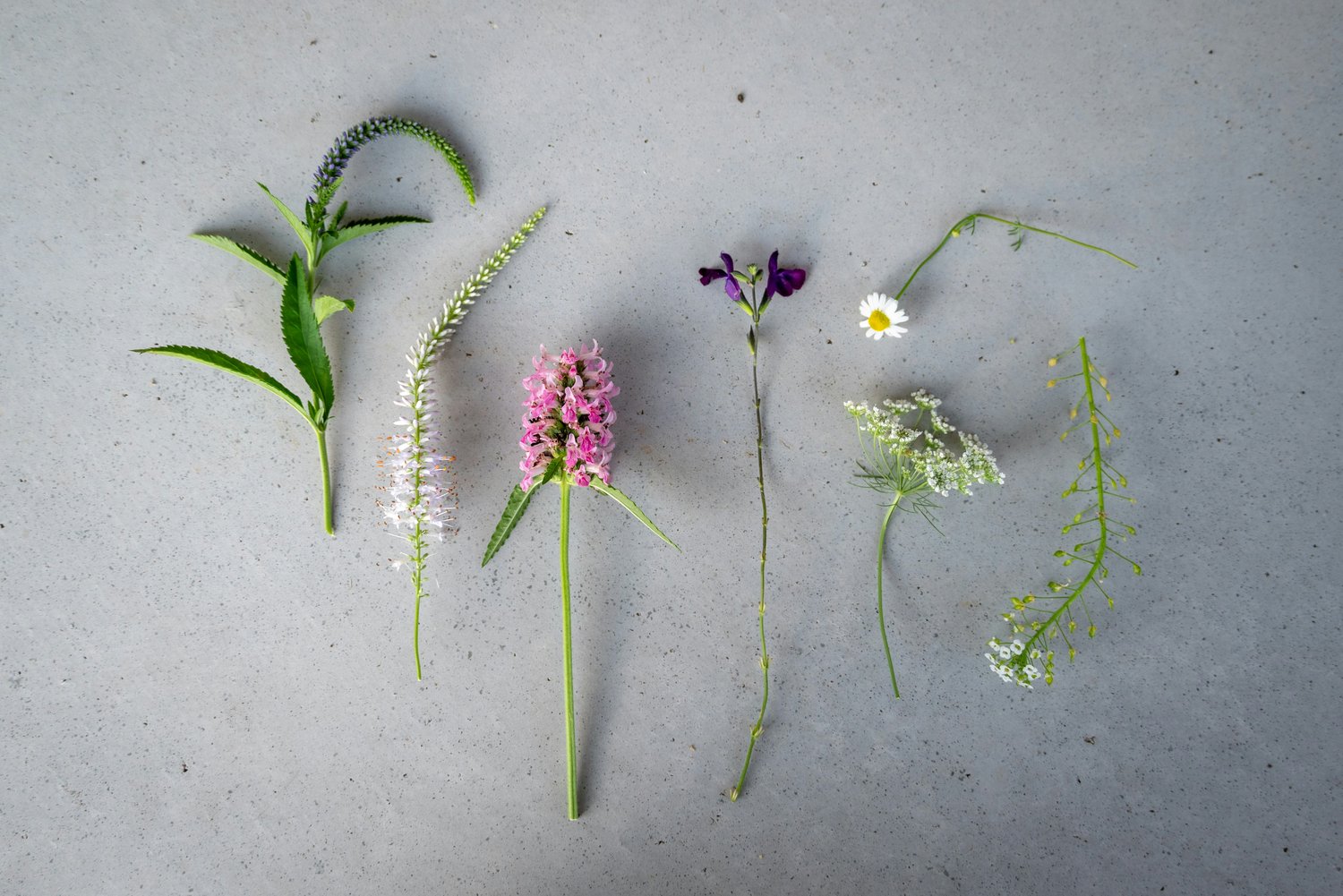
When you first become interested in herbalism, it's easy to feel like you need an entire cabinet filled with mysterious roots, flowers, tinctures, powders, and jars.
You don't.
In fact, one of the best ways to begin working with herbs is to start small and learn a handful of versatile plants really well.
A simple home herbal kit gives you easy access to herbs you can incorporate into everyday wellness rituals—from a cup of tea after a meal to a soothing evening infusion when you're ready to unwind.
The goal isn't to recreate an herbal apothecary overnight. It's to create a small, intentional collection of herbs you'll actually use.
Disclaimer: This article is for educational purposes only and is not intended to diagnose, treat, cure, or prevent any disease. Herbs can interact with medications and may not be appropriate during pregnancy, breastfeeding, or with certain health conditions. Consult a qualified healthcare professional when appropriate.
🌿 What Is a Home Herbal Kit?
Think of a home herbal kit as your personal collection of go-to herbs and basic supplies.
Depending on your lifestyle, it might include herbs traditionally used for:
- Digestive wellness
- Relaxation
- Everyday nourishment
- Seasonal wellness
- Skin care
- Mental refreshment
- General wellbeing
You don't need 30 herbs. For a beginner, five to eight carefully chosen herbs can provide plenty of opportunities to learn, experiment, and develop your own herbal rituals.
1. Peppermint: Your Digestive Go-To
Botanical name: Mentha × piperita
Peppermint is one of the easiest herbs to incorporate into everyday life. Its naturally refreshing flavor makes it delicious on its own or combined with other herbs.
Peppermint has traditionally been used to support:
🌱 Digestive comfort
🌱 Occasional bloating
🌱 A refreshed, alert feeling
🌱 Fresh breath
🌱 General digestive wellness
Keep It In Your Kit For:
A simple after-meal tea or refreshing afternoon drink.
2. Chamomile: Your Relaxation Herb
Botanical name: Matricaria chamomilla
Chamomile deserves a place in almost any beginner herbal collection. Although it's famous as a bedtime herb, chamomile is traditionally considered a gentle nervine and has also been used for digestive comfort.
Traditionally Used For:
🌼 Relaxation
🌼 Nervous system support
🌼 Digestive comfort
🌼 Evening wellness rituals
Keep It In Your Kit For:
Those evenings when your body is tired but your mind hasn't gotten the message yet.
3. Lemon Balm: Your Calm + Clarity Herb
Botanical name: Melissa officinalis
Lemon balm has a beautifully light citrus aroma and pairs wonderfully with chamomile and mint.
Traditionally, herbalists have used lemon balm to support:
🍋 Relaxation
🍋 Emotional wellbeing
🍋 Nervous system wellness
🍋 Digestive comfort
Keep It In Your Kit For:
Stressful afternoons, quiet evenings, or whenever you want to create an intentional moment to reset.
4. Stinging Nettle: Your Nourishing Herb
Botanical name: Urtica dioica
Nettle is one of those herbs that demonstrates an important principle of herbalism:
Herbs don't always need to "treat" something. Sometimes they're simply nourishing.
Nettle leaves contain naturally occurring minerals and other plant compounds and have a long history of use as a nourishing herbal infusion.
Traditionally Used For:
🌿 Everyday nourishment
🌿 General vitality
🌿 Seasonal wellness
🌿 Urinary wellness
Keep It In Your Kit For:
Long-steeped nourishing herbal infusions.
5. Calendula: Your Skin-Care Herb
Botanical name: Calendula officinalis
Your herbal kit doesn't have to consist entirely of things you drink. Calendula's beautiful orange and yellow flowers have a long history of topical use.
You'll often find calendula incorporated into:
🌼 Infused oils
🌼 Salves
🌼 Balms
🌼 Herbal baths
🌼 Skin-care preparations
Keep It In Your Kit For:
Learning how to make simple herbal oils, salves, and other topical preparations.
6. Ginger: Your Warming Kitchen Herb
Botanical name: Zingiber officinale
Some of the most useful herbs may already be sitting in your kitchen. Ginger is a perfect example. It has been used across numerous culinary and traditional wellness systems and has been studied particularly for its effects on nausea and digestion.
Keep It In Your Kit For:
Fresh ginger tea, cooking, warming herbal blends, and digestive support.
7. Dandelion: Your Bitter Herb
Botanical name: Taraxacum officinale
The plant many people spend their summers trying to remove from their lawns has a long history of both culinary and herbal use.
Dandelion is particularly interesting because different parts of the plant can be used.
The leaves can be eaten as greens, while the root is commonly prepared as tea or incorporated into herbal formulas.
Dandelion root is traditionally used as a bitter digestive herb.
Keep It In Your Kit For:
Learning about bitters and expanding your palate beyond sweet and mild herbal teas.
8. Rosemary: Your Multipurpose Aromatic Herb
Botanical name: Salvia rosmarinus
Rosemary is another fantastic example of the overlap between the kitchen and the herbal cabinet.
Its strong aromatic character makes it useful in culinary preparations as well as traditional herbal practices.
Keep It in Your Kit For:
🌿 Cooking
🌿 Herbal infusions
🌿 Aromatic rituals
🌿 Herbal hair and scalp preparations
You don't always need an exotic plant shipped from halfway around the world. Sometimes your herbal kit begins in the spice cabinet.
The Basic Supplies You'll Need
Once you've selected your herbs, you only need a few inexpensive supplies.
Consider keeping:
Glass jars with lids
Perfect for storing dried herbs away from moisture.
Tea infuser or reusable tea bags
For preparing loose-leaf herbal teas.
Fine-mesh strainer
Especially useful when working with small flowers and leaves.
Measuring spoons
Helpful for keeping your recipes consistent.
Labels and a marker
Every jar should be clearly identified.
A notebook or herbal journal
Record the herb, amount used, preparation method, date, flavor, and your observations.
You can build from there as your knowledge grows.
Label Everything
This habit matters more than beginners realize. Never rely on remembering what's inside an unlabeled jar.
At minimum, record:
Common name
Botanical name
Plant part
Date purchased or harvested
If you've created a blend, write down every ingredient. Good herbalism isn't guesswork.
Quality Matters
When purchasing herbs, don't choose a product simply because the packaging says:
"Natural."
"Premium."
"Ancient."
"Detoxifying."
Instead, look for useful information such as:
✔ Botanical name
✔ Plant part used
✔ Complete ingredient list
✔ Preparation instructions
✔ Manufacturer information
✔ Best-by date
For supplements and extracts, reputable third-party testing can provide additional assurance about identity, purity, and contaminants.
Good marketing isn't the same thing as good herbalism.
Store Your Herbs Properly
Dried herbs generally prefer the same environment you do when you're trying to sleep:
Cool. Dark. Dry.
Keep them away from:
☀️ Direct sunlight
🔥 Heat
💧 Moisture
🌬️ Excessive air exposure
Clear jars may look gorgeous lined up on an open shelf, but prolonged sunlight can degrade plant constituents over time. If you're using clear jars, keep them inside a cabinet or another dark location.
Learn One Herb at a Time
This may be the most important advice in this entire guide. Don't buy 25 herbs and immediately start mixing them together.
Choose one herb.
Learn:
- Its common and botanical names
- Which part is used
- Its traditional uses
- Its flavor and aroma
- How it's typically prepared
- Its major precautions
- How your own body responds to it
Then learn another. Eventually, you'll understand the plants individually enough to appreciate why certain herbs work beautifully together in blends. That's when herbalism becomes much more intuitive.
Start With Tea
If you're completely new to herbalism, tea is one of the most approachable ways to begin. There's something wonderfully simple about it.
Plant.
Water.
Time.
You can experiment with individual herbs before eventually creating simple combinations.
Try:
🌿 After-Meal Blend
Peppermint + ginger
🌼 Evening Blend
Chamomile + lemon balm
🌱 Nourishing Infusion
Nettle
🍋 Refreshing Blend
Mint + lemon balm
As your confidence grows, so can your herbal collection.
Your Herbal Kit Doesn't Have to Be Entirely DIY
Building a home herbal kit doesn't mean you have to formulate every blend yourself. Prepared herbal teas can be especially useful when you want the convenience of having complementary ingredients already combined.
And that's where Holistify Me can become part of your herbal cabinet.
🌿 Add Holistify Me Detox Tea to Your Herbal Kit
Sometimes you want an herbal tea without pulling six jars out of the cabinet. Holistify Me Detox Tea was created as a convenient herbal blend for people who want to incorporate an intentional tea ritual into their wellness routine.
Instead of thinking of "detox" as a magical cleanse that removes undefined toxins from your body, remember that your liver, kidneys, digestive system, lungs, and skin already perform the body's normal elimination processes.
A better approach is to build everyday habits that support overall wellness, hydration, nourishment, and consistency. That's exactly where a thoughtfully prepared herbal tea can fit.
Make Holistify Me Detox Tea part of your morning or evening wellness ritual and give yourself a few intentional minutes to slow down, sip, and reconnect with your body.
💚 Add Holistify Me Mint + Chlorophyll Green Tea
Need something a little more refreshing?
Holistify Me Mint + Chlorophyll Green Tea brings together mint, green tea, and chlorophyll in one revitalizing blend.
🌿 Mint provides its signature refreshing flavor and has traditionally been enjoyed for digestive comfort.
🍃 Green tea naturally contains caffeine along with plant compounds called polyphenols, making it a great option when you want a gentle daytime pick-me-up.
💚 Chlorophyll provides the characteristic green pigment found naturally in plants and adds another botanical element to your daily tea ritual.
Enjoy it:
☀️ In the morning
💻 During your workday
🌿 As an afternoon refresh
🧊 Chilled over ice
🍵 Warm when you want something comforting
It's an easy addition to your herbal collection when you want refreshment, ritual, and convenience in one cup.
🌿 Build Your Herbal Kit the Holistify Me Way
Your first home herbal kit doesn't need to be impressive. It needs to be useful. Start with herbs you'll actually reach for.
Learn what they do.
Learn what they don't do.
Learn how to prepare them properly.
Pay attention to your body. And slowly allow your collection to grow alongside your knowledge.
Add Holistify Me Detox Tea when you want a convenient herbal wellness ritual already prepared for you, and keep Holistify Me Mint + Chlorophyll Green Tea nearby when you're craving a refreshing botanical pick-me-up.
Because herbal wellness shouldn't feel intimidating. It can begin with something as simple as a jar of chamomile, a handful of mint, a tea strainer—and the curiosity to learn what plants have to teach you.
At Holistify Me, we believe holistic wellness grows through education, intention, and small daily habits that nurture the mind, body, and soul.
Start simple. Learn deeply. Sip intentionally. Grow from there. 🌿💚
Comments ()