

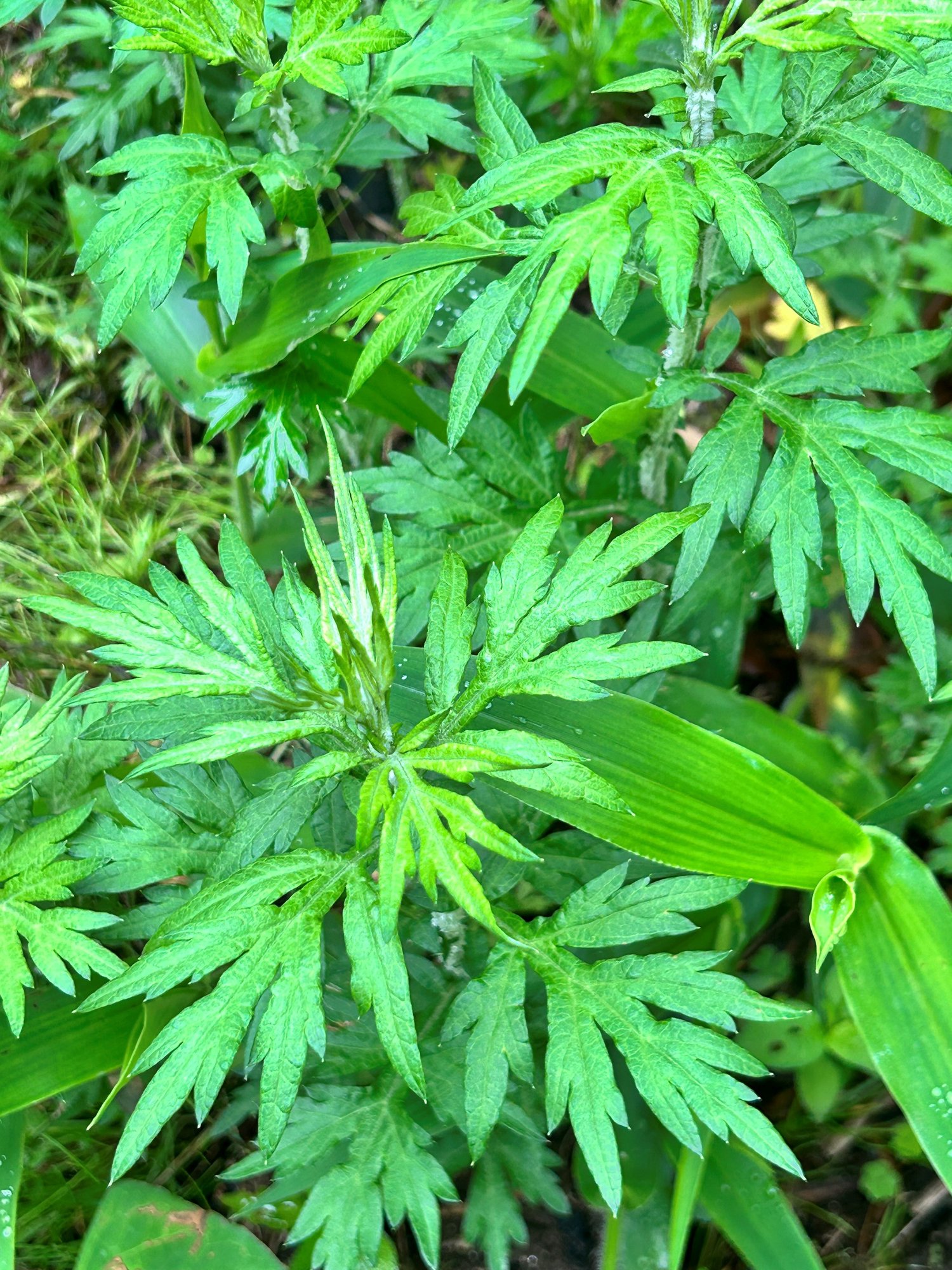
For centuries, herbalists, healers, and foragers have turned to mugwort for its unique aroma, traditional medicinal uses, and deep cultural significance. Often growing unnoticed along roadsides, fields, and forest edges, this resilient plant has earned a reputation as one of herbalism's most fascinating allies.
But what exactly is mugwort, and why has it remained a staple in traditional wellness practices around the world?
What Is Mugwort?
Mugwort is a perennial herb in the daisy family (Asteraceae). It is closely related to wormwood and has been used throughout Europe, Asia, and North America for hundreds of years.
Mugwort is easy to recognize by its:
- Dark green leaves
- Silvery-white leaf undersides
- Aromatic scent when crushed
- Reddish stems
- Tall, bushy growth habit
Traditionally, mugwort has been valued for digestive support, women's wellness, relaxation, and spiritual practices.
The Nutritional and Phytochemical Power of Mugwort
Like many medicinal herbs, mugwort contains a variety of beneficial plant compounds, including:
- Flavonoids
- Terpenoids
- Essential oils
- Coumarins
- Antioxidants
These naturally occurring compounds are believed to contribute to many of the herb's traditional uses.
1. Supports Healthy Digestion
One of mugwort's most well-known traditional uses is digestive support.
As a bitter herb, mugwort may help stimulate digestive secretions and encourage the body's natural digestive processes.
Traditionally, mugwort tea has been used to:
- Ease bloating
- Reduce gas
- Support appetite
- Promote digestive comfort after meals
Many herbalists consider bitter herbs an important but often overlooked part of digestive wellness.
2. Traditional Women's Wellness Herb
Mugwort has a long history of use in women's herbal traditions.
Historically, it has been used to:
- Support menstrual comfort
- Encourage healthy menstrual flow
- Ease occasional cramping
- Promote relaxation during the menstrual cycle
Because mugwort may stimulate the uterus, it should not be used during pregnancy without guidance from a qualified healthcare professional.
3. May Promote Relaxation and Restful Sleep
Many people enjoy mugwort as an evening tea because of its calming nature.
Traditionally, mugwort has been used to:
- Encourage relaxation
- Support healthy sleep patterns
- Ease occasional nervous tension
- Create a calming bedtime ritual
While research is still developing, many herbal enthusiasts continue to use mugwort as part of their nighttime wellness routine.
4. Famous for Vivid Dreams
Perhaps one of mugwort's most intriguing traditional uses is its connection to dreams.
For centuries, mugwort has been associated with:
- Dream enhancement
- Dream recall
- Lucid dreaming practices
- Spiritual reflection
Some people drink mugwort tea before bed or place dried mugwort near their sleeping area to support dream work and self-reflection.
While scientific evidence is limited, this remains one of the herb's most celebrated traditional uses.
5. Provides Antioxidant Support
Mugwort contains antioxidant compounds that help protect cells from oxidative stress.
Antioxidants play an important role in:
- Supporting cellular health
- Combating free radical damage
- Promoting overall wellness
While mugwort should not be viewed as a cure-all, its antioxidant content adds to its value as a traditional wellness herb.
6. Traditional Support for Circulation and Energy
In Traditional Chinese Medicine, mugwort is perhaps best known for its use in moxibustion.
Moxibustion involves burning dried mugwort near specific acupuncture points to promote circulation and support the body's natural balance.
This practice has been used for thousands of years and remains a respected component of traditional Eastern medicine.
How to Use Mugwort
Mugwort Tea
One of the most common methods.
Basic Tea Recipe
- 1 teaspoon dried mugwort
- 8 ounces hot water
Steep for 5–10 minutes and strain before drinking.
Because mugwort can be bitter, many people blend it with:
- Mint
- Chamomile
- Lemon balm
- Lavender
Herbal Sachets
Dried mugwort can be placed in:
- Dream pillows
- Sachets
- Meditation spaces
Smoke Cleansing Traditions
Some cultures have historically used dried mugwort in ceremonial and cleansing practices.
Safety Considerations
Mugwort is not appropriate for everyone.
Avoid mugwort if you:
- Are pregnant
- Have allergies to ragweed or related plants
- Have known sensitivity to Artemisia species
Possible side effects may include:
- Allergic reactions
- Digestive upset
- Skin irritation in sensitive individuals
As with any herb, moderation and proper identification are essential.
Foraging Tips
When harvesting wild mugwort:
✓ Confirm identification using multiple characteristics
✓ Look for the distinctive silvery-white underside of the leaves
✓ Harvest from clean areas away from roadsides and chemical exposure
✓ Gather young leaves and upper growth for the best quality
✓ Dry thoroughly before storage
Final Thoughts
Mugwort is a remarkable example of how traditional herbal knowledge continues to inspire modern wellness practices. Whether appreciated for digestive support, relaxation, dream work, or its rich cultural history, mugwort offers a fascinating glimpse into the relationship between people and plants.
As with all herbs, the goal is not to view mugwort as a miracle cure, but rather as one potential tool within a holistic approach to health and well-being.
Holistify Me Reflection
"Nature often places powerful teachers in ordinary places. Mugwort reminds us that wellness is not always found in the rare or exotic—it can often be growing quietly along the path we walk every day." 🌿✨
Comments ()