

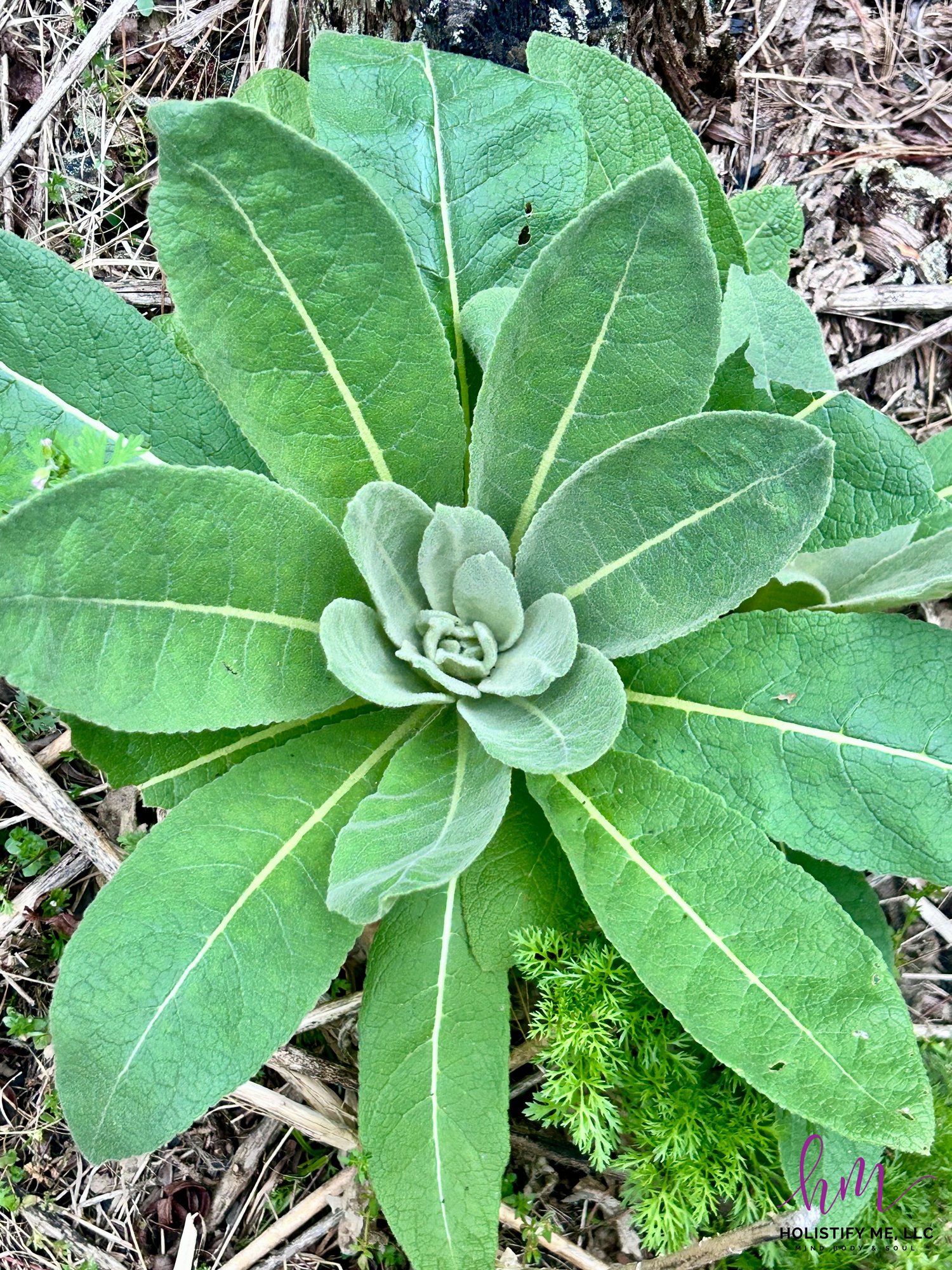
There’s a reason mullein (Verbascum thapsus) has remained a staple in traditional herbal medicine for generations. This tall, soft-leafed plant — often found growing along roadsides, fields, and disturbed soil — has long been valued as a powerful respiratory herb, soothing healer, and protective plant ally.
With its velvety leaves and towering yellow flower stalk, mullein almost looks like a plant designed to comfort the body. And in many ways, that’s exactly what it does.
What Is Mullein?
Mullein is a biennial herb traditionally used in herbalism for lung support, inflammation, skin healing, and ear health. In its first year, it grows a low rosette of soft gray-green leaves. In its second year, it sends up a tall flowering stalk that can reach over 6 feet high.
Historically, mullein was used by ancient Greek physicians, European folk herbalists, and Indigenous communities for respiratory complaints and wound care.
Today, it remains one of the most commonly used herbs for supporting the lungs naturally.
Medicinal Benefits of Mullein
1. Supports Respiratory Health
Mullein is most famous for its relationship with the lungs.
It acts as both:
- An expectorant — helping loosen and expel mucus
- A demulcent — soothing irritated tissues and dry inflammation
This combination makes it especially useful for:
- Persistent coughs
- Bronchitis
- Chest congestion
- Dry throat irritation
- Seasonal respiratory irritation
- Smokers seeking lung support
Many herbalists use mullein tea to help “open the lungs” and encourage easier breathing.
Why It Works
Mullein contains:
- Saponins (help break up mucus)
- Mucilage (soothes tissues)
- Flavonoids (anti-inflammatory antioxidants)
The plant’s energetics are often considered:
- Cooling
- Moistening
- Relaxing to irritated tissues
2. May Help Calm Inflammation
Inflammation is often at the root of chronic discomfort and illness.
Mullein contains anti-inflammatory plant compounds that may help soothe:
- Inflamed respiratory passages
- Irritated skin
- Sore muscles
- Swollen tissues
Its gentle nature makes it especially valued for people who need support without overly stimulating the body.
3. Traditional Ear Infection Remedy
One of the most well-known folk uses for mullein flowers is in herbal ear oil.
Mullein flower oil has traditionally been used to:
- Ease earaches
- Soothe irritation
- Support recovery from mild ear infections
It’s often infused together with:
- Garlic
- Olive oil
- Calendula
Important Note
Never place oils in the ear if:
- The eardrum may be ruptured
- There is severe infection
- There is unexplained hearing loss
Persistent ear pain should always be evaluated medically.
4. Skin & Wound Support
Historically, mullein leaves were used externally as poultices for:
- Burns
- Cuts
- Bruises
- Rashes
- Dry irritated skin
The soft leaves contain soothing compounds that may help calm irritation while supporting the skin’s natural repair process.
Some traditional herbalists even tucked warm mullein leaves into shoes to ease foot discomfort during long walks.
5. Antimicrobial & Protective Compounds
Research suggests mullein contains compounds with:
- Mild antibacterial activity
- Antiviral potential
- Antioxidant properties
While it is not a replacement for medical treatment, these plant compounds may contribute to its long history in traditional wellness practices.
How Mullein Is Commonly Used
Mullein Tea
The most common preparation.
Used for:
- Lung support
- Congestion
- Dry coughs
- Seasonal respiratory discomfort
Important Tip
Always strain mullein tea carefully.
The tiny hairs on the leaves can irritate the throat if not filtered well. Many herbalists strain it through:
- Fine mesh
- Cheesecloth
- Coffee filters
Mullein Smoke (Traditional Use)
Historically, some herbal traditions used dried mullein leaf in smoking blends for lung clearing rituals.
This may sound contradictory, but many traditional systems believed mullein smoke could help loosen heavy mucus.
However, modern understanding recognizes that inhaling smoke of any kind can irritate lung tissue. Tea, tinctures, or steam are generally gentler options.
Herbal Steam
Mullein can also be added to hot water for herbal steam inhalation.
This may help:
- Open congested sinuses
- Ease dry respiratory irritation
- Support easier breathing
Spiritual & Folk Symbolism of Mullein
In traditional folk practices, mullein was often associated with:
- Protection
- Courage
- Illumination
- Boundary-setting
Historically, dried mullein stalks were dipped in tallow and used as torches.
Energetically, many herbalists view mullein as a plant that helps people:
- Stand tall
- Breathe deeper
- Release heaviness
- Create internal steadiness
Safety & Precautions
Mullein is generally considered a gentle herb, but there are still important precautions:
Use Caution If:
- You are pregnant or breastfeeding
- You have severe respiratory disease
- You are allergic to plants in the Scrophulariaceae family
Avoid:
- Drinking unstrained tea
- Using contaminated roadside plants exposed to pollution or pesticides
Always positively identify wild plants before harvesting.
How to Harvest Mullein
Leaves
Best harvested:
- During the first year
- Before flowering
- On dry sunny days
Flowers
Best collected:
- Freshly opened
- During warm dry weather
Flowers are commonly used for:
- Ear oil
- Infusions
- Herbal extracts
Final Thoughts
Mullein is one of those plants that reminds us herbal medicine does not always need to be aggressive to be effective.
Soft.
Steady.
Supportive.
Its ability to soothe irritated lungs, calm inflammation, and gently support healing has earned it a respected place in traditional herbalism across generations.
Whether enjoyed as a tea, steam, infused oil, or part of a deeper connection to nature, mullein offers a beautiful example of how plants can support the body with both strength and gentleness.
Holistify Me Reflection
Sometimes healing begins with something simple:
A warm cup of tea.
A deeper breath.
A slower moment.
Mullein teaches the wisdom of softness — that calming the body can be just as powerful as fighting symptoms.
Comments ()