

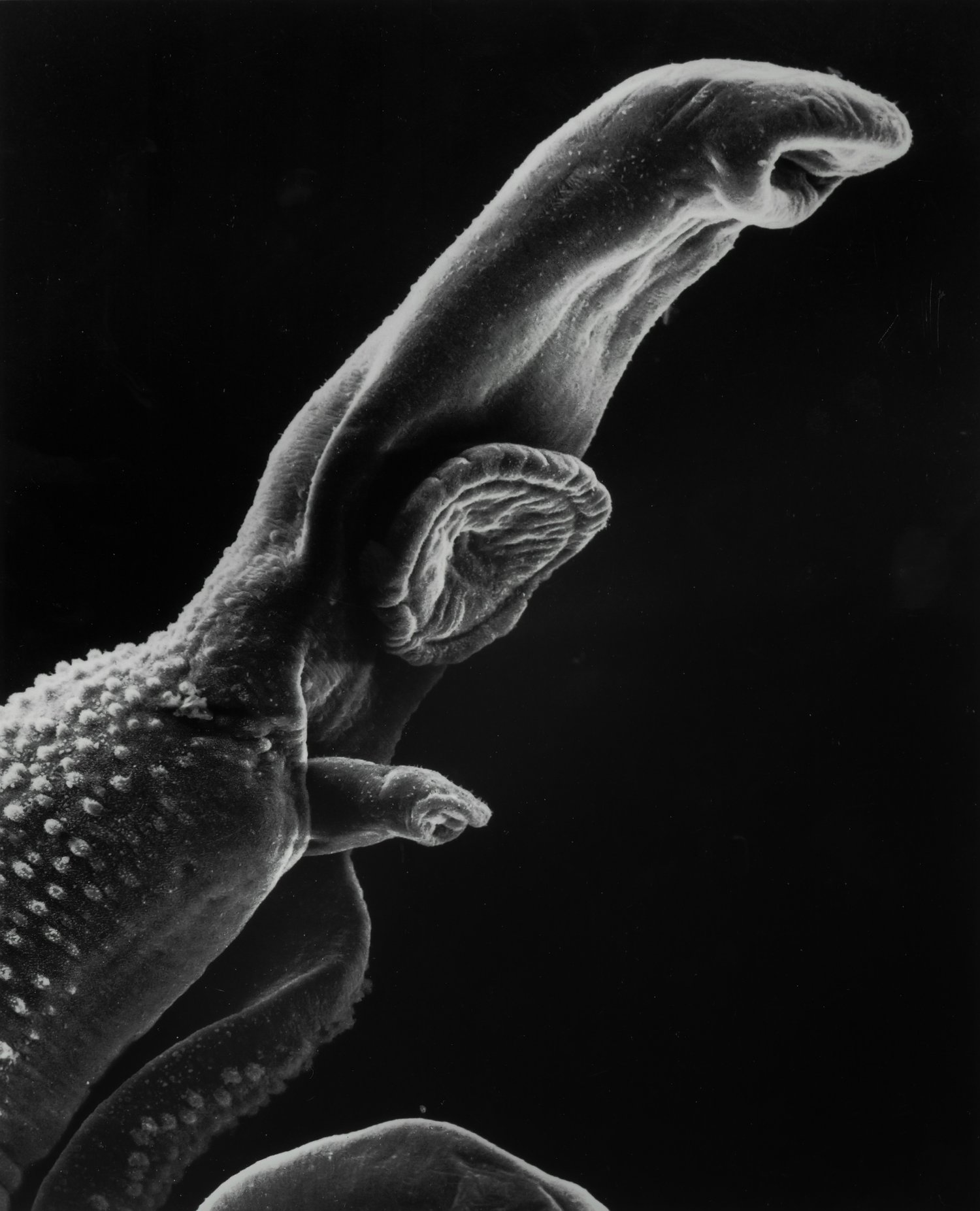
For decades, many Americans have associated parasites with tropical climates, international travel, contaminated water in developing countries, or extreme poverty. Mention the possibility of a parasitic infection in the United States and you may hear, “That isn't really a problem here.”
But the data tell a much more complicated story.
The Centers for Disease Control and Prevention (CDC) has acknowledged that parasitic infections affect millions of people in the United States and that some of these infections have historically been overlooked, underdiagnosed, and poorly understood.
So why don't we hear more about them?
And just how common are parasites in America?
Parasites Aren't Just a "Third-World" Problem
One of the biggest misconceptions surrounding parasites is that Americans rarely encounter them unless they travel internationally.
The CDC itself has addressed this belief.
In its information on Neglected Parasitic Infections in the United States, the agency explained that although people commonly associate parasitic disease with poor or developing countries, parasitic infections do occur within the United States—and some affect millions of people.
Even more importantly, the CDC acknowledged that these infections may remain undetected and untreated because people don't realize they're infected, access to appropriate care may be limited, and some healthcare providers aren't sufficiently familiar with certain parasitic diseases to recognize them.
That's very different from the popular perception that parasites are virtually nonexistent in developed countries.
More Than 40 Million Americans and One Parasite Alone
Perhaps the most eye-opening example is Toxoplasma gondii, the microscopic parasite responsible for toxoplasmosis.
According to current CDC information:
More than 40 million people in the United States are infected with Toxoplasma.
The CDC also estimates that approximately 11% of the U.S. population age six and older has had a Toxoplasma infection.
And here's part of what makes parasitic infections so easy to overlook: most healthy people infected with Toxoplasma experience no symptoms at all.
The organism can also remain within the human body for long periods—potentially for life.
Toxoplasma exposure can occur through contaminated or undercooked food, contaminated produce, environmental exposure to infected cat feces, and certain other routes.
For most healthy people it causes little or no illness, but toxoplasmosis can become particularly serious during pregnancy or in people with significantly weakened immune systems.
More Than 1 Million Americans Get Sick From Giardia Every Year
Then there's Giardia, a microscopic parasite that lives in the intestines.
Giardia can spread through contaminated water, food, surfaces and objects, as well as from person to person.
And this isn't some exotic infection Americans encounter only overseas.
The CDC says Giardia exists in every region of the United States and that more than one million people in the U.S. become sick from Giardia each year.
In fact, CDC describes Giardia as causing more illness in America than any other parasite that lives in the gut.
That alone should challenge the idea that intestinal parasites simply aren't an American concern.
Some Parasitic Infections Can Be Completely Silent
Another reason parasites are frequently misunderstood is that infection doesn't necessarily equal obvious illness.
Some people develop diarrhea, abdominal discomfort, fever, fatigue or other noticeable symptoms. Others experience very mild symptoms. And some experience none at all. That matters enormously when estimating prevalence.
You can't count infections that are never tested for or diagnosed. CDC has specifically acknowledged that the United States has had a limited understanding of how many people are infected with certain neglected parasitic infections and who is most at risk.
In other words, our surveillance isn't perfect.
So Did Public Health Authorities "Lie" About Parasites?
This deserves some nuance.
It's fair to criticize the widespread message that parasites are primarily a developing-world problem. The CDC's own publications acknowledge that parasitic infections in America have been neglected, that clinicians may be unfamiliar with them, and that infections may consequently go undiagnosed.
But that's different from evidence that the CDC deliberately concealed the truth.
A more evidence-based conclusion is that parasitic disease has historically been underrecognized, inadequately monitored and poorly communicated in the United States.
In fact, CDC researchers have identified several characteristics shared by neglected parasitic infections in America, including surprisingly large populations being infected or at risk, missed diagnoses and underreporting, lack of clinician awareness, and limitations in optimal diagnostic testing.
The irony is that the CDC itself has been trying to draw attention to this problem for years.
The phrase it chose is telling:
Neglected Parasitic Infections.
But "Parasites" Doesn't Automatically Mean Worms
This distinction is extremely important—especially in the wellness community.
When people hear parasite, they often immediately picture intestinal worms.
But parasites are a huge category of organisms.
Toxoplasma is a parasite.
Giardia is a parasite.
Trichomonas is a parasite.
Tapeworms are parasites.
Pinworms are parasites.
They are not remotely the same infection.
Toxoplasma, Giardia and Trichomonas, for example, are microscopic single-celled organisms rather than intestinal worms.
So when we say millions of Americans have parasites, that does not mean millions of Americans are unknowingly walking around with giant worms in their intestines.
That's an important distinction because social media frequently takes legitimate parasite statistics and uses them to support claims the statistics don't actually prove.
Does Everyone Need a Parasite Cleanse?
No.
And this is another area where holistic wellness needs to remain grounded in evidence.
The fact that parasitic infections are more common than many people realize does not mean every person should routinely perform aggressive parasite cleanses.
Different parasites require different diagnostic methods and treatments.
A substance capable of affecting one parasite isn't automatically effective against another. And experiencing bloating, constipation, fatigue, cravings, acne or digestive discomfort doesn't automatically prove that someone has parasites.
Those symptoms can have numerous causes.
Natural medicine can absolutely have a place in supporting overall wellness, digestive health and traditional herbal practices—but suspicion of an actual parasitic infection warrants appropriate testing and medical evaluation.
What We Should Be Talking About Instead
Rather than swinging between the extremes of:
"Parasites don't exist in America."
and
"Everyone has parasites and needs a cleanse."
there's a much more useful middle ground.
Parasitic infections do exist in America.
Some affect millions of people.
Some infections produce few or no symptoms.
Certain parasitic diseases have historically been underdiagnosed and understudied.
And public-health surveillance doesn't provide one definitive number representing every American currently infected with any parasite.
All of those things can be true simultaneously.
Reducing Your Exposure
Basic prevention can make a meaningful difference.
Wash produce thoroughly. Practice good hand hygiene, particularly after gardening, handling soil, cleaning up animal waste or using the bathroom. Drink safe water and be especially cautious with untreated water while hiking or camping. Follow appropriate food-safety practices. Avoid swallowing recreational water from lakes, rivers and pools. Keep living areas clean when infections such as pinworm are suspected, and seek appropriate testing when exposure or persistent symptoms justify it.
For those of us who spend considerable time outdoors, forage, garden or interact closely with animals, parasite awareness doesn't need to become parasite fear.
It simply means understanding that humans are part of an ecosystem—and microorganisms and parasites exist within that ecosystem too.
The Bigger Lesson: Awareness Without Fear
Perhaps the most important takeaway isn't that we should suddenly become terrified of parasites.
It's that we should stop pretending they only happen somewhere else.
The CDC has explicitly stated that parasitic infections occur in the United States, can affect millions of people, and in some circumstances remain undetected and untreated.
More than 40 million Americans are infected with Toxoplasma alone.
More than one million Americans become sick from Giardia every year.
Those aren't fringe wellness statistics.
They're CDC statistics.
The responsible conversation about parasites shouldn't be built around fear, sensationalism or the claim that every unexplained symptom means you need a cleanse. But it shouldn't be built around dismissal either.
Parasites aren't exclusively a "third-world problem." They are part of human health here in America, too—and education, prevention, appropriate testing and informed healthcare are far more useful than pretending otherwise.
Educational Disclaimer: This information is intended for educational purposes only and is not intended to diagnose, treat, cure or prevent any disease. If you believe you may have a parasitic infection, consult a qualified healthcare professional for appropriate testing and treatment.
Comments ()