

Preparedness, self-reliance, and the forgotten art of knowing how to survive.
By Holistify Me | Holistic Living & Self-Reliance
Are We Too Dependent on Modern Convenience?
Imagine waking up tomorrow without electricity, running water, internet access, or the ability to purchase food from your local grocery store. How long could you comfortably manage? A few hours? A couple of days? An entire week?
Modern technology has made everyday life remarkably convenient, but it has also created dependencies that many of us rarely consider. We rely on electricity to preserve our food, municipal systems to deliver clean drinking water, GPS to navigate unfamiliar places, and grocery stores to maintain our food supply. When these systems become temporarily unavailable, even the simplest daily activities can become challenging. This is where survival skills become invaluable.
Survival isn't simply about enduring extreme wilderness conditions. It's about developing the knowledge, resourcefulness, and confidence to meet your basic needs when familiar systems are no longer available.
Whether you're caught in a severe storm, experiencing an extended power outage, stranded during a hiking trip, or preparing for unexpected disruptions, learning foundational survival skills can make an extraordinary difference. The good news? You don't have to live off-grid or become a wilderness expert to begin.
Survival starts with education, preparation, and practice.
1. Understand the Fundamental Priorities of Survival
Before learning to build shelters or identify wild edible plants, it's essential to understand what the human body needs to stay alive. One commonly taught survival guideline is the Rule of Threes.
It suggests that, under certain extreme circumstances, a person may survive approximately:
- 3 minutes without breathable air: Oxygen deprivation can quickly become life-threatening.
- 3 hours without adequate shelter in severe conditions: Extreme cold, heat, or exposure can become dangerous within a short period.
- 3 days without water: Severe dehydration can become life-threatening, particularly during heat or physical exertion.
- 3 weeks without food: Although survival varies considerably, the body generally tolerates food deprivation longer than a lack of water.
These are rough teaching guidelines, not reliable countdowns. Actual survival times depend on environmental conditions, health, exertion, and many other factors. The larger lesson is understanding priorities.
If you're stranded outdoors in freezing temperatures, searching for food should not take precedence over protecting yourself from hypothermia. Similarly, if you're in extreme heat without drinking water, locating a safe water source may be more urgent than building an elaborate shelter.
Survival is about identifying the greatest immediate threat and addressing it first.
2. Water: Your Most Essential Survival Resource
Water supports nearly every major physiological process in the human body, including circulation, digestion, temperature regulation, nutrient transport, and waste removal.
Without adequate hydration, physical performance, concentration, and decision-making can deteriorate. Unfortunately, one of the most dangerous survival misconceptions is that clear, flowing water is automatically safe to drink. Even beautiful mountain streams can contain harmful microorganisms.
How to prepare for water emergencies
At home, maintain an emergency supply of drinking water. A useful starting point is at least one gallon per person per day for drinking and basic sanitation, with a minimum three-day supply and preferably enough for two weeks when practical. In the wilderness, learn to recognize potential water sources such as streams, springs, and collected rainwater, while understanding that their appearance does not establish their safety.
Common treatment methods include:
Boiling: Bringing clear water to a rolling boil for one minute, or three minutes above 6,500 feet, kills common disease-causing microorganisms.
Filtration: Properly rated portable water filters can remove many pathogens, but not every filter removes viruses or chemical contaminants.
Chemical disinfection: Approved water treatment products can help make microbiologically contaminated water safer when used according to their instructions.
Water contaminated with fuel, pesticides, heavy metals, or other hazardous chemicals may remain unsafe after boiling or ordinary wilderness filtration.
Survival lesson: Knowing where to find water is only half the skill. Knowing how to make it safe is equally important.
3. Shelter: Protection From the Elements
Shelter is about much more than having a roof over your head. Its primary purpose is to help maintain a safe body temperature while protecting you from wind, rain, snow, excessive sunlight, and environmental hazards. Prolonged exposure can lead to hypothermia or heat-related illness, even when conditions initially seem manageable.
Basic shelter-building knowledge
Depending on your environment and available materials, emergency shelter options may include:
- A tarp shelter that provides protection from rain and wind.
- A lean-to constructed with suitable branches and a waterproof covering.
- A debris shelter that uses dry natural materials for insulation.
- An emergency bivy or reflective blanket designed to reduce heat loss.
Location is just as important as construction. Avoid dry creek beds that may flood unexpectedly, unstable trees, exposed ridgelines during thunderstorms, and areas with evidence of rockfall. Whenever possible, choose a location with stable ground, natural wind protection, and access to safe evacuation routes.
In a genuine emergency, using an existing safe structure or carried emergency shelter is generally preferable to spending valuable energy building a primitive one.
Survival lesson: An effective shelter doesn't have to be complicated. It needs to protect you from the conditions that pose the greatest danger.
4. Fire: An Ancient Skill With Modern Importance
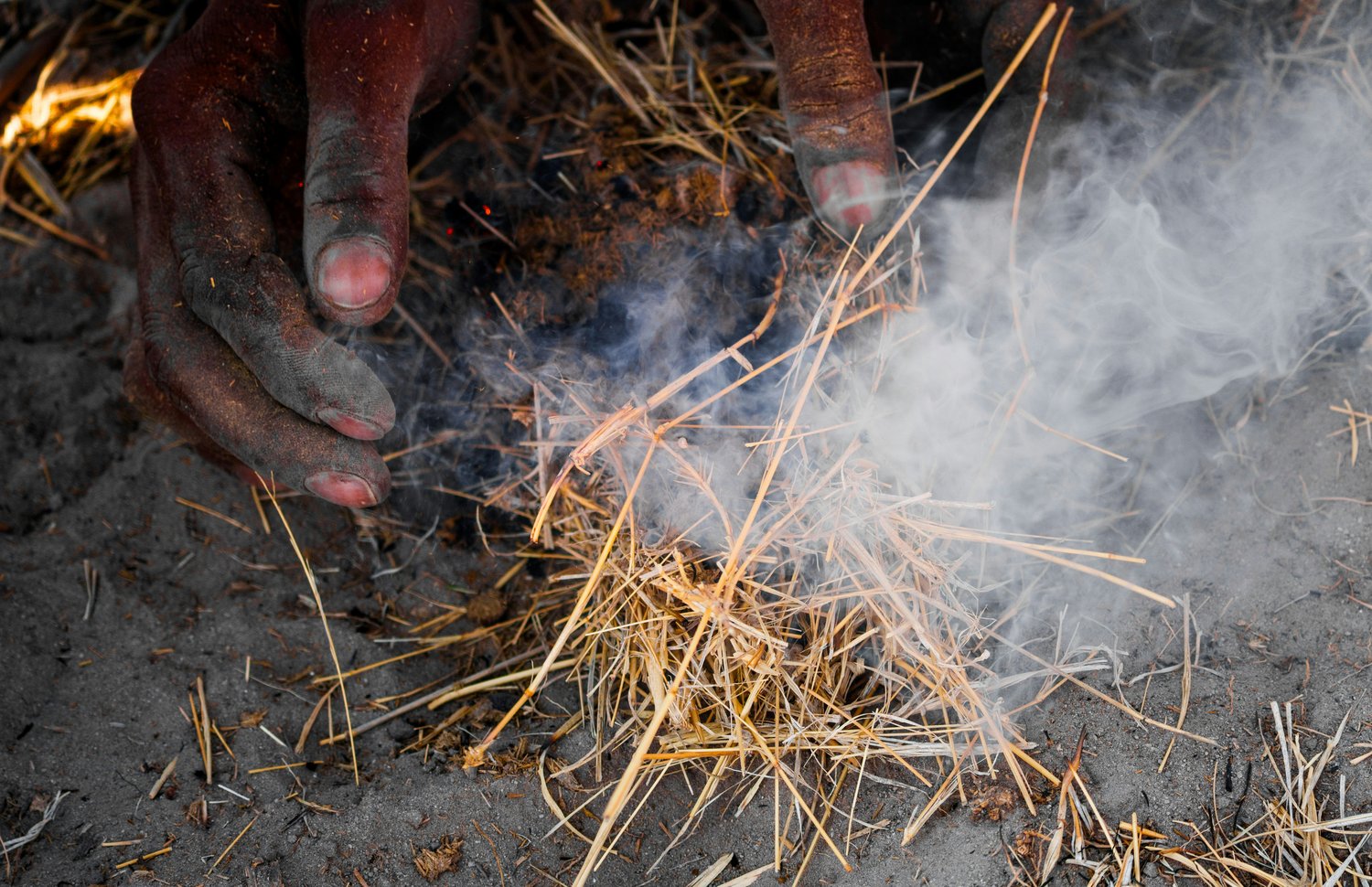
For thousands of years, humans have relied on fire for warmth, cooking, light, and protection from cold environments. Learning how to safely create and manage fire is one of the most recognizable survival skills. However, making a fire requires more than simply producing a flame.
You must understand three essential components:
Tinder: Fine, dry material that ignites easily.
Kindling: Small twigs or prepared wood that help a small flame grow.
Fuel: Larger pieces of wood that sustain the fire.
Beginners should first become proficient with dependable ignition methods, such as a lighter or waterproof matches, before experimenting with friction-fire techniques. Primitive methods, including bow drills, are fascinating ancestral skills, but they require practice, suitable materials, and favorable conditions. Never assume you'll be able to produce fire using friction during a real emergency without extensive prior experience. Fire also introduces serious risks. Wildfires, burns, carbon monoxide poisoning, and uncontrolled flames can turn a difficult situation into a disaster. Follow local fire restrictions, never build fires inside enclosed shelters, and use approved equipment for indoor emergency heating.
Survival lesson: The ability to make fire is valuable, but knowing when and where not to use it is equally important.
5. Food: Understanding Survival Nutrition
When people imagine wilderness survival, they often picture hunting, fishing, or searching for wild edible plants. While food procurement is an important long-term survival skill, it generally comes after immediate safety, shelter, and hydration needs. In most short-term emergencies, conserving energy and using food you've already packed or stored is safer than attempting to forage.
Building a practical emergency food supply
Consider keeping shelf-stable foods that require little or no preparation, including:
- Nuts, seeds, and nut butters.
- Canned beans, lentils, and vegetables.
- Dried fruits and whole-grain crackers.
- Shelf-stable plant-based milk.
- Protein bars and other nutrient-dense snacks.
- Ready-to-eat meals and foods suitable for your dietary needs.
Choose foods you already enjoy, rotate them regularly, and account for the water and fuel required to prepare them.
What about wild edible plants?
Foraging can become a valuable survival and self-reliance skill when developed through careful study and supervised practice. Wild greens, edible fruits, nuts, roots, and mushrooms have historically contributed to human diets.
However, many edible species have poisonous look-alikes, and some plants require specialized preparation to remove naturally occurring toxins. Never consume a wild plant or mushroom based solely on a photograph, an identification app, or a general description.
Survival lesson: The best emergency food is food you already know is safe, nutritious, and available.
6. Navigation: Finding Your Way Without Technology
Smartphones and GPS devices have transformed how we navigate the world. But what happens when your phone dies, loses signal, or becomes damaged?
Understanding basic navigation can prevent a minor wrong turn from becoming a serious emergency.
Essential navigation skills
Map reading: Learn how to interpret topographic maps, trail markings, contour lines, and geographical landmarks.
Compass navigation: Understand cardinal directions, orienting a map, and following a bearing.
Environmental awareness: Pay attention to trail intersections, distinctive terrain, water crossings, and changes in elevation.
Route planning: Before heading into unfamiliar territory, identify your intended route, expected return time, and potential exit points. If you become lost, avoid wandering aimlessly.
A commonly taught approach is STOP:
- Stop: Avoid making impulsive decisions.
- Think: Evaluate what happened and what resources you have.
- Observe: Examine your surroundings, map, weather, and available landmarks.
- Plan: Decide whether remaining in place or moving toward a known safe location offers the better option.
If you can contact emergency services, do so early. Staying in a safe, identifiable location often makes rescue easier than continuing to travel without a reliable route.
Survival lesson: Navigation begins long before you become lost. It starts with preparation and awareness.
7. First Aid: Knowing How to Respond When Help Is Delayed
Medical emergencies can occur anywhere, and professional assistance may not always be immediately accessible. Basic first aid knowledge can help you stabilize a situation while waiting for trained responders.
Everyone should consider learning:
- CPR and how to use an automated external defibrillator (AED).
- How to control severe bleeding.
- How to recognize shock.
- Basic wound care and infection prevention.
- How to identify heat exhaustion, heatstroke, and hypothermia.
- How to recognize dehydration and respond appropriately.
- What to do when someone experiences a suspected fracture or sprain.
A well-stocked first aid kit is useful, but supplies alone cannot replace practical training. Consider completing a recognized first aid and CPR course, followed by wilderness first aid training if you regularly hike or spend time in remote areas.
Where does herbal medicine fit?
Traditional herbal knowledge can complement a broader understanding of wellness and self-reliance. Plants such as calendula and plantain have histories of traditional topical use, although the quality of clinical evidence varies. Herbal preparations should not replace proven emergency treatments, sterile wound care, prescribed medications, or professional medical attention.
Survival lesson: Your knowledge of emergency care may be more valuable than any single piece of equipment.
8. Prepare for Emergencies at Home
Survival preparedness isn't limited to forests and mountains. In fact, many people are more likely to experience an extended power outage, water service interruption, severe storm, or temporary supply shortage than a wilderness survival emergency. Preparing your home is one of the most practical places to begin.
Your basic home preparedness checklist
- Store an emergency drinking water supply.
- Maintain several days of shelf-stable food.
- Keep flashlights, batteries, and charged power banks.
- Have a battery-powered or hand-crank emergency radio.
- Maintain a first aid kit and necessary medications.
- Keep important documents protected and accessible.
- Store basic hygiene and sanitation supplies.
- Identify safe emergency heating and cooling options.
- Develop a household communication and evacuation plan.
- Keep a small emergency bag ready if evacuation becomes necessary.
For longer disruptions, consider how you would manage without refrigeration, running water, electronic payments, or cellular service.
If you live in an apartment, your emergency plan may differ from that of someone living on a rural homestead. Focus on solutions appropriate to your available space, building rules, and resources. Never use charcoal grills, generators, camping stoves, or other outdoor combustion equipment inside your home or garage because of the risk of deadly carbon monoxide exposure.
Survival lesson: Preparedness is not about expecting disaster. It's about reducing unnecessary vulnerability.
9. Survival Psychology: Your Mind Is One of Your Greatest Tools
Survival is not purely physical. Your ability to remain calm, regulate fear, think clearly, and make decisions under pressure can strongly influence how effectively you respond to an emergency. Fear is a natural protective response, but overwhelming stress can interfere with attention, judgment, and problem-solving.
Practicing useful skills before an emergency helps reduce uncertainty.
How to strengthen your survival mindset
Practice emotional regulation. Controlled breathing and grounding techniques can help you manage stress while assessing a situation.
Develop practical confidence. Familiarity with emergency equipment and survival procedures makes unfamiliar situations easier to navigate.
Practice problem-solving. Challenge yourself to accomplish ordinary tasks without relying entirely on technology.
Build physical resilience. Walking, hiking, strength training, and maintaining mobility can support your ability to handle demanding conditions.
Accept limitations. Good survival judgment includes recognizing when an activity is unsafe and when assistance is necessary.
There is an important distinction between confidence and recklessness. A skilled survivor does not take unnecessary risks simply to prove independence.
Survival lesson: Mental resilience is strengthened through preparation, practice, and sound decision-making.
10. Begin Developing Self-Reliance Before You Need It
One of the greatest mistakes people make is waiting until an emergency occurs before attempting to learn survival skills. Knowledge is most useful when it has been practiced. Fortunately, developing self-reliance doesn't require expensive equipment, remote wilderness expeditions, or drastic lifestyle changes.
Start small.
Learn how to purify drinking water. Practice reading a paper map. Assemble an emergency kit. Learn basic first aid. Try preparing meals without electricity using safe methods. As your confidence grows, explore more advanced skills such as wilderness shelter construction, traditional food preservation, natural cordage making, responsible foraging, and primitive fire-making.
A simple four-week survival learning challenge
Week 1 — Emergency Preparedness: Assemble a basic emergency kit, inventory your food and water supplies, and create an emergency communication plan.
Week 2 — Water and Shelter: Study water treatment methods and practice setting up a tarp or emergency shelter in a safe, permitted environment.
Week 3 — Navigation and First Aid: Practice using a compass and paper map, and enroll in a recognized first aid course.
Week 4 — Practical Self-Reliance: Prepare a shelf-stable meal, learn a basic repair skill, and practice a safe outdoor fire-building exercise where permitted.
The objective isn't perfection. It's progress. Every skill you develop expands your ability to respond thoughtfully when circumstances change.
The Holistic Connection: Survival Skills Are Life Skills
At Holistify Me, holistic wellness is about understanding how the different aspects of our lives contribute to our overall well-being. Nutrition nourishes the body. Physical activity develops strength and resilience. Mindfulness supports emotional regulation. Herbalism encourages a deeper understanding of plants and their traditional uses.
Survival education adds another important dimension: the ability to care for yourself and contribute to the well-being of others when ordinary resources become limited.
Learning to grow food, preserve seasonal harvests, identify local plants, navigate natural environments, and prepare for emergencies can also strengthen our relationship with the natural world.
These skills remind us that wellness isn't limited to what we consume or how we exercise. It also includes what we know, what we can create, and how effectively we adapt.
Self-reliance doesn't mean doing everything alone. Strong communities, shared knowledge, cooperation, and knowing when to seek help are equally important aspects of preparedness.
Final Thoughts: Preparedness Is Empowerment
We cannot predict every emergency, prevent every disruption, or control every circumstance. But we can take meaningful steps to become more prepared.
Survival skills offer something that modern convenience cannot always guarantee: practical knowledge that remains valuable even when familiar systems fail. You don't have to abandon modern living to appreciate ancestral wisdom. You simply have to recognize the importance of preserving useful skills and passing them forward. Start with one skill. Practice it until you understand it. Then build upon that foundation. Because the most valuable survival tool you can possess isn't necessarily a knife, fire starter, or emergency kit.
It's the knowledge to recognize what needs to be done—and the ability to do it safely. Preparedness is knowledge. Self-reliance is practice. Resilience is built one skill at a time.
Holistify Me — Nurturing Wellness, Naturally.
Continue Your Survival Skills Education
Be on the lookout for more topics in our Survival Skills & Self-Reliance series, coming soon:
- The Rule of Threes: Understanding Your Body's Survival Priorities
- How to Find and Purify Water in the Wilderness
- Fire-Making 101: Understanding Tinder, Kindling, and Fuel
- Foraging 101: Learning to Recognize Wild Edible Plants
- How to Navigate Without GPS or Cell Service
- Forgotten Skills: What Our Ancestors Knew About Survival
Educational Resources
For additional emergency preparedness and survival guidance, explore these established resources:
- Ready.gov: Emergency planning, disaster kits, and household preparedness.
- American Red Cross: First aid, CPR training, and emergency response.
- Centers for Disease Control and Prevention (CDC): Emergency drinking water safety and health precautions.
- National Park Service (NPS): Wilderness safety, hiking preparedness, and Leave No Trace practices.
Disclaimer: This article is intended for educational purposes and does not replace certified survival instruction, medical training, or guidance from emergency authorities. Practice potentially hazardous skills under qualified supervision and follow applicable safety regulations.
Comments ()