

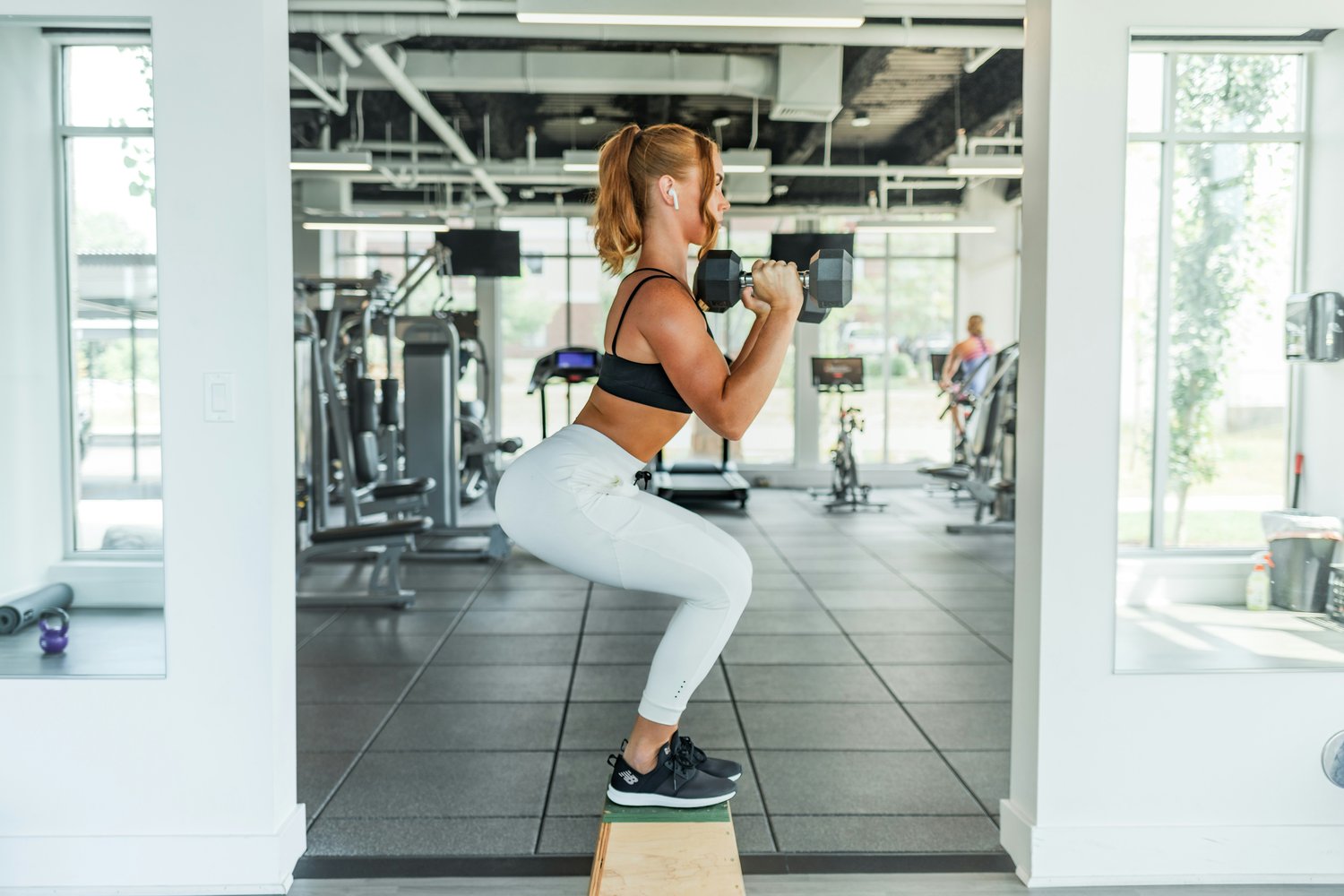
Build a stronger, more balanced body by mastering the five foundational movement patterns of strength training.
Have you ever walked into a gym, looked around at all the machines, dumbbells, and equipment, and wondered where to begin?
With hundreds of exercises to choose from, weight training can feel overwhelming, especially when you're just getting started. But here's the good news: You don't need to master hundreds of exercises to build a strong, healthy, capable body.
In fact, many effective strength-training programs can be organized around just five fundamental movement patterns: pushing, pulling, hinging, squatting, and carrying. These movements aren't simply gym exercises. They're natural movement patterns your body uses throughout everyday life.
Whether you're lifting groceries, climbing stairs, pushing open a heavy door, pulling something toward you, or picking an object up from the floor, you're already using these movement patterns. Understanding how to strengthen them can transform the way you approach fitness.
Let's explore the Big 5, why each one matters, and how you can incorporate them into your workouts to build functional strength that lasts.
What Are the Big 5 Movement Patterns?
The Big 5 are five fundamental categories of movement commonly used to organize resistance-training exercises.
They include:
- Push: Moving resistance away from your body.
- Pull: Bringing resistance toward your body.
- Hinge: Bending primarily through your hips.
- Squat: Bending through your hips, knees, and ankles to lower your body.
- Carry: Supporting and transporting resistance while maintaining stability.
Each pattern challenges different muscle groups and movement skills. Together, they provide a practical foundation for developing total-body strength, coordination, stability, and muscular endurance.
Although these five patterns cover much of what a beginner needs, they're not the only movements worth training. Rotational exercises, single-leg movements, core stability, and cardiovascular conditioning also contribute to a well-rounded fitness routine.
The goal is to create balance—not limit yourself to only five exercises.
1. PUSH: Building Upper-Body Strength and Stability
Think about the last time you pushed open a heavy door, lifted yourself off the floor, or placed something on a high shelf. Those activities require pushing strength. A push movement involves moving resistance away from your body using your chest, shoulders, and arms.
Muscles Involved
The primary muscles include:
- Pectoralis major (chest)
- Deltoids (shoulders)
- Triceps (back of the upper arms)
- Core stabilizers
Depending on the exercise, other muscles assist with maintaining balance and positioning.
Why Push Movements Matter
Developing pushing strength helps improve your ability to perform everyday tasks requiring upper-body force. Push exercises can also support shoulder strength, muscular development, and overall upper-body function.
Beginner-Friendly Push Exercises
Wall Push-Ups
Sets: 2–3
Repetitions: 10–15
Stand facing a wall with your hands slightly wider than shoulder-width apart. Bend your elbows to bring your chest toward the wall, then push yourself back to the starting position.
Dumbbell Chest Press
Sets: 2–3
Repetitions: 8–12
Lie on a bench with a dumbbell in each hand. Press the weights upward while keeping your wrists aligned and shoulders controlled. Slowly lower them toward your chest.
Seated Dumbbell Shoulder Press
Sets: 2–3
Repetitions: 8–12
Sit upright with dumbbells at shoulder height. Press the weights overhead through a comfortable range of motion, then lower them with control.
Common Push Mistakes
One common mistake is using excessive weight, causing the lower back to arch or the shoulders to move into uncomfortable positions.
Form Tip: Maintain a stable trunk, control the lowering phase, and choose a range of motion that feels comfortable for your shoulders.
2. PULL: Strengthening Your Back, Posture, and Grip
Pulling movements are essential for developing a strong upper body. Every time you pull open a door, lift something toward your torso, or climb using your arms, you're relying on pulling strength. These movements primarily challenge the muscles of your back and arms.
Muscles Involved
- Latissimus dorsi (large back muscles)
- Rhomboids (between the shoulder blades)
- Trapezius (upper and middle back)
- Biceps
- Rear deltoids
- Forearm and grip muscles
Why Pull Movements Matter
Strong pulling muscles help support shoulder function, upper-body strength, and your ability to maintain different postures. Pulling exercises are particularly valuable for people who spend long periods sitting at desks or working on computers.
Although strengthening your back won't automatically correct every postural concern, it can improve muscular endurance and your ability to comfortably maintain upright positions.
Beginner-Friendly Pull Exercises
Seated Cable Rows
Sets: 2–3
Repetitions: 10–12
Sit upright with your feet supported. Pull the handle toward your torso while keeping your shoulders controlled. Slowly extend your arms to return to the starting position.
Lat Pulldowns
Sets: 2–3
Repetitions: 8–12
Sit at a lat pulldown machine and grip the bar comfortably. Pull it toward your upper chest while keeping your torso relatively stable, then return slowly.
Dumbbell Bent-Over Rows
Sets: 2–3
Repetitions: 8–12
Hinge at your hips with a dumbbell in each hand. Pull the weights toward your torso while maintaining a stable spine, then lower them with control.
Common Pull Mistakes
Using momentum, excessively shrugging the shoulders, or leaning backward to move heavier weights can reduce the intended training stimulus.
Form Tip: Focus on moving your arms and shoulder blades in a coordinated manner rather than swinging your entire body to complete the repetition.
3. HINGE: Strengthening Your Glutes, Hamstrings, and Posterior Chain
The hip hinge is one of the most valuable movement patterns you can learn. It's also one of the most commonly misunderstood. A hinge occurs when you bend primarily at your hips while maintaining a relatively stable spine. Think about reaching down to pick up a grocery bag, bending forward to lift an object, or standing up after leaning over. These activities involve hip-hinging mechanics.
Muscles Involved
- Gluteus maximus
- Hamstrings
- Spinal erectors
- Deep core stabilizers
- Adductor magnus (a muscle of the inner thigh)
Why Hinge Movements Matter
The hinge strengthens your posterior chain—the muscles along the back of your body that contribute to hip extension, lifting, and movement. Developing this pattern can improve your ability to pick up objects, climb hills, and generate force through your hips. It also teaches you to distribute movement between your hips and spine appropriately rather than relying excessively on your lower back.
Beginner-Friendly Hinge Exercises
Bodyweight Hip Hinges
Sets: 2–3
Repetitions: 10–12
Stand with your feet approximately hip-width apart and knees slightly bent. Push your hips backward while keeping your spine comfortably aligned. Return to standing by extending your hips.
Dumbbell Romanian Deadlifts
Sets: 2–3
Repetitions: 8–12
Hold dumbbells in front of your thighs. Move your hips backward as the weights travel close to your legs. Lower only as far as you can comfortably control, then return to standing.
Glute Bridges
Sets: 2–3
Repetitions: 12–15
Lie on your back with your knees bent and feet flat on the floor. Press through your feet and lift your hips until your torso and thighs form a relatively straight line. Lower slowly.
Common Hinge Mistakes
A frequent mistake is turning the movement into a squat by bending the knees excessively instead of moving the hips backward. Another is forcing the weights lower than your available hip mobility allows.
Form Tip: Imagine closing a car door behind you using your hips. This simple cue encourages the backward hip movement needed for a proper hinge.
4. SQUAT: Building Lower-Body Strength for Everyday Life
Squatting is one of the most natural movement patterns your body performs. You squat when you sit in a chair, stand up from the toilet, lower yourself to pick something up, or move into a crouched position. Despite its simplicity, the squat requires coordination between several joints and muscle groups.
Muscles Involved
- Quadriceps
- Gluteus maximus
- Adductors
- Hamstrings, primarily assisting with stabilization
- Core stabilizers
- Calf muscles
Why Squat Movements Matter
Squats build strength through your hips, knees, and ankles while improving your ability to move between standing and lowered positions. They can also help improve balance, lower-body muscular endurance, and functional independence. As we age, maintaining the ability to sit down and stand up without assistance becomes increasingly important.
Beginner-Friendly Squat Exercises
Chair Squats
Sets: 2–3
Repetitions: 10–12
Stand in front of a sturdy chair. Lower your hips toward the seat with control, lightly touch or sit on the chair, then stand back up.
Goblet Squats
Sets: 2–3
Repetitions: 8–12
Hold a dumbbell close to your chest. Bend through your hips, knees, and ankles to lower into a squat. Keep your feet grounded and return to standing with control.
Bodyweight Squats
Sets: 2–3
Repetitions: 10–15
Stand with your feet at a comfortable width. Lower your body as though sitting into a chair, then press through your feet to return upright.
Common Squat Mistakes
Common mistakes include lifting the heels unintentionally, losing balance, or forcing the knees into an uncomfortable position. It's important to remember that everyone's squat will look slightly different depending on hip anatomy, limb proportions, and mobility.
Form Tip: Keep your weight balanced across your feet and allow your knees to travel naturally in the direction of your toes. Your knees can safely move past your toes when the movement is appropriately controlled and tolerated.
5. CARRY: Developing Real-World Strength and Core Stability
Carrying may be the most overlooked movement pattern in traditional gym routines. Yet it's one of the most practical. Think about carrying grocery bags, moving luggage, holding a child, or transporting heavy objects around your home. All of these activities require your body to stabilize itself while supporting external weight.
Muscles Involved
- Abdominal muscles and obliques
- Spinal stabilizers
- Trapezius
- Forearm and grip muscles
- Glutes
- Quadriceps and calves
Why Carry Movements Matter
Loaded carries challenge your body to maintain posture and balance while moving under resistance.
They help develop:
- Grip strength
- Core stability
- Postural endurance
- Coordination
- Functional carrying capacity
Unlike isolated abdominal exercises, carries challenge your core while your entire body works together.
Beginner-Friendly Carry Exercises
Farmer Carries
Sets: 2–3
Duration: 20–30 seconds
Hold a dumbbell in each hand and walk at a controlled pace. Keep your torso upright and avoid excessive leaning or shrugging.
Suitcase Carries
Sets: 2
Duration: 20–30 seconds per side
Hold one dumbbell at your side and walk slowly while resisting the urge to lean toward the weight.
Farmer Holds
Sets: 2–3
Duration: 20–30 seconds
Stand upright while holding dumbbells at your sides. Maintain a comfortable posture and breathe steadily.
Common Carry Mistakes
Using weights that are too heavy may cause excessive leaning, shoulder elevation, or loss of balance.
Form Tip: Start with manageable resistance and focus on maintaining a steady, controlled posture before increasing weight.
Why Training All Five Movement Patterns Matters
A well-rounded strength program challenges your body in different ways. If you only train pushing exercises, you may neglect important pulling muscles. If you focus exclusively on squats, you may miss opportunities to strengthen your posterior chain through hip hinges. And if you never practice loaded carries, you may overlook a valuable opportunity to develop grip strength and trunk stability.
Training all five movement patterns helps create a more balanced approach to muscular development. It also makes workout planning simpler.
Rather than asking, "Which random exercises should I do today?" you can ask:
"Which movement patterns am I training, and which ones might I be neglecting?"
That shift in thinking can make your workouts more purposeful and effective.
A Simple Big 5 Full-Body Beginner Workout
Ready to put these movement patterns into practice?
Here's a straightforward workout you can perform two or three times per week on nonconsecutive days.
1. Goblet Squats — Squat Pattern
Sets: 2–3
Repetitions: 8–12
Strengthens your quadriceps, glutes, and core while improving lower-body coordination.
2. Dumbbell Romanian Deadlifts — Hinge Pattern
Sets: 2–3
Repetitions: 8–12
Targets your glutes and hamstrings while reinforcing proper hip-hinge mechanics.
3. Incline Push-Ups — Push Pattern
Sets: 2
Repetitions: 8–12
Develops chest, shoulder, and triceps strength while challenging trunk stability.
4. Seated Cable Rows — Pull Pattern
Sets: 2–3
Repetitions: 10–12
Strengthens your back and arms while improving upper-body pulling strength.
5. Farmer Carries — Carry Pattern
Sets: 2
Duration: 20–30 seconds
Develops grip strength, core stability, and functional endurance.
Beginner Workout Guidelines
Begin with approximately five minutes of light movement followed by a few warm-up repetitions of your first exercises. Choose resistance that feels moderately challenging while allowing you to maintain good technique.
Rest approximately 60–120 seconds between sets, or longer when needed.
As your strength improves, gradually increase repetitions or resistance. Remember, progressive overload works best when paired with proper form and adequate recovery.
How Often Should You Train the Big 5?
For most beginners, performing full-body resistance training two or three times per week is an excellent starting point. This provides regular opportunities to practice movement patterns while allowing time for muscular recovery.
As you become more experienced, you may choose to organize your training into upper-body and lower-body sessions or more specialized workout splits. However, the fundamentals remain the same.
Your training program should challenge your muscles consistently, provide opportunities for progression, and allow sufficient recovery. You don't need to train every movement pattern every day. You simply need to incorporate them regularly throughout your routine.
Don't Forget Mobility, Balance, and Recovery
Although the Big 5 provide an excellent foundation for strength training, they're only one part of a complete fitness routine. Your body also benefits from mobility exercises, balance training, cardiovascular activity, and adequate recovery.
For example, limited ankle mobility may affect your squat technique, while reduced hip mobility may make hinging uncomfortable.
Likewise, poor sleep or insufficient nutrition can interfere with your ability to recover and progress. That's why a holistic fitness approach considers the entire body rather than focusing exclusively on individual muscles.
Strength, mobility, nutrition, recovery, and consistency work together.
Final Thoughts: Master the Movements, Build the Strength
You don't need a complicated workout routine to develop a strong, capable body. Sometimes, the most effective approach is also the simplest. By learning to push, pull, hinge, squat, and carry with proper technique, you're building a foundation that supports nearly every physical activity you perform. These movements help you become stronger in the gym, but their benefits extend far beyond it. They prepare you to climb stairs, carry groceries, lift objects, enjoy outdoor adventures, and move confidently throughout life.
And that's what functional strength is really about.
Don't just train to lift weights. Train to move through life with strength, stability, and confidence.
Build Strength with Purpose — The Holistify Me Approach
At Holistify Me, I believe fitness should enhance your life, not overwhelm it. You don't need endless workouts, complicated routines, or unrealistic expectations to become stronger. What you need is an intentional approach that combines proper movement mechanics, progressive strength training, mobility, balanced nutrition, and recovery. Whether you're just beginning your fitness journey or looking to improve the way you train, understanding the Big 5 movement patterns is an excellent place to start.
Explore more educational fitness and holistic wellness resources at Holistify Me, LLC - Payhip and discover how small, consistent improvements can help you build strength that lasts.
Because true fitness isn't just about how much you can lift.
It's about how well your body supports the life you want to live.
— Crystal
Holistify Me
Comments ()