

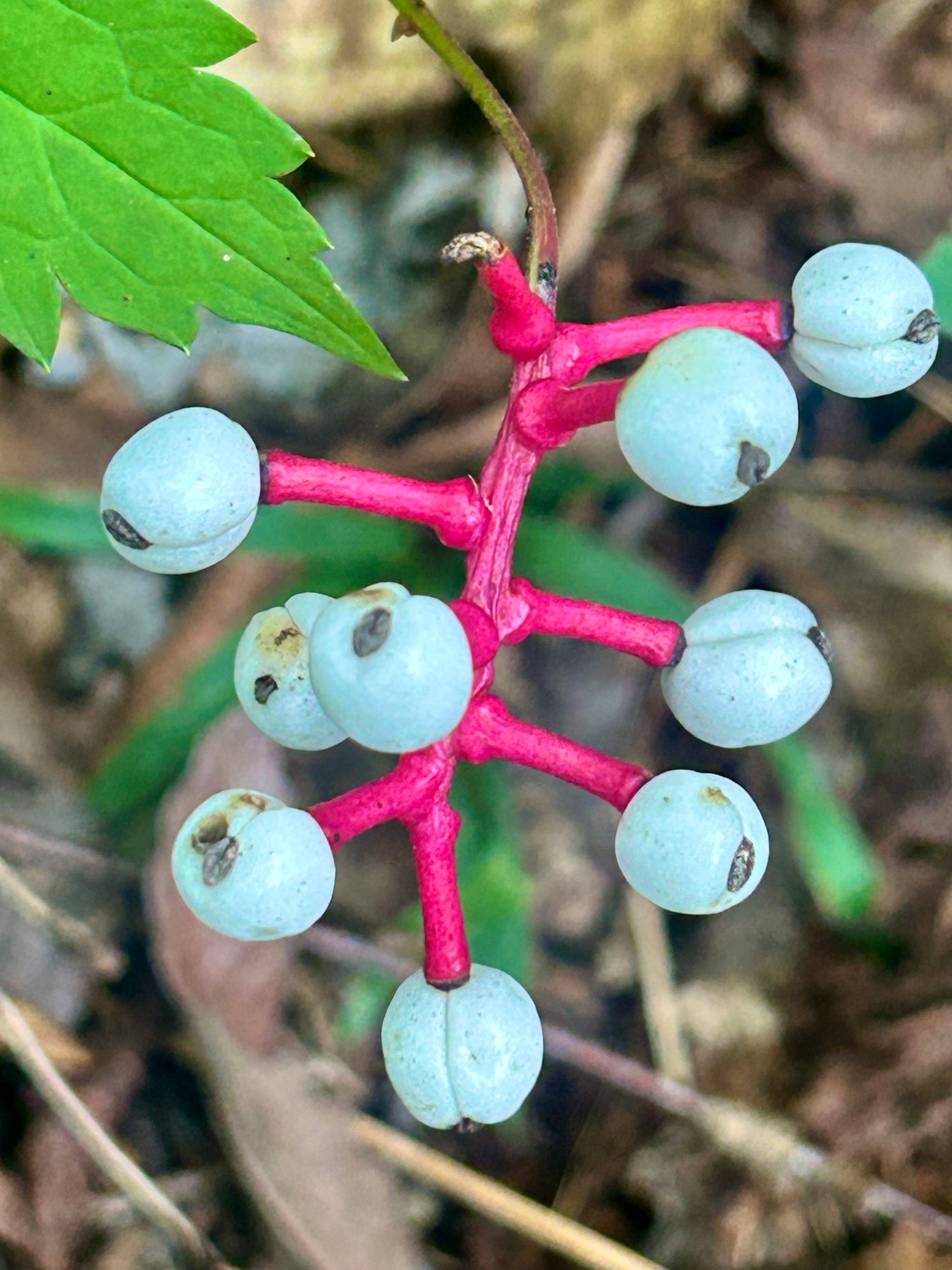
If you spend time hiking, foraging, or exploring eastern North American woodlands, you may eventually encounter a plant that looks as though it belongs in a fairy tale: white baneberry (Actaea pachypoda), commonly known as doll’s eyes.
With clusters of brilliant white berries marked by distinctive black dots, white baneberry is certainly memorable. It also has an interesting history in traditional herbal medicine.
But this is one plant where knowledge is far more valuable than experimentation.
Despite its historical medicinal uses, white baneberry is considered toxic and should not be eaten or prepared as a DIY herbal remedy.
🌱 What Is White Baneberry?
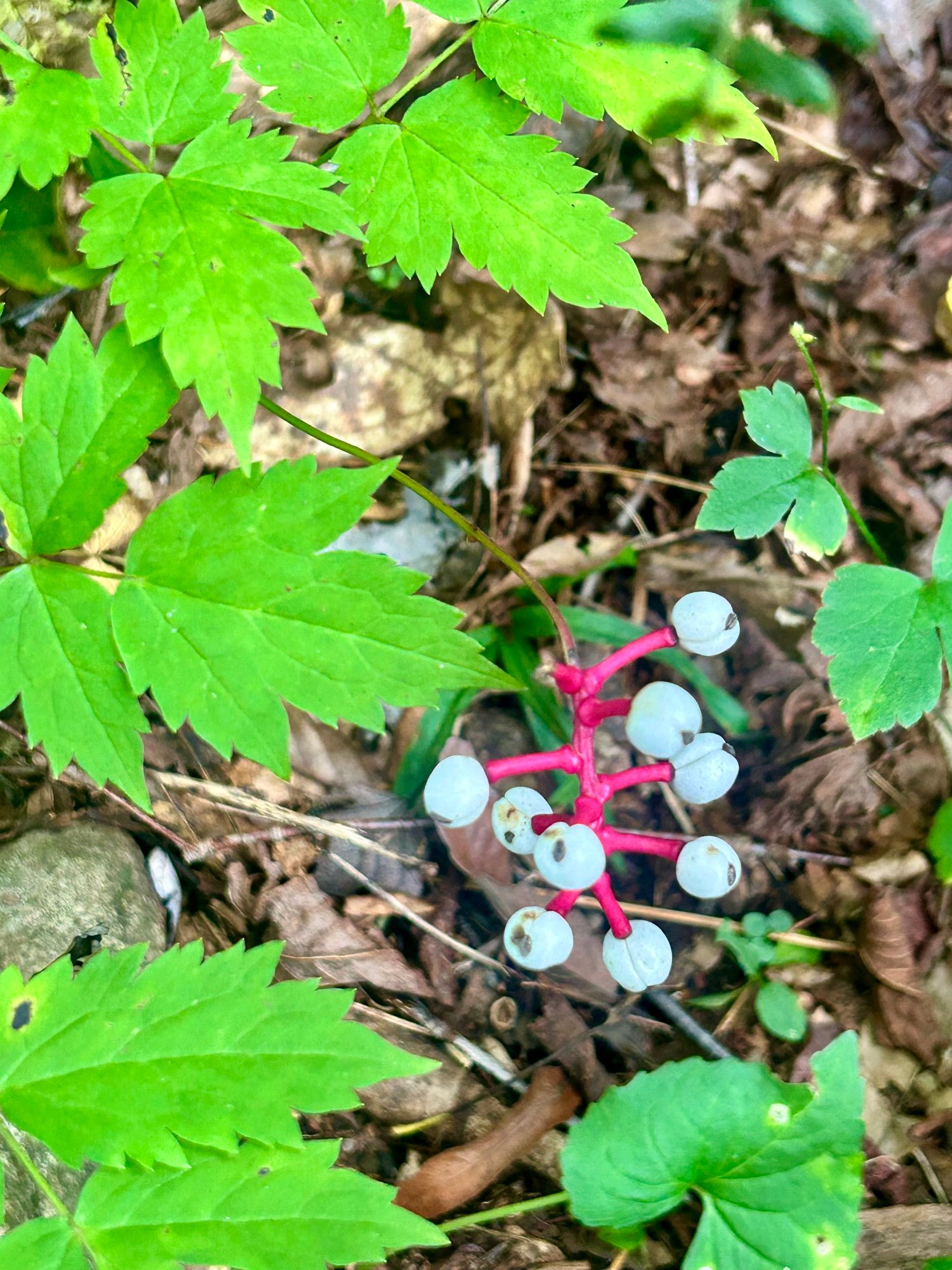
White baneberry is a perennial woodland plant native to eastern North America. It belongs to the buttercup family (Ranunculaceae) and commonly grows in shady, moist, wooded environments.
The plant produces small white flowers in spring, followed later by its unmistakable berries.
The berries are:
- Creamy white
- Round to oval
- Marked with a dark purple or black spot
- Held on thick stalks that often become bright red
Those unusual berries resemble tiny porcelain eyeballs—which explains the nickname “doll’s eyes.”
Beautiful? Absolutely.
Edible? Absolutely not.
🌿 White Baneberry's History in Herbal Medicine
White baneberry and related Actaea species have histories of traditional medicinal use. Preparations involving parts of these plants—particularly the roots—have historically been associated with complaints involving:
- Menstrual discomfort
- Headaches
- Rheumatic aches and pains
- Coughs and respiratory complaints
- Inflammation
- General pain
Traditional botanical knowledge is fascinating and deserves to be understood within its historical and cultural context.
However, there is an important distinction:
A plant having a history of medicinal use does not automatically mean it is safe for modern home herbalism.
Modern clinical evidence supporting white baneberry as a safe and effective herbal remedy is extremely limited.
⚠️ White Baneberry Is Toxic
This is where responsible herbal education becomes especially important.
White baneberry contains biologically active compounds capable of causing poisoning. The berries are particularly concerning and should never be eaten.
Ingestion has been associated with symptoms that can include:
- Nausea
- Vomiting
- Abdominal discomfort
- Dizziness
- Neurological symptoms
- Cardiovascular effects
Large or significant exposures can potentially become medically serious.
This means white baneberry isn't an herb to casually experiment with in a tea, tincture, infusion, smoothie, medicinal preparation, or wild-food recipe.
If you discover it while foraging:
Admire it. Identify it. Photograph it. Leave it growing. 🌿
👀 Why Would a Toxic Plant Have Medicinal History?
One of the most interesting lessons herbalism teaches us is that “medicinal” and “safe to consume freely” are not synonyms.
Plants contain powerful chemical compounds.
Sometimes those compounds can produce desirable physiological effects at particular preparations or doses while becoming harmful at others. Historically, experienced healers developed highly specific traditions surrounding plant identification, preparation, dosage, and application.
Modern herbalists therefore shouldn't interpret historical medicinal use as permission to experiment with potentially toxic plants.
The dose, preparation, plant part, species identification, and individual consuming it can all dramatically change the outcome.
🌿 White Baneberry vs. Black Cohosh
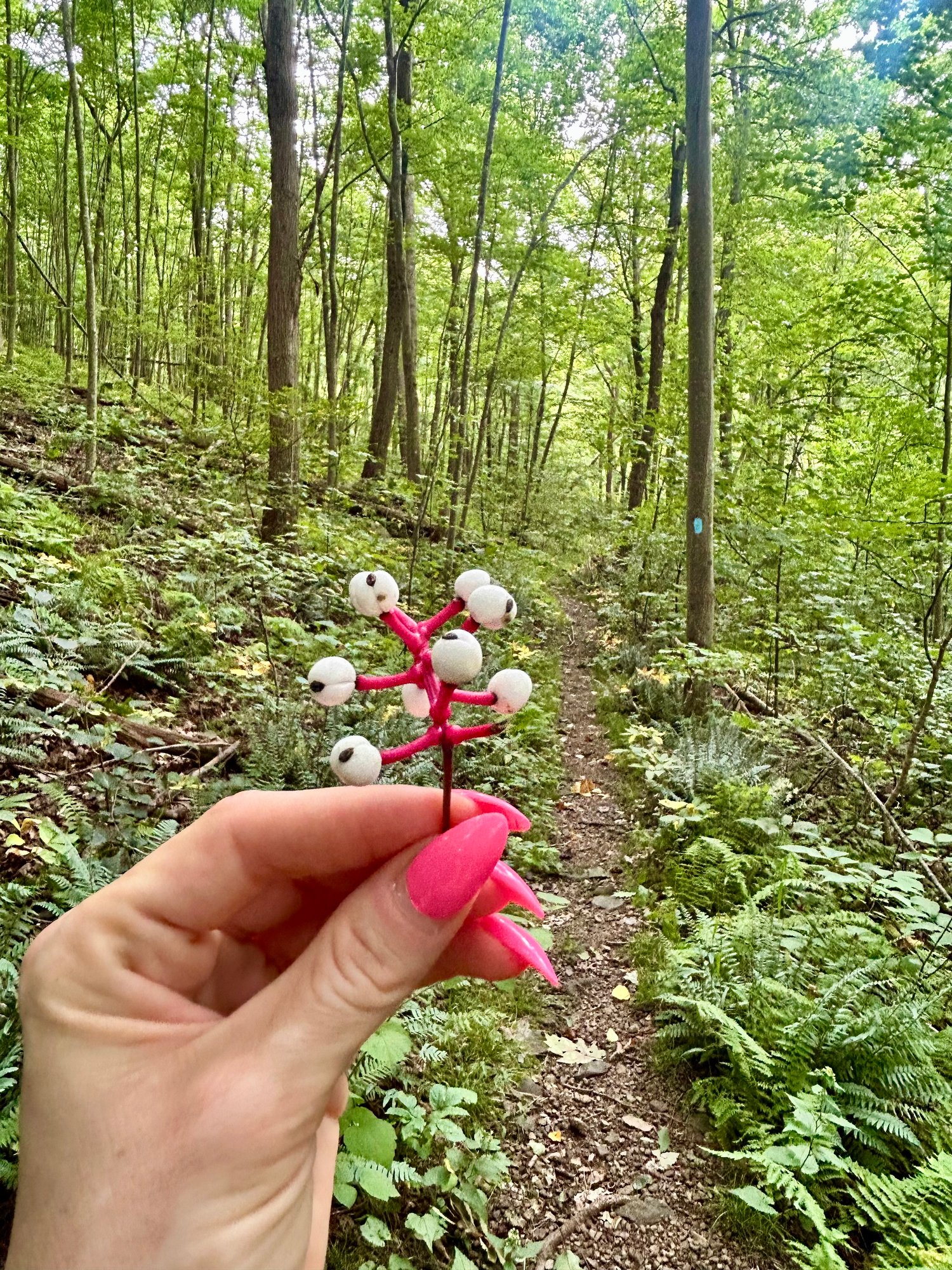
Another important point is that white baneberry should not be confused with its better-known relative, black cohosh (Actaea racemosa).
Black cohosh is commonly used in modern herbal products and has been studied particularly in relation to menopausal symptoms.
Although white baneberry and black cohosh belong to the same genus, they are different species and are not interchangeable herbal remedies.
Never assume that plants are medicinally equivalent simply because they're closely related.
🍃 A Valuable Plant for Foragers to Learn
Learning herbalism isn't only about discovering which plants you can consume.
Knowing what not to consume is equally important.
White baneberry is actually an excellent plant for beginning and experienced foragers to recognize because its mature berries are so distinctive.
Think of it as a recognition plant rather than a harvesting plant.
When you encounter those eerie little white “doll's eyes” sitting on red stalks in the forest, you've found an interesting native woodland species—but not something destined for your foraging basket.
🌿 The Bigger Herbalism Lesson
Nature contains both medicine and poison—and sometimes the line between the two is surprisingly narrow.
That's why responsible herbalism requires more than knowing a plant's name or reading that it was “traditionally used” for a particular condition.
We should also understand:
🌱 Which species we're looking at
🌱 Which plant parts were traditionally used
🌱 How they were historically prepared
🌱 What modern research actually supports
🌱 Whether toxic compounds are present
🌱 Whether the plant is appropriate for home herbalism at all
White baneberry beautifully illustrates that principle.
It's fascinating.
It's historically significant.
It's visually unforgettable.
And it's one woodland herb that's best appreciated with your eyes—not your teacup. 🌿👀
Comments ()