

When most people think about their gut, they think about digestion—whether they're bloated, constipated, regular, or experiencing an upset stomach.
But your digestive system does far more than process yesterday's dinner.
Your gut is involved in nutrient absorption, immune function, metabolism, communication with the brain, and the production or regulation of numerous compounds that influence the rest of the body. Inside your digestive tract also lives a vast community of microorganisms known collectively as the gut microbiome.
When this internal ecosystem is well supported, it can contribute to overall health and resilience. When digestive health is consistently disrupted, the effects may extend well beyond the stomach.
That's why caring for your gut isn't simply about improving digestion.
Gut health is an important part of whole-body wellness.
What Exactly Is the Gut Microbiome?
Your gastrointestinal tract is home to trillions of microorganisms, including bacteria, fungi, viruses, and other microbes.
Together, these organisms form your gut microbiome.
And having bacteria in your gut isn't necessarily a bad thing. Many microorganisms play beneficial roles within the body.
Your gut microbes can help:
- Break down components of food
- Ferment dietary fiber
- Produce certain vitamins and metabolites
- Support the intestinal barrier
- Interact with the immune system
- Influence metabolic processes
- Communicate with other systems throughout the body
Rather than trying to eliminate bacteria, the goal is to cultivate an intestinal environment that supports a diverse and balanced microbial community.
And one of the biggest ways we influence that environment is through what we eat.
Your Gut Determines What You Get From Your Food
You can eat an incredibly nutritious diet, but food still has to be digested and its nutrients absorbed before your body can use them.
Your digestive system breaks food down into smaller components, allowing nutrients such as amino acids, fatty acids, sugars, vitamins, minerals, and other compounds to be absorbed.
Those nutrients then become resources your body can use for:
- Energy
- Tissue repair
- Muscle function
- Hormone production
- Bone maintenance
- Brain function
- Immune function
- Cellular processes
This is one reason digestive health deserves just as much attention as the foods on your plate.
Nutrition isn't only about what you eat. It's also about what your body can digest, absorb, and utilize.
Your Gut and Immune System Are Closely Connected
A large portion of the body's immune activity is associated with the gastrointestinal tract.
That makes sense when you think about it.
Your digestive tract is constantly exposed to substances from the outside world through food and drink. The intestinal barrier helps selectively allow nutrients to pass through while helping protect the body from potentially harmful organisms and substances.
Meanwhile, gut microbes interact extensively with immune cells.
A healthy intestinal environment therefore helps support normal immune regulation and barrier function.
This doesn't mean that "fixing your gut" can prevent every illness. The immune system is far more complicated than that.
But supporting digestive and microbial health is one meaningful component of supporting overall immune health.
Your Gut and Brain Are Constantly Communicating
Have you ever felt "butterflies" when you're nervous?
Lost your appetite during a stressful situation?
Experienced digestive trouble during a particularly difficult week?
That's not just coincidence.
Your digestive system and brain communicate through what scientists call the gut-brain axis.
This communication involves several pathways, including the nervous system, immune signaling, hormones, and microbial metabolites.
One particularly important pathway involves the vagus nerve, which helps transmit information between the brain and many internal organs.
Gut microbes can also produce or influence compounds involved in neurological function.
For example, much of the body's serotonin is produced in the gastrointestinal tract. However, gut-produced serotonin does not simply travel directly into the brain, so claims that the gut directly supplies the brain with most of its serotonin are misleading. Instead, the relationship between the microbiome, nervous system, and mood is much more complex.
Researchers continue to study how the microbiome may influence:
- Stress responses
- Mood
- Cognition
- Appetite
- Sleep
- Behavior
The emerging science reinforces something holistic wellness has long recognized:
The systems of the body don't operate independently.
Fiber Feeds Your Gut Microbes
Fiber isn't simply something you eat to stay regular.
Certain fibers act as prebiotics, meaning they provide food for beneficial gut microorganisms.
When microbes ferment these fibers, they can produce compounds called short-chain fatty acids (SCFAs), including butyrate.
These compounds can help support the cells lining the colon and participate in immune and metabolic regulation.
Excellent plant-based sources of fiber include:
- Beans
- Lentils
- Chickpeas
- Oats
- Whole grains
- Berries
- Apples
- Bananas
- Onions
- Garlic
- Asparagus
- Leafy greens
- Chia seeds
- Flaxseed
One of the simplest strategies for supporting the microbiome is to eat a diverse variety of plant foods.
Different plants contain different types of fiber and phytochemicals, which can support different microbial populations.
Instead of searching for one magical "gut-health superfood," think:
Variety. Diversity. Consistency.
Prebiotics and Probiotics: What's the Difference?
These two terms are often confused.
Prebiotics
Prebiotics are specific substances—often types of dietary fiber—that are used by beneficial microorganisms and can provide health benefits.
Food sources may include:
- Garlic
- Onion
- Leeks
- Asparagus
- Oats
- Bananas
- Legumes
Probiotics
Probiotics are live microorganisms that, when consumed in adequate amounts, may provide health benefits.
Certain fermented foods may contain live cultures, such as:
- Sauerkraut
- Kimchi
- Miso
- Tempeh
- Some plant-based yogurts
- Kombucha
Not every fermented food automatically qualifies as a probiotic food, however. Processing and heating can destroy live microorganisms, and probiotic benefits can be strain-specific.
This is why food labels—and quality—matter.
Your Bowel Habits Can Tell You Something
Your bowel movements aren't exactly dinner-table conversation, but they're valuable information.
Changes in stool frequency, consistency, color, or ease of passage can sometimes reflect what's happening within the digestive system.
Occasional changes are normal.
Persistent problems deserve more attention.
Some digestive symptoms people commonly experience include:
- Bloating
- Constipation
- Diarrhea
- Excessive gas
- Abdominal discomfort
- Feeling unusually full
- Changes in bowel habits
These symptoms don't automatically mean that your microbiome is "imbalanced." Many different conditions, foods, medications, stressors, and lifestyle factors can produce similar symptoms.
Persistent, severe, bloody, or unexplained digestive symptoms should be evaluated by a healthcare professional rather than treated solely through supplements, herbs, or elimination diets.
Stress Can Show Up in Your Gut
Nutrition is only one piece of digestive health.
Chronic stress can influence:
- Gastrointestinal motility
- Digestive sensations
- Appetite
- Eating patterns
- Gut-brain communication
That's why a gut-supportive lifestyle isn't limited to changing your grocery list.
It can also include:
🌿 Regular movement
🌿 Adequate sleep
🌿 Mindful eating
🌿 Stress-management practices
🌿 Spending time outdoors
🌿 Breathwork or meditation
🌿 Eating meals without constantly rushing
Sometimes supporting digestion means looking at how you eat, not only what you eat.
What Can Work Against Gut Health?
Your microbiome is influenced by many factors throughout life, including diet, medications, environment, age, stress, illness, and lifestyle.
Some habits associated with poorer digestive or microbial health include:
- Diets consistently low in fiber
- Limited dietary variety
- Heavy reliance on ultra-processed foods
- Excessive alcohol consumption
- Chronic sleep deprivation
- Long-term unmanaged stress
- Unnecessary antibiotic use
Antibiotics deserve an important distinction: they can alter the microbiome, but they are also essential, sometimes lifesaving medications when medically necessary.
The answer isn't to avoid prescribed antibiotics. It's to use them appropriately under medical guidance.
How to Start Supporting Your Gut Naturally
You don't need an expensive detox, restrictive cleanse, or cabinet full of supplements to start caring for your digestive system.
Begin with the basics:
- Eat more plant variety. Rotate vegetables, fruits, legumes, whole grains, nuts, seeds, herbs, and spices.
- Gradually increase fiber. Increasing it too quickly can actually worsen gas and bloating, so allow your digestive system time to adjust.
- Drink enough water. Hydration works alongside fiber to support normal bowel function.
- Include fermented foods if you tolerate them.
- Move your body regularly.
- Eat more slowly and chew thoroughly.
- Prioritize sleep.
- Find healthy ways to manage chronic stress.
And perhaps most importantly:
Be consistent.
Your digestive system doesn't need perfection. It benefits from supportive habits repeated over time.
Gut Health Is Whole-Body Health
The digestive system isn't an isolated tube running through your body.
It's connected to your nervous system.
It interacts with your immune system.
It helps determine how nutrients from food become available to your body.
It houses an enormous microbial ecosystem.
And it communicates with systems throughout the body.
That doesn't mean every health problem begins in the gut or that healing the gut can cure every condition—those claims go beyond what science supports.
What we can say is that digestive health is an important pillar of overall wellness.
And supporting it often comes back to surprisingly simple things:
Whole foods. Plant diversity. Fiber. Hydration. Movement. Sleep. Stress management.
Not another extreme diet.
Ready to Optimize Your Digestive Health?
Your gut plays an important role in how you digest and absorb nutrients, support immune function, maintain energy, and feel from day to day—but knowing what to change can sometimes feel overwhelming.
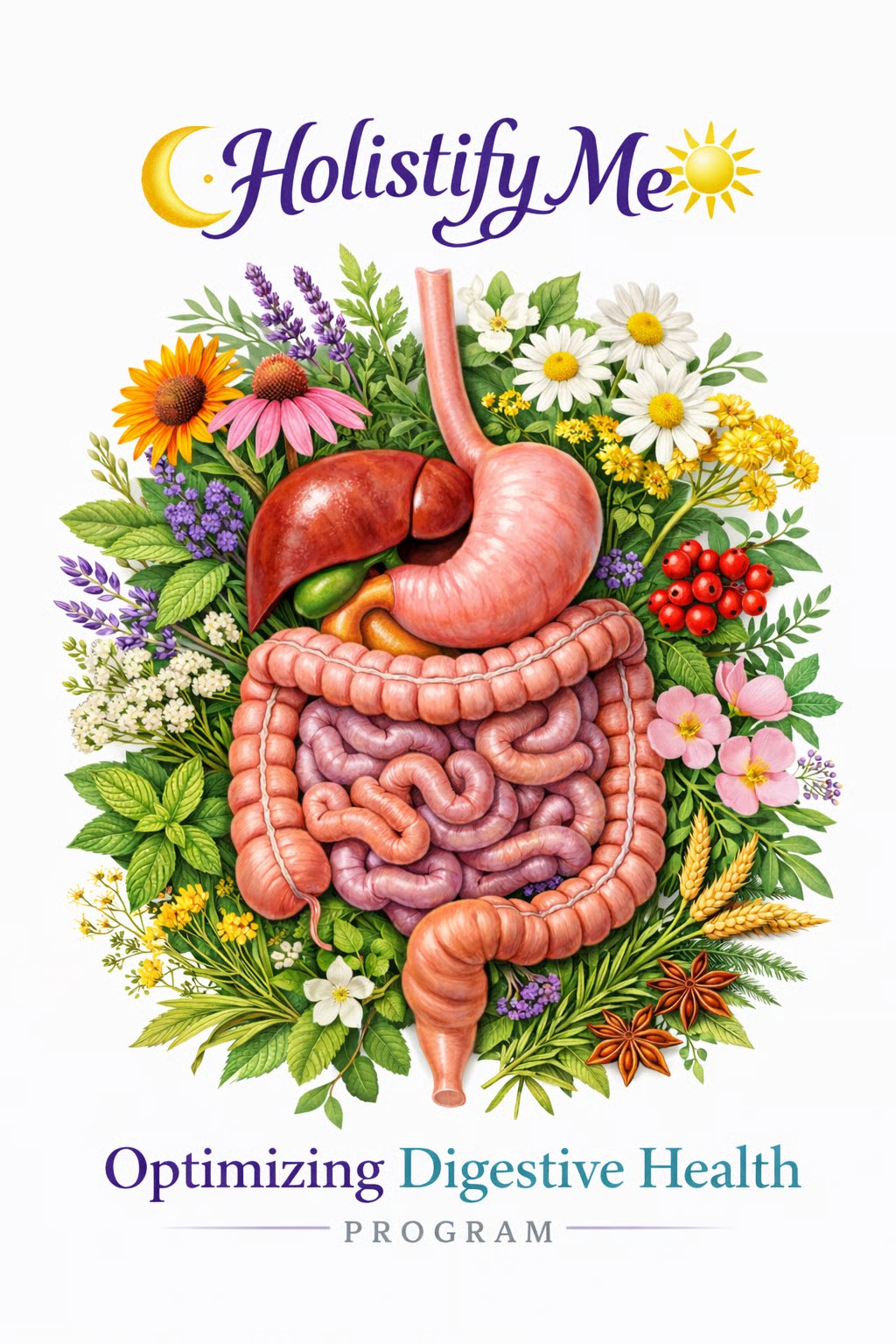
The Holistify Me Optimizing Digestive Health Program was created to help you take a more intentional, whole-body approach to digestive wellness.
Through practical nutrition education, supportive lifestyle strategies, recipes, guided resources, and tools you can actually apply to everyday life, this 6-week program helps you better understand your digestive system and build habits that support it from the inside out.
If you’re ready to stop guessing and start becoming more intentional about the way you nourish and care for your gut, the Holistify Me Optimizing Digestive Health Program is your next step toward creating a healthier, more balanced you—mind, body, and soul. 🌿💜
Comments ()