

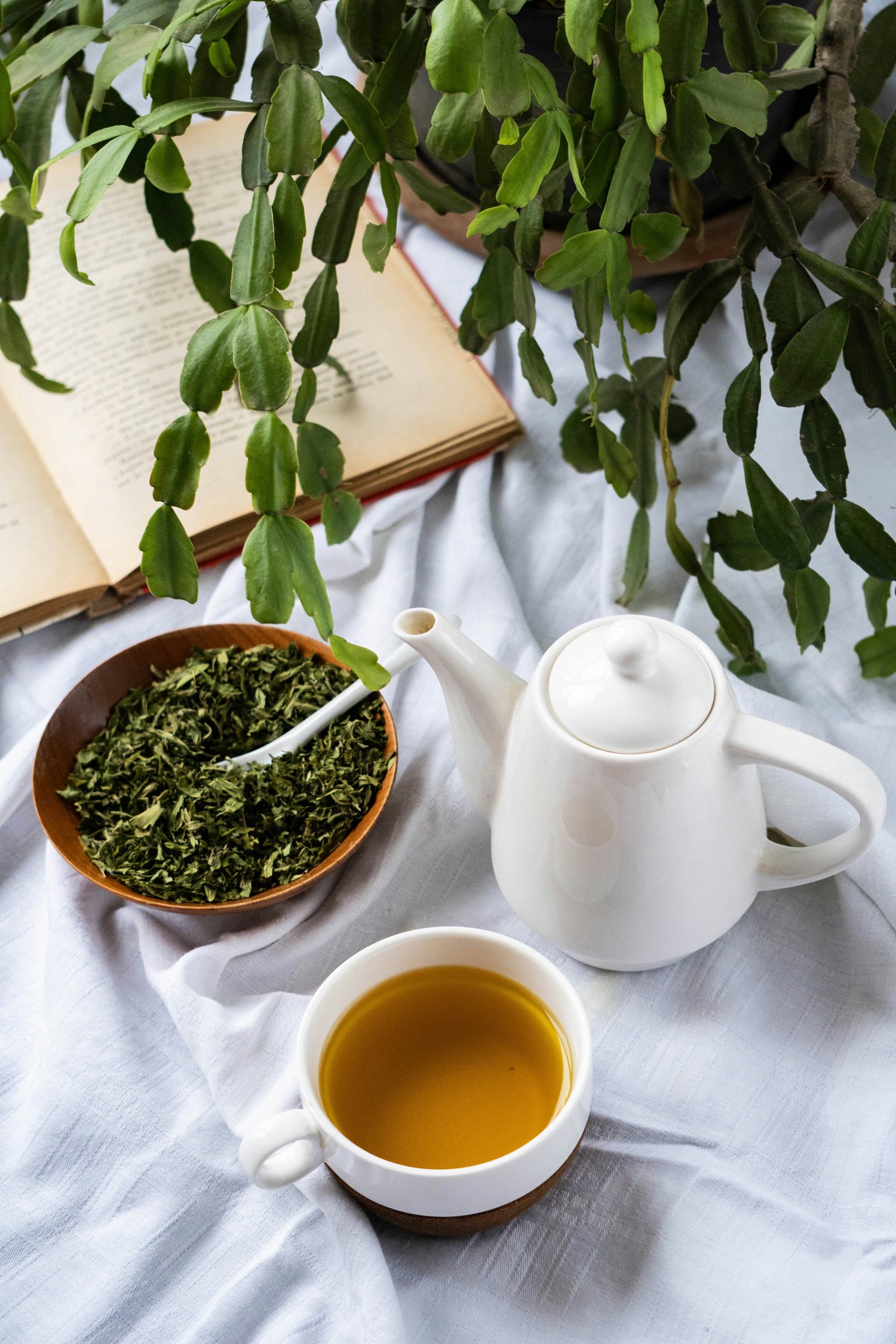
You bought the herbs.
You brewed the tea.
You drank it.
And then...
Nothing.
No noticeable difference. No magical transformation. No moment where you suddenly thought, “Wow—this stuff really works!”
So naturally, you may start wondering:
Does herbal tea actually do anything?
Before you give up on herbalism, there's something important to understand:
Herbs aren't all used the same way, and drinking an herbal tea doesn't automatically mean you've prepared an effective—or appropriate—herbal preparation. Sometimes the problem isn't the herb.
It may be how you're using it, what you're expecting from it, or whether it's even the right herb for your goal.
Let's break down some of the most common reasons your herbal tea may not be giving you the experience you expected.
Disclaimer: This article is for educational purposes only and is not intended to diagnose, treat, cure, or prevent disease. Herbs can interact with medications and may not be appropriate for everyone. Persistent or concerning symptoms should be evaluated by an appropriate healthcare professional.
1. You're Not Using Enough Herb
One tiny tea bag floating around in a giant mug of water may create a pleasant beverage. But depending on the herb and your purpose for drinking it, it may produce a relatively weak infusion. This is where understanding the difference between beverage tea and an herbal infusion becomes useful. A casual beverage might be prepared primarily for flavor.
An herbal infusion is usually prepared more intentionally, with attention to:
- The amount of herb
- Water volume
- Steeping time
- Plant part
- Desired preparation
That doesn't mean stronger is automatically better. It means preparation matters.
Follow appropriate preparation instructions for the specific herb or product rather than assuming every herb should be brewed exactly like ordinary tea.
2. You're Not Steeping It Long Enough
Dip. Dip. Dip.
Three minutes later, the tea bag comes out. For some teas, that's perfectly reasonable. For others, a longer steep may produce a more concentrated extraction of water-soluble plant constituents.
Depending on the plant, an herbal infusion may steep for:
5 minutes.
10 minutes.
15 minutes.
Or considerably longer for certain traditional preparations.
Covering your tea while it steeps can also be useful with aromatic herbs because some of their volatile compounds can escape with steam.
🌿 Holistify Me Tip
When working with aromatic herbs such as mint or lemon balm, place a lid or small plate over your mug while steeping. And don't automatically assume longer is always better—follow guidance appropriate to the particular plant you're using.
3. You're Using the Wrong Part of the Plant
Here's something beginners often don't realize:
The entire plant isn't necessarily interchangeable.
Herbalists may use:
🌿 Leaves
🌸 Flowers
🌱 Roots
🪵 Bark
🌰 Seeds
🍓 Fruits
🌾 Rhizomes
And different parts of the same plant can have different chemical compositions and traditional applications.
Take dandelion, for example.
Dandelion leaf and dandelion root both have histories of herbal use, but they aren't necessarily selected for exactly the same purposes.
This is one reason a quality herb label should tell you not only the plant's name but also which part you're consuming.
4. You're Preparing Every Herb the Same Way
This one is huge. A delicate flower and a dense root aren't physically the same material, so it makes sense that they aren't always prepared identically.
🌸 Delicate Plant Parts
Leaves and flowers are commonly prepared as infusions. Hot water is poured over the herb and allowed to steep.
🌳 Tougher Plant Parts
Roots, bark, and some seeds are often prepared as decoctions. A decoction generally involves gently simmering the plant material in water for a period of time.
Why?
Because tougher plant material may require more heat and time to extract certain water-soluble constituents effectively.
Knowing your plant changes how you prepare your plant.
5. You're Expecting an Instant Result
We live in a culture that expects everything immediately.
Headache?
Take something.
Tired?
Drink something.
Can't sleep?
Take something.
Herbalism doesn't always fit neatly into that mindset. Some herbal preparations may produce effects people notice relatively quickly, while other traditional herbal practices involve consistent use over longer periods.
The appropriate timeline depends heavily on:
- The herb
- The preparation
- The person
- The reason it's being used
One cup isn't a universal test of whether an herb "works." At the same time, don't continue indefinitely with an herb that isn't appropriate simply because someone told you herbs "take time."
Consistency matters, but so does reassessment.
6. You're Using the Wrong Herb for the Job
Your friend drinks chamomile and loves it. That doesn't automatically mean chamomile addresses whatever you're experiencing.
One of the biggest mistakes in herbal wellness is choosing an herb because it's trending rather than asking:
What am I actually trying to accomplish?
Are you looking for:
- Digestive comfort?
- Relaxation?
- Everyday nourishment?
- A refreshing caffeinated beverage?
- A bedtime ritual?
Those aren't interchangeable goals.
Herbalism becomes much more useful when you stop asking:
“What's the best herb?”
and start asking:
“What's an appropriate herb for this particular purpose?”
7. Your Herbs Are Old or Poorly Stored
That forgotten bag of herbs sitting beside a sunny kitchen window for three years? It may not be at its best anymore. Light, heat, moisture, oxygen, and time can affect the quality of dried plant material.
Properly store herbs in:
✔ Well-sealed containers
✔ Cool locations
✔ Dry environments
✔ Dark cabinets or containers protected from light
Pay attention to the plant's:
👃 Aroma
🎨 Color
📅 Age
💧 Signs of moisture
🦠 Signs of mold or deterioration
Aromatic herbs in particular should generally still smell like something. If your peppermint has almost no mint aroma left, that's worth noticing.
8. The Product Isn't What You Think It Is
Don't let a beautiful green package covered in leaves do all the talking. Turn it around. Read the label.
Look for:
Common name
Botanical name
Plant part
Ingredient list
Serving/preparation instructions
A product marketed around one herb may actually be a blend containing many ingredients.
And words such as:
"Natural"
"Premium"
"Cleanse"
"Superfood"
don't tell you the dose, identity, quality, or suitability of the herb. Become a label reader. Your herbal education shouldn't stop at the front of the package.
☕ 9. You're Adding Herbal Tea Without Addressing the Bigger Picture
This may be the hardest truth...
Tea can't compensate for everything else.
You can't reasonably expect a cup of herbs to undo:
Four hours of sleep.
Chronic dehydration.
An inadequate diet.
Constant stress.
Or an underlying health problem that needs medical attention.
Herbs can be one part of a larger wellness strategy.
That strategy may also include:
🥗 Nutritious food
💧 Hydration
😴 Adequate sleep
🏋️ Regular movement and strength training
🧘 Stress management
🌿 Time outdoors
❤️ Healthy relationships
🩺 Appropriate healthcare
Holistic wellness means looking at the whole picture. Not asking one cup of tea to do all the work.
🚩 10. You're Expecting the Herb to Do Something It Can't
This is where responsible herbal education matters.
Social media is filled with claims that certain teas will:
"Melt belly fat."
"Flush toxins overnight."
"Balance every hormone."
"Cure anxiety."
"Clean your organs."
"Fix your gut."
Those claims can create unrealistic expectations.
Herbs contain biologically active compounds, and some have meaningful evidence supporting specific uses. But herbs aren't magic. And stronger claims require stronger evidence.
For example, your body already has sophisticated systems—including your liver and kidneys—that process and eliminate substances every day.
An herbal tea doesn't need an exaggerated promise to be worthwhile. It can simply be one supportive part of an intentional wellness routine.
🌿 So...How Do You Make Better Herbal Tea?
Start with these questions:
1. What herb am I actually using?
Know both the common and botanical name.
2. What part of the plant am I using?
Leaf? Root? Flower? Seed?
3. Is tea an appropriate preparation?
Not every useful plant constituent extracts well into water.
4. Am I preparing it correctly?
Check the recommended amount, temperature, steeping time, and whether the herb is better infused or decocted.
5. Is my herb fresh and properly stored?
Quality matters.
6. What am I realistically expecting it to accomplish?
Separate traditional use, personal experience, and scientific evidence.
7. Is it appropriate for me?
Consider medications, health conditions, pregnancy, allergies, and other individual factors.
Those seven questions will teach you more about herbalism than simply buying whatever herb is trending this week.
🍵 Turn Tea Into a Ritual, Not a Rescue Mission
There's another side to herbal tea that's easy to overlook.
Not every cup needs to solve a problem.
Sometimes preparing tea gives you permission to:
Sit down.
Put the phone away.
Breathe.
Drink something warm.
Reflect.
Hydrate.
Be still for ten minutes.
That ritual has value too.
Herbalism doesn't have to become another frantic attempt to "fix" yourself. It can become a way of intentionally caring for yourself.
🌿 The Holistify Me Approach
At Holistify Me, we believe herbs work best as part of a bigger picture.
That means moving beyond the idea of:
“Drink this tea and everything will change.”
Instead, ask:
How am I sleeping?
How am I nourishing my body?
How am I managing stress?
Am I moving my body?
Am I giving myself opportunities to rest?
And where can herbs complement those habits?
That's the difference between chasing wellness trends and actually building a wellness lifestyle.
🌸 Final Thoughts
If you've tried an herbal tea and thought, “This isn't doing anything,” don't immediately conclude that all herbalism is useless.
Get curious.
Maybe the tea was too weak.
Maybe it wasn't steeped appropriately.
Maybe the plant material was old.
Maybe you were using the wrong plant part.
Maybe it wasn't the right herb for your goal.
Or maybe the expectation itself wasn't realistic.
Learning herbalism means learning to ask better questions.
Because the goal isn't to believe every claim made about herbs.
And it isn't to dismiss plants because one cup didn't produce a dramatic result.
The goal is to understand them.
Learn the plant.
Learn the preparation.
Learn the limitations.
Learn your body.
And allow that knowledge to shape a more thoughtful relationship with herbal wellness.
Holistify Me – Embracing Health & Wellness the Holistic Way: Mind, Body & Soul. 🌿
Comments ()