

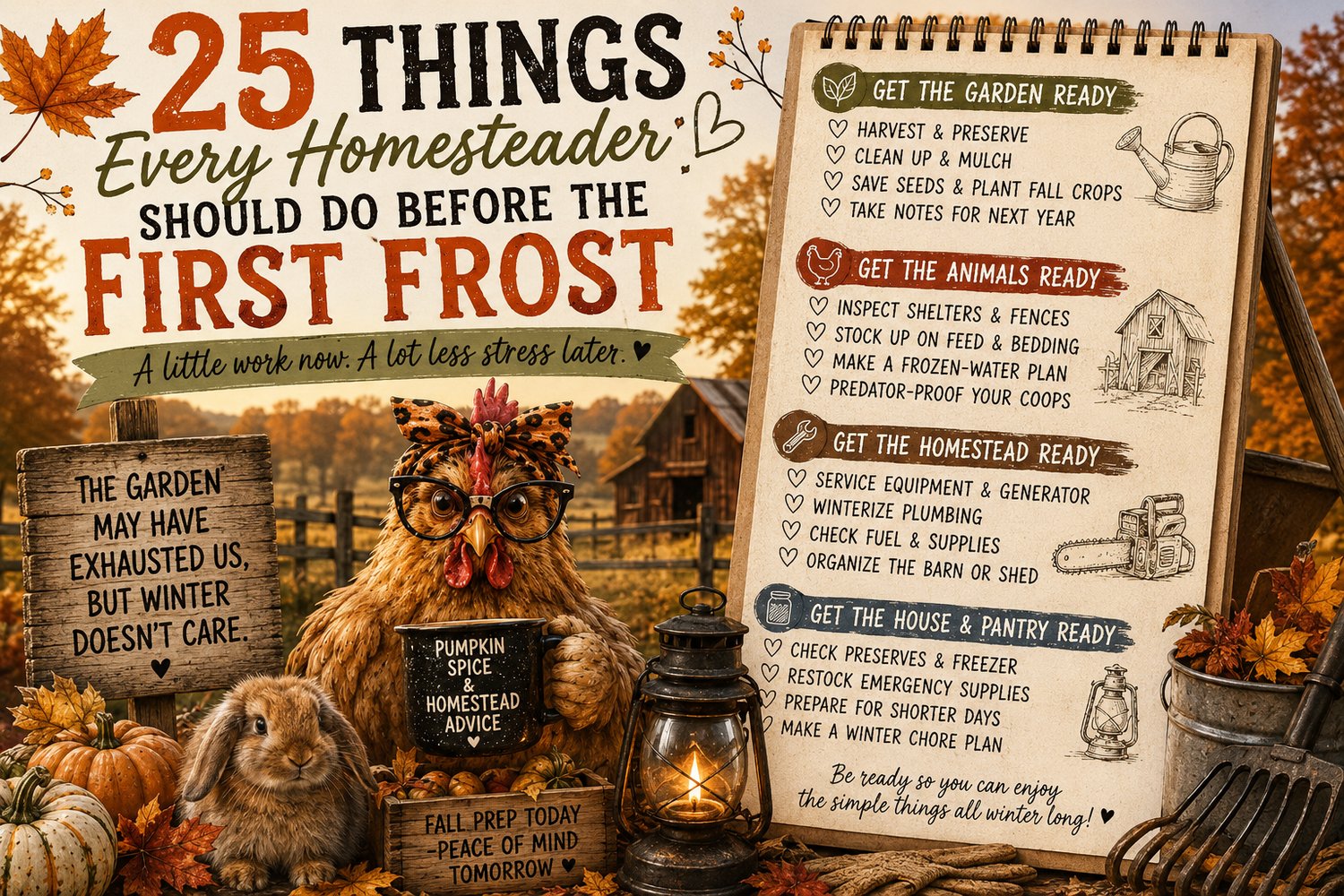
The garden may have exhausted us, but winter doesn't care.
By the end of summer, most homesteaders are ready for a break. We've planted, weeded, watered, hauled feed, fought bugs, preserved food, and probably threatened to give up gardening at least once.
Then the cool mornings arrive.
Fall is beautiful—but it's also our warning that winter is coming. A little work now can prevent a whole lot of frozen, muddy frustration later.
Here are 25 things to tackle before that first frost hits.
Get the Garden Ready
1. Harvest frost-sensitive vegetables.
Pick tomatoes, peppers, squash, cucumbers, beans, and other warm-season crops before frost damages them.
2. Harvest your herbs.
Dry, freeze, preserve, or bring suitable herbs indoors before freezing temperatures arrive.
3. Save seeds.
Collect seeds from healthy, successful plants so you're ready for next year's garden.
4. Preserve the last harvest.
Can, freeze, dehydrate, ferment, or properly store what you can. Don't let months of work spoil because you're tired of looking at vegetables!
5. Clean up diseased plants.
Remove problem plant material that could carry pests or disease into next year's garden.
6. Add mulch.
Leaves, straw, and other suitable organic mulch can help protect your soil through winter.
7. Plant fall crops.
Depending on your climate, you may still have time for lettuce, spinach, kale, radishes, carrots, and other cool-season crops.
8. Write down what worked.
Record your best varieties, biggest failures, pest problems, and what you want to do differently next year—before you forget!
Get the Animals Ready
9. Inspect coops, barns and hutches.
Repair leaks, loose boards, damaged wire, roofing, doors, and other problems while the weather is still comfortable.
10. Check ventilation.
Animals need protection from harsh weather without trapping excessive moisture and ammonia inside their shelter.
11. Stock up on bedding.
Keep a reasonable supply of dry bedding ready before cold weather makes supply runs more difficult.
12. Check your feed supply.
Winter storms and icy roads can interrupt feed runs. Keeping a sensible reserve can save you from an emergency trip.
13. Make a frozen-water plan.
Decide how you'll keep animals supplied with drinkable water when temperatures fall below freezing.
14. Walk your fences.
Fix weak spots, loose wire, broken posts, and questionable gates before winter weather makes repairs miserable.
15. Predator-proof your shelters.
Check locks, latches, wire, roofs, doors, and enclosure edges. Hungry predators can become persistent when natural food is scarce.
Get the Homestead Ready
16. Test your generator.
Don't wait for the electricity to go out to discover your generator won't start.
17. Service winter equipment.
Check chainsaws, tractors, snow equipment, and other tools you'll depend on during cold weather.
18. Protect outdoor plumbing.
Disconnect hoses and prepare exposed faucets, pipes, pumps, and irrigation equipment for freezing temperatures.
19. Check fuel supplies.
Plan ahead for equipment, generators, vehicles, and heating needs, and always store fuel safely in approved containers.
20. Organize the barn or shed.
Put winter supplies where you can actually find them. Nobody wants to search through a dark barn during freezing rain for a bucket.
Get the House & Pantry Ready
21. Inventory preserved food.
Check your canned, frozen, dehydrated, and stored foods and see where your winter pantry has gaps.
22. Restock emergency supplies.
Keep drinking water, shelf-stable food, flashlights, batteries, first-aid supplies, and essential animal supplies accessible.
23. Check your freezer.
If it's holding months of home-raised meat or garden produce, make sure it's working properly and have a plan for extended power outages.
24. Prepare for shorter days.
Check headlamps, flashlights, barn lights, batteries, and appropriate outdoor electrical equipment before evening chores start happening in the dark.
25. Make a winter chore plan.
Imagine waking up to frozen water, ice, animals waiting to be fed, and no electricity. Knowing what you'll do first makes a bad morning much easier to handle.
Don't Try to Do Everything Today
Winter preparation doesn't have to mean spending an entire weekend working yourself into the ground.
Pick three things from this list and do them this week. Then pick three more.
Every fence repaired, bag of feed stored, jar preserved, hose disconnected, and shelter inspected is one less problem you'll have to deal with when it's freezing outside.
And when the garden finally dies back and you sit down with that first warm cup of coffee, enjoy it.
You survived another growing season.
The weeds may have won a few battles—but there's always next year.
Comments ()