

If you raise chickens or keep farm-fresh eggs around, you may occasionally wonder, “Is this egg still good?” One quick way to estimate an egg’s age is the float test.
How to Float Test an Egg
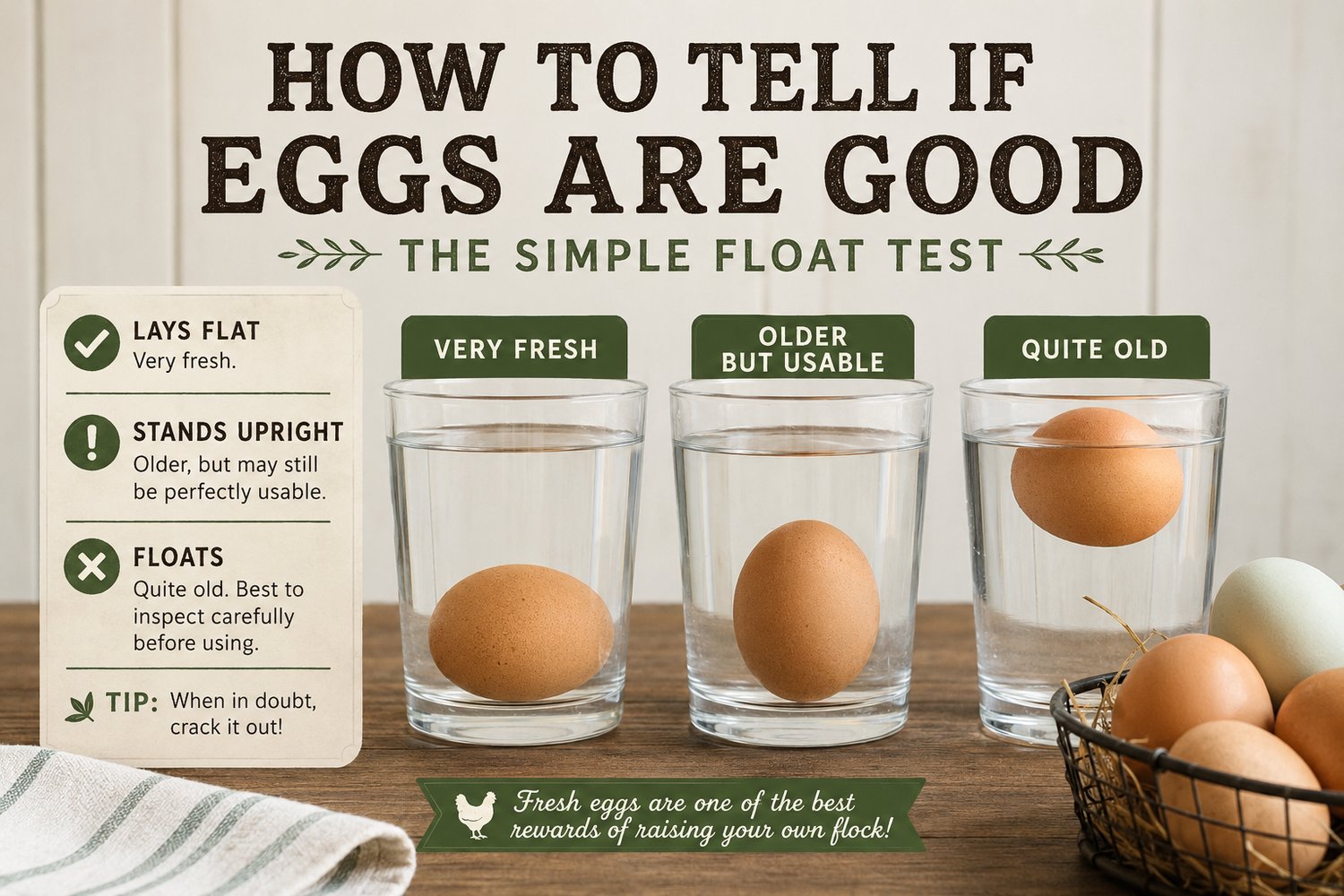
Fill a bowl or glass with enough cold water to completely cover the egg. Gently lower the egg into the water and watch what it does:
Lays flat on the bottom: Very fresh.
Stands upright but stays on the bottom: Older, but may still be perfectly usable.
Floats to the top: The egg is quite old. It’s best to inspect it carefully before deciding whether to use it.
Why Do Old Eggs Float?
Eggshells are porous. As an egg ages, moisture and carbon dioxide gradually escape through the shell and the air cell inside gets larger. The larger air pocket makes an older egg more buoyant.
That means the float test is really an age/freshness test—not a perfect food-safety test. A floating egg isn't automatically rotten, and a sinking egg isn't a guarantee that it's safe.
The Final Check
When you're unsure about an egg, crack it into a separate bowl instead of directly into your recipe.
Check for an unusual appearance or a strong, unpleasant odor. A spoiled egg will usually make itself obvious once cracked. When in doubt, throw it out.
Homesteader Tip
Write the collection date on your egg cartons or use a simple rotation system: oldest eggs in front, newest eggs in back. It makes keeping track of a large supply much easier.
Fresh eggs are one of the best rewards of raising your own flock—and a little egg knowledge goes a long way!
Comments ()