
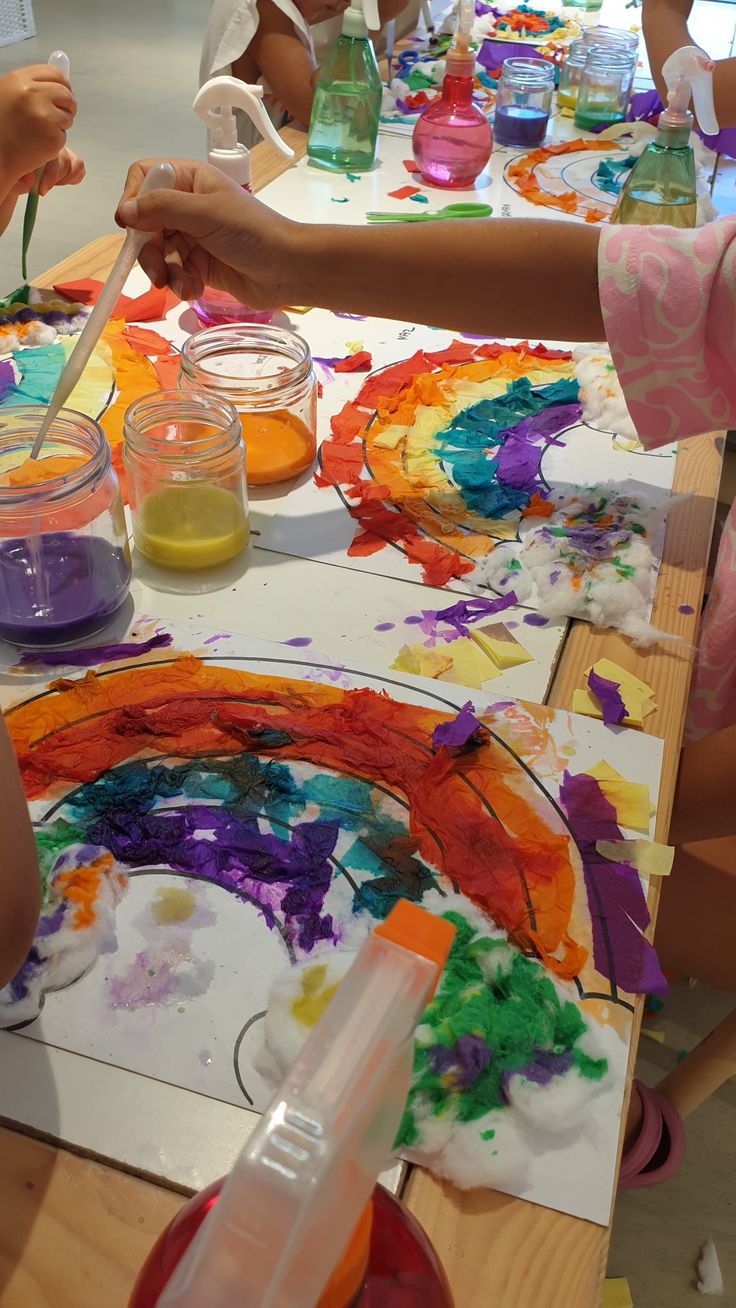
Creativity is not something children should have to grow out of. It is something we should encourage. From the moment a child picks up a crayon, makes up a story, dances around the living room, or turns a cardboard box into an imaginary world, they are learning how to not only create, but to think. They are learning how to express themselves and see the world from perspectives beyond their own. Being raised with creativity can shape the way a child understands themselves and the world around them. Art gives children a language for feelings they may not yet know how to explain. A painting can communicate something a child cannot put into words. A poem can give a name to an emotion they've been carrying. A song can make them feel understood.
And most importantly, art gives children permission to experiment. There is no single correct way to draw a picture. A story can take an unexpected direction and a sculpture can be rebuilt. Art teaches children that mistakes aren't necessarily failures, but they can be part of the process of creating something new. That lesson extends far beyond the art classroom. Creativity encourages children to ask questions and approach problems from different angles. These are skills that matter in every part of life, whether a child eventually becomes an artist, scientist, teacher, engineer, writer, doctor, or something else entirely.
Yet arts education and opportunities are often among the first things to lose funding when schools and communities face financial pressure. Children can end up with fewer art classes, fewer instruments, fewer opportunities to perform, and fewer places where they can share their work. This can affect a child more than you think. A child's access to art should not depend on how much money their family has. Not every child can afford private lessons, expensive supplies, museum memberships, or extracurricular programs. For some children, a school art class or community arts program may be their only opportunity to discover that they love painting, photography, music, theater, dance, writing, or any other creative medium. When we fund the arts, we aren't simply paying for supplies or programs. We're investing in children's ability to imagine. We're giving a child the chance to discover a talent they didn't know they had. We're giving them a safe place to express themselves. We're giving them the opportunity to find a community. We're giving them the freedom to create something that exists nowhere else in the world. And those opportunities can stay with them for the rest of their lives.
Funding the arts also means supporting the adults and organizations that make these experiences possible. Teachers, community programs, nonprofits, museums, libraries, youth organizations, and artists all help create spaces where young people can explore their creativity. When those programs receive funding, they can reach more children and provide resources that would otherwise be inaccessible.
Creativity should not be treated as an unnecessary luxury. It is a fundamental part of being human. Every child deserves the opportunity to make something simply because they imagined it. They deserve access to colors, instruments, books, stages, and all the other places where creativity can grow. They deserve to be encouraged when they make something strange, imperfect, or completely new. Because sometimes, the child who is given a paintbrush becomes an artist. Sometimes, they become a writer. Sometimes, they become an architect, a scientist, a filmmaker, a teacher, or an innovator.
And sometimes, they simply become a person who knows how to look at the world and imagine that it could be different.
That is why funding the arts matters.