

For years, we have been told to be trauma-informed.
We have learned that trauma is common, that many patients carry experiences we may never see, and that a person’s behavior may be a response to what they have experienced.
But awareness alone is not enough.
Knowing about trauma is important. But we also need practical tools that help us take what we know and put it into action.
Because the question is no longer: Do we understand trauma? The question is: How do we consistently provide care that creates safety, restores dignity, and supports healing?
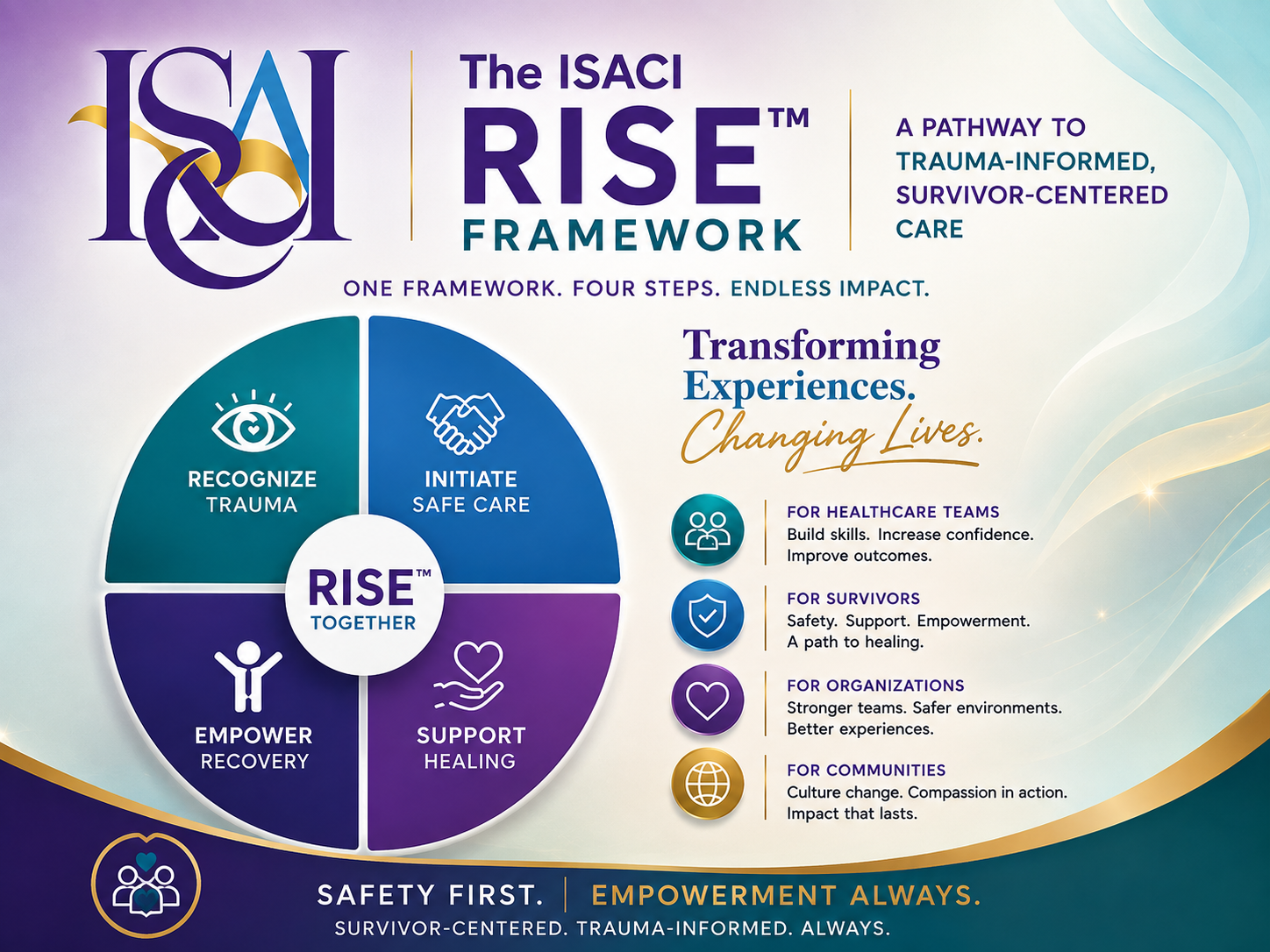
This is where the ISACI RISE™ Framework comes in.
I created RISE™ to help us move beyond simply being aware of trauma and into intentionally practicing trauma-informed, survivor-centered care.
RISE™: A Framework for Safer Healthcare Experiences
One thing I believe, is that every patient is a person first.
Behind every diagnosis is a story. Behind every reaction is a reason. And in every encounter, we have an opportunity to create safety.
The ISACI RISE™ Framework gives us four principles to help guide those interactions:
R — Recognize Trauma
Trauma is not always visible.
The patient in front of you may never tell you what happened to them. They may not even recognize that some of their reactions are connected to trauma.
Sometimes what we see is simply the behavior.
A patient who appears angry may be afraid. A patient who seems disconnected may be overwhelmed. A patient who refuses care may be trying to regain a sense of control.
This is where recognizing trauma can change the way we respond.
Instead of asking: What is wrong with this patient? We can ask: What might this person have experienced that is affecting their response?
That small shift can completely change an interaction.
I — Initiate Safe Care
Safety is the foundation of every trauma-informed interaction.
Before someone can begin to trust us, they need to feel safe with us.
And creating safety doesn't always require more time. Often, it comes down to how we approach the person in front of us.
Safe care begins with intentional actions: • Introduce ourselves • Explain what is going to happen • Ask permission before proceeding • Provide choices when possible • Respect boundaries • Communicate without judgment.
I know the reality of healthcare. We work in busy environments. We are managing competing priorities, limited time, interruptions, and patients who need us.
But sometimes creating safety takes only a few seconds.
Imagine saying: Before we begin, I want to explain what will happen and make sure you understand your options.
A simple statement like that can change how someone experiences their care.
S — Support Healing
Every healthcare encounter has the potential to become part of someone's healing.
For some patients, the way we respond may be the first time they feel believed, respected, heard, or valued.
We support healing when we: • Listen without judgment • Validate concerns • Connect patients with appropriate resources • Recognize the emotional impact of the healthcare experience.
As healthcare professionals, we often think about healing in terms of what we can physically do: the procedure, the medication, the treatment plan.
But healing isn't always something we can see or measure.
Sometimes healing begins when someone finally feels seen.
E — Empower Recovery
Trauma can take away a person's sense of control.
Our care should not take more of it away.
This is why empowerment matters.
Whenever possible, we can give patients opportunities to participate in their care. We can provide information, offer choices, allow time to process, and create space for questions.
These may seem like small things to us.
To someone who has experienced trauma, they may mean everything.
They communicate: Your voice matters. Your choices matter. You matter.
Why Healthcare Organizations Need a Framework
Those of us working in healthcare know the challenges our teams are facing.
Burnout. Compassion fatigue. Turnover. Patient dissatisfaction. Increasingly complex care. Vicarious Trauma.
Trauma-informed care is often discussed as something we do for patients.
I believe it is bigger than that. It is a culture strategy.
When we understand trauma and have practical tools for responding to it, we can create environments where patients feel safer, staff feel more confident, communication improves, and trust grows.
A trauma-informed culture benefits all of us.
From Framework to Practice
I developed the ISACI RISE™ Framework because I wanted healthcare teams to have something practical—something we could easily apply in our everyday interactions with patients.
RISE™ helps move trauma-informed care from something we understand to something we consistently practice.
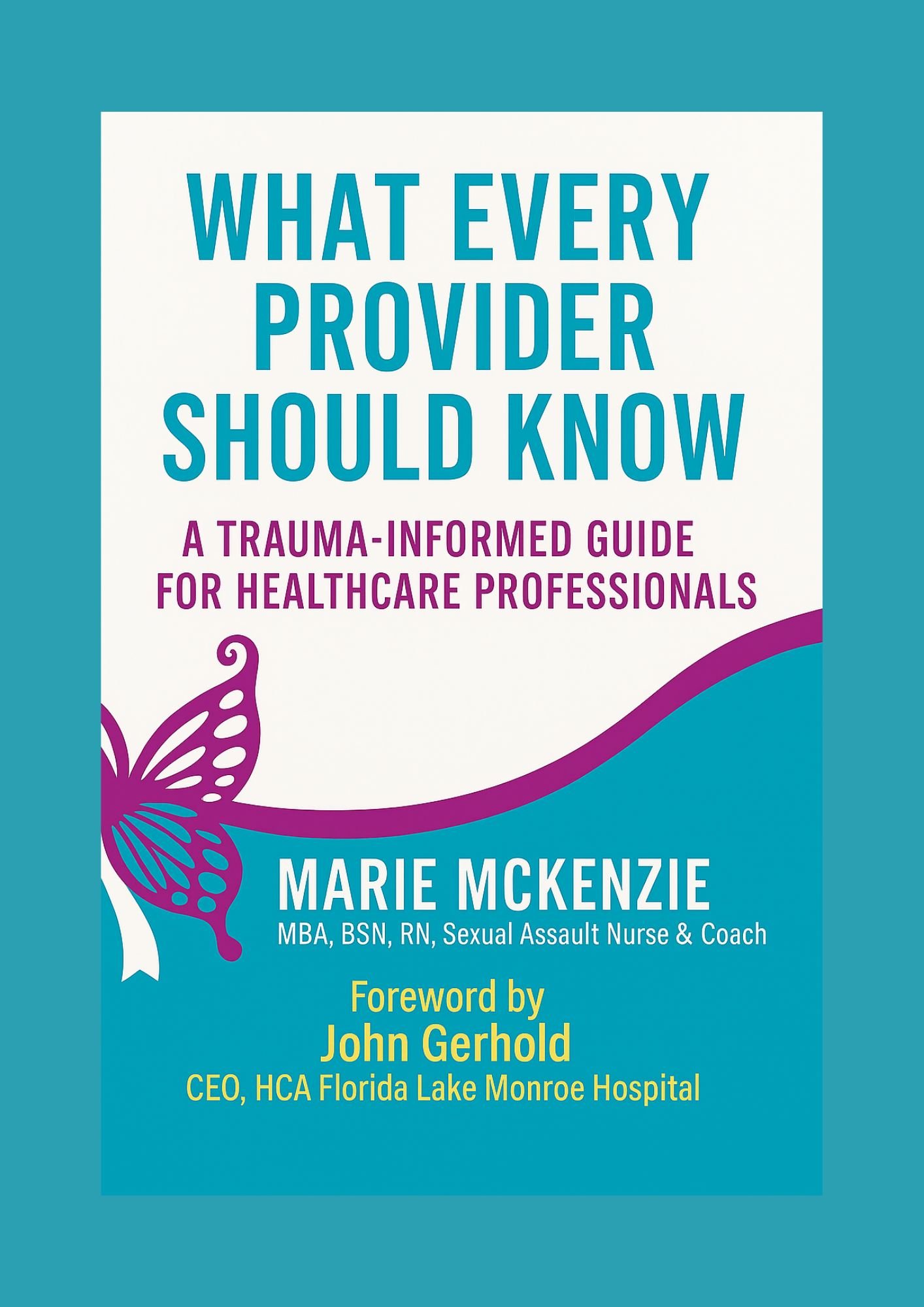
My book, What Every Provider Should Know: A Trauma-Informed Guide for Healthcare Professionals, takes these principles further and provides practical guidance for applying trauma-informed care in real-world healthcare settings.
The framework provides the roadmap. The guide provides the knowledge.
Together, they help us turn awareness into action.
The Future of Healthcare Is Trauma-Informed
Every one of us has the ability to influence how a patient experiences healthcare.
And it doesn't always require a major intervention.
Sometimes it is a pause. A question. An explanation. A moment of compassion.
Sometimes it is simply recognizing that the person standing, sitting, or lying in front of us may be carrying something we cannot see.
That's why trauma-informed care isn't only about what we do. It's about how we do it.
At ISACI, my mission is to equip healthcare teams with the knowledge and practical skills to provide survivor-centered, trauma-informed care.
Because the people who trust us with their care deserve to feel safe. They deserve to be treated with dignity and respect. And they deserve to have a voice in what happens to them.
Safety first. Empowerment always.
Ready to Take the Next Step?
What Every Provider Should Know: A Trauma-Informed Guide for Healthcare Professionals offers practical guidance to help you bring trauma-informed principles into everyday patient interactions.
Get your copy → What Every Provider Should Know
f you're a leader looking to strengthen trauma-informed, survivor-centered care across your team, I’d welcome the opportunity to discuss how ISACI training and consultation can support your organization.
Bring Trauma-Informed Care Training to Your Team → Schedule A Consultation