

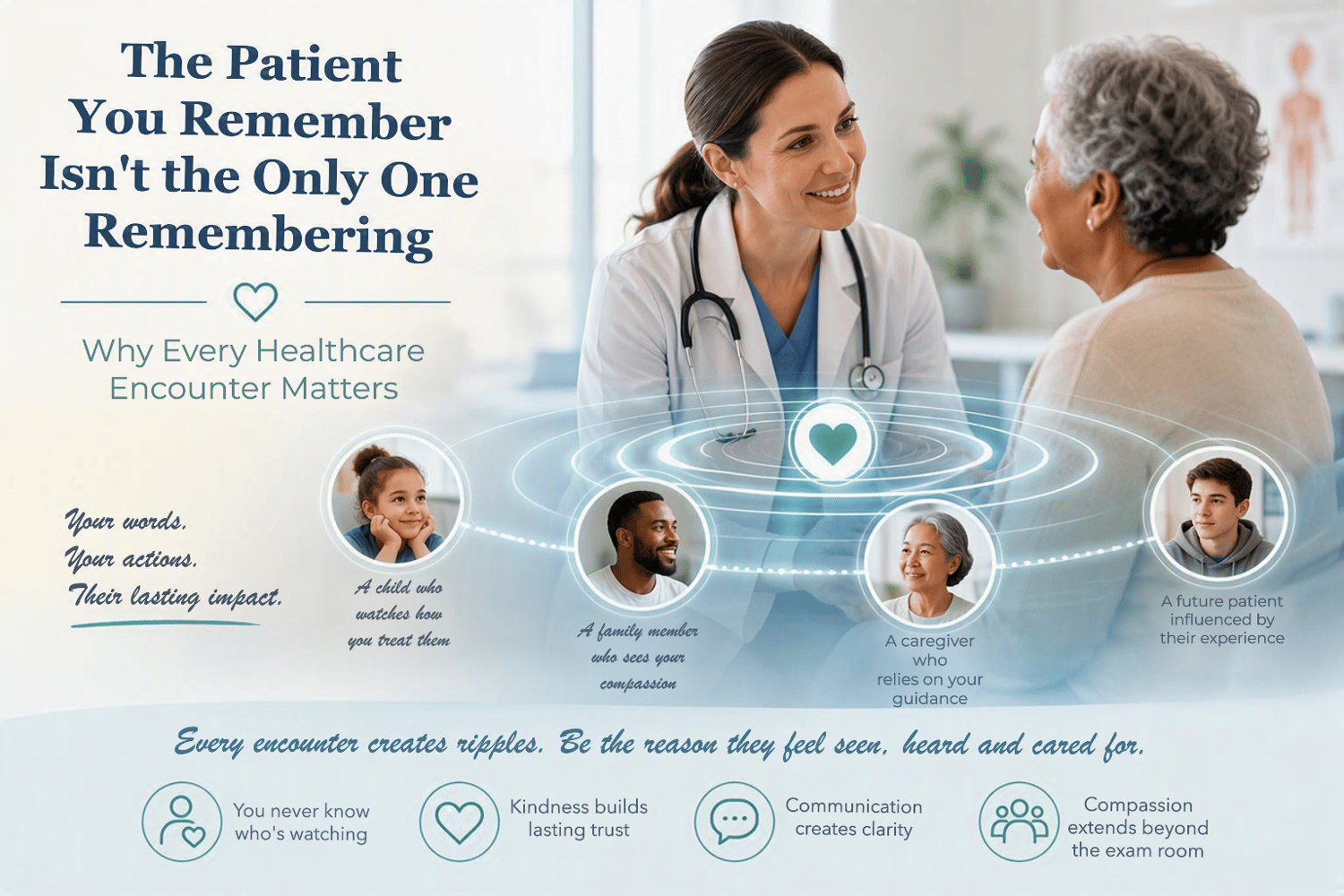
Every day, healthcare professionals walk into moments that matter.
A patient arrives scared.
A family member is overwhelmed.
Someone is experiencing pain, uncertainty, or a crisis they never expected.
Healthcare teams are trained to assess, diagnose, treat, and stabilize. But there is another part of every encounter that deserves equal attention:
How did that person feel while they were in our care?
Because patients may forget the exact words we used.
They may forget the name of the medication they received.
They may forget the details of the procedure.
But they often remember:
- Did someone listen to me?
- Did someone believe me?
- Did someone explain what was happening?
- Did I feel respected?
- Did I feel safe?
This is why trauma-informed care matters
Trauma Is More Common Than We Realize
Trauma impacts people from all backgrounds and walks of life.
Some patients enter healthcare settings carrying experiences of violence, abuse, neglect, loss, accidents, or previous medical trauma. Many will never disclose what they have experienced.
That means healthcare professionals may be caring for trauma survivors without knowing their story.
Trauma responses can look different from person to person.
A patient may appear:
- Angry
- Anxious
- Quiet
- Distrusting
- Resistant to care
- Unable to answer questions
Without understanding trauma, these behaviors may be labeled as difficult or noncompliant.
Trauma-informed care encourages us to look deeper.
Instead of asking:
“What is wrong with this patient?”
We begin asking:
“What might have happened that is affecting how this person is responding?”
That shift creates compassion.
Healthcare Can Be a Place of Healing
Healthcare professionals enter this field to help others. However, even with good intentions, certain interactions can unintentionally create fear or loss of control.
A patient may feel retraumatized when:
- Procedures are performed without adequate explanation
- Choices are removed unnecessarily
- Concerns are dismissed
- Personal space is not respected
- Communication feels rushed or judgmental
Trauma-informed care does not mean avoiding necessary care.
It means providing necessary care while recognizing the whole person.
The diagnosis is important.
The person behind the diagnosis is equally important.
Safety Is the Foundation
Safety is at the heart of trauma-informed care.
Safety means more than physical protection.
It also means emotional and psychological safety.
Patients feel safer when healthcare professionals:
- Introduce themselves
- Explain what will happen next
- Ask permission
- Provide choices when possible
- Listen without judgment
- Respect personal boundaries
A simple statement can change an experience:
“Before we begin, I want to explain what will happen and answer any questions you have.”
That moment communicates:
“You matter.”
“You have a voice.”
“You are part of this process.”
Every Healthcare Team Member Matters
Trauma-informed care does not begin when the patient enters the exam room.
It begins the moment they enter the healthcare system.
The registration team.
The security officer.
The nurse.
The provider.
The technician.
The environmental services team.
Every person contributes to whether a patient feels welcomed, respected, and safe.
Creating a trauma-informed culture requires everyone to understand their role.
Because every interaction sends a message.
Trauma-Informed Care Supports Healthcare Professionals Too
Trauma-informed care also supports the people providing care.
Healthcare professionals are exposed to suffering, emergencies, and difficult situations every day.
Without the right tools, compassion can become exhaustion.
Trauma-informed training helps teams:
- Improve communication
- Reduce conflict
- Build confidence
- Strengthen teamwork
- Create safer environments
When healthcare workers feel equipped, patients benefit.
Small Changes Create Lasting Impact
Trauma-informed care is not about perfection.
It is about awareness.
It is about recognizing that every patient has a story we may never know.
It is about understanding that our words, our actions, and our presence matter.
A moment of kindness can restore dignity.
A moment of patience can create trust.
A moment of safety can change someone’s healthcare experience.
The question every healthcare professional should ask is:
“Did this person feel safe in my care?”
Because the patient you remember may only be one encounter in your day.
But you may be the healthcare professional they remember for years.
Marie L. McKenzie, BSN, RN, MBA, CEN, SANE
Founder, (ISACI), Trauma-Informed Care Educator
ISACI delivers trauma-informed training for healthcare teams and survivor-centered coaching through RISE Framework™—two paths, one framework, one philosophy
Trauma-Informed. Survivor-Centered. Always.
Learn more about ISACI HERE