

How Most People Journal & The Problem With It.
Most people think journaling is about writing their thoughts, feelings, emotions and what happened in their day. This is partially true. But after describing what’s going on in your life... then what? When we dump our thoughts into the page it’s similar to calling a friend to talk about how we're feeling just to get it off of our chest.
Sure, that friend may listen. And, sure, after talking to them we may feel lighter. But oftentimes this is a temporary relief. Otherwise, when you think about it, we wouldn’t keep revisiting the same topics and unfortunately dumping these same topics on to others. Or, in this case, writing about the same thing in our journal without making growth in our lives.
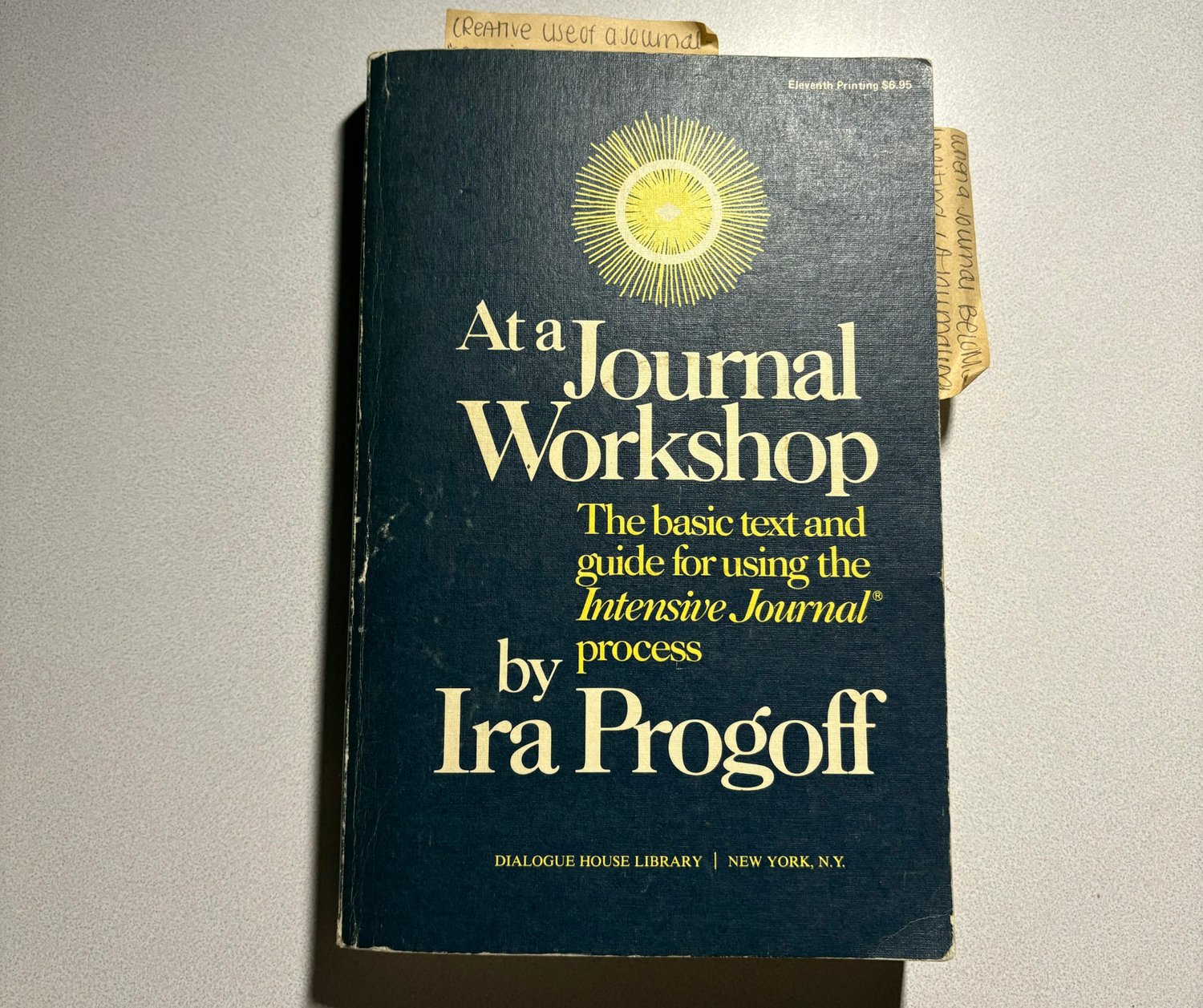
It's no doubt that journaling feels therapeutic but what if instead of just feeling good it *changed* our lives. I came across some interesting perspectives in the book "The Intensive Journal Process" by Ira Progroff. It's shifted the way I journal and think about journaling and I want to share it.
The Background Story: How I Discovered This Powerful Way to Journal
I wanted to learn more about the journaling process. I've been journaling since I was in 5th grade because I enjoyed expressing myself freely. Journaling has always made me feel better and because that was enough for me I'd never take the time to research how journaling came to be a popular tool.
In my search, I came across the psychologist Ira Progoff. He’s known for being apart of the depth psychology movement. This movement was all about studying the subconscious mind. During his research in other areas he stumbled upon the usefulness of keeping a journal. He also found there were limitations to the typical way that most of his patients were journaling. This motivated him to find a process that would move past the limitations he noticed. He spent several years refining the journaling process to accommodate for it's limitations.
.
A few limitations he noted:
- journaling was too surface level (most people only wrote about their day, vented or emotionally dumped)
- people repeated the same thoughts in their journal without progression (I've definitely noticed this within my own journaling practice)
- it lacked organization for understanding different areas of our life and how they fit into each other
It took him years of refining a process he ends up calling 'The Intensive Journal Process' which is a way of journaling that is systematic, effective and allows the user to:
- make meaning of their life,
- establish organization in their life,
- to record their life history without falling into the previously mentioned limitations
Recognizing these limitations he wanted to refine a journal practice that:
- helped people hear their inner voice and gain more insight into themselves
- created meaning across different aspects of our lives so that we can see everything as connected
- stimulated personal growth rather than just emotional release
His work with the Intensive Journal Process is chronicled in his book called "At a Journal Workshop" which goes into depth of what would happen in an Intensive Journal Therapy Workshop. He wrote this book to be more accessible to those who couldn't come to a workshop and those who wanted to continue the lifelong practice of keeping a journal.
His passion for making journaling systemized, impactful and accessible is really inspiring to me. Although I've directly experienced the usefulness of keeping a journal reading his work is encouraging to take it serious as the actual transformative, creative and spiritual practice that it is.
For the sake of brevity, I'll stick to one thing that I've taken from this book away so far.
This Question Will Improve Your Journaling (Even If You Never Read This Book)
So far, I'd recommend this book to anyone interested in studying a system of journaling that's rooted in depth psychology. I'd also recommend it to anyone who is looking to develop a practice of writing that feels grounding. Many people are seeking a way to engage with the spiritual side of themselves outside of the typical systems of church that most of us have been exposed to. Many people are seeking to go deeper within themselves in a way that doesn't involve rigid systems and journaling is a way to engage with the innermost part of ourselves. I'd also recommend this book for anyone who is looking to deepen there career as a journal therapist or add the practice of journaling to their existing practice. It's thorough. But if you don't have interest in getting the book for yourself I'll tell you what's been transformational for me so far.
My eyes have been opened to using journaling in a way that is much deeper than emotional release.
After writing how I'm feeling or what's going on I then write the words "What is this trying to teach me?"
What asking this question, after dumping my thoughts, helped me see was that there’s medicine, richness and depth in every experience of my life. Rather than feeling like life is happening to me and overly identifying with the events - especially the emotionally uncomfortable ones - I’m able to more clearly see what these experiences are trying to teach me.
For example: Let's say I'm frustrated with a person. I write about everything this person does that makes me feel upset. After I finish writing I definitely feel lighter but as weeks go by I notice I'm still in the cycle of talking about the same thing. That, then, becomes an addition to the problem that I'm venting about because now I realize that I'm stuck in a loop.
This is where the question "What is this trying to teach me?" comes in. What was once just a typical session where I dumped my emotions on the page becomes an opportunity to dig deeper into the situation and realize this person or situation is here to teach me a lesson. Asking myself what that lesson may be allows me to dive deeper into myself and emerge with the medicine I need to resolve the situation or better understand myself.
Notice how the first way of writing is just me talking about what's going on. Notice how the second one is a question. Questions allow us to penetrate deeper into the nature of ourselves & has a beautiful way of leading us back home to ourselves.
I’ve been experimenting with new ways to bring journal therapy into every day life and this little question is at the center of what I’m creating. I’ll be sharing more soon about my journal therapy studies - but for now I highly recommend you join me in asking this one question in your journal
'What is this trying to teach me?'
Comments ()