
Gentle ways children and teenagers can reconnect, regulate and feel calmer in an overwhelming world
There is something about nature that slows us down. Not always dramatically. Not in a magical movie-montage kind of way where everybody suddenly becomes emotionally healed whilst standing barefoot in a forest at sunrise. Real life is usually much messier than that. But nature often gives children and adults something modern life rarely does: slower attention, quieter stimulation, space to breathe,
and permission to simply be for a little while.
Some people reading this will already know exactly what I mean by that. Others may hear phrases like “being present” or “mindful moments” and understandably feel that it all sounds slightly fuzzy and unrealistic, particularly if you are currently trying to support an anxious, overwhelmed or emotionally exhausted child whilst also juggling work, laundry and approximately 47 unread school emails. Many of us
live in a near constant state of rushing, it's kind of a life necessity isn't it.
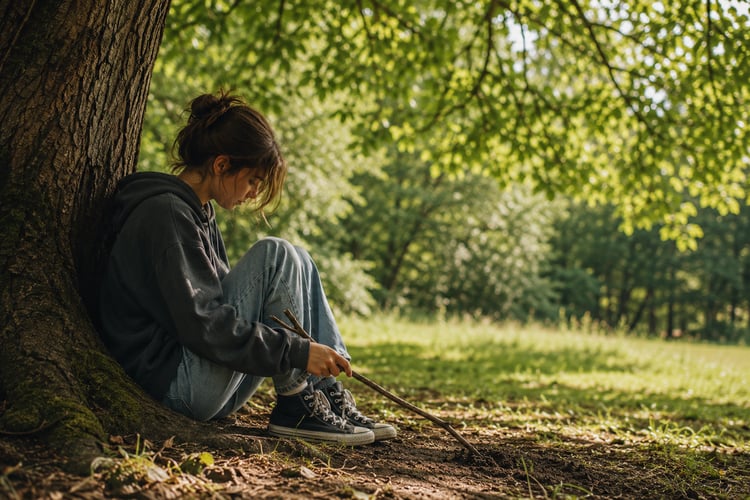
I don't know about you but I often used to find myself rushing through moments I barely fully experience before moving onto the next thing. I was trying to fit as much in as possible. I still do that...a lot!
The point is that often children feel that pace too. My children started to pull me up on it as they got older. My son definitely would not have engaged in many of my suggestions below. It was not him, nor was it me as a child. But my daughter...
Over the years, some of the calmest moments my daughter and I shared happened almost accidentally. Long before I knew much about nervous system regulation or mindfulness techniques, I used to encourage her to “take a picture in her head” when we found somewhere peaceful. We would stop for a moment and really notice where we were.
The light through the trees.
The sound of water.
Cold air on our faces.
The colour of the sky.
Birdsong.
The smell after rain.
She would close her eyes for a few seconds and try to “save the picture” in her mind. Before I knew it, I was doing it too, and I liked it, for the first time in my life was learning to really appreciate my surroundings. Looking back now, I realise those small moments became some of her most powerful calming techniques. Not because they removed anxiety entirely, but because they gave her small ways to slow herself down, reconnect with her body and regulate overwhelming thoughts.
It calmed me too.
Sometimes we would simply walk more slowly. Sometimes we planted things. Sometimes we sat quietly collecting pebbles on an autumn beach. At one point we became mildly obsessed with taking cuttings from an old cheese plant to see if they would grow in water in a glass vase. For the record: they absolutely do. Quite enthusiastically, actually.
She also went through a phase of using a potato peeler to turn sticks into spears in the garden whenever she felt frustrated. She is now 26 years old and, honestly, I suspect she probably still does this quietly somewhere when life becomes overwhelming.
And perhaps that is part of the point.
Children often guide us towards regulation if we give them enough time and space to notice what genuinely helps them.
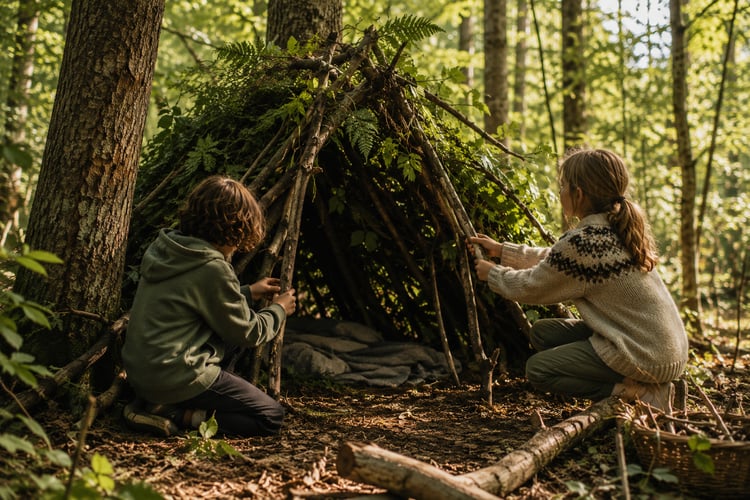
Not every child will find calm in the same ways. Some children dislike mud, insects, silence or unfamiliar outdoor environments. Some children feel safer indoors. Some children need movement whilst others need stillness. Nature-based regulation is not about forcing children into idyllic woodland experiences because Pinterest told us they should be building fairy houses out of moss by age seven.
It is simply about gently reconnecting children with slower, sensory, meaningful experiences that reduce overwhelm rather than adding to it and importantly, nature does not need to mean wilderness.
A child can experience calming moments:
- watering herbs on a windowsill
- noticing birds through a bedroom window
- collecting stones at the beach
- sitting beneath a tree in a local park
- growing sunflower seeds in yoghurt pots
- photographing clouds on the walk home from school
Small moments still matter.
Research increasingly suggests that time spent in natural environments may help support emotional wellbeing, attention, stress reduction and emotional regulation. Outdoor learning and nature connection have also been linked with improved concentration, social connection and calmer nervous system responses in many children and young people. Perhaps this is not especially surprising.
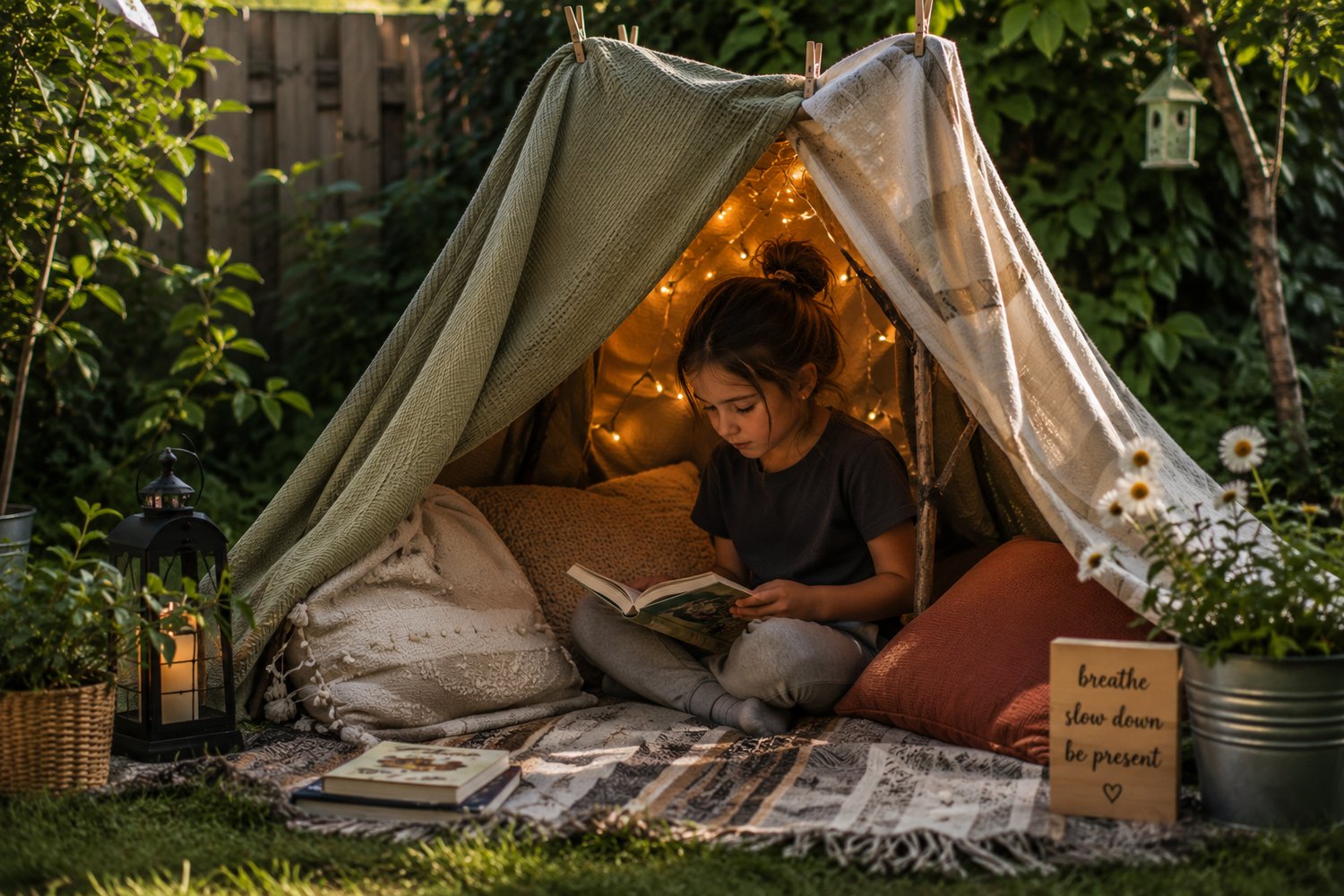
Human beings evolved in movement, community and nature long before we experienced constant notifications, endless scrolling and lives lived largely indoors beneath artificial light. Many children today are carrying enormous amounts of stimulation, emotional pressure and cognitive overload.
Sometimes calmer environments genuinely help.
Particularly for children experiencing:
- anxiety
- emotional overwhelm
- EBSA (Emotionally Based School Avoidance)
- burnout
- dysregulation
- sensory overload
- low mood
- emotional exhaustion
Nature often lowers the pressure to perform.
There is no “correct” way to watch water move over stones. No assessment rubric for noticing birds. No competition involved in collecting sea glass or pressing flowers between old books. Children can simply participate. And often, that is where regulation quietly begins.
Making Room For Something Else
One thing I learned over the years is that recovery is rarely a straight line. There may be days when a child cannot leave the house. Days when everything feels overwhelming. Days when even the smallest task feels impossible. There may also be days when they suddenly want to build a den, race down a hill, tell jokes, take photographs, paddle in a stream or spend an hour looking for interesting stones.
Those moments matter, because they remind children that anxiety is not the whole story.
When children are struggling, family life can easily become centred around the struggle. We talk about worries, symptoms, school, panic, appointments and what is going wrong. Understandably so. We are trying to help. Yet sometimes children also need room for something else.
A laugh.
A shared joke.
A small adventure.
A moment of curiosity.
A chance to feel like themselves again.
As parents, we can sometimes become so focused on supporting difficult emotions that we accidentally leave little space for anything beyond them. That doesn't mean pretending everything is fine. It doesn't mean forcing happiness. It simply means staying open to those small opportunities when they appear.
A short walk that becomes a longer one. Five minutes outside that turns into an hour. A silly moment that becomes a family joke repeated for years. A child who says "yes" to something today that they could not face last month. Recovery often looks less like a dramatic breakthrough and more like a gradual increase in good moments.
More good hours in a day.
More good days in a week.
More confidence to try again.
The goal is not to eliminate every difficult feeling.
The goal is to help children discover that difficult feelings are not the whole story.
Gentle Nature-Based Ideas for Calm & Connection
Not every activity needs to be educational in the formal sense. Sometimes the value lies in slowing down, noticing and creating calmer emotional experiences together. I know that for my daughter who lives in a very busy city she still grows her plants, takes a long walk out in the country, visits local parks, and still makes us cards made from her pressed flower collection. These things suited her, helped her and continue to be part of the way she lives her life.
Here are some simple ideas that many children and teenagers may enjoy:
Quiet noticing activities
- cloud watching
- bird spotting
- photography walks
- collecting leaves or interesting stones
- listening to rivers or waves
- sunset or sunrise walks
- nature scavenger hunts
- sketching trees or flowers
- sitting quietly in a favourite outdoor spot
Hands-on calming activities
- planting seeds
- growing herbs indoors
- repotting old plants
- taking plant cuttings
- watering routines
- flower pressing
- drying flowers
- pebble painting
- making collages from old nature books
- creating nature journals
- collecting shells, sea glass or pinecones
Ideas for older children & teenagers
- photography projects
- journalling outdoors
- sketching or painting landscapes
- making jewellery from sea glass or stones
- mindful walking
- building dens or lookout spots
- hammock reading
- creating playlists for walks
- nature mood boards
- identifying wildflowers or plants
- beachcombing
- making art from found natural objects
Family connection ideas
- picnics
- hot chocolate walks in winter
- planting something together
- slow Sunday nature walks
- visiting garden centres
- looking through old flower books from charity shops
- building bug hotels
- collecting “interesting things” together
- taking photographs of the same tree throughout the seasons
The important thing is not perfection.
It is connection.
Slowness.
Breathing space.
Moments of regulation.
Moments where children feel safe enough to exist without pressure.
And perhaps, in a world that increasingly asks children to move faster, perform more and absorb constant stimulation, those quieter moments matter more than we sometimes realise.
At InclusiveEd, many Calm Code™ resources are built around this understanding:
that emotional safety, meaningful connection and gentle regulation strategies help children feel calmer, safer and more able to engage with the world around them.
Not every strategy will work for every child.
Not every day will feel peaceful.
And sometimes “finding calm” simply means surviving a difficult afternoon together with kindness intact.
But I do hope that somewhere within these ideas you find something useful for you and your child.
Even if it simply starts with standing still for a moment and taking a picture in your head.
If this blog resonated with you, you may also find these InclusiveEd resources helpful for supporting:
- anxiety
- emotional regulation
- school overwhelm
- EBSA
- emotionally safe learning
- calmer routines at home and school

Free Anxiety & EBSA Support Pack
If you're supporting a child with anxiety, school avoidance, EBSA, overwhelm or big feelings, I've created a free printable starter pack to help children understand their emotions and begin important conversations at home or school.
Inside you'll find gentle worksheets on overwhelm, sadness, anger, calm strategies and emotional wellbeing, plus practical support from the InclusiveEd Calm Code series.
📥 Download the FREE Calm Code Starter Pack here: FREE Calm Code Starter Pack Anxiety, EBSA & Emotional Wellbeing Worksheets for Children - Payhip
Comments ()