

When a child is having a panic attack, most adults instinctively want to fix it quickly.
- We reassure.
- We ask questions.
- We encourage them to calm down.
- We try to reason.
- We try to stop the panic.
But during a panic attack, a child’s nervous system is not thinking logically.
It is reacting as if there is danger, even if the danger is not visible to us. That’s why some of the most well-meaning responses can accidentally increase overwhelm.
The good news is:
- You do not need perfect words.
- You do not need to “solve” the panic.
- And you do not need to make the feeling disappear immediately.
What helps most is helping the child feel:
- safe
- regulated
- understood
- and not alone.
What A Panic Attack Can Look Like In Children
Panic does not always look dramatic.
Some children:
- cry
- shake
- hyperventilate
- cling to adults
- say they “can’t do it”
Others may:
- shut down completely
- go silent
- become angry
- try to run away
- refuse to speak
- complain of stomach aches or dizziness
- say they feel sick or trapped
Some children cannot explain what is happening at all.
Their brain and body are overwhelmed.
That is not attention-seeking.
It is a stress response.
What NOT To Do During A Panic Attack
1. Don’t overwhelm them with questions
When children panic, processing language becomes harder.
Questions like:
- “What’s wrong?”
- “Why are you panicking?”
- “What happened?”
- “What are you worried about?”
…can feel overwhelming in the moment.
Instead:
keep language simple and calm.
Try:
- “I’m here.”
- “You are safe.”
- “We can take this slowly.”
- “You don’t have to talk right now.”
2. Don’t try to argue with the fear
Even if the fear seems irrational to us, it feels very real to them.
Saying:
- “There’s nothing to worry about.”
- “You’re overreacting.”
- “Calm down.”
- “You’re fine.”
…can sometimes increase panic because the child feels misunderstood.
Instead:
focus on helping the body feel safe first.
3. Don’t rush them
Many children need recovery time after panic.
Trying to immediately continue:
- schoolwork
- conversations
- demands
- transitions
- social interaction
…can prolong overwhelm.
Recovery is not laziness.
It is nervous system recovery.
What DOES Help During A Panic Attack
Stay calm yourself! (Difficult I know)
Children often borrow calm from safe adults.
- You do not need to appear perfect.
- Just steady.
- Slow your voice.
- Slow your movements.
- Reduce pressure.
- Sometimes your calm presence matters more than your words.
Reduce stimulation
Panic can make everything feel louder, brighter and more intense.
If possible:
- reduce noise
- dim screens
- move away from crowds
- lower demands
- give physical space if needed
Some children want closeness.
Others need distance.
Follow their cues where possible.
Use grounding, not pressure
Grounding helps bring attention back to the present moment.
Simple ideas include:
- holding a cold drink
- noticing feet on the floor
- slow breathing together
- naming things they can see
- holding a comfort item
- listening to calming music
- gentle movement
Not every strategy works for every child.
That is okay.
Keep language short and predictable
During panic, less is often more.
Helpful phrases:
- “You are safe.”
- “I’m staying with you.”
- “This feeling will pass.”
- “One step at a time.”
- “You don’t need to explain.”
Avoid long explanations while the child is overwhelmed.
After The Panic Attack
Children are often exhausted afterwards.
Some may:
- cry
- sleep
- become quiet
- feel embarrassed
- become irritable
- want reassurance
- want to pretend it never happened
Try not to immediately analyse everything.
The goal first is:
Recovery.
Later — when calm — you can gently explore:
- what helped
- possible triggers
- early warning signs
- support strategies for next time
A Very Important Reminder
Panic attacks can feel frightening for children and adults.
But panic itself is not dangerous.
The body is reacting to perceived threat.
The nervous system is trying to protect the child.
With understanding, safe support and practice, many children gradually learn:
- what is happening in their body
- how to recognise early signs
- and what helps them feel safer and calmer over time.
Progress is often slow, uneven and non-linear.
That does not mean you are failing.
Helpful Calm Support Tools
If your child struggles with panic, overwhelm or school anxiety, these gentle printable tools may help support calm communication and recovery at home or school:
- Understanding Anxiety & EBSA - School Anxiety EBSA Support Toolkit | Emotional Regulation Printables (digital Download) - Etsy
- Calm Code for Children — Understanding Anxiety & Finding Calm - Child Anxiety Toolkit Printable, Calm Down Worksheets Workbook Ages 7-11, Coping Skills, Emotional Regulation - Etsy
- Calm Code for Teens & Young People Teen Anxiety Workbook | Emotional Regulation & Panic Support for Overwhelmed Teens | Calm Code Printable Journal - Etsy
FREE LINK TO QUICK CALM AND SUPPORT TOOLS PRINT, CUT, LAMINATE ADD TO KEY RING - for those moments when the child needs reasurence with them. Copy and paste below -
https://acrobat.adobe.com/id/urn:aaid:sc:EU:a0db173a-35ff-4ee5-9948-51ed52fec75a?x_api_client_id=edge_extension_viewer&x_api_client_location=share
Free Anxiety & EBSA Support Pack
If you're supporting a child with anxiety, school avoidance, EBSA, overwhelm or big feelings, I've created a free printable starter pack to help children understand their emotions and begin important conversations at home or school.
Inside you'll find gentle worksheets on overwhelm, sadness, anger, calm strategies and emotional wellbeing, plus practical support from the InclusiveEd Calm Code series.
📥 Download the FREE Calm Code Starter Pack here: FREE Calm Code Starter Pack Anxiety, EBSA & Emotional Wellbeing Worksheets for Children - Payhip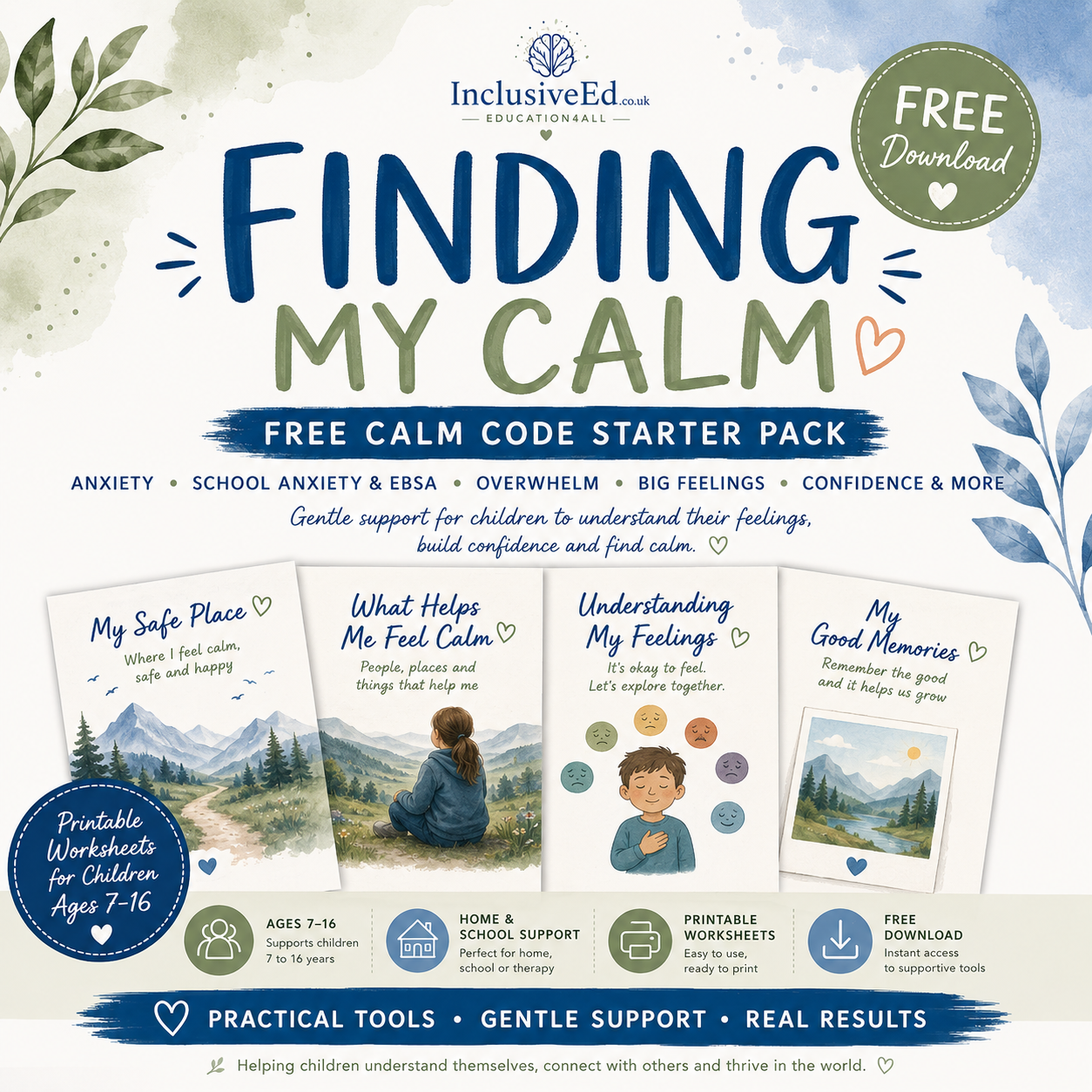
Comments ()