
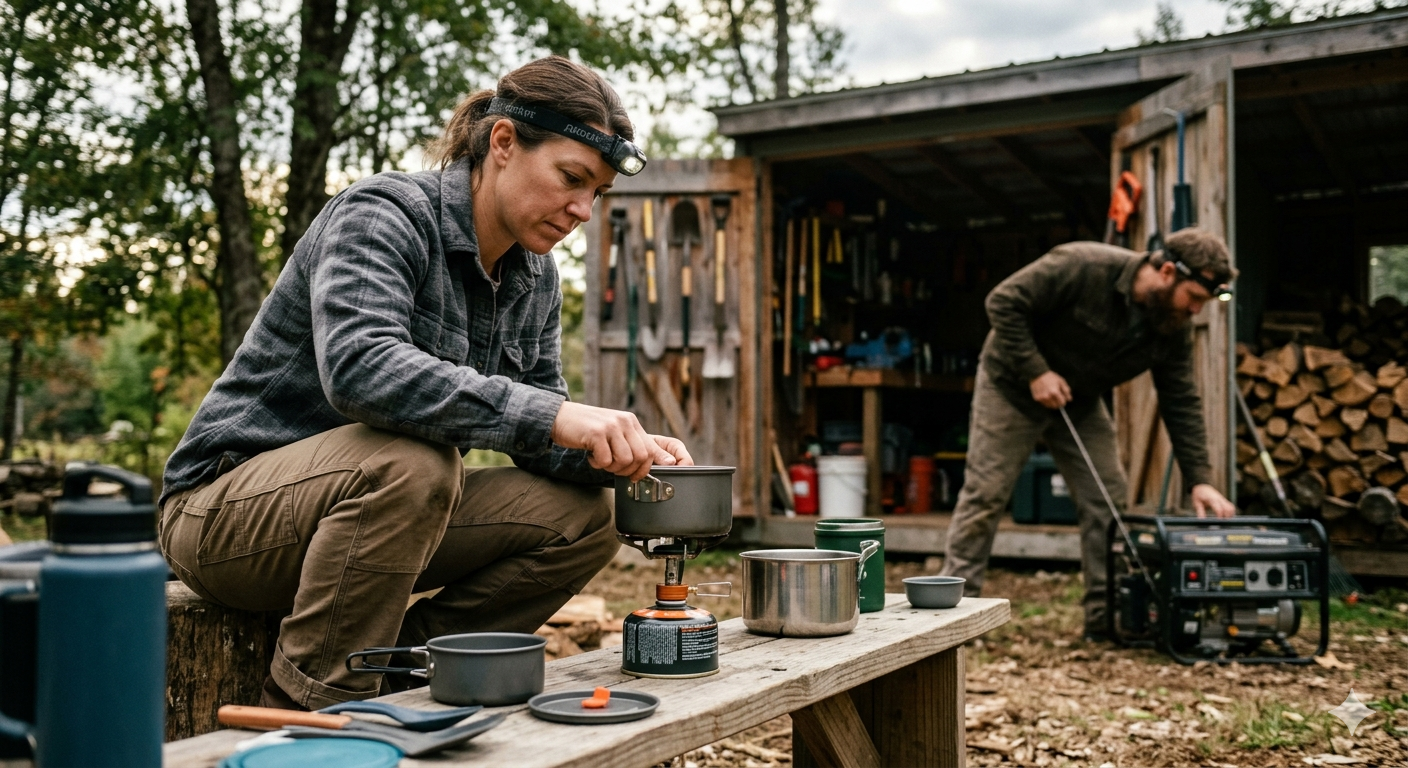
We often use the terms "prepared" and "ready" interchangeably, but in the context of self-reliance and resilience, they represent two very different states of being. Understanding the gap between them is the difference between owning a tool and knowing how to fix a house.
One is about inventory; the other is about integration.
Preparedness: The Foundation of "Things"
Preparedness is largely a logistical state. It is the act of gathering the resources you might need for a future event. When you are prepared, you have checked the boxes:
- The Gear: You have the water filters, the medical kits, and the backup power.
- The Storage: Your pantry is full, and your tools are organized in the shed.
- The Plan: You have a document or a map that outlines what to do when things go sideways.
Preparedness is essential, it provides the "hardware" for survival. However, preparedness is static. You can be perfectly prepared on paper while remaining completely immobile when a real crisis hits.
The Preparedness Trap: Many people stop here. They buy the kit, put it in the closet, and feel a false sense of security. They have the stuff, but they haven't yet built the system.
Readiness: The Evolution of "Action"
Readiness is a psychological and physical state. It is the ability to use what you have under pressure, in the dark, while tired or stressed. Readiness is dynamic and lived.
- The Skill: You don't just own a tourniquet; you have practiced applying one-handed in the dark.
- The Condition: You have the physical stamina and mental fortitude to execute your plan.
- The Instinct: You’ve run "stress tests" on your systems. You know that your backup generator takes three pulls to start and that your garden needs extra shade in July.
Readiness is what happens when preparedness meets experience. It is the "software" that runs the hardware.
The Bridge: How to Move from Prepared to Ready
If preparedness is a shopping list, readiness is a rehearsal. Here is how you bridge the gap:
1. The "Power Out" Test
Don’t wait for a storm. Turn off your main breaker for twenty-four hours. Can you cook? Can you see? Do you know where the flashlights are without thinking? This move from theory to practice is the birth of readiness.
2. Skill Maintenance
A water filter is useless if the ceramic element is cracked or if you’ve forgotten how to backflush it. Readiness requires regular interaction with your gear. If you haven't touched a tool in six months, you aren't ready to use it, you're just "prepared" to look for the manual.
3. Mental Adaptability
The biggest difference is flexibility. A prepared person relies on their plan working perfectly. A ready person knows the plan will fail and is prepared to pivot. Readiness is the confidence that comes from knowing you can solve problems as they arise, regardless of what gear you have on hand.
The Bottom Line
Preparedness is what you have. Readiness is who you are.
Investing in supplies is a great first step, but don't let your journey end at the checkout counter. True self-reliance isn't found in a box of gear, it’s found in the muscle memory, the practiced skills, and the calm mind of someone who has moved beyond simple accumulation and into true readiness.