
The rise of "PrepTok" and "Aesthetic Prepping" in 2026 has brought self-reliance into the mainstream, but it has also created a distorted version of what it actually means to be ready.
On social media, prepping looks like a perfectly organized pantry of matching glass jars and a $10,000 "bug-out" gear haul. In reality, that’s just consumerism in a tactical vest.
Here is what the algorithms get wrong about the reality of prepping.
1. The "Aesthetic" Trap
Social media rewards what looks good on camera. This has birthed the "restock video" era, where prepping is equated with buying 50 bottles of the same laundry detergent and arranging them by color.
- The Social Media Myth: Prepping is about perfectly labeled bins and a "Pinterest-worthy" bunker.
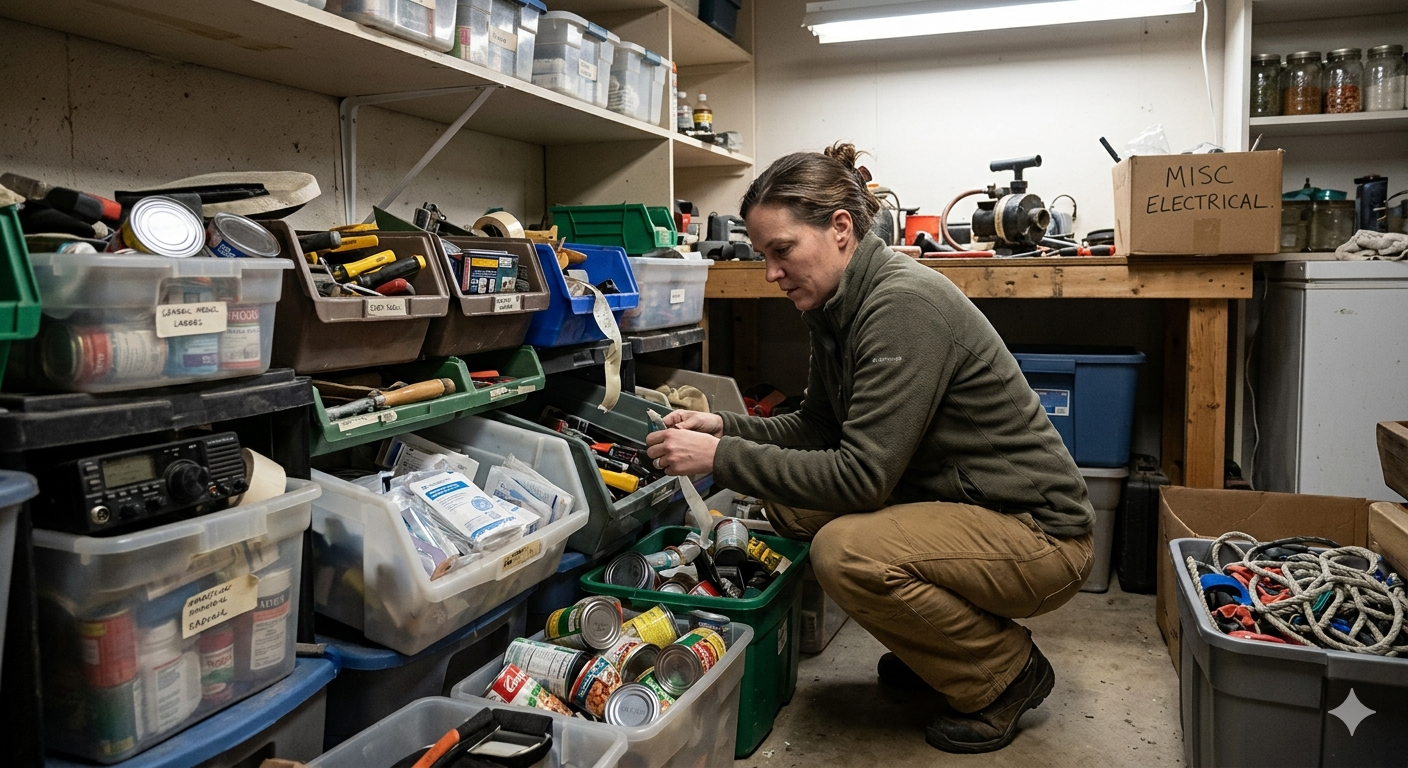
- The Reality: Real prepping is often messy and deeply unphotogenic. It’s a box of mismatched PVC pipe fittings because you need to know how to fix a leak, or a freezer full of ugly, hand-labeled bags of garden scraps for soup. If your prep looks like a showroom, you’re probably prioritizing the camera over the function.
2. Gear Over Skill
It’s easy to sell a $400 survival knife through a link in a bio. It’s much harder to "sell" the 50 hours of practice it takes to actually use a map and compass or to successfully grow a single calorie-dense crop like potatoes.
- The Social Media Myth: Buying the "ultimate survival kit" makes you ready.
- The Reality: Gear is a force multiplier, but you can't multiply zero. Without the skill to use it, that expensive equipment is just dead weight. Social media rarely shows the boring, repetitive practice required to make those tools useful.
3. The "Lone Wolf" Fantasy
The most popular prepping content often features a single person heading into the woods to thrive in isolation. It’s a rugged, cinematic narrative that fits perfectly into a 60-second Reel.
- The Social Media Myth: You can, and should, survive entirely on your own.
- The Reality: History shows that humans survive in communities. True prepping is about knowing your neighbors, knowing who has the tractor, who is a nurse, and who knows how to weld. A basement full of beans won't save you if you’re the only person in the neighborhood who isn't sharing.
4. Fear-Based Consumerism
Algorithms prioritize high-arousal emotions, and fear is the strongest one. Creators often use "doom-scrolling" hooks to convince you that a total collapse is imminent, and the only solution is the product they happen to be reviewing.
- The Social Media Myth: Preparation should be driven by panic and "end-of-the-world" scenarios.
- The Reality: Effective prepping is driven by calm risk assessment. You are far more likely to experience a three-day power outage, a job loss, or a localized flash flood than a cinematic apocalypse. Preparedness should reduce your anxiety, not fuel it.
5. Ignoring the "Boring" Preps
You will rarely see a viral video about someone updating their life insurance, building an emergency savings fund, or getting their annual physical.
- The Social Media Myth: Prepping is all about tactical gear and off-grid living.
- The Reality: Financial stability and physical health are the two most important "preps" you can have. If you have a year's worth of freeze-dried food but $0 in savings and high blood pressure, your priorities are skewed by what's "cool" online.
How to Prep "Realistically"
If you want to move away from the social media version of prepping, change your metric for success. Stop asking, "How does this look?" and start asking:
- Can I maintain this? (Simplicity over complexity).
- Have I tested this? (Experience over inventory).
- Who can I help with this? (Community over isolation).
True self-reliance isn't a performance; it’s a quiet, consistent commitment to being a person who can solve problems when things go wrong.
What do you think? Have you found yourself falling into the "aesthetic" trap, or have you found a way to keep your prepping practical and grounded?