
If you've ever handed a piano score to a trumpet player and wondered why it sounded wrong, you're not alone.
One of the most confusing concepts for beginning church musicians is the difference between concert pitch and transposed instruments. Understanding this simple idea can save hours of frustration and help your church orchestra play together more effectively.
What Is Concert Pitch?
Concert pitch is the actual pitch that is heard.
Instruments such as:
- Piano
- Flute
- Oboe
- Violin
- Viola
- Cello
- Trombone
- Tuba
are generally considered concert-pitch instruments.
When a pianist plays a C, the audience hears a C.
Simple enough.
What Is a Transposed Instrument?
A transposed instrument is designed so that the note written on the page is different from the pitch that actually sounds.
For example, when a Bb trumpet player sees and plays a written C, the note that comes out is actually a Bb.
Likewise, a Bb clarinet playing a written C also produces a concert Bb.
This means that trumpet and clarinet players cannot simply read music written for piano or flute and expect it to sound correct.
Their music must be transposed.
Why Do Transposed Instruments Exist?
Many beginning musicians ask:
"Why didn't they just make everything in the same key?"
The answer is practical.
Instrument makers wanted musicians to be able to switch between different sizes of the same instrument family while using similar fingerings.
For example, a clarinet player can move between various clarinets and still use familiar finger patterns.
The same principle applies to saxophones and brass instruments.
While this makes life easier for performers, it creates an extra challenge for arrangers and music directors.
Common Transposed Instruments in Church Orchestras
Bb Instruments
- Trumpet
- Bb Clarinet
- Tenor Saxophone
- Soprano Saxophone
Eb Instruments
- Alto Saxophone
- Baritone Saxophone
F Instruments
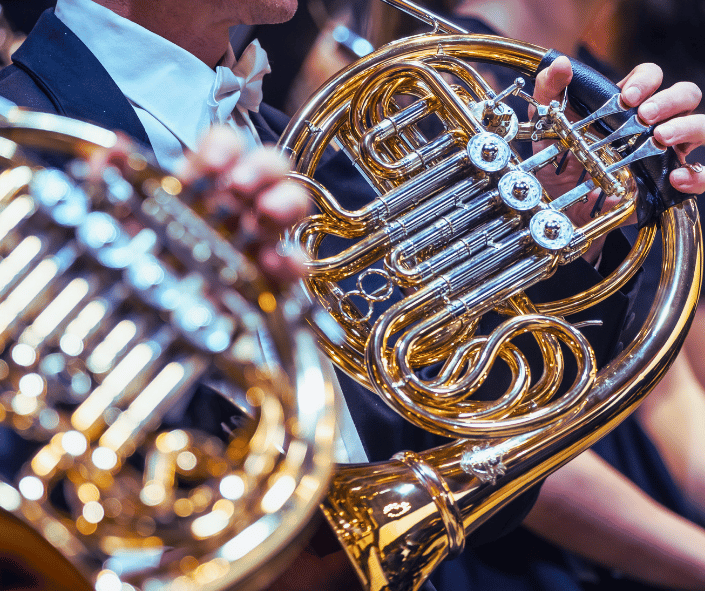
- French Horn
Each of these instruments requires its own properly transposed part.
Why This Creates Problems in Many Churches
Many churches rely on hymnbooks or piano scores.
The pianist can play directly from the music, but instrumentalists often face challenges because:
- The music is not written in their key.
- They must transpose on sight.
- Many young musicians have never learned transposition.
- Rehearsal time is wasted correcting wrong notes.
As a result, talented musicians become discouraged and may stop participating altogether.
The Solution: Properly Transposed Parts
The easiest solution is simple.
Provide every instrumentalist with music written specifically for their instrument.
When the clarinet player sees a C, it should be the correct note for that instrument.
When the trumpet player sees a G, it should be the correct note for that instrument.
No mental gymnastics.
No last-minute transposing.
No confusion.
Just music-making.
How This Helps Beginning Church Musicians
Properly transposed parts allow musicians to:
- Join the orchestra immediately.
- Focus on rhythm, tone, and expression.
- Build confidence.
- Enjoy rehearsals more.
- Support congregational singing effectively.
This is especially important for young musicians who are still learning to read music.
Why I Created Sacred Hymns for Orchestra
One challenge I observed in many church orchestras was the lack of ready-to-play music for transposed instruments.
Young clarinetists, trumpet players, saxophonists, and horn players were often expected to figure out transposition on their own.
Instead of helping them succeed, this frequently led to frustration.
That is why every volume of Sacred Hymns for Orchestra includes properly prepared parts for common transposed instruments. Musicians can focus on worship, ministry, and musical growth rather than worrying about what key they are supposed to play in.
Final Thoughts
Concert pitch and transposed instruments may seem confusing at first, but understanding the difference is an important step toward building a successful church orchestra.
When musicians are given music that is prepared correctly for their instruments, they can spend less time struggling and more time serving.
And that's exactly where their focus should be.