

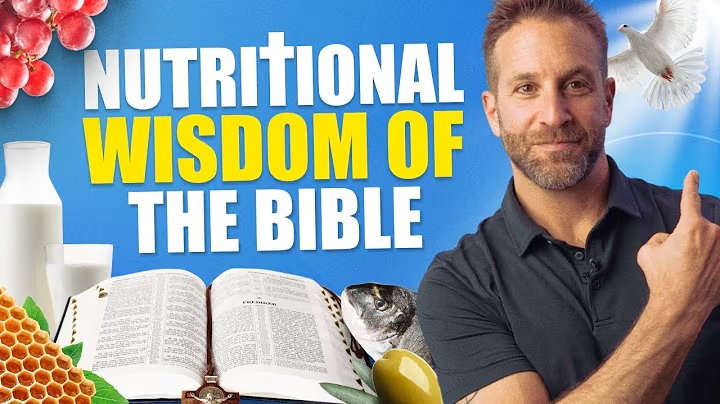
In our modern world of conflicting health advice, trendy diets, and complex wellness programs, many believers find themselves searching for truth amid the noise. What if the answers we seek have been available all along in the pages of Scripture? The Bible offers profound wisdom about health and wellness that transcends time, culture, and the latest scientific trends.
This isn't about cherry-picking verses to support personal preferences or creating a "Christian diet plan." Instead, it's about discovering the timeless principles that God has woven throughout Scripture regarding how we should care for our bodies, minds, and spirits. These principles provide a foundation that can guide our health decisions with wisdom, balance, and purpose.
The Body as God's Temple
Perhaps no biblical concept regarding health is more foundational than Paul's teaching in 1 Corinthians 6:19-20: "Do you not know that your bodies are temples of the Holy Spirit, who is in you, whom you have received from God? You are not your own; you were bought at a price. Therefore, honor God with your bodies."
This passage reveals several crucial truths about our relationship with physical health. First, our bodies are not merely our own possessions to do with as we please. They belong to God, purchased through Christ's sacrifice. This ownership brings both privilege and responsibility.
The temple metaphor is particularly significant. In ancient times, the temple was the dwelling place of God's presence, maintained with utmost care and reverence. The priests followed specific protocols for keeping the temple clean, orderly, and worthy of God's habitation. Similarly, our bodies house the Holy Spirit, making their care a spiritual discipline rather than merely a personal preference.
This understanding transforms how we approach food, exercise, rest, and lifestyle choices. Every decision becomes an opportunity to honor God through wise stewardship of what He has entrusted to us. It's not about perfectionism or legalistic rule-following, but about recognizing the sacred nature of our physical existence.
When we view our bodies as temples, several practical applications emerge. We become more thoughtful about what we consume, recognizing that our food choices affect not just our physical health but our ability to serve God effectively. We prioritize rest, understanding that adequate sleep is essential for spiritual alertness and emotional stability. We engage in physical activity not primarily for vanity but for maintaining the vessel God has given us for His purposes.
Divine Design in Creation
From the very beginning, God established patterns for health and wellness that we can observe throughout creation. Genesis reveals that God created humans in His image, placed them in a garden environment, and provided them with work that was both meaningful and physically engaging.
The original diet prescribed in Genesis 1:29 consisted entirely of plants: "Then God said, 'I give you every seed-bearing plant on the face of the whole earth and every tree that has fruit with seed in it. They will be yours for food.'" While this changed after the fall and again after the flood when God explicitly permitted meat consumption, the foundational emphasis on plant foods remains significant.
Modern nutritional science increasingly validates what Scripture suggested from the beginning: plants provide extraordinary benefits for human health. They contain fiber, antioxidants, phytonutrients, and other compounds that support optimal bodily function. Countries with the highest consumption of plant foods generally show lower rates of chronic diseases like heart disease, diabetes, and certain cancers.
This doesn't necessarily mean Christians must be vegetarian, but it does suggest that God's original design placed heavy emphasis on plant foods for good reason. Even today, incorporating more fruits, vegetables, whole grains, legumes, nuts, and seeds into our diets aligns with both biblical wisdom and scientific evidence.
The work Adam was given in Eden was physical but not burdensome. He was to "work it and take care of it" (Genesis 2:15). This suggests that God designed humans for regular physical activity as part of our natural state. We weren't created to be sedentary beings but rather to engage our bodies in meaningful movement and labor.
Sabbath Rest and Recovery
One of the most overlooked aspects of biblical wellness is the principle of Sabbath rest. In Exodus 20:8-11, God commands His people to remember the Sabbath day and keep it holy, working six days but resting on the seventh. This wasn't arbitrary legislation but a reflection of God's own pattern during creation.
Modern society often treats rest as laziness or lost productivity, but Scripture presents it as divine wisdom. God could have created everything instantaneously, yet He modeled a rhythm of work and rest that teaches us something fundamental about how He designed us to function.
The Sabbath principle applies to more than just one day per week. It encompasses the need for regular recovery in all areas of life. Our bodies require adequate sleep to repair tissues, consolidate memories, and restore energy. Our minds need periodic breaks from mental strain to maintain creativity and focus. Our spirits benefit from times of quiet reflection and worship.
Jesus Himself demonstrated this principle throughout His ministry. Despite the pressing needs around Him, He regularly withdrew to solitary places for prayer and rest (Luke 5:16). He also encouraged His disciples to rest when they had been ministering intensively: "Come with me by yourselves to a quiet place and get some rest" (Mark 6:31).
This biblical rhythm challenges the modern tendency toward constant busyness and productivity. It suggests that rest is not only permissible but essential for optimal functioning. When we neglect adequate recovery, we undermine our ability to serve God and others effectively.
Moderation and Self-Control
Scripture consistently promotes moderation as a key principle for healthy living. Proverbs 25:16 warns, "If you find honey, eat just enough—too much of it, and you will vomit." This simple statement contains profound wisdom about the importance of balance and self-regulation.
The fruit of the Spirit includes self-control (Galatians 5:22-23), which applies directly to our health choices. Self-control isn't about rigid restriction or joyless discipline, but about the freedom that comes from making wise choices aligned with God's design for our well-being.
In Philippians 4:5, Paul encourages believers to "let your gentleness be evident to all." The Greek word translated as "gentleness" can also mean "moderation" or "reasonableness." This suggests a balanced approach to life that avoids extremes in either direction.
Applied to nutrition, this principle argues against both gluttony and extreme restriction. God created food for nourishment and enjoyment, but problems arise when we use food to meet needs it wasn't designed to fulfill or consume it in quantities that harm rather than help our bodies.
The same principle applies to exercise and physical activity. While regular movement is essential for health, obsessive exercise that consumes excessive time and mental energy or causes physical harm violates the principle of moderation. Balance involves finding sustainable rhythms that support long-term health rather than pursuing extremes.
Community and Accountability
Biblical wellness is not an individualistic pursuit but takes place within the context of community. Throughout Scripture, we see the importance of fellowship, mutual encouragement, and accountability in living out God's principles.
Ecclesiastes 4:12 reminds us that "a cord of three strands is not quickly broken," emphasizing the strength that comes from community support. This applies powerfully to health and wellness pursuits, which can be challenging to maintain in isolation.
The New Testament letters frequently encourage believers to "spur one another on toward love and good deeds" (Hebrews 10:24) and to "carry each other's burdens" (Galatians 6:2). In practical terms, this might involve sharing healthy meals, exercising with friends, supporting each other through difficult health challenges, or providing accountability for positive lifestyle changes.
The early church's practice of sharing meals (Acts 2:46) demonstrates how food and fellowship were naturally integrated in the Christian community. This stands in contrast to the isolated eating habits common in modern society, which often contribute to both physical and emotional health problems.
Community support also provides wisdom and perspective that we might lack individually. Proverbs repeatedly emphasizes the value of wise counsel and the dangers of trying to navigate life's challenges alone. When making significant health decisions, seeking input from mature believers can help us discern God's will and avoid potential pitfalls.
Stewardship and Responsibility
The parable of the talents (Matthew 25:14-30) teaches that God holds us accountable for how we manage what He has entrusted to us. This principle of stewardship extends to our health and physical well-being. We will one day give an account for how we cared for the bodies, minds, and resources God provided.
Good stewardship involves both using our health for God's purposes and maintaining it for future service. This means making decisions based not just on immediate pleasure or convenience but on long-term consequences and our ability to fulfill God's calling on our lives.
It also means recognizing that our health affects our capacity to serve others. When we neglect our physical well-being, we may find ourselves unable to meet the needs around us or to respond to God's direction in our lives. Conversely, when we maintain good health, we increase our capacity for service and impact.
This perspective helps us navigate difficult decisions about health priorities. While we shouldn't become obsessed with perfect health, neither should we be careless with the resources God has given us. The goal is wise stewardship that maximizes our ability to love God and serve others throughout our lifetime.
Practical Applications
Translating biblical principles into practical health decisions requires wisdom, prayer, and often some trial and error. Here are several areas where Scripture provides clear guidance:
Nutrition: Emphasize the plant foods God originally designed for human consumption while enjoying other foods in moderation. Practice gratitude for God's provision and avoid both gluttony and extreme restriction.
Physical Activity: Engage in regular movement that honors God's design for our bodies while avoiding obsessive exercise that becomes an idol. Find activities that you can sustain long-term and that contribute to your overall well-being.
Rest: Prioritize adequate sleep and regular recovery, viewing rest as obedience to God's design rather than laziness. Build rhythms of work and rest that reflect the Sabbath principle.
Community: Share your health journey with other believers, offering and receiving encouragement, accountability, and practical support. Make meals and physical activities opportunities for fellowship when possible.
Stress Management: Cast your anxieties on God (1 Peter 5:7) while also taking practical steps to manage stress through healthy lifestyle choices. Recognize that chronic stress undermines both physical health and spiritual growth.
Conclusion
Biblical wellness is ultimately about recognizing that our health is not separate from our spiritual life but deeply integrated with it. When we approach health decisions from a biblical worldview, we find freedom from both legalistic rules and careless neglect. Instead, we discover principles that promote genuine wellbeing in every dimension of our existence.
The goal is not perfect health, which remains elusive in our fallen world, but faithful stewardship of what God has entrusted to us. As we align our health practices with biblical principles, we often find that our physical well-being improves, but more importantly, our spiritual maturity deepens and our service capacity expands.
God's design for human flourishing encompasses body, mind, and spirit working together in harmony. When we honor Him through wise care of our physical health, we create space for His Spirit to work more freely in and through us, ultimately bringing glory to His name and blessing to those around us.
Comments ()