
There's a specific kind of disappointment that comes from pulling a tray of frozen croissants out of the oven and finding them pale, doughy in the centre, or flat as a pancake. You had brunch plans. Now you have sad bread.
The good news: cooking frozen croissants well isn't about luck or a fancy oven. It's about understanding a few small variables — temperature, spacing, thawing time, and knowing your equipment — that separate a bakery-worthy pastry from a soggy letdown. Once you know the rules, frozen croissants become one of the most reliable shortcuts in your freezer, ready to turn an ordinary Tuesday into something that smells like a Parisian café.
This guide walks through every method for cooking frozen croissants: oven, air fryer, and toaster oven — plus the troubleshooting tips that actually fix common mistakes, so you never end up with a tray of regret again.
Why Frozen Croissants Deserve a Permanent Spot in Your Freezer
Frozen croissant dough has come a long way. Many grocery brands now laminate their dough with real butter, using the same folding technique French bakers rely on to create dozens of paper-thin layers. That means the difference between frozen and bakery-fresh often comes down to how you bake them, not the quality of what's in the box.
There's also a practical case for keeping a box on hand. According to the National Coffee Association, roughly 66% of American adults drink coffee daily, and breakfast pastries remain one of the most common pairings for that morning cup. A box of frozen croissants means you're always one preheated oven away from a spread that looks like it took real effort.
The Golden Rules of Cooking Frozen Croissants
Before diving into specific methods, a few universal principles apply no matter how you're cooking frozen croissants:
1. Give Them Room to Grow
Croissants roughly double in size as they bake. Crowding them on a tray means the edges fuse together and steam gets trapped, leading to a gummy interior. Space them at least 2 inches apart.
2. Don't Rush the Color
A croissant is done when it's deeply golden brown, not lightly tanned. Pulling them too early is the single most common mistake — the outside looks fine, but the inside stays underbaked and dense.
3. Check the Package for Thaw Instructions
Some frozen croissants go straight from freezer to oven. Others — especially proofed-dough varieties — need 8 to 12 hours of slow rising in the refrigerator or on the counter before baking. Skipping this step is the difference between a puffy, airy croissant and a flat one.
4. Use Parchment, Not a Bare Pan
Butter renders out as croissants bake. Parchment paper catches the drips and prevents the bottoms from scorching or sticking.
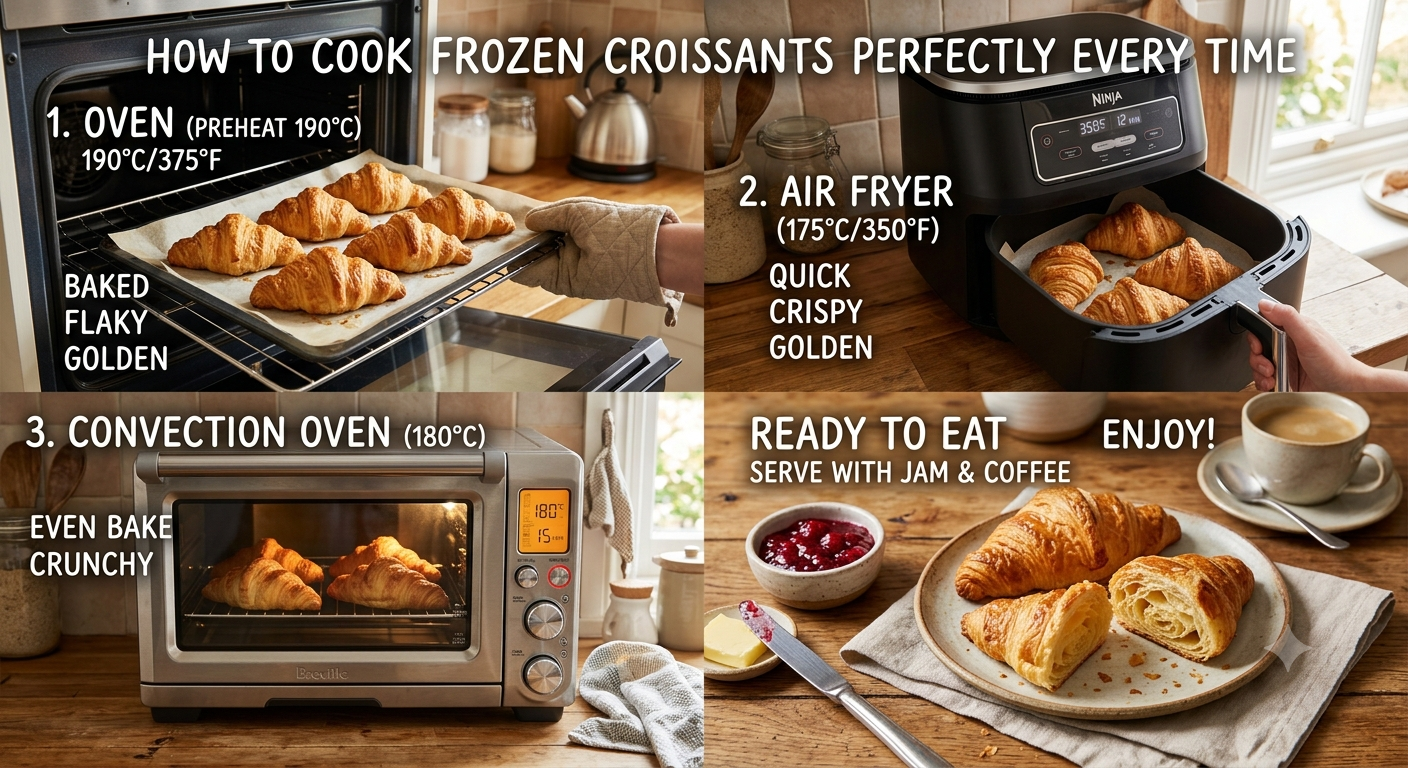
Method 1: Baking Frozen Croissants in the Oven (Best for Texture)
The oven is the gold standard for cooking frozen croissants because it delivers the most even heat and the best rise.
Steps:
- Preheat the oven to 350°F–375°F, depending on your package instructions.
- Line a baking sheet with parchment paper and arrange the croissants at least 2 inches apart.
- Bake for 15–22 minutes, checking at the earliest recommended time. Large croissants take longer than mini ones.
- Look for deep golden-brown colour on top and along the edges before pulling them.
- Let them rest on the pan for 5 minutes before serving or filling. This lets the layers set so they don't collapse or tear.
Method 2: Cooking Frozen Croissants in an Air Fryer (Best for Speed)
An air fryer won't give you quite the same dramatic rise as an oven, but it's faster and produces an extra-crisp exterior that many people actually prefer.
Steps:
- Preheat the air fryer to 325°F.
- Place croissants in a single layer, leaving space between each one so air can circulate.
- Cook for 8–12 minutes, checking at the 8-minute mark.
- Rotate the basket halfway through if your air fryer tends to brown unevenly.
This method is especially good if you're only cooking one or two croissants and don't want to heat a full oven or if you're aiming for that shatter-crisp texture people love in viral "flat croissant" and croffle recipes.
Method 3: Toaster Oven (Best for Small Batches)
A toaster oven splits the difference between the two methods above — it's faster than a full oven but gentler than an air fryer.
Steps:
- Preheat to 350°F using the bake setting, not toast.
- Place croissants on the toaster oven tray, lined with parchment or foil.
- Bake for 12–18 minutes, watching closely after the 10-minute mark since toaster ovens run hotter and less evenly than full-size ovens.
Avoid the microwave entirely. It heats croissants quickly but turns the delicate, flaky layers gummy and chewy almost instantly — there's no way to microwave a frozen croissant and preserve that signature crackle.
Troubleshooting: Fixing Common Frozen Croissant Problems
My croissants came out flat.
This usually means they needed a longer thaw or proof time before baking, or your oven wasn't fully preheated. An oven that hasn't reached temperature won't create the initial burst of steam that makes lamination puff up.
The outside is dark, but the inside is doughy.
Your oven is likely running hot, or the croissants were placed too close to the top heating element. Move the rack to the centre position and consider tenting with foil once the colour looks right.
They're greasy or leaking butter everywhere.
Some butter release is normal — that's the lamination doing its job. But excessive leaking often means the oven temperature is too low, causing the butter to melt out before the layers can set and seal.
They taste bland.
A light egg wash or a brush of melted butter right before baking can boost colour and flavour, especially with plain frozen dough that doesn't already include a glaze.
What to Do With Them Once They're Baked
Cooking frozen croissants well is really just step one. Once they're golden and cooled slightly, they become a blank canvas:
- Sweet: Fill with pastry cream and fresh berries, or split and stuff with a good dark chocolate for a quick pain au chocolat riff.
- Savoury: Layer with scrambled eggs, sharp cheese, and crisp bacon for a make-ahead breakfast sandwich.
- Reinvented: Press thawed, uncooked dough into a waffle iron for croffles – the crispy-edged hybrid that's been everywhere on social media.
Always slice cooled croissants with a serrated knife, cutting horizontally and leaving a hinge on one side. A straight-edged knife crushes the layers you worked so hard to preserve.
Storage and Make-Ahead Tips
- Unbaked, frozen: Most varieties keep well in the freezer for up to 6 months, though flavour and rise are best within 3 months.
- Baked and cooled: Store at room temperature in a paper bag (not plastic, which traps moisture) for up to 2 days.
- Reviving day-old croissants: A quick 3–5 minute stint in a 300°F oven brings back the crisp exterior without drying them out.
Final Thoughts
Cooking frozen croissants perfectly comes down to patience and a few small habits: give them space, trust the colour over the clock, and don't skip the thaw instructions on the package. Once you've got the method down, a box of frozen croissants stops being a backup plan and becomes one of the most versatile ingredients in your kitchen — equally at home in a lazy Sunday breakfast or a full brunch spread for guests.