

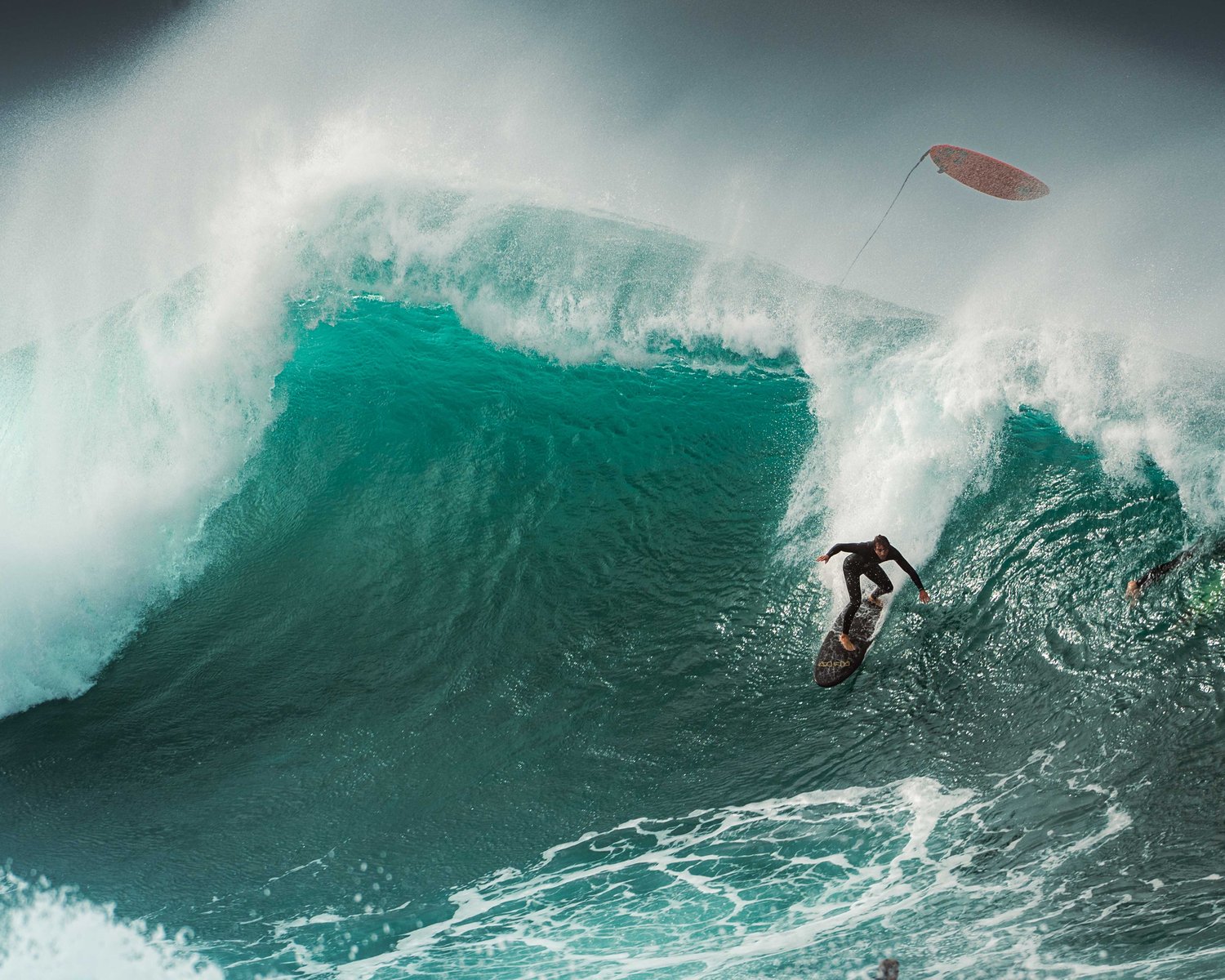
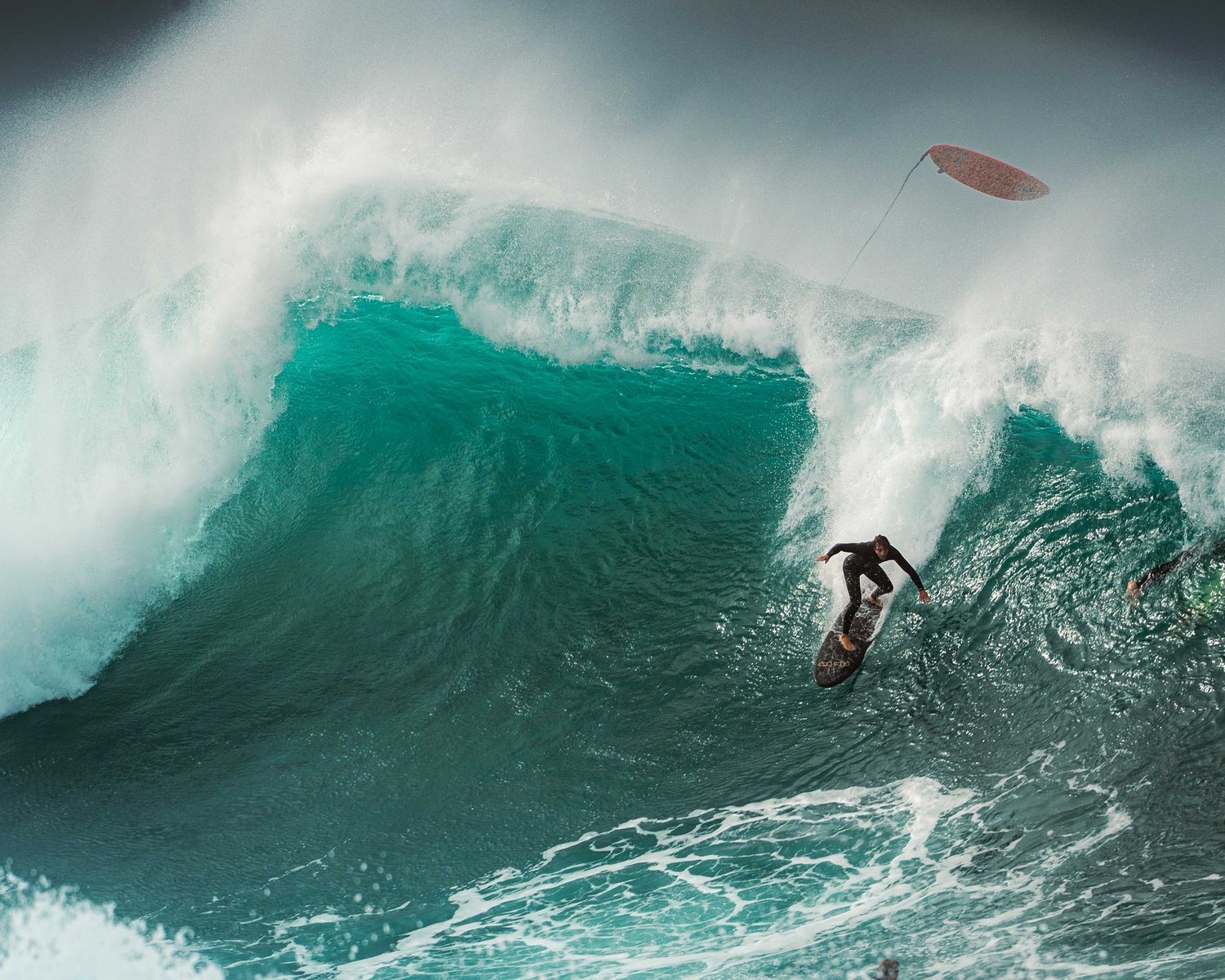
I flew into Los Angeles in the middle of the night with one goal. Get to The Wedge by sunrise.
The swell had been on my radar for days. Forecasts were lining up. Local reports were getting louder. People were already talking about it like it could be one of those rare Wedge days that gets remembered long after the swell fades. I had seen enough to know that if I wanted to shoot it, I needed to move fast.
By the time I landed, it was around 3 AM. I was running on almost no sleep and still had to make my way from LAX down to Newport Beach. Somewhere in the process of getting off the plane and moving through the airport with all my gear, I managed to sprain both ankles.
Not exactly how you want to start a surf photography trip.
I got to the hotel, slept for maybe 30 minutes, and woke up before sunrise feeling like I had barely closed my eyes. My ankles were swollen and sore, but the swell window was too short to waste. I wrapped them with Ace bandages, packed my Nikon Z6III, grabbed the 180 to 600mm lens, and headed toward the end of the Balboa Peninsula.
The Wedge is one of those waves that feels almost engineered to be unpredictable. A strong south swell moves into Newport Beach, reflects off the jetty, and meets the incoming swell in a way that can create a steep, doubling, violent wave right near the sand. It does not break like a normal wave. It folds, shifts, and changes shape fast. That is what makes it so dangerous to ride and so fascinating to photograph.
Somehow, I found a parking spot close enough to make the morning work. That felt like the first win of the day. From there, I wrapped my ankles tighter, shouldered my gear, and started hobbling toward the beach.
The walk was slow. Every step through the sand was a reminder that both ankles were not happy with me. But as soon as I got close enough to see the ocean, I forgot about most of it.
The first set I saw was enough to make the whole trip worth it.
Before the wave even fully came into view, I could see the peak rising over the sand dunes. It looked like a mountain of water lifting out of nowhere. For a second, it did not look real. It was one of those moments where you stop thinking about the flight, the pain, the lack of sleep, and all the reasons it might have been a bad idea.
I pulled out the camera, mounted the 180 to 600mm, and started shooting.
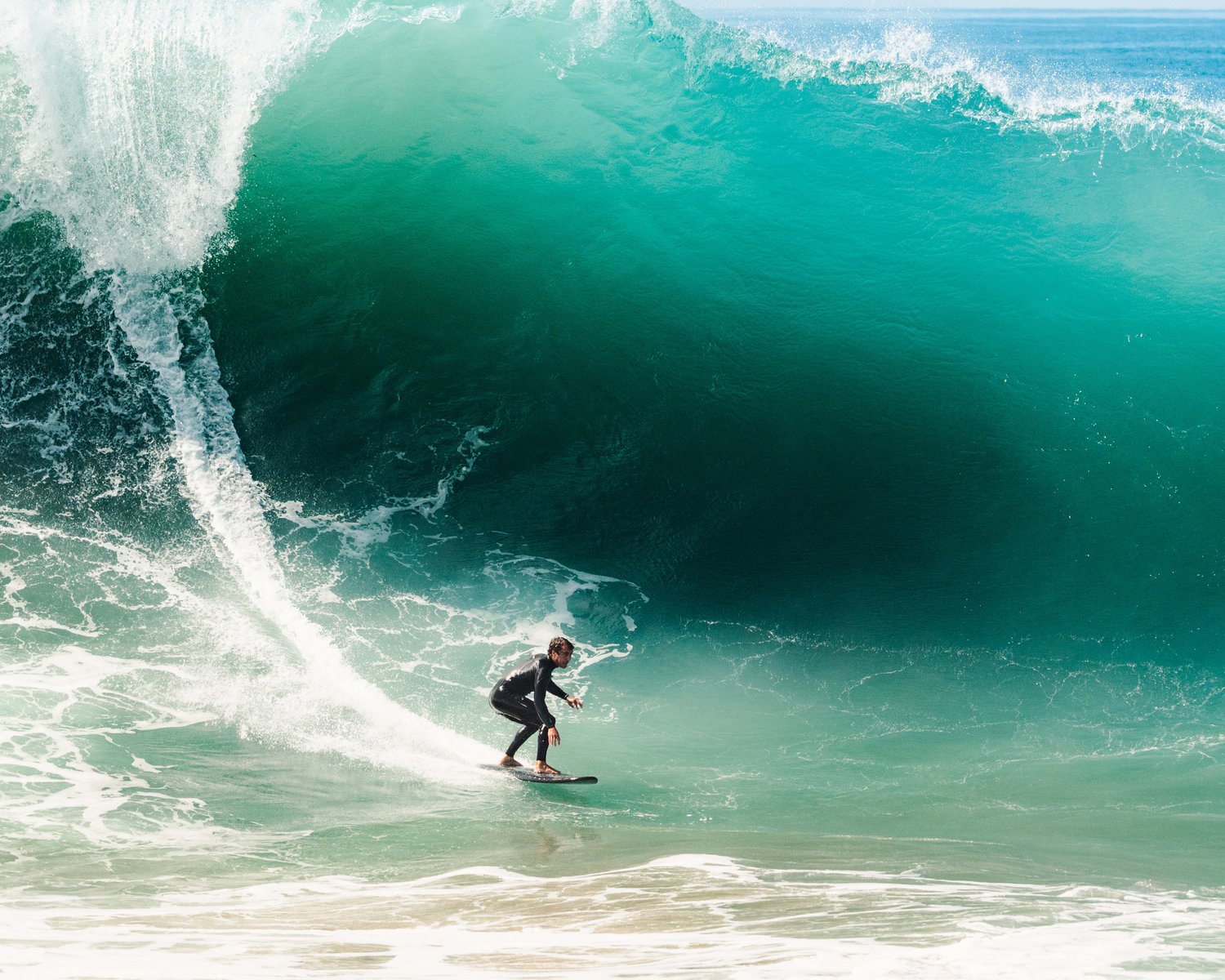
The beach was already filling up. Photographers were lining the sand. Spectators kept showing up with coffee, towels, phones, and cameras. Everyone was looking at the same spot on the horizon, waiting for the next set to stack up. When a darker line appeared outside the jetty, you could feel the whole beach shift. Conversations stopped. Lenses came up. People moved into position.
Then the wave would hit the right angle and The Wedge would turn into something completely different.
Some waves stood up like walls. Some doubled so quickly that the shape changed halfway through the ride. Some looked like they might offer a clean line, then collapsed into heavy whitewater a second later. The bodyboarders, surfers, and bodysurfers out there were reading the wave in real time, making decisions in a place where everything seemed to be moving faster than it should.
Photographing it was not simple. With a long lens, you can pull the wave close and show the scale, but The Wedge does not always give you clean frames. Riders disappear behind spray. The lip throws wide. The wave bends out of shape. One second you have a perfect composition, and the next second it is complete chaos.
The best images were not always the neatest ones. Some of the strongest frames were the ones that showed how strange and heavy the wave really was. A rider at the bottom of a huge green face. A bodyboarder holding a line through a section that looked impossible. A wall of water unloading so close to shore that the beach itself felt like part of the impact.
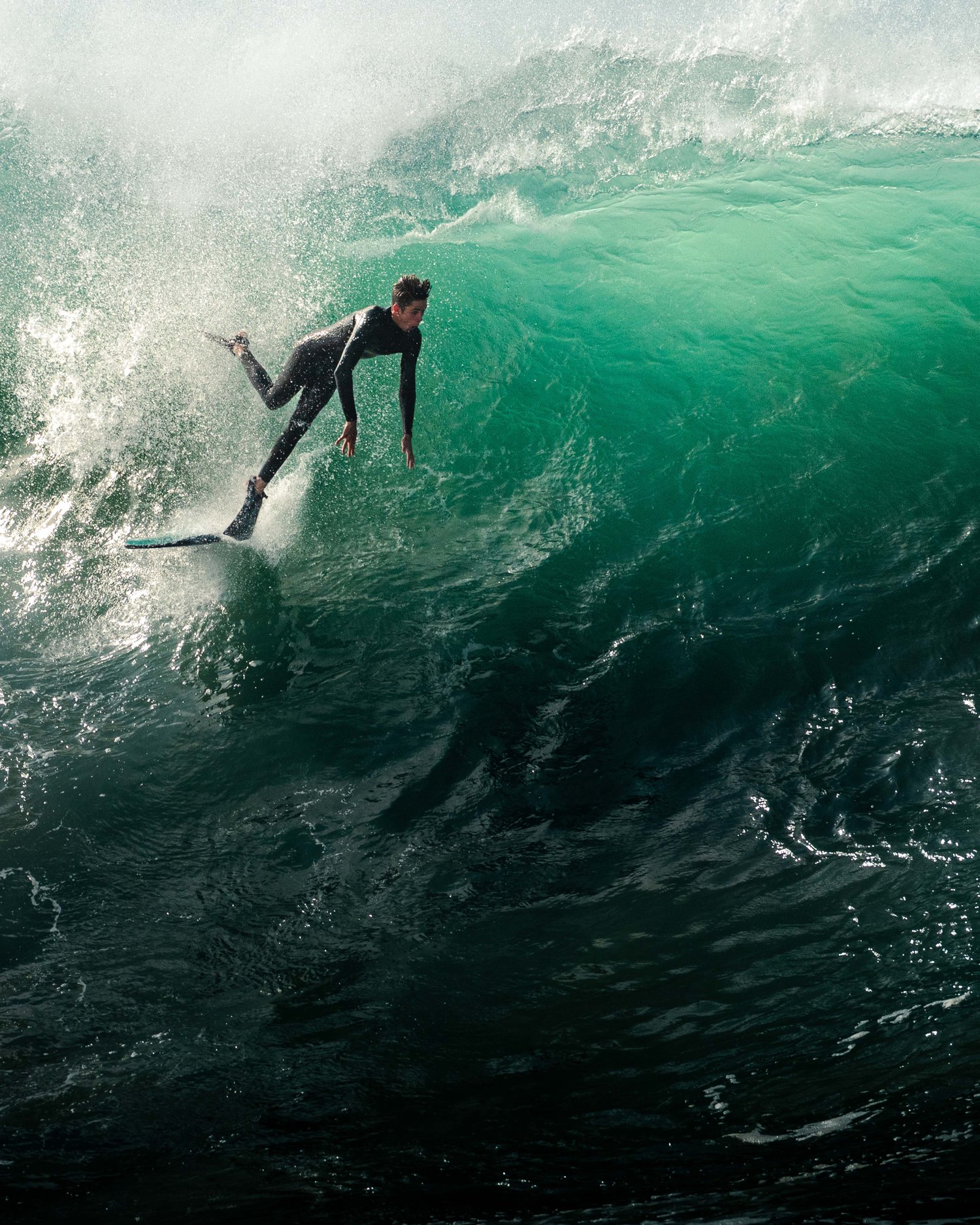
The crowd became part of the experience too. This did not feel like a quiet morning watching surf. It felt like people had gathered at the end of the peninsula to witness something. Every big set pulled a reaction out of the beach. Every committed drop felt like a risk. Every successful ride made the crowd come alive.
That is what stood out to me most about The Wedge. It is not just the size. It is the energy around it. The sound of the wave hitting the sand. The way the backwash moves. The way everyone watches the horizon between sets. The way the whole place seems to tense up before a big one breaks.
I had flown across the country to photograph a swell, but once I was there, it felt bigger than just getting images. It felt like documenting a rare meeting of timing, coastline, and ocean energy. The South Swell brought the power, but The Wedge shaped it into something that only happens there.
By the time I finally stepped off the beach, I was exhausted. My ankles were shot. I had barely slept. My gear was covered in sand and salt. But I had the frames I came for, and more than that, I had seen the wave do exactly what everyone said it might do.
Some trips are easy to justify after the fact.
This one was justified the second I saw that first set rising over the dunes.
I also put together a short film from this trip to The Wedge, showing the swell in motion and the energy of being there in person.
Watch the short film: 20FT+ AT THE WEDGE — CALIFORNIA SUPER SWELL | Short Film - 6/9/26
Explore More Photography
This trip was one small part of the ocean work I’m always chasing, from underwater wildlife and reef scenes to waves, surf, and coastal landscapes.
You can explore more of my photography on my website, including available prints, galleries, and select images for licensing.
View my photography: https://www.kylesotophotography.com/