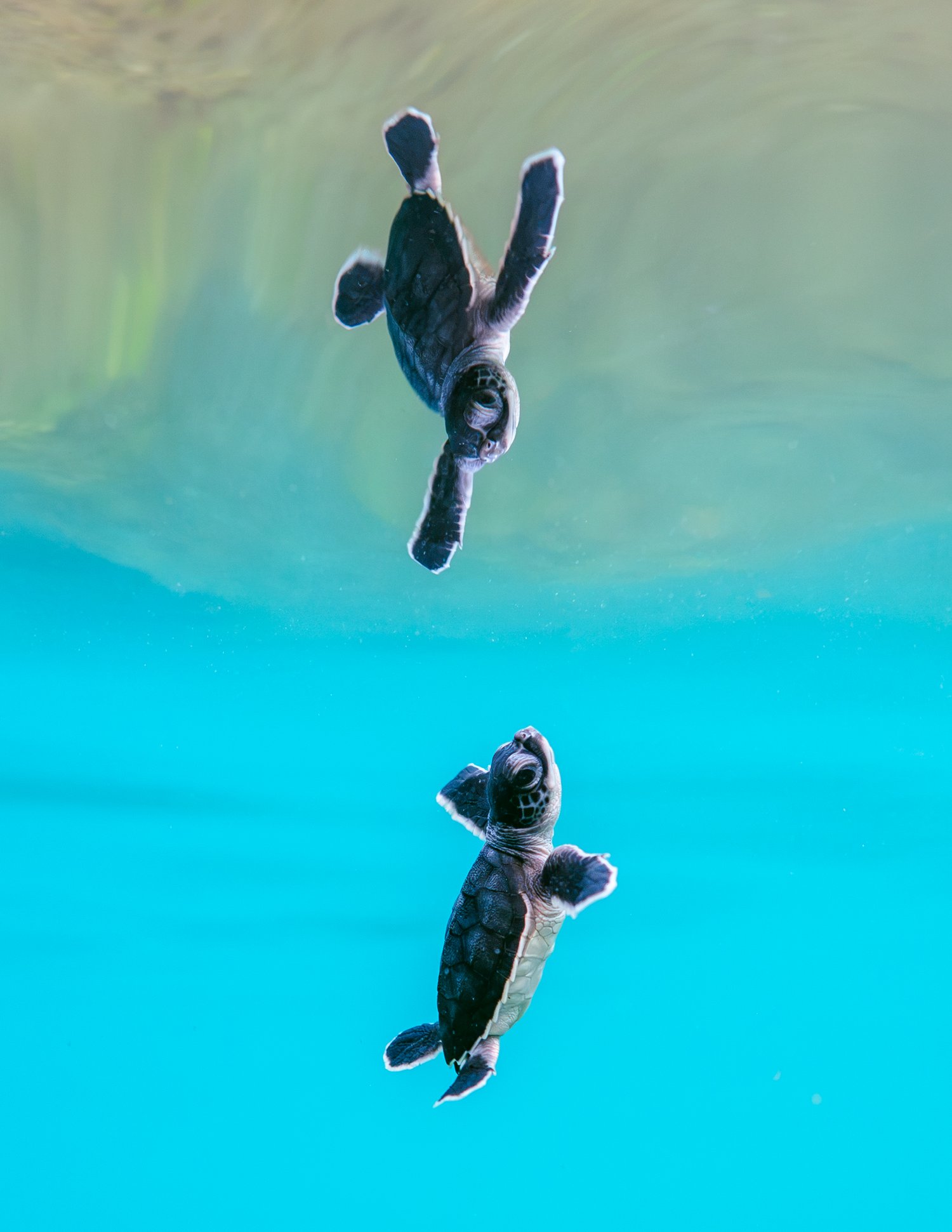

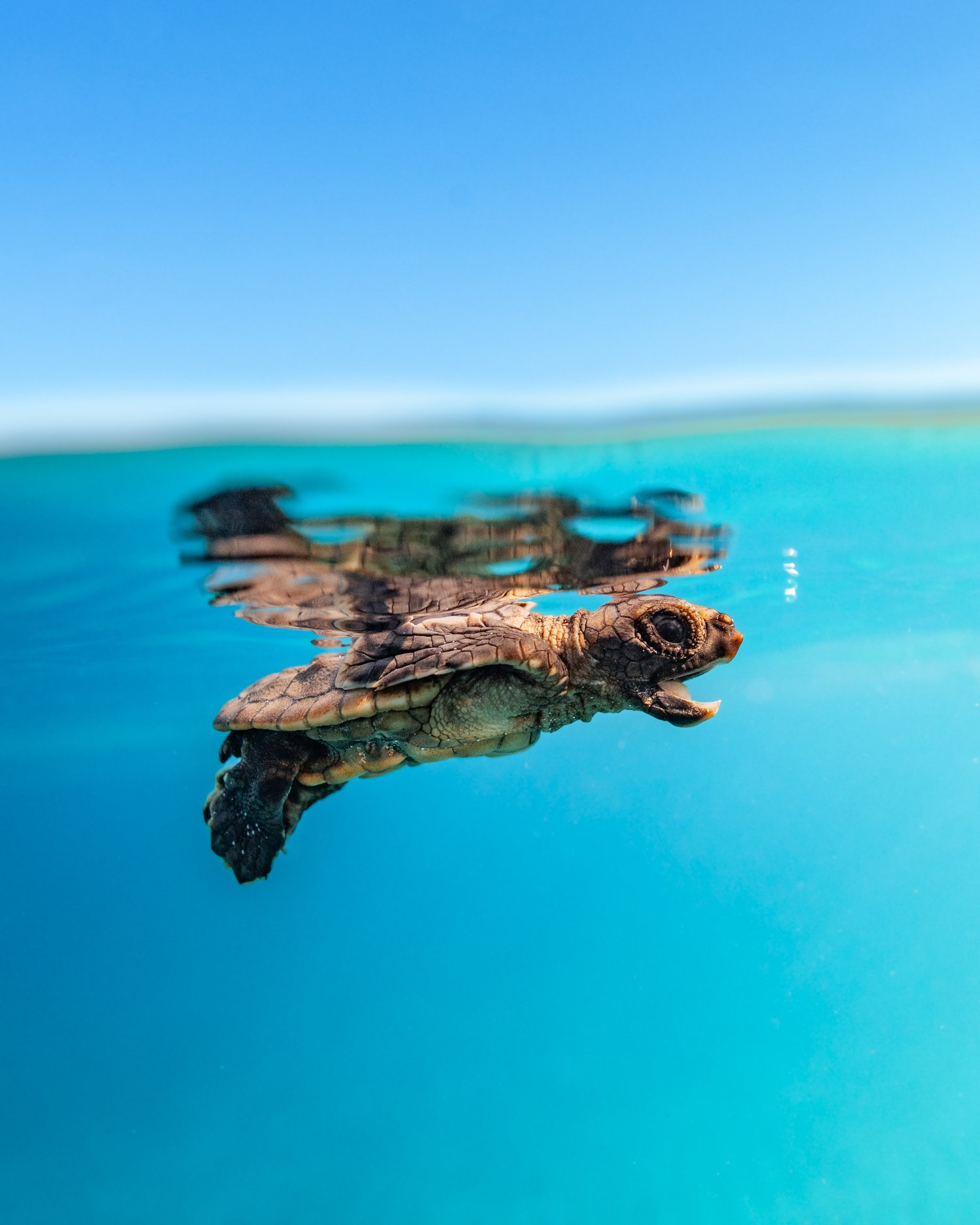
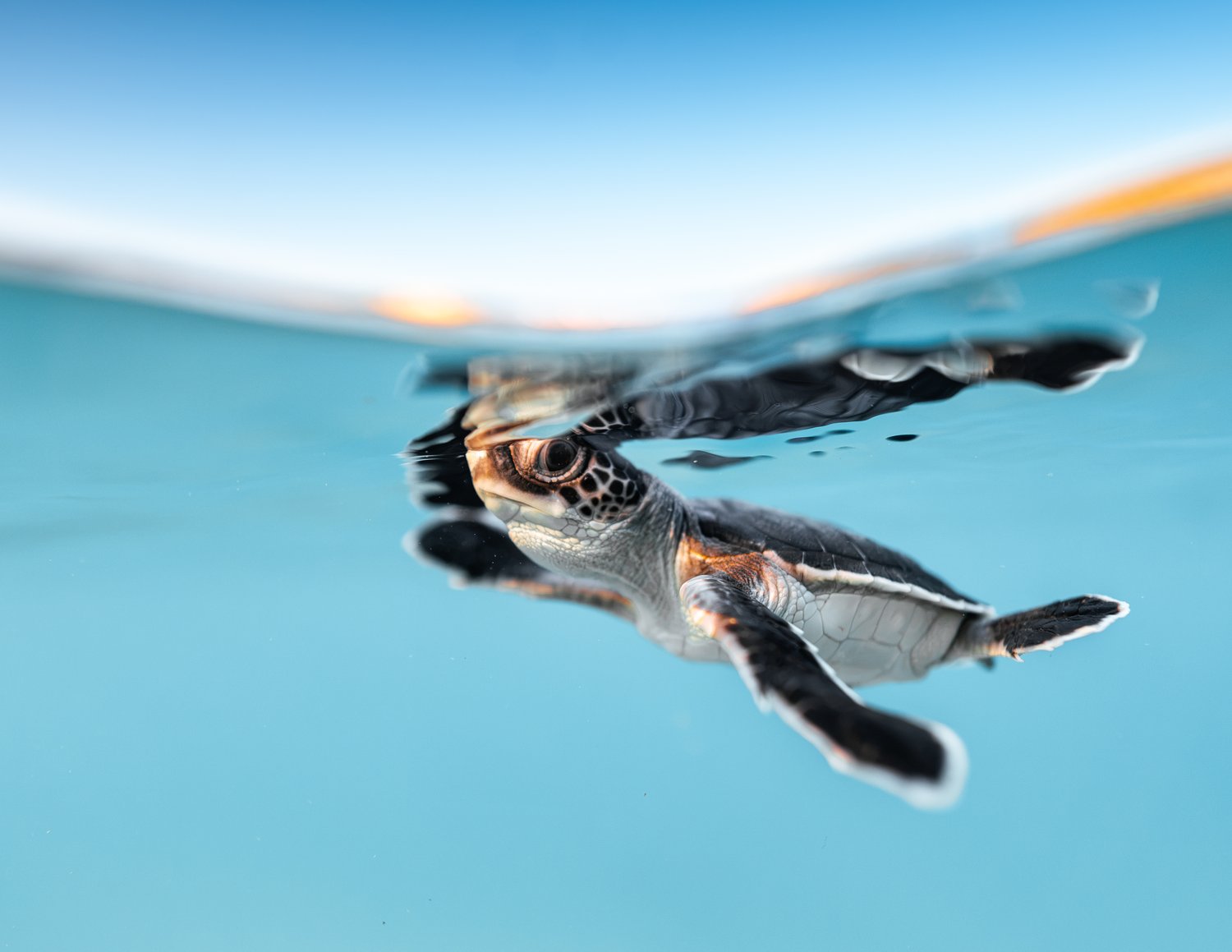
Photographing Sea Turtle Hatchlings Underwater: The Mornings Behind the Shot
There are some subjects I can go looking for with a pretty good idea of what the day will bring.
Sea turtle hatchlings are not one of them.
Most hatchlings make their way toward the ocean in the middle of the night, which means seeing one during the small window of morning light is already rare. Photographing one underwater adds another layer entirely.
A lot of mornings start the same way. Alarm before sunrise. Camera housing packed. Fins, mask, batteries, lenses, all the usual gear. Then a long walk down the beach while it is still mostly dark.
And most of the time, I come home with nothing.
That is probably the part of photographing hatchlings that does not translate through Instagram very well. You eventually see a handful of photographs from one incredible morning, but you do not see all the mornings that came before it.
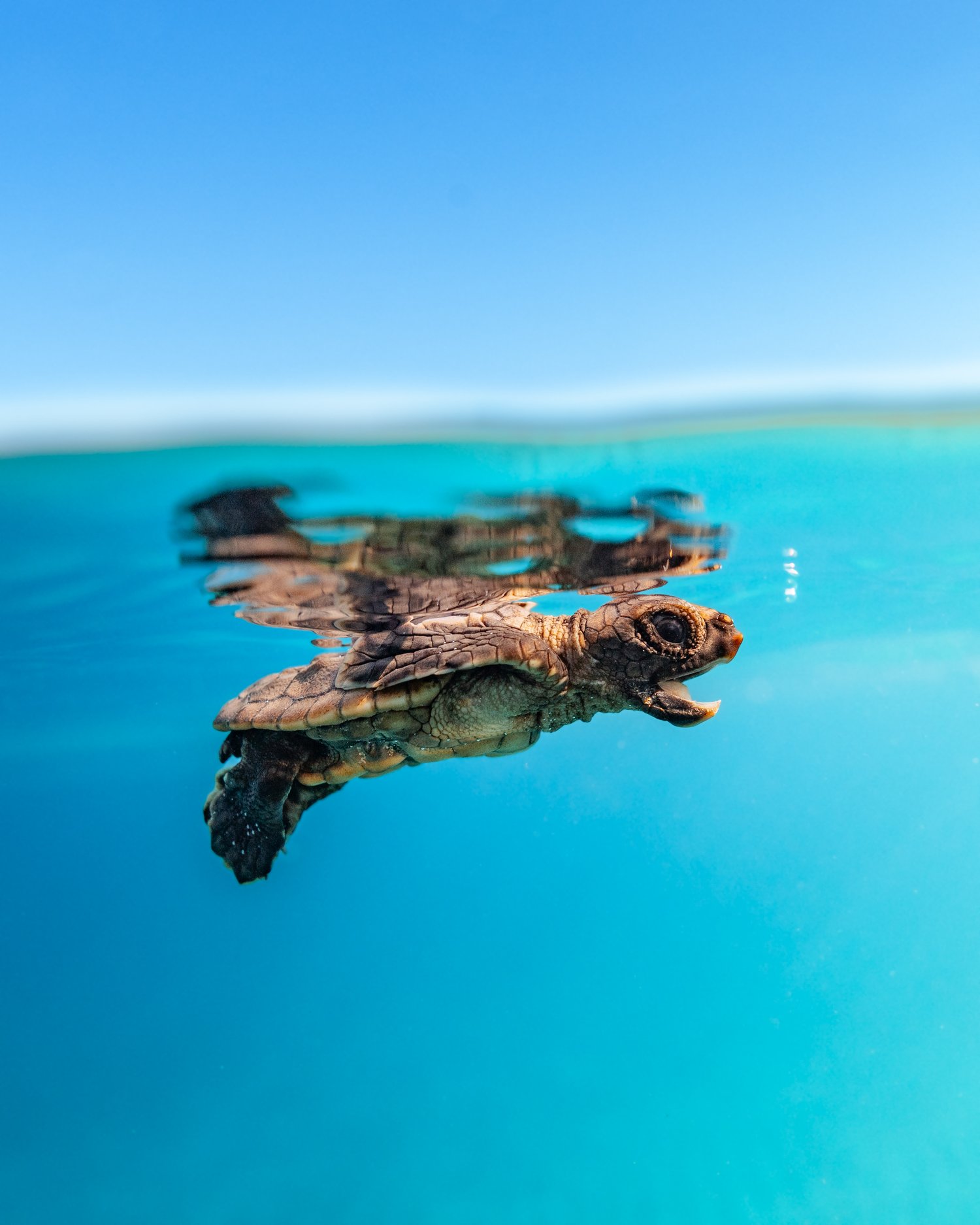
Most Mornings Are Just Walking
There is no guarantee. I can spend morning after morning walking the beach before sunrise and never even take the camera out of the housing. That uncertainty is also what makes these encounters so special.
A hatchling is tiny. Much smaller than it tends to look in a photograph. And once it starts moving, everything happens fast.
You have this little turtle working its way toward an enormous ocean while the light is changing by the minute. There is not much time to think once everything starts coming together.
That is why so much of photographing wildlife actually happens before you press the shutter. You learn to be patient. You learn not to expect anything. And eventually, every once in a while, you get one of those mornings where everything lines up.
Underwater Is a Completely Different Challenge
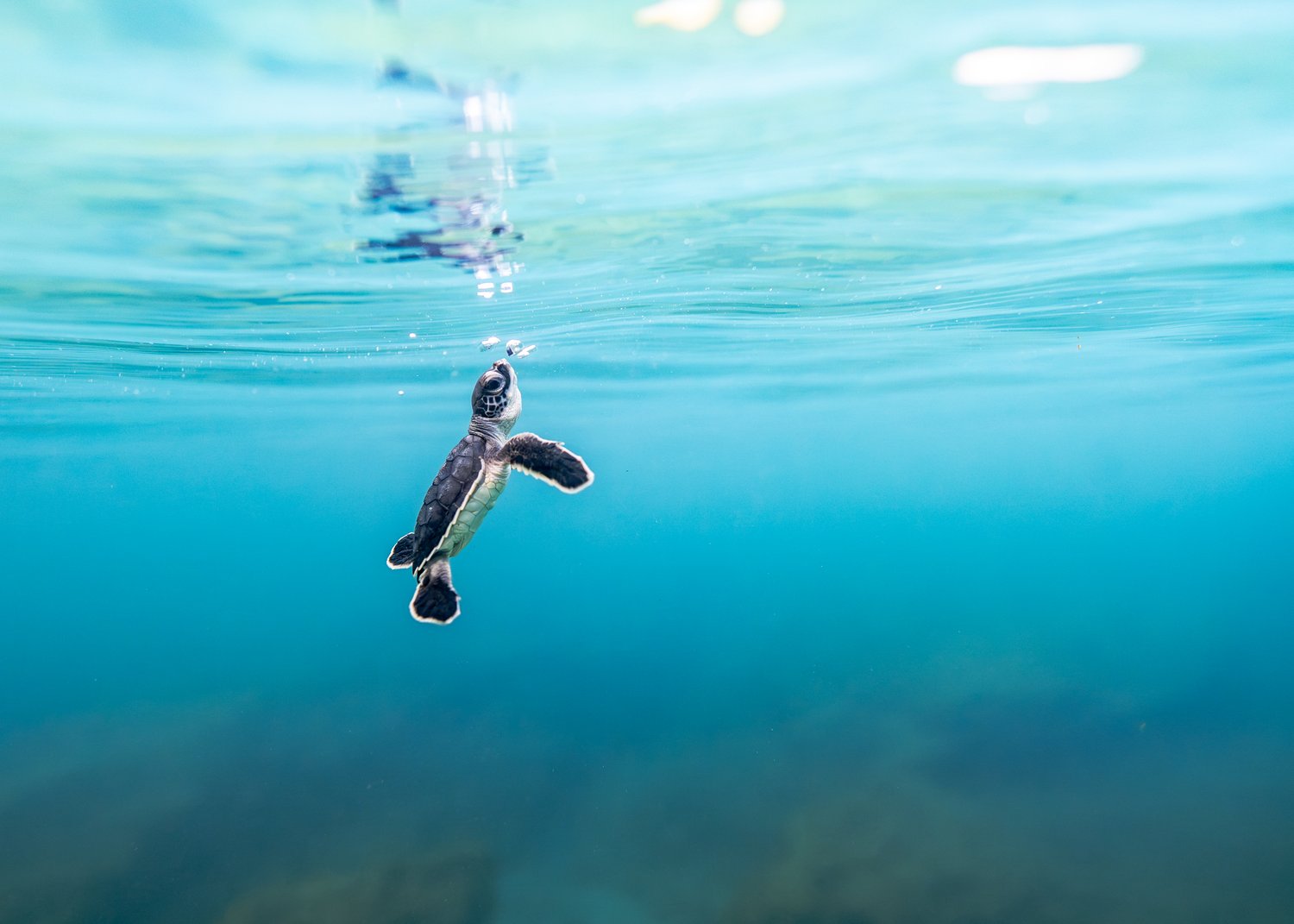
Finding a hatchling is only the beginning. Photographing one underwater around sunrise can be incredibly difficult. The light is still low, the turtle is moving quickly, and the camera is trying to lock focus onto an animal that takes up a very small part of the frame. For me, the biggest challenge is usually the face.
You can have beautiful light, clear water and a perfect little turtle swimming through the frame, but if the focus misses the eye or lands slightly behind the head, the photograph does not have the same impact.
I am essentially asking the camera to find a tiny focus point on a moving hatchling in relatively dark water while both the turtle and I are moving. When it works, though, there is nothing quite like it. Seeing one of these tiny turtles underwater gives you a completely different perspective on the journey it has just started. Above water, the ocean can look calm. Down there, that hatchling suddenly looks unbelievably small.
The Photograph Is Never More Important Than the Turtle
This is probably the most important part of the entire process. The goal is never to change what the turtle is doing just to make a photograph. With any wildlife encounter, but especially something as vulnerable as a sea turtle hatchling, I want the animal making the decisions. I stay out of its path, keep my movements calm and give it space. When conditions allow me to photograph one underwater, I try to get myself into a position where I can simply let the moment happen naturally. Sometimes that means the turtle never comes anywhere near me. That is fine. Wildlife photography gets a lot better when you stop trying to control every encounter. You start paying more attention to behavior and less attention to forcing the photograph you imagined beforehand. And when an animal does naturally move through the right place at the right time, the resulting image means a lot more.
One Good Frame Can Take a Lot of Mornings
Wildlife photography can look very different once it reaches social media.
You see the turtle.
You see the clear water.
You see the photograph where the focus hit perfectly.
You do not necessarily see the alarm clock, the dark beach, the heavy camera housing or all the mornings when absolutely nothing happened.
But to me, that is part of the photograph too. Those empty mornings are what make the good ones feel so good. And every once in a while, after enough early alarms and long walks, I come home, pull up the files and think: I think I just took my best hatchling photos ever.