


By JasonRoyLlewelyn-Miller, Executive Editor, Leadership Institute For Excellence
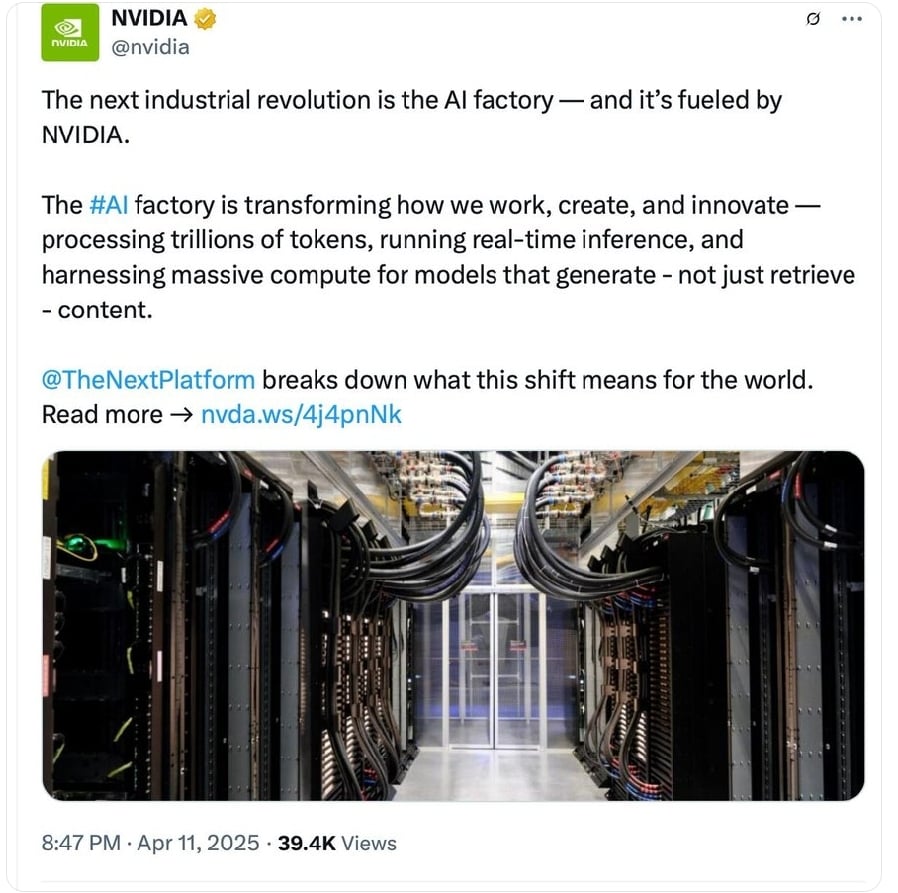
In a move that could reshape the global AI landscape, Nvidia—the semiconductor giant fueling the artificial intelligence revolution—announced plans to produce AI supercomputers entirely in the United States for the first time. The company revealed on Monday that it aims to manufacture up to $500 billion worth of AI infrastructure domestically over the next four years through its manufacturing partnerships.
This strategic shift comes as the U.S. intensifies efforts to secure its technological supply chains and maintain dominance in AI development. But beyond the economic implications, Nvidia’s decision underscores a growing urgency: the need for robust AI certification and regulatory frameworks to ensure these powerful systems are deployed safely and ethically.

Why Nvidia’s U.S. Production Matters
Nvidia’s graphics processing units (GPUs) are the backbone of modern AI, powering everything from OpenAI’s ChatGPT to advanced military simulations. Until now, much of the company’s manufacturing has relied on overseas partners, particularly in Taiwan and South Korea. But geopolitical tensions, supply chain vulnerabilities, and the U.S. government’s push for domestic semiconductor production have accelerated the shift toward American-made AI infrastructure.
“This is not just about business—it’s about national security,” said a senior Nvidia executive, speaking on condition of anonymity. “AI is the new arms race, and the U.S. cannot afford to depend on foreign supply chains for its most critical technologies.”
The Trump administration’s Tariffs war and Science Act, has played a key role in incentivizing Nvidia’s move. By bringing AI supercomputer production stateside, the company ensures that the U.S. maintains control over the hardware driving AI advancements—a crucial advantage as China and other nations aggressively invest in their own AI capabilities.
The Urgent Need for AI Certification
While Nvidia’s announcement signals a major win for U.S. tech sovereignty, it also raises pressing questions about how these supercomputers will be used—and who will oversee their deployment.
A recent NBC News investigation highlighted the risks of unregulated AI systems, citing incidents where AI-driven tools have spread misinformation, deepened biases, and even been weaponized. One expert quoted in the report warned:
“We’re building these incredibly powerful systems with no real safeguards. Without proper certification, we’re flying blind into an era where AI could cause massive harm—intentionally or not.”
Nvidia’s AI supercomputers will be exponentially more powerful than today’s models, capable of training next-generation AI systems that could surpass human-level performance in certain tasks. Without stringent certification standards, these machines could accelerate the development of unchecked AI applications—from autonomous weapons to deepfake-driven disinformation campaigns.
“The U.S. needs an FDA for AI,” said Dr. Cynthia Rudin, a Duke University professor of computer science, in the NBC report. “Right now, companies can deploy AI systems that impact millions of people without any real accountability.”

What AI Certification Could Look Like
Several proposals for AI certification are already gaining traction:
1. Third-Party Audits – Independent organizations could evaluate AI systems for bias, security vulnerabilities, and potential misuse before deployment.
2. Federal Licensing – Similar to how pharmaceuticals require FDA approval, high-risk AI models might need government clearance.
3. Transparency Mandates – Companies could be required to disclose training data, decision-making processes, and limitations of their AI systems.
Nvidia’s shift to U.S. production could make such regulations easier to enforce. With AI infrastructure built domestically, policymakers would have greater visibility into how these systems are developed and deployed.
The Global Implications
Nvidia’s decision also sends a clear message to China, which has been racing to achieve AI supremacy. By securing its supply chain and aligning with U.S. national security priorities, Nvidia is positioning itself as a key player in the geopolitical tech war.
“This isn’t just a business strategy—it’s a statement,” said Paul Triolo, a technology poli0cy expert at Albright Stonebridge Group. “The U.S. is saying that AI leadership is non-negotiable, and it’s willing to invest heavily to protect it.”

What Comes Next?
Nvidia’s $500 billion U.S. production plan is a bold bet on the future of AI—one that could redefine the industry. But as these supercomputers come online, the pressure will mount for stronger oversight.
Lawmakers, tech leaders, and ethicists must now collaborate to ensure that AI’s exponential growth doesn’t outpace our ability to govern it. Without proper certification and regulation, the very systems designed to propel humanity forward could become its greatest liability.
As one AI researcher starkly put it in the NBC investigation: “We’re building gods. We’d better make sure we can control them.”
For now, Nvidia’s move is a step toward securing America’s AI future. The next step? Making sure that future is safe for everyone.
I'm Not Saying Nothing I'm Just Saying.