

The Three-Headed Technological Storm Threatening Human Jobs:
GenAI, AI Agents, AGI & Robotics
By Jason Roy Llewelyn-Miller
April 20, 2025
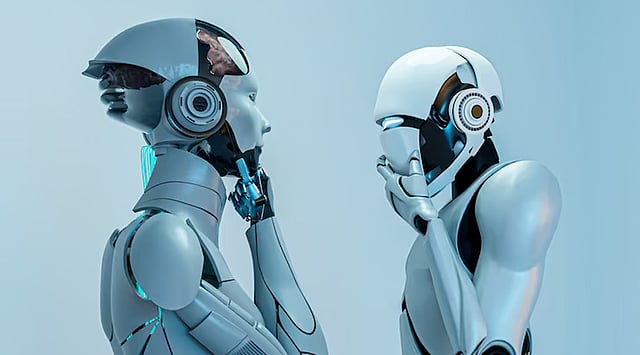
In a quiet yet accelerating revolution, humanity is walking headlong into what economists and technologists are now calling the “Three-Headed Technological Storm.” Generative AI, intelligent AI agents, artificial general intelligence (AGI), and robotics are no longer distant threats or mere science fiction; they are converging forces poised to upend global labor markets in ways not seen since the Industrial Revolution.
What began as a curiosity—chatbots like OpenAI’s ChatGPT—has rapidly transformed into a suite of increasingly autonomous systems that don't just respond to human prompts, but act entirely on behalf of users. These systems are smarter, faster, more integrated, and dangerously scalable. The risk to human employment, from clerical roles to professional services, is growing not year by year, but month by month.

Europe’s Quiet Preparation for AI Agents
Nowhere is this shift more palpable than in Europe. While American firms race toward integration, Brussels has been quietly preparing for the inevitable rise of AI agents in everyday life and business. In cafes and boardrooms alike, conversations about AI are moving beyond novelty and into existential territory.
Until recently, Europe’s most visible AI application was generative chatbots—think ChatGPT—used for writing emails, producing summaries, or automating customer service. But AI agents, the next evolutionary step, are pushing past these limits. These aren’t just responsive assistants—they’re proactive. They can join virtual meetings, take notes, summarize documents, make scheduling decisions, and even recite key performance indicators—all without human intervention.
This shift is subtle, but seismic.
“Europe has recognized the inevitability of intelligent agents in our economy,” said a senior policy official at the European Commission, speaking under condition of anonymity. “We’re seeing the beginning of a digital labor class—machines working for humans, but potentially replacing them as well.”
The American Acceleration
Across the Atlantic, Silicon Valley is not preparing—it’s launching.
Earlier this year, OpenAI unveiled its most aggressive step yet into this future with Operator, an AI agent platform capable of completing end-to-end workflows across multiple apps, emails, websites, and enterprise systems. It doesn’t just assist—it replaces the need for many repetitive jobs in marketing, HR, scheduling, customer service, and even data analysis.
Not to be outpaced, Microsoft followed suit this week with a bold update to its Copilot Studio: a new “computer use” feature that allows AI agents to autonomously operate websites and apps on behalf of users. We are now witnessing a future in which AI agents book your travel, order your supplies, summarize your board meetings, and compose your financial reports.
Alexandr Wang, founder and CEO of Scale AI, was upbeat about the change:
“This is the most profound transformation of work since the advent of the internet. AI agents aren’t replacing human potential—they’re amplifying it. The companies and workers who embrace this shift will outcompete everyone else.”
His co-founder, Lucy Guo, added:
“We're at the beginning of a new industrial era—one defined by intelligence, not labor. The winners will be those who can integrate AI agents into their business models fastest.”
That optimism is not universal.

Jobs Under Siege
In the legal sector, junior associates are seeing their workloads swallowed by AI systems that can draft contracts and review thousands of documents in seconds. In customer service, chatbots and AI agents are already managing nearly 80% of first-tier support. In marketing, AI is producing campaign briefs, ad copy, performance reports, and even running multichannel tests on its own.
And in data science—once considered future-proof—AI agents now conduct entire analytic pipelines, from data cleaning to visualization, making many entry-level roles redundant.
“It’s a tsunami,” says Marta Löfgren, head of labor relations at Sweden’s Teknikföretagen. “The pace of displacement is faster than reskilling programs can handle. We risk creating a generation of unemployed white-collar professionals.”

AGI on the Horizon
Compounding this trend is the whispered approach of AGI—artificial general intelligence. While still theoretical, recent breakthroughs in multi-modal models suggest AGI is closer than once imagined. An AGI system wouldn’t just perform tasks—it would understand goals, make autonomous decisions, and self-improve. It would be the ultimate employee. And, for many, the last.
The conversation has shifted from "Can machines do our jobs?" to "What will be left for us to do?"
Robotics: The Final Piece
While AI agents operate in digital spaces, robotics brings this revolution into the physical world. In Germany, logistics warehouses now feature robotic arms guided by AI vision that pack and ship without human oversight. In France, experimental elder care robots can administer medication, monitor health metrics, and offer conversational companionship.
Tesla’s Optimus prototype is rumored to be in pilot testing across select manufacturing sites in the U.S., and Boston Dynamics’ Spot is being integrated with enterprise AI systems to patrol, inspect, and report on physical environments.
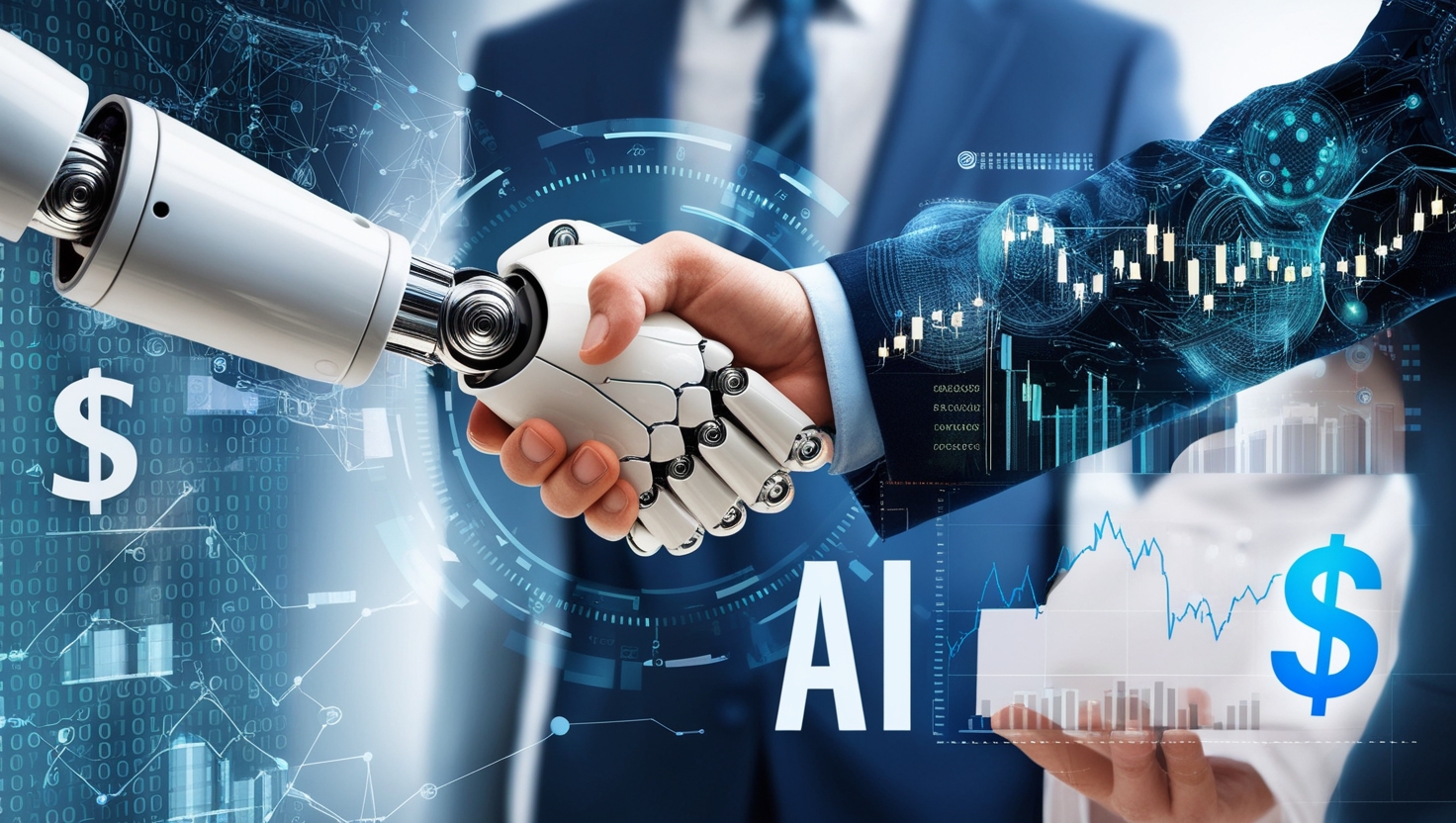
These developments merge the digital with the physical—creating a hybrid labor force that threatens both white- and blue-collar employment.
The Labor Market Reimagined
So what happens next?
Some economists suggest the labor market will bifurcate. On one side, elite knowledge workers who manage, design, or own the AI systems. On the other, a vast displaced population struggling to remain relevant in a digitized economy. Universal basic income, once a fringe idea, is gaining traction as a serious policy discussion in both the EU and U.S.
Others, like Wang of Scale AI, remain bullish:
“AI will destroy some jobs, yes—but it will create far more. Entire industries will emerge around AI management, compliance, ethics, prompt engineering, and system integration. This is a moment for reinvention, not retreat.”
Yet even the optimists admit: the transition will be brutal.
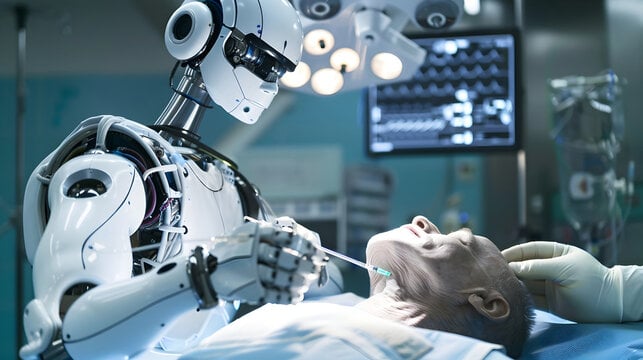
The Future of Work—Or the End of It?
For companies, this is the moment to choose: embrace the storm, or risk being left behind. For workers, it’s time to re-skill, re-think, and re-define value in an age when intelligence is no longer human-exclusive.
Jason Roy Llewelyn-Miller, a futurist and founder of the Leadership Institute for Excellence, says the next decade will test the very meaning of employment:
“We’re entering a new social contract—between humans, machines, and capital. Whether that contract empowers or erodes humanity depends on decisions we make today.”
One thing is clear: the future of work is no longer about work—it’s about adaptation. And the storm has already begun.
Would you like this article formatted for print, web publishing, or adapted into a white paper for a broader campaign?
"I'm Not Saying Nothing I'm Just Saying "
Happy Resurrection Sunday