
More Than Just Play: 5 Reasons Why Bilateral Coordination is a Child’s Superpower
Ever wondered why simple movements, like clapping or using scissors, are such a big deal in early development? That’s Bilateral Coordination at work—the ability to use both sides of the body together in a coordinated way. It’s not just physical; it’s a "Superpower" for the developing brain!
Here are 5 reasons why this skill is a game-changer for your little one:

1. Building the "Brain Bridge" When a child uses both hands together, it strengthens the Corpus Callosum—the bridge between the left and right hemispheres of the brain. A stronger bridge means faster communication between the two sides, leading to better problem-solving and cognitive skills.
2. Enhancing Focus and Attention Engaging in rhythmic, bilateral activities (like our Hand Pop challenges!) requires deep concentration. It forces the brain to "synchronize," which naturally builds the focus muscle needed for classroom learning.
3. Boosting Self-Confidence There’s nothing like the smile on a child’s face when they finally "get it." Mastering physical coordination gives children a sense of control over their bodies, which directly boosts their self-esteem and willingness to try new things.
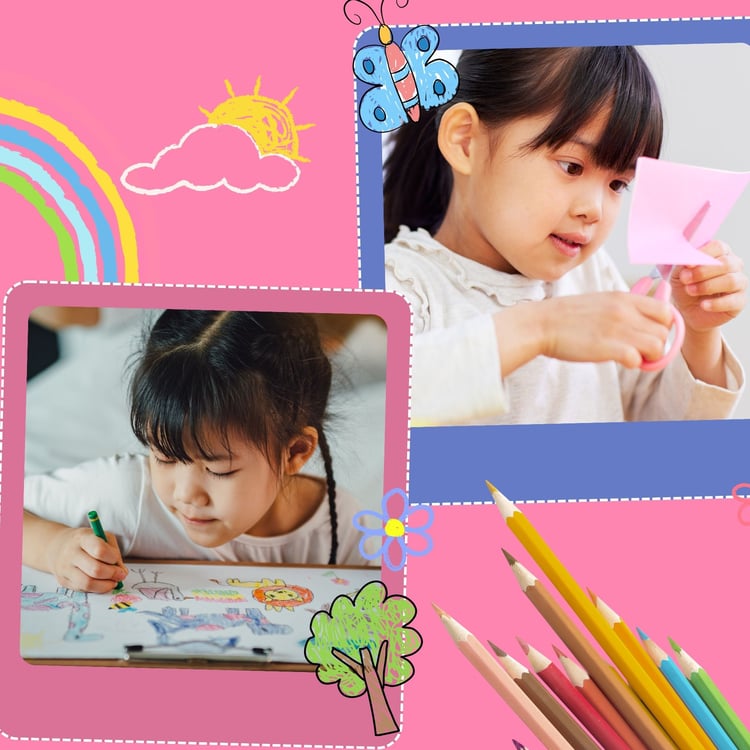
4. The Foundation for Writing Did you know that holding a paper with one hand while writing with the other is a bilateral task? Mastering these movements now means your child will have an easier time holding pencils and scissors correctly when they start school.
5. Cognitive Flexibility Bilateral play encourages the brain to be adaptable. As children learn to switch between different hand shapes and movements, they are actually practicing "Cognitive Flexibility"—the ability to shift thinking and adapt to new information.
Ready to start the workout? You don't need fancy equipment to build these superpowers. Our Hand Pop Series is designed specifically to turn these developmental milestones into a fun, daily game.