
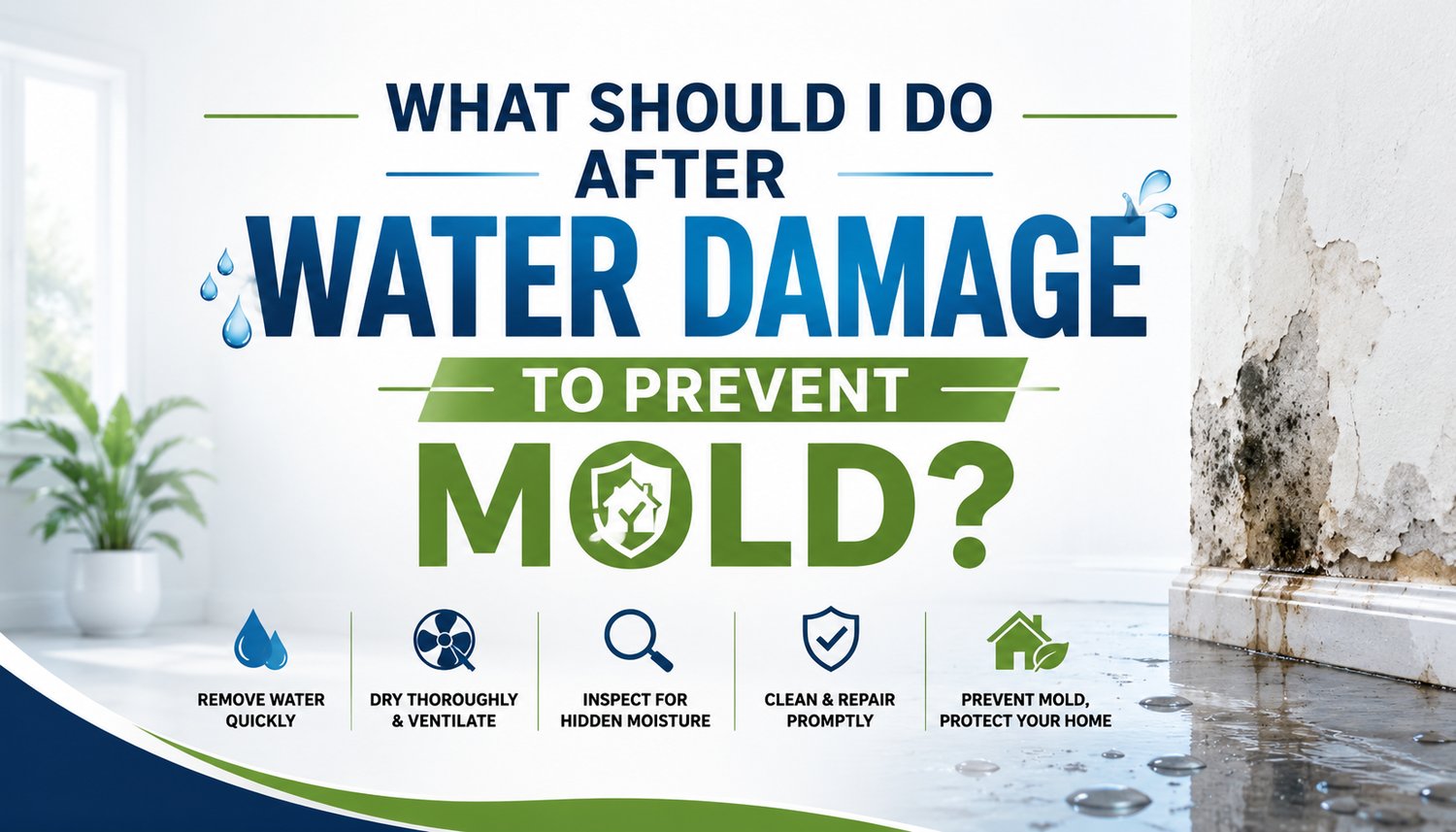
Water damage can happen when you least expect it. A burst pipe, overflowing appliance, roof leak, or heavy rainstorm can leave your home with soaked floors, damp walls, and standing water. While the visible damage is concerning, there's another problem that often follows if action isn't taken quickly; mold growth. Since mold can begin developing within 24 to 48 hours under the right conditions, knowing what to do immediately after water damage can make a significant difference in protecting your home.
The good news is that taking the right steps early can reduce the chances of mold developing and minimize the cost of future repairs. If the damage is minor or extensive, acting quickly is the key to restoring your property safely.
Very Important Steps to Prevent Mold After Water Damage
Water damage cleanup isn't just about removing water. Hidden moisture can remain behind walls, under flooring, and inside ceilings, creating the perfect environment for mold growth. Working with experienced professionals like Long Island Best Mold Removal helps ensure your home is thoroughly dried and protected against future mold issues.
Remove Water and Dry the Affected Areas Immediately
The first priority after water damage is removing any standing water as quickly as possible. The longer moisture remains inside your home, the greater the chance that mold will begin to grow. After removing the water, focus on drying everything thoroughly. Open windows if weather permits, use fans to improve air circulation, and run dehumidifiers to reduce indoor humidity. Carpets, furniture, drywall, insulation, and wooden flooring may all absorb moisture, so they should be checked carefully. Even if surfaces appear dry, moisture can remain trapped underneath flooring or inside walls. That's why it's important to continue drying until every affected area has reached normal moisture levels.
Inspect for Hidden Moisture and Water Damage
Not all water damage is easy to see. Moisture often travels behind walls, beneath flooring, inside cabinets, and into crawl spaces where it can remain unnoticed for days or even weeks. A careful inspection can help identify areas that may still be damp. Look for warning signs such as water stains, peeling paint, swollen wood, soft drywall, musty odors, or condensation. These signs may indicate hidden moisture that should be addressed before mold has a chance to develop. If flooding was severe or water entered multiple rooms, a professional inspection may help locate moisture that standard household tools cannot detect.
Restore the Home and Prevent Future Problems
Once everything has been dried and inspected, the next step is restoring any damaged materials and reducing the likelihood of future water issues. Severely damaged drywall, insulation, or flooring may need to be replaced if they cannot be dried properly. It's also important to repair whatever caused the water damage in the first place. Fix leaking pipes, repair roof damage, clean blocked gutters, and ensure your home has proper drainage. Improving ventilation in bathrooms, kitchens, laundry rooms, and basements can also help control humidity and reduce the risk of future mold growth. Regular maintenance and quick attention to leaks can save homeowners from costly repairs later.
Conclusion
Water damage doesn't always lead to mold, but delaying cleanup greatly increases the risk. Acting quickly to remove water, dry every affected area, inspect for hidden moisture, and repair the source of the problem can help keep your home safe and healthy. If the damage is extensive or you're concerned about moisture that may be mold hidden from view, seeking professional assistance can provide peace of mind and help ensure your home is fully restored before mold has the opportunity to spread.