
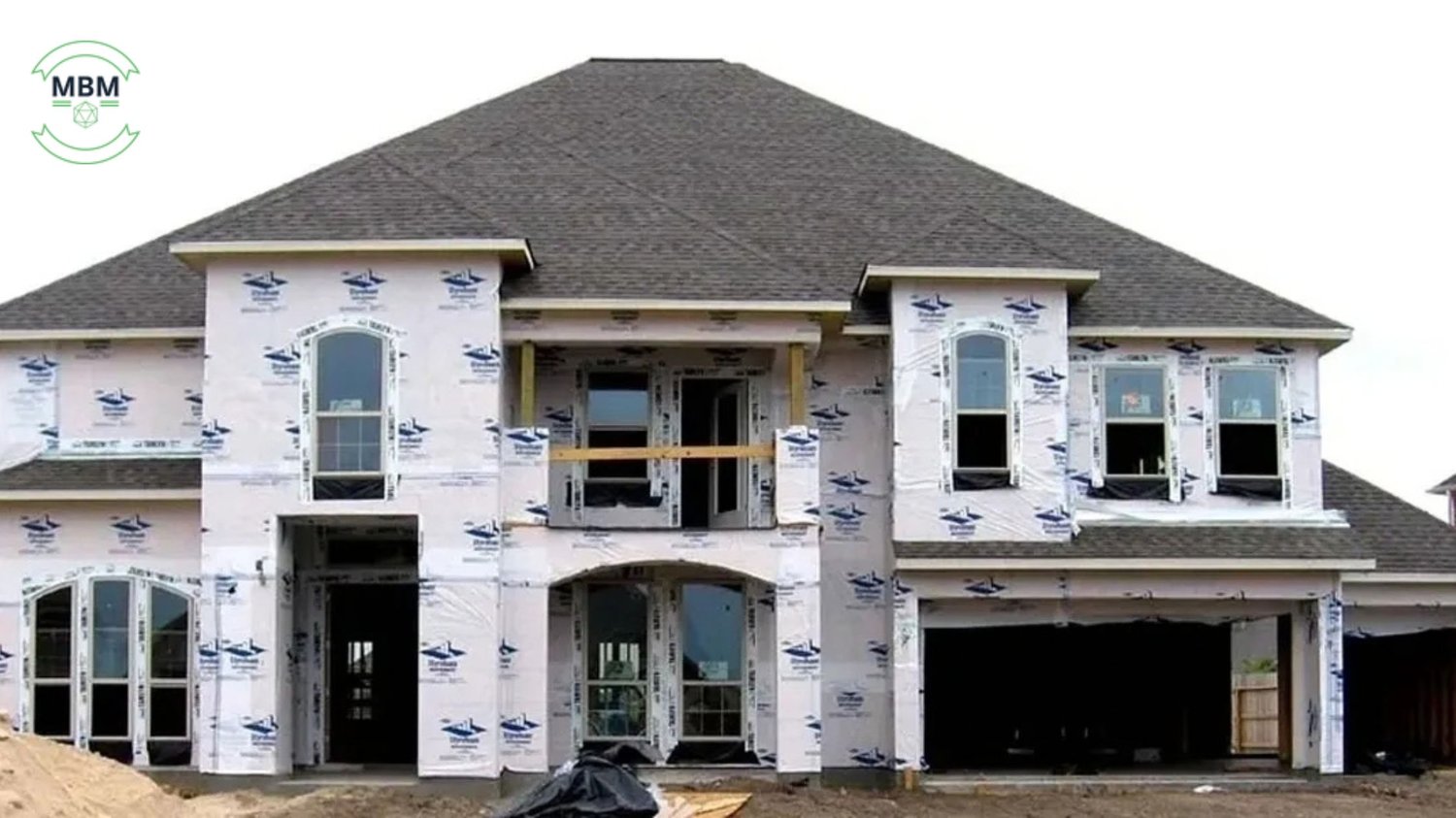
Buildings keep records.
They record movement through cracks, moisture through staining, settlement through distorted finishes, and excessive loads through changes in structural behavior. Those records are rarely complete, and they do not explain themselves. A forensic structural engineer interprets that evidence to determine what happened, why it happened, and what the findings mean for the building.
Forensic structural engineering is therefore less about looking for a dramatic failure and more about reconstructing a sequence of events. MBM Engineering and Inspection Services applies engineering analysis to physical evidence so property owners and other stakeholders can move from uncertainty toward a defensible understanding of structural conditions.
What Does a Forensic Structural Engineer Do?
A forensic structural engineer investigates existing structural conditions when the cause, responsibility, extent, or significance of a problem is uncertain.
The investigation may involve:
- Reviewing drawings, reports, photographs, and repair records
- Examining visible structural and building conditions
- Documenting cracks, deformation, moisture-related damage, or deterioration
- Considering site and environmental conditions
- Evaluating possible load paths and structural behavior
- Developing engineering explanations for observed failures
- Providing technical documentation to support repair or other decisions
The important distinction is that forensic work focuses on causation and evidence, not simply observation.
Seeing a crack is an observation. Determining whether it reflects shrinkage, settlement, movement, overstress, deterioration, or another mechanism requires engineering judgment.
Why Structural Problems Rarely Have One Simple Cause
Buildings behave as systems. Changes in one part can influence conditions elsewhere.
Consider a wall crack near an opening. The crack itself provides useful information, but its orientation, location, width, recurrence, surrounding materials, and relationship to structural elements can change its meaning. Water intrusion or foundation movement may add another layer to the investigation.
This is why forensic structural engineering cannot rely on a single visual clue. Engineers have to consider competing explanations and determine which one best fits the available evidence.
That process resembles scientific reconstruction. Evidence is collected first. Possible mechanisms are then considered. Observations are tested against those mechanisms until the explanation becomes sufficiently coherent to support a professional conclusion.
When Should a Property Owner Consider Forensic Investigation?
Forensic structural investigation can become useful when ordinary inspection does not answer the central question.
Common situations include:
- Significant or recurring structural cracking
- Unexplained settlement or differential movement
- Structural damage after severe weather
- Concerns following renovation or structural modification
- Disputes involving alleged construction defects
- Repeated repairs that have not resolved a condition
- Questions about the origin or progression of building damage
- Unexpected deterioration in structural materials
Not every defect requires forensic engineering. The need generally increases when the consequences of misunderstanding the condition are significant or when the available evidence does not support a clear explanation.
How Does a Forensic Structural Investigation Work?
A disciplined investigation usually develops in stages.
1. Establish the Known History
The engineer first determines what is already known. Construction documents, previous inspections, repair records, photographs, maintenance information, and occupant observations can establish a timeline.
History matters because a building condition is rarely a single moment. Damage may develop gradually, appear after an event, or return following an earlier repair.
2. Examine the Physical Evidence
The next stage focuses on the building itself. Observations are documented systematically rather than treated as isolated defects.
Location, pattern, severity, material type, surrounding conditions, and relationships between defects can all contribute to the investigation.
3. Test Possible Causes
The engineer then considers plausible mechanisms. Structural loads, foundation movement, moisture, material deterioration, construction details, alterations, and environmental factors may all enter the analysis depending on the situation.
The strongest explanation is the one supported by the evidence, not necessarily the first explanation proposed.
4. Translate Findings Into Decisions
Technical findings ultimately need practical meaning.
A forensic structural engineer may help clarify whether further investigation is warranted, whether repairs should address an underlying cause, or whether a reported condition appears consistent with another mechanism.
The value lies in connecting engineering evidence with a decision that property stakeholders actually need to make.
How Forensic Structural Engineering Firms Are Evolving
Modern forensic investigations increasingly combine field observation with better documentation, digital records, analytical tools, and non-destructive investigation methods.
That does not make engineering judgment obsolete. It makes judgment more accountable.
Digital photographs can preserve conditions that may later change. Thermal imaging and moisture-related assessment can reveal patterns that are difficult to understand visually. Structural analysis can test how theoretical loading or movement might affect a system.
Technology provides additional evidence. It does not automatically provide the explanation.
This distinction will become even more important as forensic structural engineering firms adopt increasingly sophisticated digital workflows. The future of the discipline will likely involve stronger integration between field evidence, building records, analytical modeling, and data management.
Why Engineering Judgment Still Matters
Structural failures rarely behave like textbook examples. Real buildings contain alterations, repairs, imperfect construction, changing site conditions, aging materials, and incomplete records.
That complexity requires more than a checklist.
MBM Engineering and Inspection Services approaches forensic structural questions by connecting what can be observed with what can be reasonably demonstrated through engineering analysis. The objective is a clear technical narrative supported by evidence.
Buildings may appear silent, but they leave clues everywhere. Cracks reveal movement. Distortion reveals force. Moisture reveals pathways. Repairs reveal history.
A forensic structural engineer learns to read those clues without forcing them into a predetermined story. That discipline is what turns a damaged building from a mystery into an engineering problem that can be investigated, explained, and acted upon.