

At 8:17 AM, the city looked normal.
Traffic lights blinked through another busy morning. Coffee brewed in kitchens. Radios hummed softly in workshops and garages. Kids argued over breakfast while gardeners stepped outside to inspect seedlings after the rain.
IMPORTANT NOTICE: Download The Free Backyard Food Independence Starter Kit👈
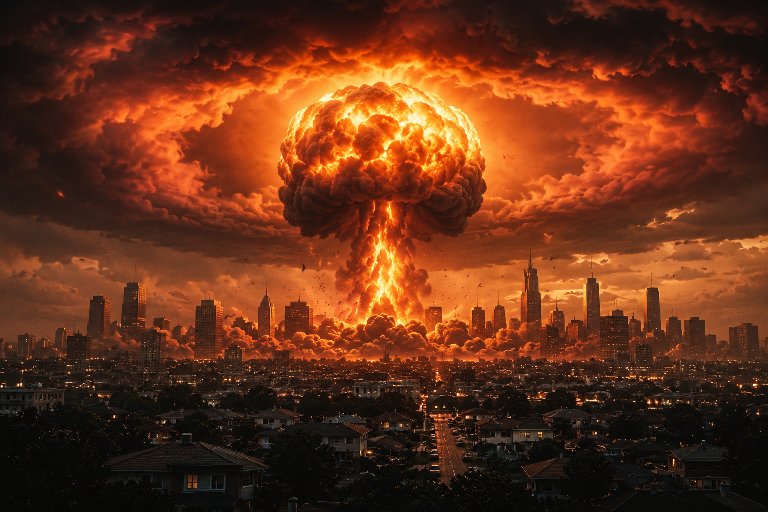
Then came the flash.
Not thunder. Not lightning.
A white-blue burst brighter than the sun itself — silent for one impossible second — followed by a shockwave powerful enough to turn windows into knives and streets into chaos.
For millions, life would divide into two timelines:
before the flash and after it.
The terrifying truth is that a single nuclear detonation would not only destroy buildings. It would unravel systems people depend on every hour of every day: electricity, communication, water, food delivery, transportation, medical care, and public order.
But survival is not reserved for action heroes or bunker owners.
In many ways, ordinary families with practical skills, calm leadership, and self-reliant lifestyles would have the best chance of enduring what comes next.
And that changes everything.
The First 10 Minutes
A nuclear detonation creates several immediate layers of destruction.
First comes the blinding thermal flash — hot enough to ignite fires miles away depending on the size of the weapon and weather conditions. People caught outdoors near the blast zone would suffer devastating burns instantly.
Seconds later comes the shockwave.
Windows explode inward. Roofs collapse. Vehicles overturn. Power lines snap. Phones stop working as networks overload. Sirens scream. Smoke rises across entire districts.
Then comes confusion.
Most people would not initially understand what happened.
Was it an industrial accident?
A missile strike?
A power plant explosion?
A terrorist attack?
That uncertainty becomes dangerous.
Panic spreads faster than facts.
EMP: The Silent Killer Of Modern Civilization
One of the least understood threats is the electromagnetic pulse — commonly called an EMP.
A nuclear detonation can damage or destroy sensitive electronics over a large area. Depending on altitude and weapon type, it could disable:
cell towers
internet systems
banking infrastructure
vehicles with advanced electronics
communication systems
parts of the electrical grid
Imagine an entire region suddenly unable to:
access money
use GPS
pump fuel
recharge devices
buy food electronically
contact family
Modern society runs on invisible systems. Remove electricity, and cities become fragile very quickly.
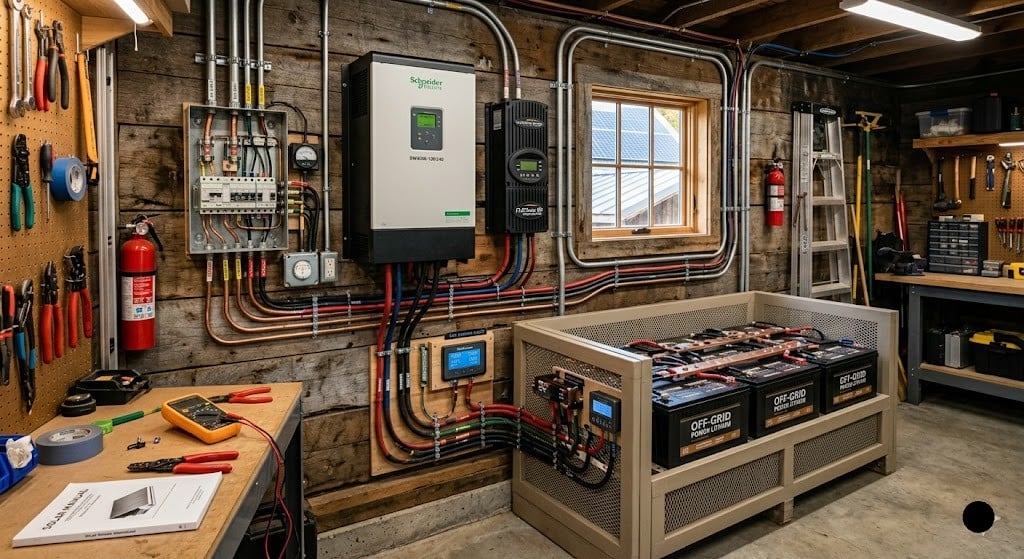
This is why off-grid thinking is no longer a fringe lifestyle idea. Small solar backup systems, battery storage, hand tools, rainwater systems, gravity-fed water storage, and even micro hydro energy setups suddenly become more than hobbies — they become resilience.
A family with light, water filtration, stored food, and basic power has an enormous advantage in the first critical days.
The First 24 Hours
The first day after a detonation would likely determine who remains stable and who falls into chaos.
Stores would empty within hours.
Gas stations would stop functioning if pumps lose power. ATMs would fail. Traffic congestion would trap thousands trying to flee urban areas simultaneously.
Hospitals would become overwhelmed almost immediately.
And then comes the invisible threat:
radioactive fallout.
Depending on wind direction, fallout can spread dangerous radioactive particles far beyond the blast zone. Exposure risk depends heavily on distance, shelter quality, and time spent outside.
The most important survival principle during this phase is simple:
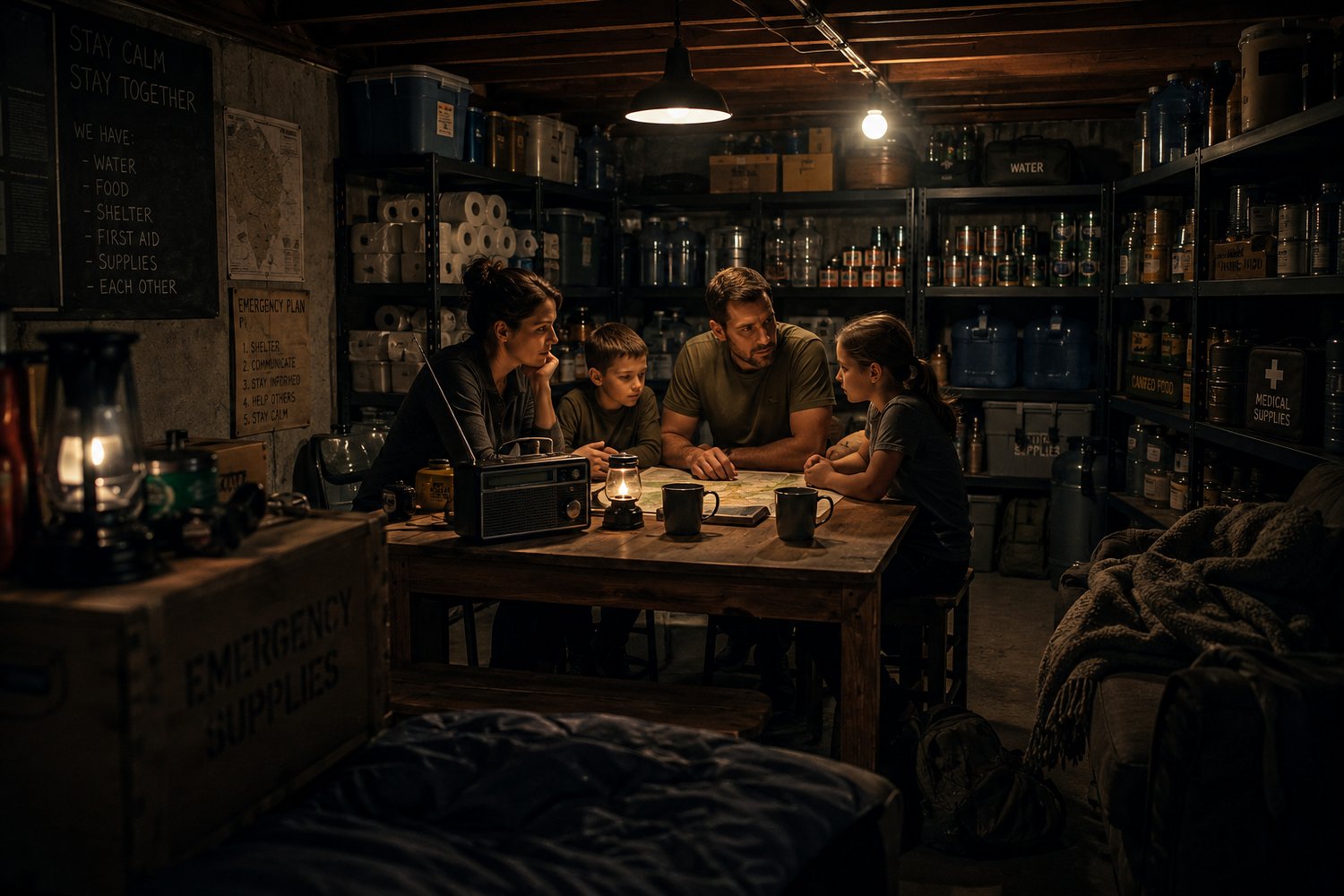
Get inside. Stay inside. Stay informed if possible.
Basements, reinforced interior rooms, concrete structures, and underground spaces provide the best protection.
People who rush outside unnecessarily — especially during fallout movement — may unknowingly expose themselves to dangerous contamination.
What Happens To Cities
Cities depend on constant supply chains.
Food deliveries arrive daily.
Water systems require electricity.
Waste systems require maintenance.
Fuel depends on transportation networks.
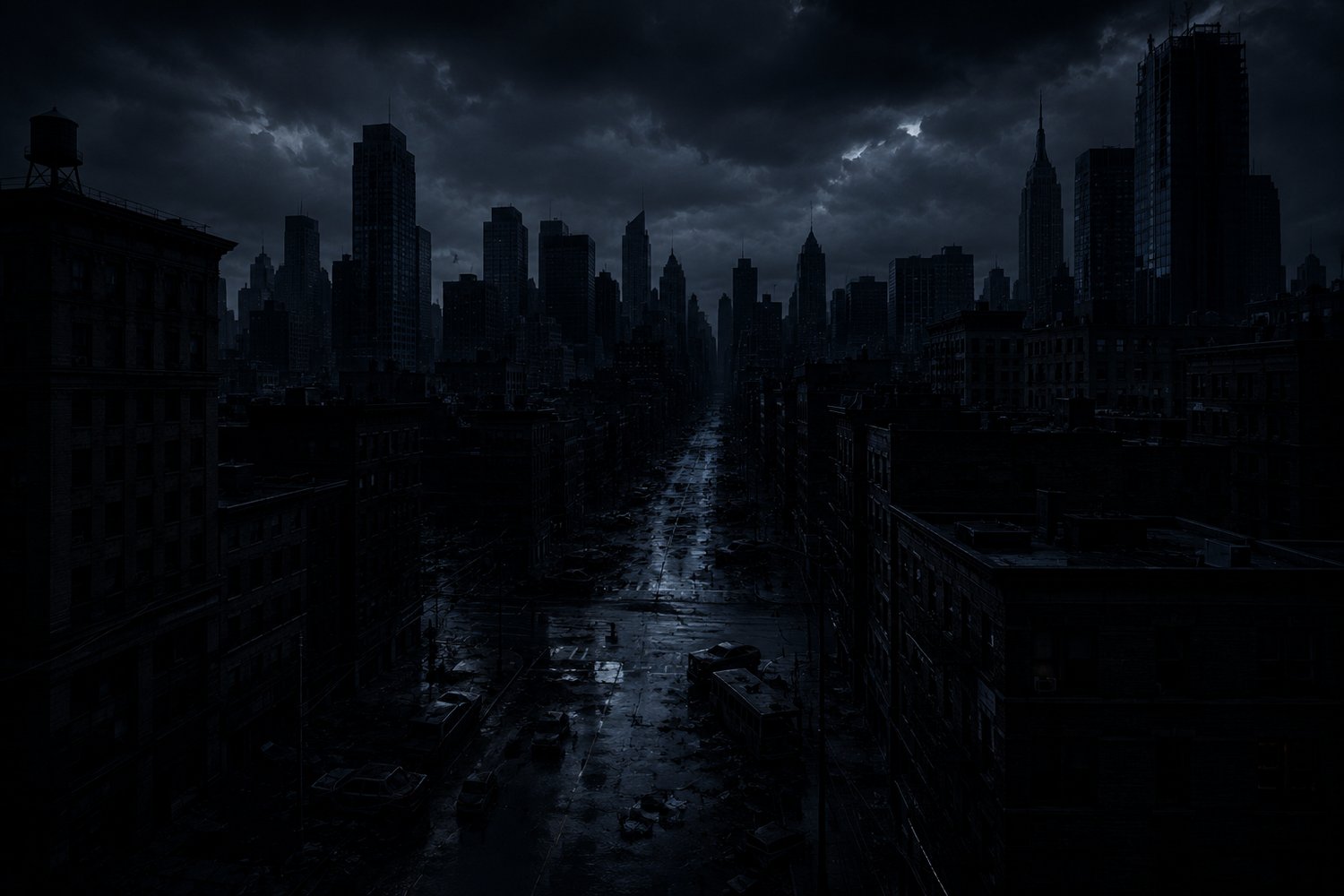
Without those systems, urban environments become difficult to sustain quickly.
Within days, shortages could affect:
clean drinking water
medicine
refrigeration
sanitation
fuel
security
Crowded populations create pressure. Fear creates poor decisions.
Most families are only a few missed deliveries away from empty shelves.
This is why preparedness is not paranoia. It is simply understanding how dependent modern life has become.

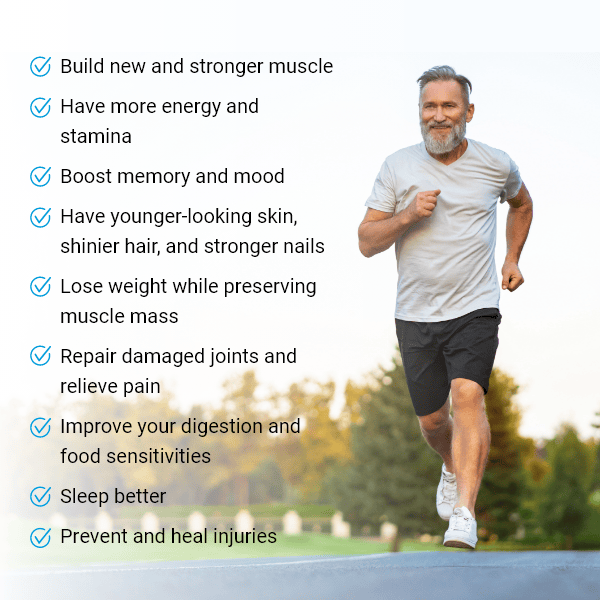
In uncertain times, preparation goes beyond food storage and emergency tools. Physical resilience matters too — especially when stress, exhaustion, and demanding conditions can wear the body down quickly. Many survival-focused households keep nutrient-dense foods, protein sources, and essential amino acids on hand to support strength, stamina, and recovery during physically demanding situations. One option that’s been gaining attention is Advanced Amino Formula, a blend of essential amino acids designed to support muscle maintenance, recovery, and sustained energy without relying on heavy protein shakes. It fits naturally alongside a preparedness lifestyle focused on long-term self-reliance, physical endurance, and staying capable when it matters most. ([advancedaminoformula.co][1])
How Rural Areas Might Survive Better
Rural communities would face hardships too — but they may possess critical advantages.
People outside dense urban zones often already understand:
growing food
repairing equipment
heating without central systems
storing supplies
collecting water
working with tools
living with less dependence on infrastructure
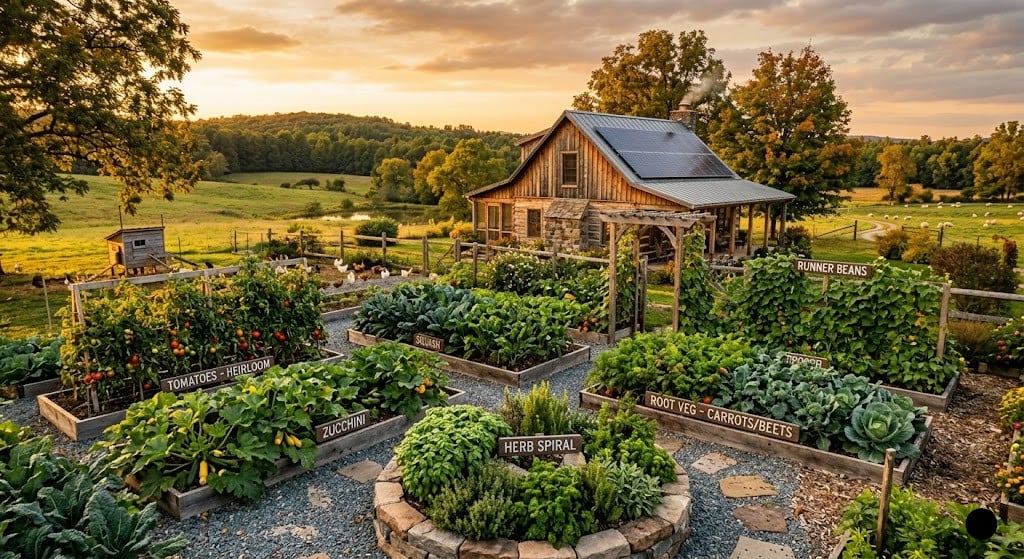
A backyard garden suddenly becomes more valuable than decorative landscaping.
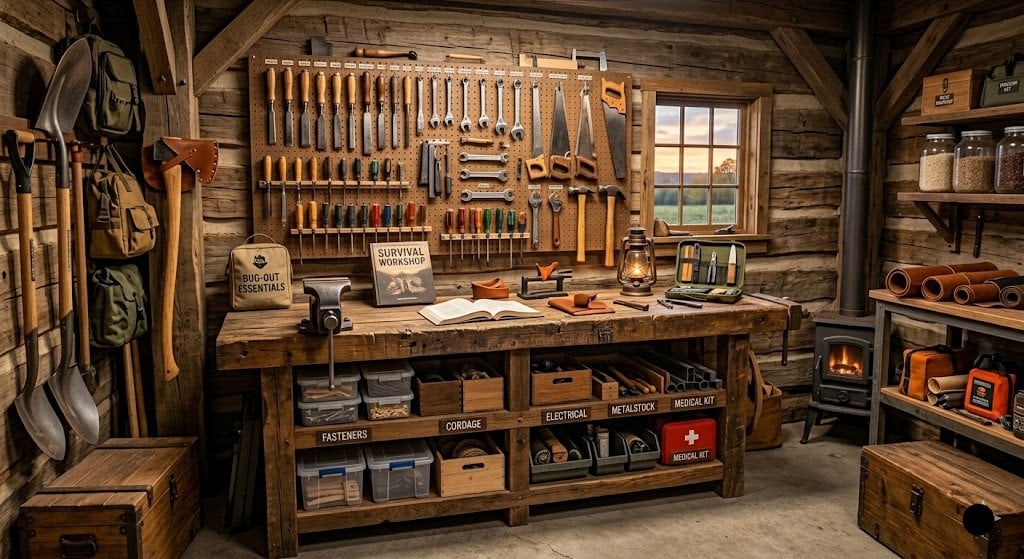
A small workshop becomes a survival asset.
The ability to build shelving, repair fencing, create storage systems, construct raised beds, or maintain tools could become essential daily skills.
Families with practical DIY experience would likely adapt faster psychologically as well.
Because preparedness is not only about supplies.
It is about capability.
Why Self-Reliance Becomes EverythingIn normal times, convenience hides vulnerability.
People assume:
power always returns
stores always restock
fuel always arrives
help is always coming
But large-scale disasters expose a hard truth:
families may need to function independently for days or weeks.
That does not mean isolation or fear.
It means readiness.
Self-reliant households often focus on:
backup cooking methods
emergency lighting
water collection
food preservation
basic first aid
alternative energy
practical tools
repair skills
community cooperation
Even a modest backyard can become a powerful resilience space.
Raised beds.
Rainwater barrels.
Vertical gardens.
Composting systems.
Simple solar charging stations.
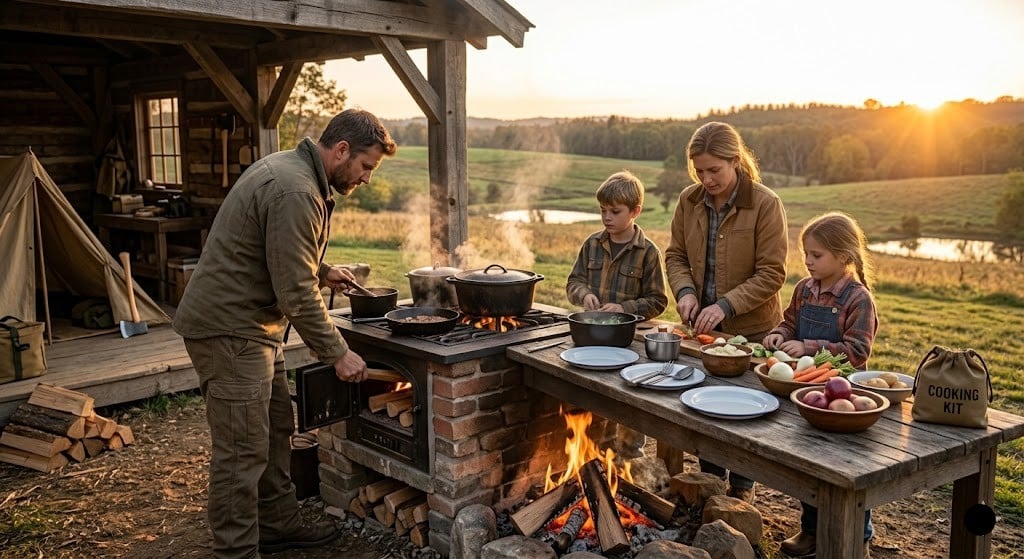
Outdoor cooking setups.
Storage benches built from reclaimed wood.
Preparedness does not have to look like a bunker.
Sometimes it looks like a well-organized garden and a workshop full of useful tools.
The Importance Of Clean Water
After any major disaster, water becomes one of the first critical problems.
Municipal systems depend heavily on electricity and treatment infrastructure. If those systems fail, contamination risks increase rapidly.
A family can survive weeks without food.
Without clean water, survival becomes far more urgent.
Every household should understand at least basic water preparedness:
store emergency drinking water
own reliable filtration systems
learn purification methods
collect rainwater safely
maintain clean storage containers
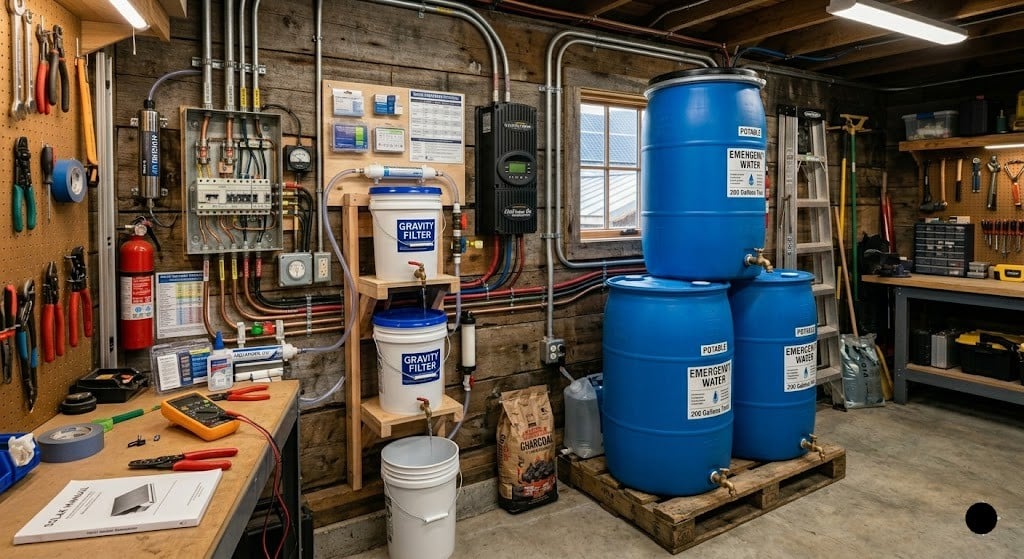
Simple gravity-fed filters, purification tablets, stainless steel boiling systems, and rain catchment setups can make a major difference.
Families interested in sustainable living already have a head start here.
How To Prepare A Backyard Survival SpaceThe modern backyard can become more than recreational space.
It can become a resilience system.
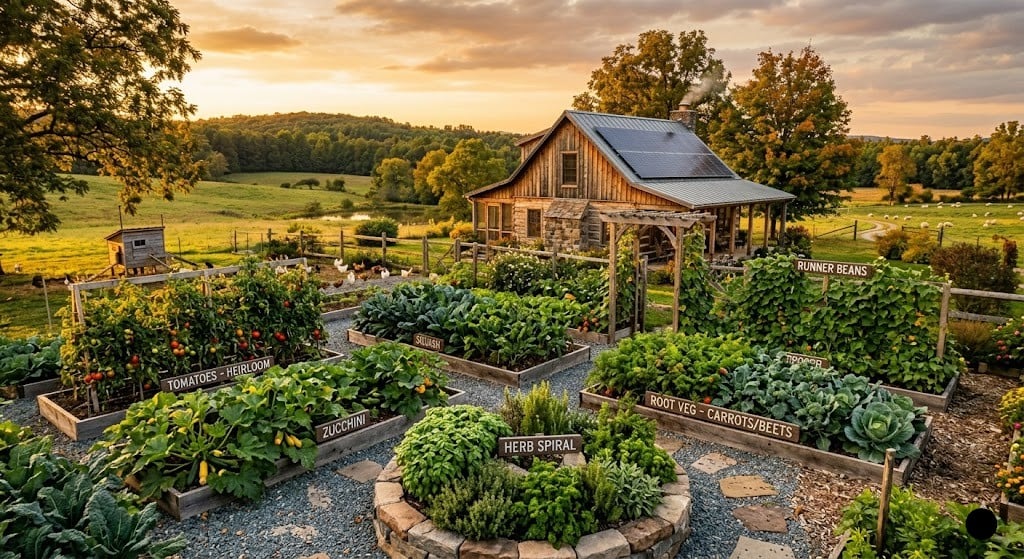
A practical preparedness-oriented backyard might include:
raised vegetable beds
medicinal herbs
rainwater collection
composting
firewood storage
solar lighting
secure tool storage
outdoor cooking capability
backup battery charging stations
Many families underestimate how valuable simple woodworking skills become during disruptions.
The ability to build:
shelves
storage crates
planter boxes
protective barriers
drying racks
repair benches
insulated storage spaces
…creates independence that money alone cannot buy during emergencies.
Preparedness is deeply connected to craftsmanship.
Tools Every Family Should Own
Fancy gadgets matter less than reliable basics.
A well-prepared household should consider having:
flashlights and rechargeable lanterns
battery banks
basic solar chargers
water filters
hand tools
first aid kits
radios
work gloves
sturdy storage containers
multi-tools
axes or saws
fire extinguishers
emergency blankets
backup cooking equipment
The families who adapt best are often the ones who invested slowly over time in practical equipment rather than panic-buying during crisis.
A small home workshop — even a simple one — can become incredibly valuable.
Repairing instead of replacing becomes essential when supply chains fail.
Psychological Survival & Leadership
One of the greatest dangers after catastrophe is psychological collapse.
Fear spreads fast.
People freeze.
Argue.
Panic.
Make reckless decisions.
Children especially look to adults for emotional stability.
The calmest family member may become the most important survival tool in the house.
Preparedness includes emotional readiness:
creating plans before emergencies
practicing communication
organizing supplies clearly
teaching children basic safety
building routines during stress
Leadership is not domination.
It is calm direction during uncertainty.
Communities that cooperate generally survive disasters better than isolated individuals driven by panic.
Neighbors matter.
Skills matter.
Trust matters.
Mistakes Most People Would Make
In nearly every disaster scenario, the same mistakes repeat:
waiting too long to prepare
panic buying
relying entirely on government response
ignoring water needs
wasting fuel
spreading misinformation
traveling unnecessarily during danger
neglecting mental health
failing to organize supplies
Another major mistake is assuming preparedness requires huge money.It does not.
A family can slowly improve resilience month by month:
extra canned food
better storage
basic gardening
water filtration
backup power
practical skills
Preparedness is built gradually.
Like a garden.
A Realistic Family Preparedness Checklist
Here is a calm, realistic starting point for ordinary households:
Food
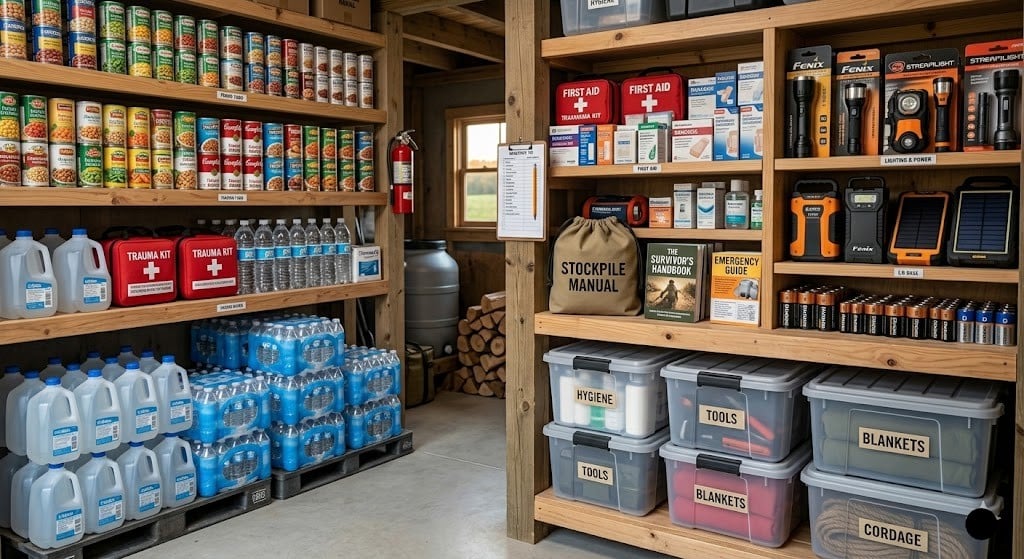
2–4 weeks of shelf-stable food
rice, beans, oats, canned goods
manual can opener
garden seeds
Water
emergency water storage
filtration system
purification tablets
rainwater collection options
Power & Light
rechargeable lanterns
solar chargers
backup batteries
small off-grid energy systems if possible
Shelter & Warmth
blankets
weatherproof clothing
tarps
sleeping bags
Medical
first aid kit
prescription backups
hygiene supplies
Communication
battery or hand-crank radio
written emergency contacts
family meeting plan
Tools & Repair
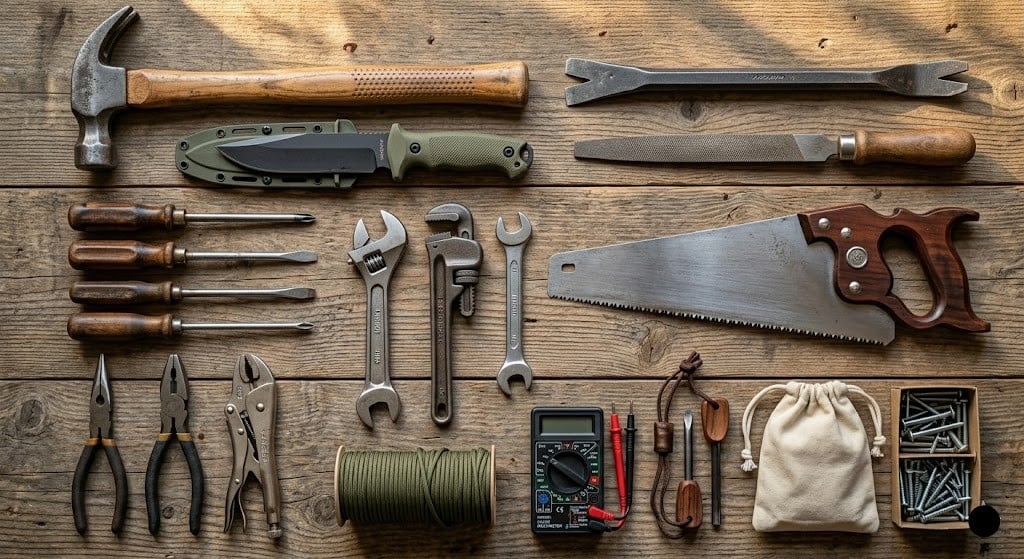
hammer
screwdrivers
saw
duct tape
gloves
workshop basics
Backyard Preparedness
raised garden beds
compost system
tool organization
water storage
outdoor cooking area
Preparedness is not about fear.
It is about reducing helplessness.
The Quiet Strength Of Preparation
If a nuclear bomb ever detonated, the world afterward would not look like movies.
There would be confusion.
Silence.
Smoke.
Fear.
Darkness.
But there would also be something else:
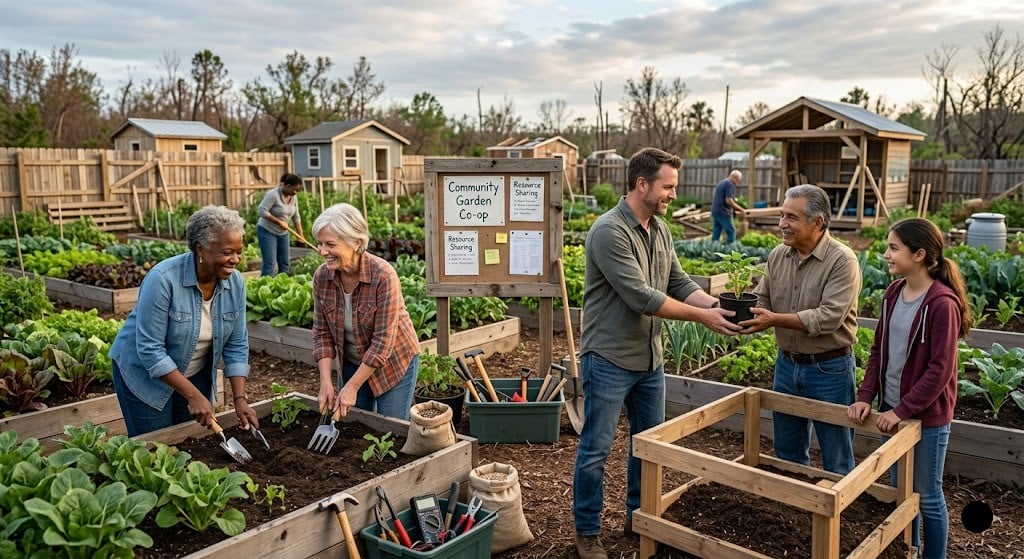
Families helping each other.
Gardens feeding neighborhoods.
People repairing instead of discarding.
Communities rediscovering practical skills.
Ordinary households becoming unexpectedly resilient.
The goal is not to live in fear of disaster.
The goal is to build a life strong enough to endure uncertainty.
Every raised garden bed.
Every stored water container.
Every practical tool.
Every learned skill.
Every backup light source.
Every homemade shelf in a backyard workshop —
all of it quietly increases independence.
And in unstable times, independence becomes peace of mind.
The future may remain uncertain. But preparedness does not require panic.
It requires calm thinking.
Practical action.
And the willingness to build a more resilient life before the lights ever go out.
Explore off-grid ideas. Learn practical DIY skills. Build your backyard into something more than decoration. Because resilience is not built overnight — it is grown, piece by piece, like strong roots beneath the soil.
Comments ()