

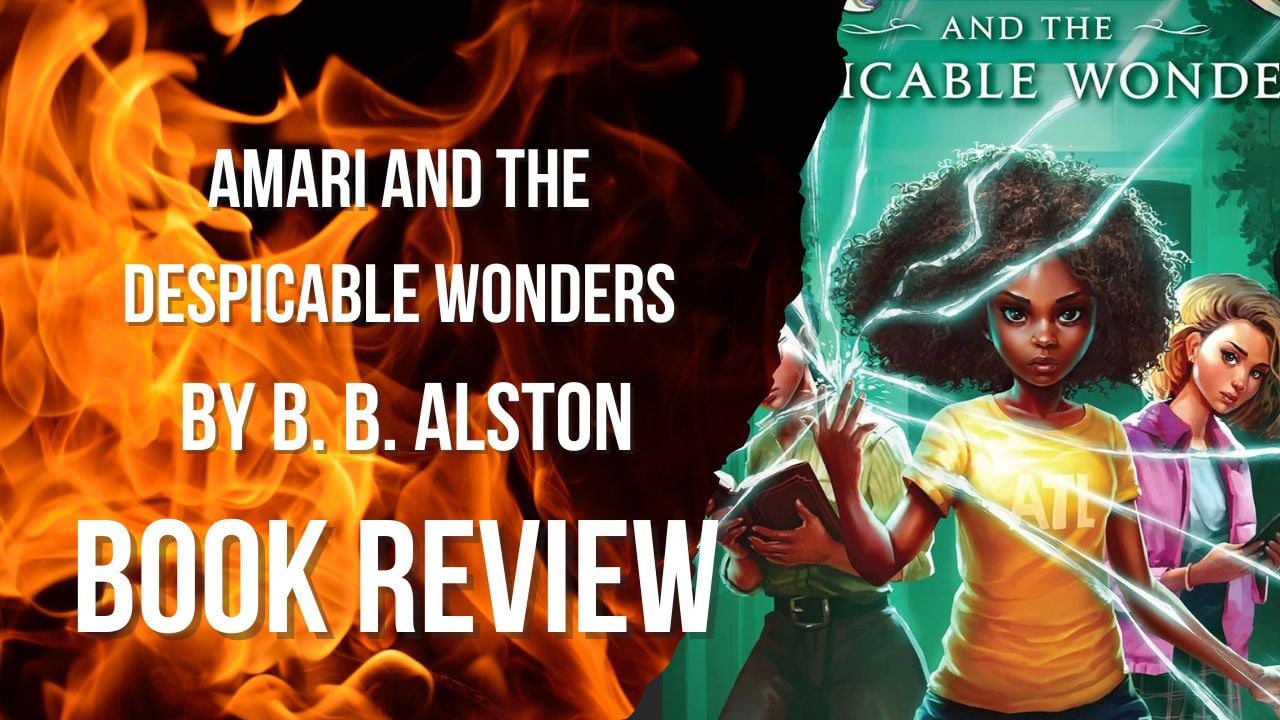
Amari and the Despicable Wonders: When Magic, Justice, and Courage Collide
Amari and the Despicable Wonders by B. B. Alston is the third and climactic book in the Amari and The Night Brothers trilogy... and it feels every bit like a reckoning. This is the point where every thread introduced in the earlier books tightens, every moral question demands an answer, and every character is forced to choose what they are truly willing to sacrifice.
Rather than focusing on discovery or entry into the supernatural world, it is about conflict, consequence, and culmination. The danger is no longer theoretical. The enemy is no longer distant. And the cost of victory is no longer abstract.
At the heart of it all is Amari... still brave, still compassionate, but now standing at the center of a battle that threatens to destroy everything she holds dear.
A World on the Brink
The supernatural world is no longer just unstable... it is on the edge of collapse. Fear has hardened into policy, suspicion has replaced trust, and every decision feels like it could tip the scales toward disaster.
This book makes it painfully clear that the greatest threat isn't just external monsters or forbidden magic... it is what happens when fear is allowed to dictate who deserves protection and who doesn't. Long-standing injustices are no longer background noise... they are central to the conflict
The world Amari once fought to belong to now feels willing to burn itself down to maintain control.
Amari and Quinton: Love, Control, and Conflict
One of the most emotionally charged threads in this book is the growing rift between Amari and her brother, Quinton. His refusal to let her help in the fight isn't rooted in doubt about her abilities... it is rooted in love, fear, and a desperate need to protect her at all costs.
But protection can easily become a cage.
Amari and Quinton don't just disagree on strategy... they disagree on what and who is most important to secure. Quinton is focused on containment and control. Amari is focused on people, harm reduction, and on stopping the suffering at its source.
Amari's growth in this book isn't about gaining power. It is about claiming her agency, even when the people she loves most are trying to take that choice away.
Dylan: When Power and Pain Spiral
Dylan's descent into madness is one of the most haunting elements of the story. What makes it so effective... and so unsettling... is that it doesn't come out of nowhere. His unraveling is gradual, rooted in fear, obsession, and a growing disconnect from reality.
By the time the story reaches its peak, Dylan is no longer simply an antagonist... he is a cautionary tale. A demonstration of what happens when power is left unchecked, when trauma is ignored, and when control becomes more important than humanity.
Amari sees what others refuse to acknowledge: that stopping Dylan isn't just about winning... it is about preventing further devastation, even if the cost is unbearable.
The Ultimate Sacrifice
The emotional core of Amari and the Despicable Wonders lies in Amari's final choice.
When it becomes clear that Dylan cannot be reasoned with, that containment will not be enough, Amari does what no else is willing... or able to do.She makes the ultimate sacrifice to stop him.
This moment isn't framed as glory or triumph. It is quiet, devastating, and deeply human.
Amari's sacrifice is the culmination of everything she stands for:
- choosing compassion over control
- choosing responsibility over safety
- choosing others, even when it could cost her everything
It is a reminder that heroism isn't about surviving... it's about what you are willing to give up so others can.
Character Analysis
Amari Peters
Amari is the emotional and moral core of the series. Across the series and especially in The Despicable Wonders, she represents agency in the face of control. Amari's power has never been her magic alone. It is her empathy, her refusal to dehumanize others, and her insistence on choosing people over systems.
Amari is no longer fighting to be included... she is fighting to be heard. Her greatest struggle is not against villains, but against those who love her and believe they know what is best for her. Her ultimate sacrifice is the natural culmination of her character: she has always been willing to carry pain if it means sparing others.
Elsie Rodriguez
Elsie serves as both a grounding force and an emotional mirror for Amari. Where Amari often carries the weight of responsibility, Elsie brings loyalty and fierce friendship. She is deeply protective, but unlike Quinton, her protection doesn't come at the cost of Amari's autonomy.
Elsie's strength lies in her constancy. She may waver when things become frightening or politically complicated but her loyalty to her friends allows her to continue even when things are hard. Her presence reinforces on the the series' key messages: chosen family can be just as powerful as blood ties.
Jayden Daniels
Jayden Daniels is Amari's loyal, non-magical best friend who gains supernatural powers in the form of communication with animals and joins the Bureau, evolving from a nervous neighborhood kid to a brave, supportive force, crucial to Amari's quest. He highlights themes of true friendship and courage, even as their relationship begins to hint at romance.
Jayden consistently stands by Amari, even when things get hard, showing deep friendship and loyalty, which is central to the story's theme of true camaraderie. He starts out nervous about the new world he has been thrust into but as the story moves on he slowly gets more confident. He provides a grounding presence and a different perspective for Amari.
As the story progresses, his bond with Amari deepens, with hints of a potential romance, as they navigate dangers together and he actively helps Amari fight for what is right.
Dylan Van Helsing
Dylan is a villain who is tragedy in motion. His descent into madness is fueled by obsession, fear, and an unchecked belief that control and power equals safety. What makes Dylan so compelling is that his motivations initially resemble those of so-called heroes.
By the end of the story, Dylan represents what happens when pain is ignored and the lust for power is indulged. He becomes a warning: even righteous intentions can curdle into destruction when empathy is abandoned. Dylan is not just someone Amari must stop... he is someone the system helped create.
Quinton Peters
Quintons' love for Amari is unquestionable... but love, when mixed with fear, can easily turn into control. His refusal to let Amari help stems from trauma and protectiveness, not arrogance. Yet his inability to trust Amari's judgment becomes one of the story's most painful conflicts.
Quinton symbolizes a recurring theme: Who gets to decide what protection looks like. His arc forces readers to confront an uncomfortable truth... good intentions do not excuse stripping someone of their agency.
Lara Van Helsing
Lara carries the weight of history and reputation on her shoulders, and this pressure has shaped her worldview... one that Amari makes her question. As time goes on she starts to see the error of her ways and begins to help Amari in any way she can, even when it seems like to do so she has to betray her. Her character highlights how inherited roles can limit moral imagination. Lara is not cruel, but she is often constrained by what must be done rather than what should be done.
Elaine Harlowe
Elaine is a cunning, power-hungry faun who manipulates her way to the top of the Bureau of Supernatural Affairs, becoming its director and using her mind-control power to fuel her anti-magician agenda. She contrasts Amari journey while embodying systemic prejudice within the magical world due to a tragic past. She is a complex antagonist, strong-willed and intelligent, but driven by bias and a desire for control, seeking to eradicate magicians, creating conflict and helping to push the supernatural world toward war.
Her supernatural powers had been suppressed by Merlin until the entire council is frozen in time. She serves as the primary obstacle for Amari, leading the Bureau's anti-magician stance and opposing Amari's efforts to unite the supernatural world.
She was orphaned as a young faun and was raised by adoptive parents who died during one of Moreau's attacks. Her personal trauma fuels her hatred for magicians. In this sense she represents the deep-seated prejudice against magicians and the UnWanteds that the supernatural society holds. As a result she takes advantage of the time freeze affecting the leaders of the supernatural world to seize control of the Bureau and pursue her own agenda.
In her takeover, she sets the stage for the escalating conflict between the Bureau and the League of Magicians. Her manipulation and control of the Bureau's vast resources make her a formidable foe, pushing Amari and her friends to find new solutions to counter her power and stop the upcoming war.
Elaine Harlowe is a villain whose personal pain and prejudice is driving her to dismantle the very system that she seeks to control, much like Dylan. This forces Amari to confront not just powerful magic, but deep-seated societal divisions.
Peekaboo
Peekaboo provides moments of levity, but he has a deeper purpose. He exists outside of the human power struggles and offers emotional relief. Peekaboo reminds readers that innocence and wonder still exist... even in the darkest moments. This contrast makes the story's heavier themes hit harder.
Agent Magnus
Agent Magnus is a complex figure: initially a tough, loyal, cowboy hat wearing agent with steel skin. He is known for his dedication to his friends and is now engaged to Agent Fiona, but his arc becomes tragic as his love for his students leads to his sacrifice and disappearance.
He is fiercely loyal, supportive, and dedicated, often acting as a protector and mentor to Amari, even offering as much support as he receives. He is a key ally and friend to Amari. His sacrifice deeply affects Amari and fuels speculation about his fate.
Magnus serves as a moral compass and powerful ally, embodying the struggle against corruption. His story highlights the high stakes and personal losses in the fight for the supernatural world.
Agent Fiona
Agent Fiona is a respected and powerful Bureau agent and serves as a key ally to Amari. Her supernatural ability allows her to see people's true intentions by looking into their eyes. She helps Amari navigate the dangerous political landscape of the supernatural world. She is a formidable and loyal figure.
Themes and Ideas
Agency vs. Protection
One of the most dominant themes in Amari and the Despicable Wonders is the tension between protecting someone and allowing the agency. Amari's struggle, especially with Quinton, highlights how easily love can become control when fear takes over.
Fear as a Catalyst for Harm
Fear drives many of the book's conflicts. Institutions tighten their grip. Individuals justify extreme actions. Boundaries that once existed to maintain safety begin to erode. Dylan's descent is the most extreme example of this, but he is not alone. Again and again, fear is shown not as a passive emotion, but as an active force that reshapes morality. The story warns that when fear is allowed to dictate decisions, it rarely leads to justice.
Power, Control, and Moral Corrosion
The novel repeatedly challenges the idea that power can be wielded "cleanly." Whether it is magical power, institutional authority, or emotional leverage, power always comes with a price. Characters like Dylan and Elaine how easily control can replace compassion... especially when systems reward results over humanity. The book suggests that unchecked power doesn't just harm others... it corrodes the person holding it.
Love That Hurts
Not all harm comes from villains. Some of the deepest wounds are inflicted by people who genuinely care. Quinton's actions, while rooted in love, still cause pain. Lara's adherence to legacy harms as much as it protects. Even well-intentioned silence becomes a form of betrayal. The book refuses to romanticize harmful love, instead showing that intent doesn't erase impact.
Sacrifice Without Glory
Amari's final act reframes heroism. Her sacrifice is not rewarded with celebration or certainty... it is quiet, devastating, and irreversible. By stripping sacrifice of spectacle and glory, this story emphasizes that true heroism is often unseen and deeply personal. It is not about being remembered as a hero, but about preventing harm, even at unbearable costs.
Systems vs. Individuals
Throughout the novel, systems are shown to prioritize stability over people. Policies override compassion. Outcomes matter more than lives. Characters like Agent Magnus offer a counterpoint, proving that individuals within systems still have choices. This theme reinforces a core message: systems do not absolve responsibility... people still choose how they participate in them.
Final Thoughts
Amari and the Despicable Wonders challenges the idea that protection justifies control. It exposes how fear can fracture even the strongest bonds. And it dares to show young readers that doing the right thing doesn't always come with a happy ending.
This book is a book about love that clashes, power that corrupts, and courage that demands sacrifice.
If you have followed Amari's journey from the beginning, this finale will hurt, but it will also stay with you.
Because seome stories aren't meant to comfort us. They are meant to change us.