

By Mark Paine Fisher
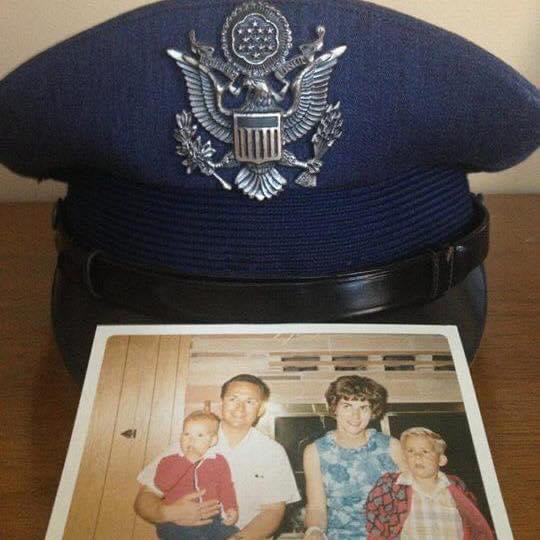
Son of Capt. Robert T. Paine, USAF
I was five years old when my father died.
Capt. Robert T. Paine, United States Air Force, was killed in a plane crash on December 29, 1966.
At five years old, you don’t understand death. You understand absence. You understand the empty chair. You understand that someone who was there yesterday is not there today.
One of my clearest memories of my father is surprisingly simple.
He taught me how to tie my shoes.
I didn’t know it would be the last lesson he would ever teach me.
There was no final conversation. No goodbye. No moment where I understood the importance of what was happening. Just a young father kneeling beside his little boy, helping him learn something ordinary.
The Questions I Carried
For almost sixty years, I thought losing my father was something that happened to me. Something in my past.
What I didn’t realize was how much that little boy carried forward.
After the end of my 37-year marriage, I began asking questions I had avoided for most of my life.
Not questions about my father.
Questions about me.
- Why was disappointment so frightening?
- Why did I spend so much of my life trying to make sure nobody else left?
- Why could a room full of affirmation never quite convince me I was enough?
Those questions eventually led me back to the first great loss of my life. My father.
I realized the five-year-old boy who was not allowed to attend his father’s funeral never really had the chance to grieve. He didn’t have the words. He didn’t understand loss.
He just knew someone he loved disappeared.
Finding My Father
I began searching.
Not just for Capt. Paine, the Air Force officer. I wanted to know Robert Paine, the young husband, the father, the man behind the uniform.
That search became The Paine Protocol.
At first, I thought I was writing a story about discovering my father.
The unexpected gift was discovering myself.
During that journey, I learned about the work of Dr. James Pennebaker, a psychologist at the University of Texas at Austin, who spent decades studying expressive writing.
His research helped demonstrate something powerful: putting difficult experiences into words can help people organize, process, and make meaning from the things they have carried.
That made sense to me.
Because something happened as I wrote.
Memories that had been scattered began finding a place. Questions I had carried for decades began finding language.
The little boy who lost his father finally had a voice.
Giving the Little Boy a Voice
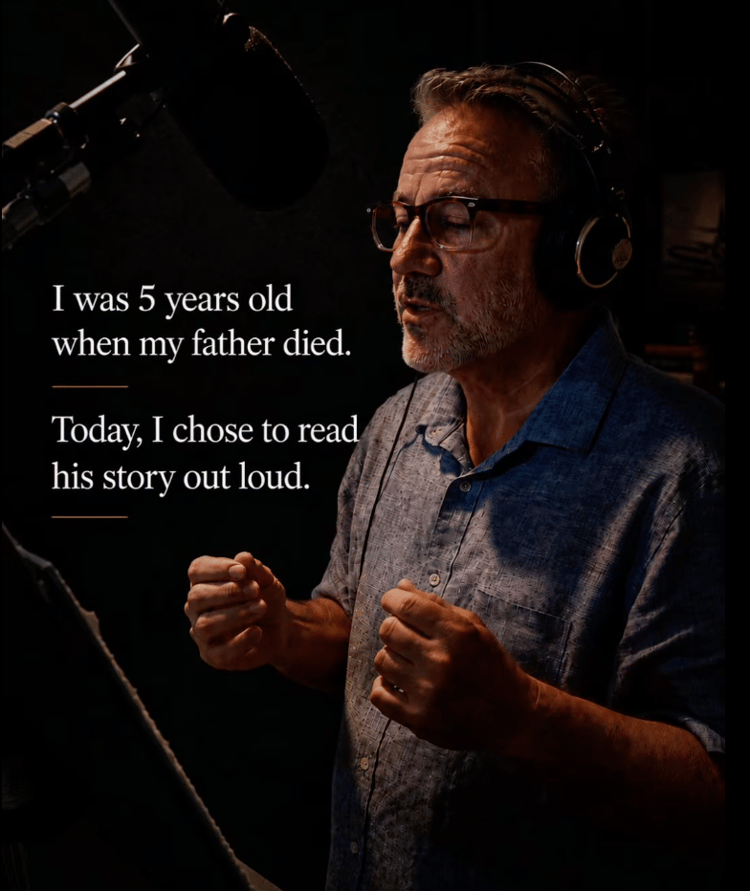
Recently, I stood in a recording studio narrating the audiobook.
Suddenly, I wasn’t just reading chapters.
I was speaking words that five-year-old boy never got to say.
I was telling him:
- Your loss mattered.
- Your questions mattered.
- Your story mattered.
- And your father’s story did not end on December 29, 1966.
A few days later, I shared The Paine Protocol at my parents’ retirement community. I thought people would want to talk about the mystery surrounding my father’s crash.
Some did.
But what surprised me was what happened afterward.
For three days, people stopped me.
Veterans. Military spouses. Sons and daughters.
They didn’t just want to talk about my story. They wanted to tell me theirs.
Stories of loss. Stories of unanswered questions. Stories they had carried quietly for years.
That’s when I understood something important.
When we tell our stories, we sometimes give other people permission to tell theirs.
Making Room for Joy
Writing The Paine Protocol did not erase my grief.
It did not give me back the years I lost with my father. It didn’t answer every question.
But it helped give my story a beginning, middle, and a new chapter.
People have asked me, “How do you know you’re healing?”
For a long time, I thought healing meant the sadness would disappear.
I don’t believe that anymore.
I know I’ve begun to heal because grief no longer takes up all the space.
There is room now.
- Room for gratitude.
- Room for laughter.
- Room for love.
- Room for joy.
The five-year-old boy who lost his father will always be part of me.
But he is no longer the only part of me.
My father missed almost my entire life. My graduations. My marriage. My children. My grandchildren.
But somehow, nearly sixty years later, he was still teaching me.
Not how to tie my shoes this time.
How to heal. How to remember. How to finally let the little boy inside me know:
You can stop trying to prove you are enough.
You always were.
I started writing because I wanted to discover what happened to my father.
I never expected the writing would reveal what happened inside his son.
And maybe that is the beautiful mystery of remembering the people we love:
Their stories don’t end when we lose them.
Sometimes they are still helping us find our way home.
Special Reader Offer
If this story stirred something in you, I’d love for you to read or listen to The Paine Protocol.
For a limited time, use code: HEALING50 to take 50% off the digital book, full audiobook, or Collector’s Bundle.
Start here:
https://payhip.com/MarkPFisher
Some stories are written to sell books.
This one was written to find my way home.

Mark Paine Fisher
Author: The Paine Protocol: A Cold War Thriller based on a True Story
https://payhip.com/MarkPFisher
Comments ()