
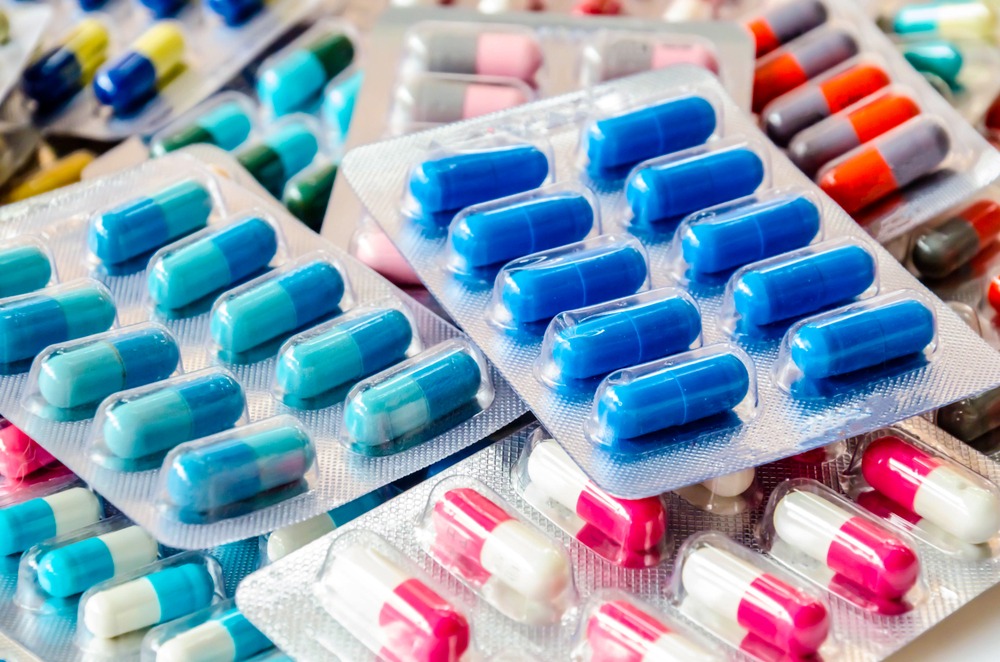
India Generic Drugs Market Outlook
This research report by IMARC Group on the India Generic Drugs Market provides a forecast of market size, share, and emerging trends for 2026–2034. The report covers segmentation by therapy area, drug delivery, and distribution channel, with regional coverage across North India, South India, East India, and West India.
Market Snapshot
- Market Name: India Generic Drugs Market
- Region: India
- Base Year and Market Size: 2025, USD 30.0 Billion
- Forecast Year and Market Value: 2034, USD 53.5 Billion
- CAGR: 6.42%
- Forecast Period: 2026–2034
- Segmentation Covered: Therapy Area, Drug Delivery, Distribution Channel, Region
Current Market Size of the India Generic Drugs Industry
In 2025, the India generic drugs market size reached USD 30.0 Billion and is projected to touch USD 53.5 Billion by 2034, expanding at a CAGR of 6.42% during 2026–2034. Four forces explain this trajectory: patent expiries opening complex generics like semaglutide, the PLI scheme for pharmaceuticals attracting ₹46,744 crore in actual investment, export demand that crossed USD 30 billion in FY25, and price controls that make generics the default prescribing choice across therapy areas.
Emerging Trends in the India Generic Drugs Market
Semaglutide Patent Expiry Opens a New Generic Frontier
The loss of semaglutide patent protection has triggered rapid generic entry into the GLP-1 market. Torrent Pharma became the first to launch generic oral semaglutide after the Delhi High Court ruled its formulation did not infringe Novo’s patent, and Dr Reddy’s followed with Obeda priced at ₹99 to ₹225 per tablet. Sun Pharma secured CDSCO approval for its own generic oral semaglutide in October 2026. The GLP-1 market in India nearly tripled to ₹2,700 crore from ₹950 crore in 2025. This matters because complex generics offer higher margins than simple formulations and signal a shift toward specialty capability.
PLI Investment Exceeds Targets by Nearly Three Times
Government incentives have pulled far more capital into pharmaceutical manufacturing than originally planned. The PLI Scheme for Pharmaceuticals, with a ₹15,000 crore outlay, attracted ₹46,744 crore in actual investment as of June 2026, against a targeted ₹17,275 crore. Beneficiary companies achieved cumulative sales of ₹4,02,869 crore, including exports worth ₹2,57,370 crore. Companies including Sun Pharma, Aurobindo, Dr Reddy’s, Lupin, Cipla, Intas, and Torrent expanded capacities for complex generics, biosimilars, and autoimmune medicines. This investment depth supports the shift from simple generics to higher-value products.
Export Momentum Sustains Despite US Pricing Pressure
Generic drug exports provide a demand floor that domestic consumption alone cannot match. India’s pharmaceutical exports touched USD 30.47 billion in FY25, growing 9.4% year-on-year despite pricing pressures in key global markets. PHARMEXCIL noted that exports were supported by generics, vaccines, and APIs, with diversified demand from regulated and emerging markets. The council engaged with the Department of Commerce and DGFT to align policies, ease trade, and strengthen MSME participation. Export growth gives manufacturers scale advantages that support domestic pricing competitiveness.
Price Controls Reshape Cancer Drug Economics
Trade margin rationalisation is extending beyond scheduled essential medicines into non-scheduled cancer drugs. The government brought 137 non-scheduled anti-cancer drugs, including patented ones, under trade margin rationalisation through an October 2026 order, capping trade margins at 30% of MRP. This follows a 2019 pilot covering 42 non-scheduled anti-cancer drugs that successfully drove down patient costs. For generic manufacturers, the measure compresses distributor margins but expands patient access, potentially increasing volume even as per-unit margins decline.
Request Sample Report with Datasheet: https://www.imarcgroup.com/india-generic-drugs-market/requestsample
Growth Drivers of the India Generic Drugs Market
PLI Schemes Reduce API Import Dependence
The PLI Scheme for Bulk Drugs, with a ₹6,940 crore outlay, has approved 48 projects and commissioned 39 for manufacturing 28 APIs and KSMs as of June 2026. Investment reached ₹5,210.74 crore, exceeding the committed ₹4,330 crore. The scheme enabled domestic production of fermentation-based products including Penicillin-G, Clavulanic Acid, and Rifampicin, which were earlier largely imported. Reduced API import dependence stabilises raw material costs for generic formulators and shortens supply chains, supporting margin predictability.
CDSCO Approvals Accelerate Generic Launches
Regulatory approvals are flowing for high-demand generic products. Natco Pharma received CDSCO approval for generic semaglutide injection in February 2026 and launched in March 2026. Sun Pharma secured approval for generic oral semaglutide at three strengths in October 2026. These approvals demonstrate that Indian manufacturers can meet regulatory requirements for complex formulations, and they signal to global markets that Indian generic capability extends beyond simple tablets and capsules. Each approval opens a product category that previously had limited competition.
Domestic Market Scale Supports Export Competitiveness
India’s domestic pharmaceutical market, estimated at around USD 60 billion, is projected to grow to USD 130 billion by 2030. This scale provides manufacturing depth and supply-chain resilience that smaller markets cannot match. PHARMEXCIL highlighted that a growing domestic market provides scale advantages supporting export-led growth. Generic manufacturers that serve both domestic and export markets can spread fixed costs across larger volumes, improving cost competitiveness in international tenders where price determines contract awards.
Patent Expiries Create a Multi-Year Product Pipeline
The generic industry’s growth depends on new molecules losing patent protection, and the pipeline remains active. Semaglutide’s expiry created immediate generic competition across injectable and oral formats. Gilead’s lenacapavir has drawn 18 patent filings in India covering compound, salt forms, formulations, and dosing regimens, with patient groups warning of evergreening that could delay affordable generics. While lenacapavir’s patent situation remains contested, the broader trend is that blockbuster drugs continue to lose protection, creating opportunities for generic manufacturers with the capability to develop complex formulations.
Request Detailed Methodology: https://www.imarcgroup.com/india-generic-drugs-market/methodology
Opportunities in the India Generic Drugs Market
Complex Generics and Biosimilars
The PLI scheme explicitly supports complex generics, biosimilars, and high-value pharmaceuticals, and beneficiary companies have invested far beyond targets to build capability. Simple generics represented an estimated 65% of market revenue historically, but complex products offer higher margins and less price erosion. A manufacturer that develops capability in biosimilars, inhalers, or injectable depot formulations can compete in segments where fewer Indian companies have qualified, capturing premium pricing that commodity generics cannot sustain.
GLP-1 Generic Competition
The semaglutide market’s tripling to ₹2,700 crore indicates substantial demand for GLP-1 drugs in India. Torrent holds nearly 90% of the oral generic semaglutide market, but Sun Pharma’s approval and Dr Reddy’s launch indicate that competition is expanding. A manufacturer that enters with competitive pricing or differentiated formulations can capture share in a category where patient demand is growing and penetration remains relatively low. The opportunity extends to combination products and alternate delivery formats as the market matures.
MSME Integration into Export Supply Chains
PHARMEXCIL’s Chintan Shivir initiative aims to engage pharmaceutical MSMEs on regulatory compliance, quality standards, and export preparedness, with programmes planned in Ahmedabad and Hyderabad following a Chandigarh edition. MSMEs that upgrade quality systems and obtain export certifications can access global supply chains that larger manufacturers cannot fully serve alone. The opportunity is in specialized or low-volume products where large players lack scale advantage, and in contract manufacturing for companies seeking additional capacity.
Challenges in the India Generic Drugs Market
Patent Evergreening Delays Generic Entry
Secondary patent filings can extend market exclusivity beyond the standard 20-year term, delaying affordable generics. Gilead filed at least 18 patent applications in India covering lenacapavir, including base compound, salt forms, formulations, dosing regimens, and methods of use, with patents if granted set to expire in 2042, 28 years after the first application. Patient groups have asked the government to reject secondary patent applications, arguing that layered filings deter generic entry. For generic manufacturers, the challenge is that even where voluntary licences exist, as with lenacapavir, only licence holders can manufacture, limiting competition.
Pricing Pressure from Trade Margin Controls
The extension of trade margin rationalisation to 137 non-scheduled anti-cancer drugs caps margins at 30% of MRP, based on March 2026 distributor prices. While this improves patient affordability, it compresses the distribution margin that supports generic manufacturers’ channel relationships. The Department of Pharmaceuticals is examining trade margins on other expensive hospital-administered drugs, including anti-infectives and ICU medicines, with plans to apply TMR only above ₹100. Manufacturers of premium generics face the prospect of further margin controls as the government expands its affordability agenda.
Quality and Compliance Costs for Export Markets
Export-oriented generic manufacturers face regulatory scrutiny from the US FDA, EU authorities, and other agencies that can halt shipments if manufacturing standards fall short. PHARMEXCIL’s MSME outreach focuses on regulatory compliance and quality standards because smaller manufacturers often lack the systems that regulated markets require. Upgrading facilities, documentation, and testing capabilities requires capital that smaller players struggle to fund. Non-compliance carries consequences that extend beyond the affected facility, as import alerts can damage a company’s reputation across all markets.
Key Market Segments in the India Generic Drugs Market
The India generic drugs market is segmented by therapy area, drug delivery, distribution channel, and region.
Therapy Area Segmentation
- Central Nervous System
- Cardiovascular
- Dermatology
- Genitourinary/Hormonal
- Respiratory
- Rheumatology
- Diabetes
- Oncology
- Others
Cardiovascular and diabetes hold significant shares because India’s chronic disease burden drives sustained demand for statins, antihypertensives, and anti-diabetic medications. Diabetes is gaining share rapidly as GLP-1 generics enter the market, with semaglutide competition expanding across oral and injectable formats. Oncology holds smaller volume but higher value per unit, and trade margin controls on cancer drugs indicate that the segment’s pricing is under policy scrutiny. Respiratory and CNS generics serve large patient populations through retail pharmacies.
Drug Delivery Segmentation
- Oral
- Injectables
- Dermal/Topical
- Inhalers
Oral formulations hold the dominant position because tablets and capsules are the most convenient and cost-effective delivery method for chronic disease management. Injectables are growing faster as biosimilars and complex generics enter the market, including generic semaglutide injections that require cold chain and sterile manufacturing capability. Dermal and topical products serve dermatology and pain management applications, while inhalers represent a smaller segment where domestic manufacturing capability remains limited compared to oral solid dosage forms.
Distribution Channel Segmentation
- Retail Pharmacies
- Hospital Pharmacies
Retail pharmacies dominate generic drug distribution because most chronic disease prescriptions are filled at standalone and chain pharmacies that patients visit routinely. Hospital pharmacies hold a significant share for injectable and oncology products administered in clinical settings, and for drugs covered under hospital formularies. The channel mix matters for pricing: retail generics compete on brand and price, while hospital generics are often procured through institutional tenders where volume discounts determine awards.
Regional Breakdown
- North India
- South India
- East India
- West India
West India leads generic drug demand because Maharashtra and Gujarat host major pharmaceutical manufacturing clusters and have well-developed retail pharmacy networks in Mumbai, Pune, and Ahmedabad. South India is the significant secondary region, supported by Hyderabad’s status as a pharmaceutical manufacturing hub, Bengaluru’s healthcare infrastructure, and Tamil Nadu’s generic prescribing culture. North India benefits from Delhi NCR’s concentration of hospitals and pharmacies, while East India remains a smaller market with growing healthcare access.
Who Are the Key Players in the India Generic Drugs Market?
Covering an in-depth analysis of the competitive landscape, market structure, key player positioning, competitive dashboards, top winning strategies, and detailed profiles of all major industry participants you will gain access to all these exclusive insights within the full research report.
Latest Recent Developments in the India Generic Drugs Market
Sun Pharma Secures CDSCO Approval for Generic Oral Semaglutide
In October 2026, Sun Pharmaceutical Industries received CDSCO approval to manufacture and market generic once-daily semaglutide tablets in India for type-2 diabetes at 3 mg, 7 mg, and 14 mg strengths. The formulation is therapeutically equivalent to Novo’s Rybelsus and will be manufactured at Sun’s Kamrup, Assam facility using API sourced from China’s Zhongmeihuadong Pharmaceutical. Torrent Pharma currently holds nearly 90% of the oral generic semaglutide market.
Government Caps Trade Margins on 137 Anti-Cancer Drugs
In October 2026, the government brought 137 non-scheduled anti-cancer drugs, including patented ones, under trade margin rationalisation through an order invoking Paragraph 19 of the DPCO, 2013, capping trade margins at 30% of MRP based on March 2026 distributor prices. The order followed a 2019 pilot covering 42 anti-cancer drugs that successfully reduced patient costs. The Department of Pharmaceuticals is examining extending margin controls to other expensive hospital-administered drugs.
PLI for Pharmaceuticals Attracts ₹46,744 Crore in Investment
In September 2026, PIB reported that the PLI Scheme for Pharmaceuticals, with a ₹15,000 crore outlay, attracted ₹46,744 crore in actual investment as of June 2026, far exceeding the targeted ₹17,275 crore. Beneficiary companies achieved cumulative sales of ₹4,02,869 crore including exports of ₹2,57,370 crore, and created 1,21,294 jobs. The scheme supports manufacturing of biopharmaceuticals, complex generics, patented drugs, and autoimmune medicines.
Customization Note
If you require any specific information not covered within this report's scope, we will provide it as part of the customization.
Request Report Customization: https://www.imarcgroup.com/request?type=report&id=30695&flag=E
Frequently Asked Questions (FAQs)
Q1. How large is the India generic drugs market and what is its forecast?
The market stood at USD 30.0 Billion in 2025 and is projected to reach USD 53.5 Billion by 2034, growing at a CAGR of 6.42% during 2026–2034.
Q2. Why is demand rising for generic drugs in India?
Patent expiries opening complex generics like semaglutide, PLI investment of ₹46,744 crore expanding manufacturing, export demand above USD 30 billion, and chronic disease burden driving sustained prescription volume are supporting growth.
Q3. Which therapy area and drug delivery lead India’s generic drugs market?
Cardiovascular and diabetes hold significant shares through chronic disease demand, while oral formulations dominate delivery because tablets and capsules are the most convenient and cost-effective method for long-term management.
Q4. Where is generic drug demand strongest in India?
West India leads, anchored by Maharashtra and Gujarat’s manufacturing clusters and retail pharmacy networks, with South India as the significant secondary region supported by Hyderabad’s pharmaceutical hub.
Q5. How is India’s generic drugs market changing in 2026?
Sun Pharma and Torrent have launched generic oral semaglutide after patent expiry, the government has capped trade margins on 137 anti-cancer drugs, and PLI investment has exceeded targets by nearly three times.
Comments ()