Your Cart
Loading

Stop collecting setups. Start building a trading framework.

Trading is more than finding an entry. To make structured decisions, you need to understand market context, chart reading, market structure, key levels, risk, and execution as one connected process.


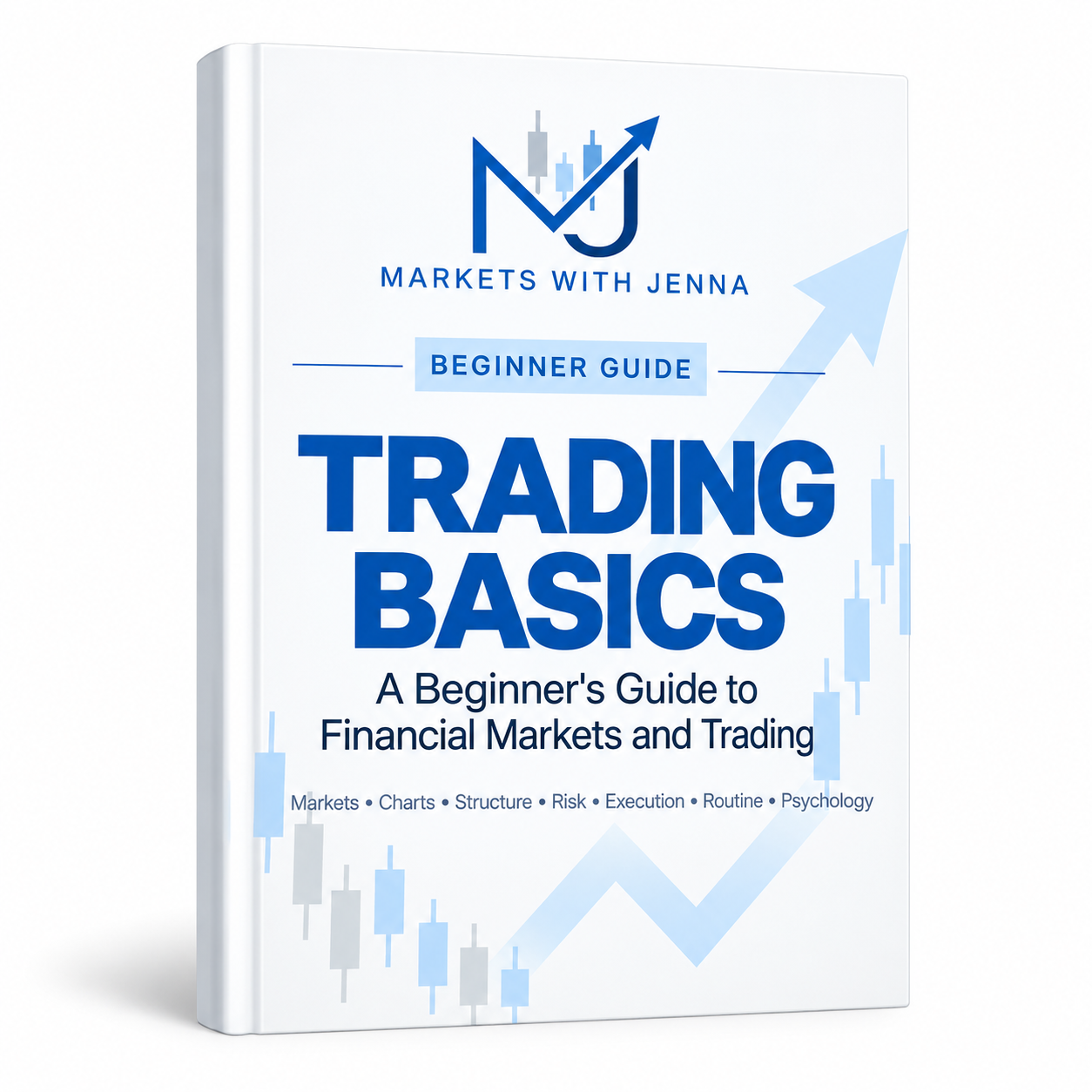
Trading Basics was created to connect these individual concepts into a clear, structured foundation that takes you from understanding the market to planning, executing, and reviewing a trade.

Why do so many beginner traders get stuck?

They start with entries

You learn setups and entry models before understanding market context, structure, and what would make the trading idea invalid.

They read signals without context

Candles, levels, and patterns are only information. Their meaning depends on timeframe, structure, location, volatility, and what happened before.

They never build a process

Without a defined idea, entry, invalidation, risk, execution, and review, trading remains a series of disconnected decisions instead of a repeatable framework.

Build the trade before you take it.

1. IDEA (What do you expect price to do?)

Start with a clear market idea. Define what you expect price to do and why before you begin thinking about execution or entry timing.

2. ENTRY (What must happen before you act?)

Define the conditions that must appear before you act. An entry should follow your plan, not simply react to movement or an attractive candle.

3. INVALIDATION (Where is your idea clearly wrong?)

Decide where your market idea is no longer valid. This level should be clear before the position is opened, not adjusted after entry.

4. RISK (What loss can you accept in advance?)

Once invalidation is clear, decide how much capital you are willing to risk. Position size should keep the planned loss within that limit.

A candle is not a signal.

A candlestick only shows what happened during a specific period of time. On its own, it does not tell you what the market will do next.


The same candle can carry a very different meaning depending on where it forms, the current market structure, the timeframe, nearby key levels, volatility, and what happened before. A strong bullish candle in the middle of a range does not carry the same information as a similar candle forming after a reaction from an important level.


This is why trading should not begin with searching for isolated patterns or entry signals. First, understand the environment. Is the market trending, ranging, or transitioning? Which timeframe provides the broader context, and where are the areas that actually matter?


Key levels work in the same way. A support or resistance area does not tell you that price must reverse. It simply tells you where to pay closer attention and evaluate how price behaves when it gets there.


A complete trading decision connects several elements together. These include the market idea, the context, the entry condition, the point where the idea becomes invalid, and the amount of risk you are prepared to accept.


The goal is not to predict every move. It is to build a process that helps you make structured decisions even when the outcome remains uncertain.


That is the foundation Trading Basics is designed to build.

Trading, built on strong foundations.

Trading Basics is designed for those who want to move beyond isolated concepts, setups, and strategies and understand how the core elements of trading work together.


The guide builds from market fundamentals and chart reading through timeframes, market structure, key levels, risk management, execution, routine, and trading psychology.


The goal is not to give you a strategy to copy, but to help you build a structured trading foundation that you can use to understand, evaluate, and develop future trading approaches more independently.

What will you learn?

1. Understand how financial markets work

Learn what trading is, how market prices are formed, who participates in financial markets, and which major instruments you are likely to encounter as a trader.


2. Learn how to read trading charts

Understand chart types, candlesticks, OHLC data, long and short positions, and how the same market can look different across multiple timeframes.

3. Understand the logic of market structure

Learn how to identify trends, consolidation, swing highs, and swing lows, and understand how market structure develops and begins to change.


4. Identify the market context that matters

Understand support, resistance, and key levels, the role of trading sessions, and how economic events such as CPI, NFP, and FOMC decisions can affect the market.

5. Build a strong foundation in risk management

Learn the principles of invalidation, stop loss placement, position sizing, risk to reward, leverage, drawdown, and overall risk exposure.

6. Build a complete trading process

Understand order types and trade execution, then develop a structured routine covering preparation, execution, journaling, review, psychology, and discipline.

Not ready yet? Start for free.

Before You Place Your First Trade is a short, free guide designed for those who want a clear introduction to the foundations of trading before risking real capital.


The guide introduces market context, candlesticks, trends, key levels, trade planning, risk, position sizing, and the importance of following a consistent trading process.


The goal is not to give you a strategy to copy, but to help you build a structured trading foundation that you can use to understand, evaluate, and develop future trading approaches more independently.

What will you learn in the free guide?

1. Think in decisions, not predictions

Understand why a trader’s job is not to predict the next move with certainty, but to define the idea, entry, invalidation, and risk before taking a trade.

2. Learn how to interpret candlesticks correctly

Understand open, high, low, and close, and learn why a single candle should not be treated as a complete trading signal.

3. Recognize trends and ranges

Learn how to distinguish directional markets from sideways conditions and understand why market conditions also depend on the timeframe you are analyzing.

4. Mark only the levels that truly matter

Learn how swing points, support, and resistance areas can be used as reference zones and why they should not be treated as automatic buy or sell signals.

5. Plan the trade before you enter

Connect entry, invalidation, target, risk to reward, and position sizing so you know the structure and risk of the trade before opening the position.

6. Build a consistent trading process

Learn to recognize common beginner mistakes, follow predefined rules, and evaluate the quality of your decision process instead of judging yourself by the outcome of a single trade.

FAQs