

If you've ever watched an action movie, you know the hero isn't just fighting stuff; they're fighting for something important, saving the world, protecting a loved one, or retrieving a priceless artifact. That something is their WHY. In cybersecurity, we often focus on the what (firewalls, patches, MFA) and the how (zero trust, compliance frameworks). But if we miss the underlying WHY, we're just running on a treadmill, burning energy without a clear destination.
The WHY in cybersecurity isn't about blocking malware; it's about protecting the business's ability to succeed, innovate, and serve its customers. Think of your company's mission (what you do, why people buy your product or use your service). That core value is what the bad guys are trying to disrupt, steal, or hold hostage. When you connect your security strategy to this bigger picture, you transform from a cost center into a strategic enabler.
From Technical Jargon to Business Imperatives
To truly make security a priority, we have to stop speaking "Nerd" and start speaking "Executive." An executive team doesn't care about a "critical vulnerability in the FooBar library" , but they absolutely care about a "vulnerability that could halt our e-commerce platform during the holiday shopping rush and cost us $5 million in lost sales." The difference is the language: one is a technical specification, the other is a business objective and a risk-to-revenue.
This principle is rooted in the fundamental WHY of IT itself: IT exists to support the business goals and objectives, not the other way around. We in technology sometimes forget that our systems, networks, and firewalls aren't the main event; they are the reliable, secure stage upon which the business performs its show. Cybersecurity's why is simply a more critical layer of that foundation. It requires translating every security objective into a direct business impact. For example, instead of saying: "We need to implement a sophisticated data loss prevention (DLP) solution," say: "We need a DLP solution to protect our intellectual property (the secret sauce that gives us our market advantage) so a competitor can't steal it and undercut our future growth."
The True 'Why' of Communication
You can have the best technology stack in the world, but if you can’t articulate its value, you’ve built a fortress with no one to guard it. This is why Communication is, arguably, the single most important core component of cybersecurity. Our WHY for communication isn't just to report a vulnerability; it's to build a shared sense of ownership and understanding across the entire company. We need to be like Captain Picard on the bridge of the Enterprise: communicating clearly, calmly, and frequently, ensuring every crew member understands the mission and their role in protecting the ship.
This is where true success is found: Success comes from helping others succeed in answering their WHY. When the Marketing team's WHY is to launch a new, data-driven campaign, our security WHY is to make sure the customer data is handled safely so they can hit their targets without causing a privacy disaster. When you approach every interaction not as an auditor, but as a trusted partner whose primary function is to secure their path to success, you stop being a department they grudgingly tolerate and start being the team they call first.
Reframing the Brand: From Blocker to Enabler
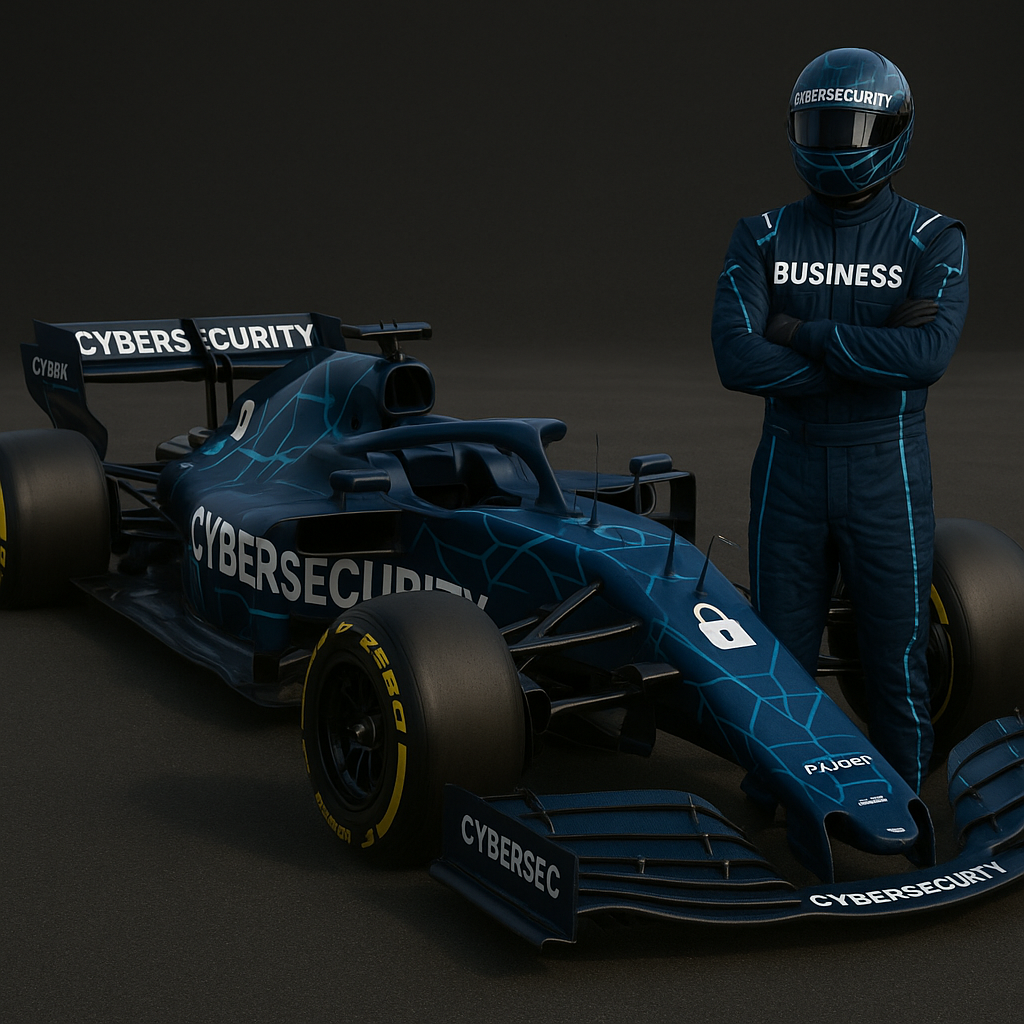
Imagine your business is a high-speed Formula 1 race car. The security team's job isn't to slow the car down; it's to ensure the brakes, tires, and chassis integrity are robust enough so the driver (the business) can push the car to its maximum speed without spinning out or crashing. The better the brakes (security controls) are, the faster and more confidently the driver can go.
For too long, the security team's brand has been "The Department of No." Our ultimate WHY must be to completely reframe that perception. We must become the secure enabler who finds ways to deliver solutions. This means changing our default answer from "No" to "Yes, and here are three ways we can do that securely." For every problem, there should always be at least three possible solutions presented to the business, each with a clear risk-to-cost profile. This allows the business owner (the person whose WHY we are supporting) to make an informed, risk-aware decision, rather than just having a door slammed in their face. By consistently finding and championing the WHY (the direct link between a security control and a business outcome), we elevate cybersecurity to its rightful place as a proactive, non-negotiable component of modern business strategy.
By: Brad W. Beatty
When everything stops, the human spirit keeps moving.
Dragon Flash: The Skipping Stones of Time
A Novel by Brad W. Beatty, Coming soon.
Comments ()