

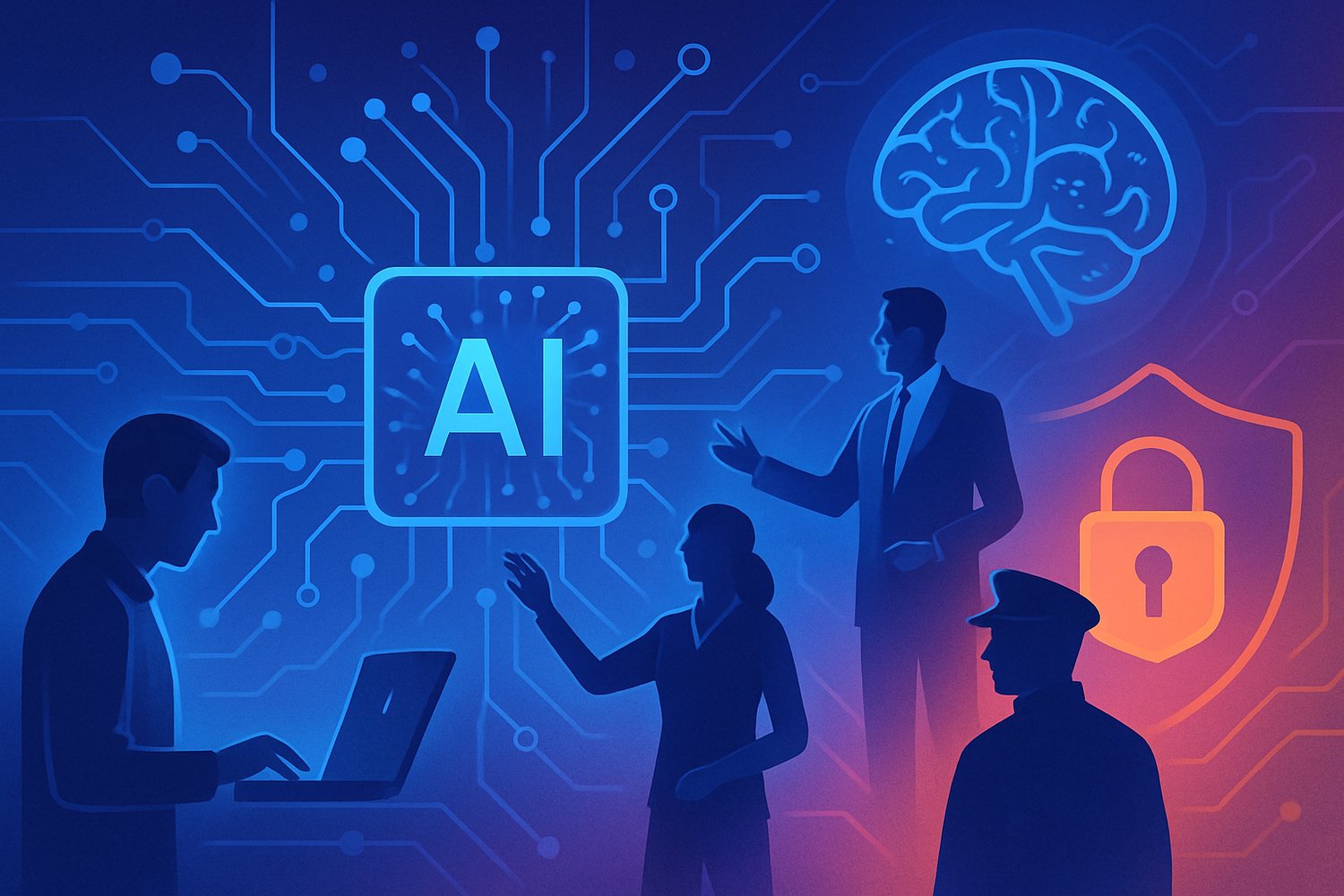
In the rapidly evolving landscape of technology, AI serves not as a replacement for human talent but as a powerful amplifier. For leaders, the challenge is to equip their teams to harness this potential effectively. Today, we're going to take a look at the impact of AI on the roles of developers and security professionals and provide a strategic framework for re-skilling, with a focus on critical areas such as prompt and context engineering, AI governance, and advanced problem-solving.
AI's Impact on Developers: From Coders to AI Collaborators
For developers, AI tools are fundamentally altering the nature of their work. Solutions like GitHub Copilot automate repetitive coding tasks, identify bugs, and suggest optimizations, significantly enhancing efficiency. However, these tools are not infallible; they can produce flawed code or fail to account for a project's unique specifications.
This is where context engineering becomes essential. By providing AI with rich, relevant background information, such as project architecture, performance requirements, or security standards like the OWASP Top 10, developers can guide the AI to produce more accurate and secure code. For example, explicitly referencing OWASP in a prompt helps the AI avoid common vulnerabilities such as SQL injection. The developer's role is shifting from hands-on coding to high-level design and strategic oversight, ensuring AI-generated output aligns with real-world needs. Research indicates this collaboration can boost developer productivity by as much as 55%. The alternative is a team that becomes technologically obsolete.
Security Professionals: Evolving from Reactive to Proactive
For security professionals, AI presents both a powerful ally and a new set of challenges. On one hand, AI-driven tools can analyze vast datasets to detect threats and predict attacks with unprecedented speed. On the other hand, AI introduces new vulnerabilities, such as adversarial attacks and algorithmic biases that can be exploited.
The modern security professional's role is not to be a watchdog, but a strategist. They must now oversee AI defenses, interpret complex outputs, and develop proactive strategies against these evolving risks. By embracing AI, security teams can transition from a reactive posture, responding to breaches after they occur, to a proactive one, architecting resilient, secure systems. Neglecting this shift could leave an organization vulnerable to threats that a human-AI team could have prevented.
A Strategic Roadmap for Re-skilling Your Team
Successfully integrating AI requires a deliberate strategy. Leaders must focus on three core areas to prepare their teams for this new paradigm.
1. Master Prompt and Context Engineering
This skill involves crafting precise inputs to guide AI effectively. It's the difference between a vague command and a detailed directive that yields a high-quality result.
For Developers: Training should focus on creating prompts that include specific project context, such as scale, performance requirements, or a target platform. For instance, a prompt for a sorting function should specify the programming language, the type of data, and the performance expectations to ensure the AI's output is robust and optimized.
For Security Professionals: Prompts for security tasks should include regulatory context (e.g., PCI DSS compliance), real-world threat information (e.g., CISA's Known Exploited Vulnerabilities or KEVs), and strategic frameworks (e.g., Continuous Threat Exposure Management or CTEM). Using CTEM and KEVs helps security teams prioritize the most critical threats, moving beyond a simple list of CVEs to a proactive, risk-based approach.
Actionable Steps: Implement weekly workshops focused on prompt-crafting with real project data. Track improvements in task efficiency and the accuracy of AI-generated outputs.
2. Establish Robust AI Governance
Effective AI governance ensures the ethical, secure, and compliant use of AI technologies. This framework acts as a set of rules for the "highway of algorithms," preventing potential crashes.
For Developers: They must be trained on governance frameworks like those from NIST or the EU AI Act. Their workflow should include audits of AI-generated code to check for biases or security flaws from the outset.
For Security Professionals: They need to specialize in AI-specific threats, such as data poisoning, and develop robust monitoring and response protocols. Regular governance reviews should be a standard part of their duties.
Actionable Steps: Partner with external experts for training or utilize specialized online courses. Conduct internal audits quarterly and certify key team members to build in-house expertise.
3. Cultivate Complex Problem-Solving Skills
AI is proficient at pattern recognition but struggles with nuanced, creative, or unprecedented challenges. These are the areas where human ingenuity and critical thinking remain paramount.
For Developers: Promote skills in holistic system design and troubleshooting AI limitations. Simulating project "curveballs" in war-gaming sessions can sharpen their ability to innovate hybrid solutions.
For Security Professionals: Emphasize strategic foresight and scenario planning for zero-day exploits or adaptive threats. Role-playing exercises can help them anticipate and outmaneuver sophisticated adversaries.
Actionable Steps: Foster a culture of continuous learning through hackathons, cross-functional collaboration, and mentorship. Use case studies of real-world AI failures to drive home the importance of human oversight and critical thinking.
The Choice is Clear
The AI-augmented era is here. For leaders, this presents a clear choice to embrace the change and invest in your team's skills, or risk being left behind. By focusing on prompt and context engineering, AI governance, and nurturing complex problem-solving, you can future-proof your workforce. This strategic investment will not only enhance productivity and enable innovation but it will also significantly mitigate risk, ensuring your organization thrives in this new technological landscape where AI is here to stay.
By: Brad W. Beatty
Comments ()