
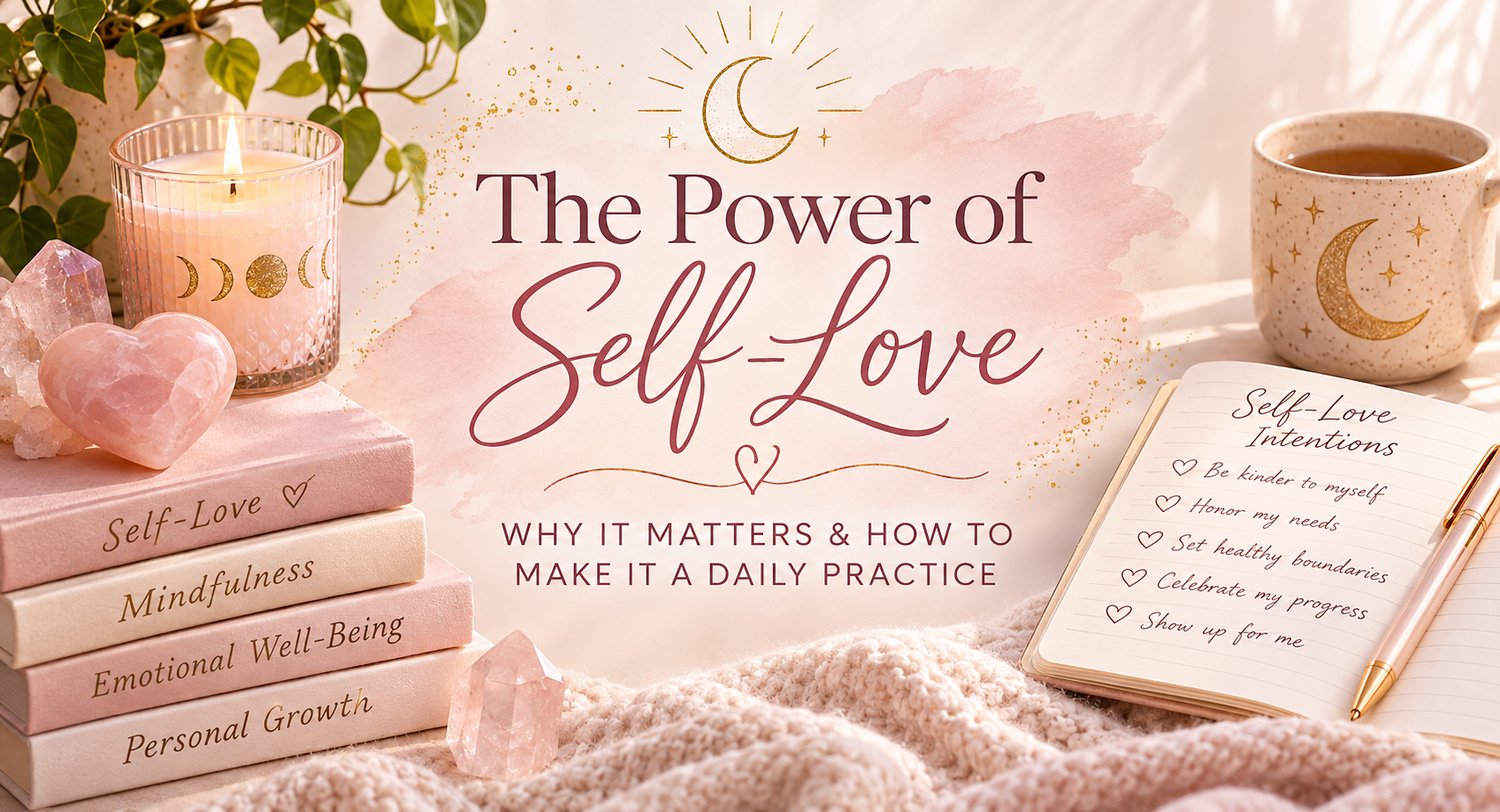
Because the most important relationship you'll ever nurture is the one you have with yourself.
There is something interesting about the way we move through life.
We spend so much time learning how to love other people. We learn how to be supportive partners, caring parents, thoughtful friends, and dependable coworkers. We show up for the people we love, encourage them through difficult moments, and remind them of their worth when they've forgotten it.
But somewhere along the way, many of us forget to offer that same kindness to ourselves.
We become our own harshest critics. We hold ourselves to impossible standards. We replay mistakes, question our decisions, compare our lives to others, and convince ourselves that we'll finally feel good enough when we accomplish just one more thing.
And when someone suggests practicing self-love, it can sound like just another task to add to an already overwhelming list.
But here's what I want you to know:
Self-love isn't about becoming a better version of yourself so that you're finally worthy of love. It's about recognizing that you're already worthy, exactly as you are, while giving yourself permission to continue growing.
And learning to truly believe that can change so much.
What Self-Love Really Means (And What It Doesn't)
Self-love has become a popular phrase in the wellness world, but I think we've sometimes lost sight of what it actually means.
It's not just bubble baths, face masks, positive affirmations, or treating yourself to something special.
Those things can certainly be enjoyable, but meaningful self-love goes much deeper.
From a psychological perspective, self-love involves developing a healthier, more compassionate relationship with yourself. It means recognizing your inherent worth, accepting your imperfections, respecting your needs, and responding to your struggles with understanding rather than constant criticism.
It means being able to say:
- I can make mistakes without believing I'm a failure.
- I can set boundaries without feeling responsible for everyone else's reactions.
- I can acknowledge my weaknesses without overlooking my strengths.
- I can prioritize my needs without believing I'm selfish.
- I can be a work in progress and still be worthy of love and belonging.
Self-love isn't the absence of self-doubt. It's learning not to let self-doubt determine your worth.
And perhaps most importantly, self-love is a practice, not a destination. You don't wake up one morning suddenly loving every part of yourself. It's something you build, little by little, through the way you speak to yourself, the choices you make, and the compassion you offer yourself during difficult moments.
Why Self-Love Matters for Your Mental and Emotional Well-Being
One of the most important things I've learned through my work in mental health is just how deeply our relationship with ourselves influences the way we experience the world.
The thoughts we have about ourselves don't simply disappear after we've had them. They can influence our emotions, our behaviors, our relationships, and the choices we make. When our internal dialogue is consistently critical, we may find ourselves feeling anxious, overwhelmed, inadequate, or afraid of making mistakes. We may overextend ourselves to gain approval, struggle to establish boundaries, or constantly seek reassurance that we're doing enough. Over time, these patterns can become exhausting.
This is where self-compassion becomes especially important. Psychological research has linked greater self-compassion with lower levels of anxiety, depression, and stress, as well as greater emotional well-being.
Self-compassion doesn't mean ignoring problems or avoiding accountability. It means recognizing that struggling, making mistakes, and experiencing difficult emotions are part of being human.
Instead of asking, "What's wrong with me?"
We begin asking, "What do I need right now?"
Instead of saying, "I should be doing better."
We practice saying, "I'm doing the best I can with what I have today, and I can keep learning."
These may seem like small shifts, but they can create meaningful changes in the way we relate to ourselves.
The Inner Critic: Why We're Often So Hard on Ourselves
Have you ever noticed how easily you can offer compassion to someone you love, yet struggle to extend that same understanding to yourself?
Imagine a close friend telling you she's overwhelmed, exhausted, and feeling like she isn't doing enough.
Would you tell her she's failing? That she should try harder? That everyone else seems to have it figured out?
Probably not.
You would likely remind her that she's human, that she's carrying a lot, and that she deserves rest and kindness. Yet when we find ourselves in the same situation, our internal dialogue often sounds very different.
Our inner critic can develop through a combination of early experiences, social expectations, learned beliefs, and the messages we've absorbed about success, worth, and belonging. For some of us, being hard on ourselves became a way to stay motivated, avoid criticism, or feel more in control.
But you don't have to be cruel to yourself to grow.
In fact, self-compassion can help us approach mistakes with greater emotional safety, making it easier to reflect, learn, and move forward.
The goal isn't necessarily to eliminate your inner critic. It's to begin noticing when that voice shows up, questioning whether its messages are helpful or accurate, and intentionally choosing a more compassionate response.
Self-Love Is Also About Boundaries, Rest, and Honoring Your Needs
Sometimes self-love looks beautiful and peaceful.
Other times, it looks uncomfortable.
It looks like saying no when you're used to saying yes.
It looks like disappointing someone because you've finally decided to honor your own limits.
It looks like resting even though your to-do list isn't finished.
It looks like walking away from situations that consistently leave you feeling depleted.
And sometimes, it looks like allowing yourself to want something different from the life you've worked so hard to create. We often associate self-love with how we feel about ourselves, but it's equally important to consider how we treat ourselves.
Are you giving yourself permission to rest?
Are you listening when your body and mind tell you something isn't working?
Are you making choices that reflect your values, or are you constantly trying to meet everyone else's expectations?
Learning to love yourself means recognizing that your needs matter, too.
Not more than everyone else's.
But certainly not less.
Five Small Ways to Begin Practicing Self-Love
If self-love feels unfamiliar or difficult, you don't need to completely change your life overnight.
In fact, I encourage you not to.
Lasting change often begins with small, intentional practices that become part of your everyday life.
1. Notice How You Speak to Yourself
Start paying attention to your internal dialogue, especially when things don't go as planned.
When you notice a critical thought, pause and ask yourself:
Would I say this to someone I love?
If the answer is no, consider how you might reframe that thought with more compassion.
2. Check In With Yourself Daily
We spend so much time responding to the needs of others that we sometimes lose touch with our own.
Take a few quiet moments each day to ask:
How am I really feeling today?
What do I need more of?
What might I need less of?
You don't have to immediately fix anything. Simply noticing is a meaningful first step.
3. Practice Setting Small Boundaries
Boundaries are not about controlling other people. They're about recognizing what is and isn't healthy or sustainable for you.
Start small.
Maybe it's declining an invitation when you need rest, stepping away from your phone, or giving yourself permission not to respond to every request immediately.
4. Celebrate Progress Instead of Perfection
Perfectionism can make it difficult to recognize how far we've come.
Rather than focusing exclusively on what you haven't accomplished, begin noticing the small ways you're growing.
Maybe you handled a difficult conversation differently.
Maybe you took a break when you needed one.
Maybe you caught yourself in a moment of negative self-talk and chose kindness instead.
Those moments matter.
5. Create Space for Reflection
One of the most powerful ways to strengthen your relationship with yourself is to become curious about your thoughts, feelings, patterns, and needs.
Journaling, mindful reflection, and intentional self-check-ins can help you slow down long enough to notice what is happening beneath the surface.
And you don't need to have all the answers.
Sometimes the most meaningful growth begins with asking yourself better questions.
Why Self-Love Requires Intention, Not Just Inspiration
Here's something I think is important to remember.
Reading an inspiring quote about self-love might make you feel good for a moment.
But creating a healthier relationship with yourself takes more than inspiration.
It takes awareness.
It takes practice.
It takes a willingness to slow down, challenge old beliefs, and make small choices that align with the way you want to feel and live.
This is one of the reasons I love guided journaling and intentional reflection.
When we create space to explore our thoughts and emotions, we give ourselves an opportunity to move beyond simply reacting to life and begin responding with greater awareness.
Writing things down can help us recognize patterns, clarify our values, identify our needs, and notice the progress we might otherwise overlook.
And perhaps most importantly, it creates a little space in our day that belongs entirely to us.
Not to our responsibilities.
Not to the people who need us.
Just to us.
Your Self-Love Journey Starts With One Small Step
If you've spent years putting yourself last, struggling with self-criticism, or feeling like you're never quite doing enough, I want to remind you of something.
You don't have to earn the right to care for yourself.
You don't need to reach a certain weight, accomplish a particular goal, become more productive, or finally get your life together before you deserve kindness.
You deserve that kindness now.
And while understanding the importance of self-love is a beautiful beginning, the real transformation happens when you start bringing that understanding into your everyday life.
That's exactly why I created the Mindful & Mystical Self-Love Planner.
I wanted to create a space where you could slow down, reconnect with yourself, and begin turning the idea of self-love into something you actually practice.
A space to reflect on what you're feeling, explore what you need, and become more intentional about the relationship you're building with yourself.
Because self-love shouldn't feel like another expectation you have to live up to.
It should feel like coming home to yourself.
Ready to Begin Your Self-Love Journey?
If you're ready to move beyond simply reading about self-love and start making it part of your everyday life, I'd love to invite you to explore the Mindful & Mystical Self-Love Planner.
Think of it as a gentle companion on your journey toward greater self-awareness, self-compassion, and intentional living.
You don't need to have everything figured out.
You just need to be willing to begin.
Explore the Self-Love Planner →
With love and intention,
Mindful & Mystical
This article is intended for educational and personal growth purposes and is not a substitute for individualized mental health care.