
Discover the meaning behind smoke cleansing, how to create a mindful cleansing ritual, and simple ways to bring more intention, peace, and a little everyday magic into your home.
Have you ever walked into a room and immediately felt like you needed a fresh start?
Maybe you've had a particularly stressful week, recently moved into a new home, or simply feel like your space could use a little reset.
Sometimes, when life feels overwhelming, creating a peaceful environment can be one of the simplest ways to reconnect with ourselves.
And while we often think about cleaning our homes by organizing, dusting, or decluttering, there's another kind of ritual that has become increasingly popular in mindfulness and spiritual wellness practices: smudging and smoke cleansing.
For generations, people across different cultures have used aromatic plants, incense, and smoke in spiritual ceremonies, religious observances, and personal rituals.
Today, many people explore smoke cleansing as a symbolic way to release what no longer serves them, set meaningful intentions, and create a greater sense of calm and connection within their surroundings.
But if you're new to the practice, you might be wondering where to begin.
What exactly is smudging? What supplies do you need? And how can you create a cleansing ritual that feels meaningful without making it complicated?
Let's explore.
What Is Smudging, and How Is It Different From Smoke Cleansing?
Although the terms are often used interchangeably, there are some important distinctions.
Smudging is a term associated with specific ceremonial practices in a number of Indigenous North American cultures. These traditions can carry deep spiritual, cultural, and community significance, and their meanings and protocols vary among Indigenous nations.
Smoke cleansing, more broadly, refers to the use of smoke from herbs, incense, or other plant materials in personal, religious, or spiritual rituals.
Different cultures have their own histories and practices involving aromatic smoke, and they shouldn't all be treated as interchangeable.
In contemporary spiritual wellness communities, smoke cleansing is often associated with symbolically releasing unwanted energy, welcoming positive intentions, or marking a new beginning.
It's important to recognize that the idea of removing negative energy through smoke is a spiritual belief rather than a scientifically established process.
However, creating a thoughtful ritual can still offer something meaningful.
It can encourage us to slow down, become more present, reflect on what we're carrying emotionally, and consciously decide what we'd like to invite into the next chapter of our lives.
And sometimes, that moment of intention is what makes a ritual feel special.
Curious About Trying Smoke Cleansing?
If you're new to smoke-cleansing rituals, gathering the supplies can feel a little overwhelming.
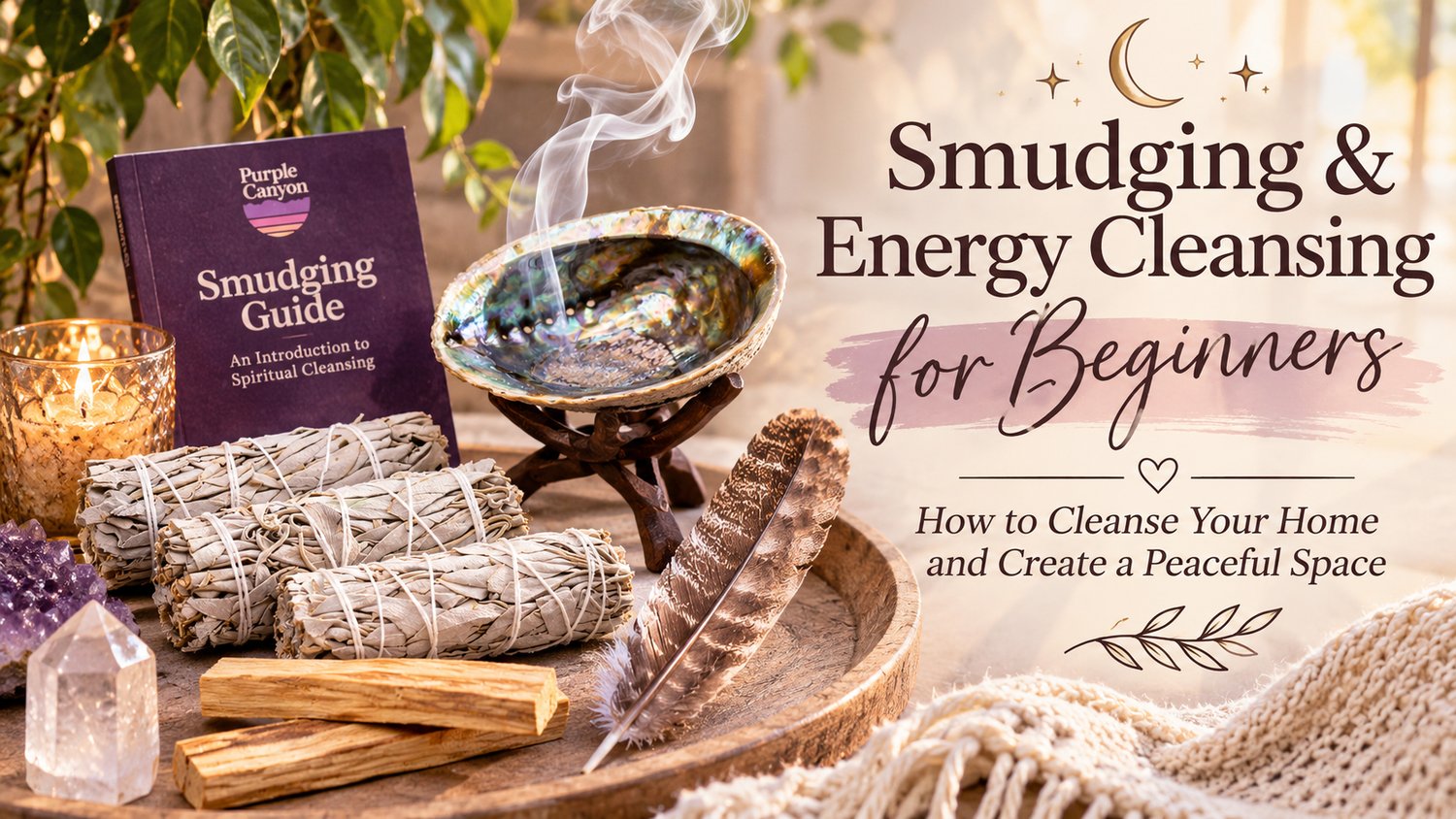
One option is the Purple Canyon Beginner's Smudge Kit, which includes white sage bundles, Palo Santo sticks, an abalone shell, a feather, a stand, and an introductory guide.
It's a convenient collection of tools for readers who want to explore the practice and learn more about the different materials traditionally associated with smoke cleansing.
✨ Explore the Beginner's Smoke Cleansing Kit on Amazon
Before purchasing, I encourage you to learn about the cultural significance of white sage and Palo Santo and look for transparent, responsible sourcing information.
Why Do People Practice Energy Cleansing?
One of the things I appreciate about intentional rituals is that they create an opportunity to pause.
So much of our daily life happens on autopilot.
We move from one responsibility to the next, often carrying stress, frustration, or mental clutter without giving ourselves much time to process it.
A symbolic cleansing ritual can offer a moment to stop and ask:
What am I ready to let go of?
What kind of energy or atmosphere do I want to create in my home?
How do I want to feel as I move into this next season of my life?
People may choose to practice smoke cleansing when:
Moving into a new home or apartment
Beginning a new chapter in life
Creating a peaceful space for meditation or reflection
Marking the end of a difficult or stressful period
Setting intentions for a new month or season
Establishing a mindful self-care routine
While burning herbs hasn't been shown to remove negative energy or treat emotional distress, the reflective elements of a ritual can help us reconnect with our values and intentions.
The practice doesn't have to be elaborate to feel meaningful.
Sometimes, simply creating a few quiet moments for yourself can be enough.
Understanding Common Smoke Cleansing Tools
If you've explored spiritual wellness products, you've probably noticed that different cleansing kits include a variety of materials.
Here are some of the most common.
White Sage
White sage is a fragrant plant native to parts of Southern California and Baja California. It holds cultural and ceremonial significance for certain Indigenous communities.
It has also become popular in commercial spiritual wellness products, which has raised concerns about cultural appropriation, overharvesting, and sourcing.
If you're considering purchasing white sage, I encourage you to learn about its cultural importance and seek suppliers who can explain where and how their plants are grown or harvested.
You can also explore other aromatic herbs that are meaningful within your own traditions.
Palo Santo
Palo Santo, often translated as "holy wood," is a name used for more than one type of tree. One commonly sold aromatic species is Bursera graveolens, which has a history of use in parts of South America.
In contemporary spiritual practices, Palo Santo is often associated with purification, grounding, and intention-setting.
As with white sage, responsible sourcing matters.
Look for suppliers who identify the species and provide meaningful information about how the wood was obtained.
Abalone Shell
Abalone shells are sometimes used as decorative holders for herbs and other ritual materials.
Their beautiful iridescent appearance makes them a popular addition to spiritual spaces.
However, an abalone shell should not automatically be assumed to be a safe container for burning materials. Shells can become very hot and may crack when exposed to heat.
For any burning ritual, use an appropriate heat-resistant incense burner or fireproof dish on a stable, nonflammable surface.
Feathers
Feathers are sometimes used to direct smoke during ceremonial or personal practices.
Certain feathers also hold specific cultural significance, and some bird feathers are legally protected.
For a personal smoke-cleansing practice, a feather isn't necessary. You can simply allow smoke to rise naturally while keeping the burning material in a safe holder.
A Cleansing Guide
For beginners, having a guide can make the process feel more approachable.
A thoughtful guide should explain the materials, acknowledge relevant cultural traditions, and provide clear safety information.
Remember, you don't need every accessory to create a meaningful mindfulness ritual.
Your intention and awareness matter more than the number of tools you own.
How to Create a Simple Smoke Cleansing Ritual at Home
If you'd like to explore smoke cleansing, consider approaching it as a mindful practice rather than a set of rigid rules.
You can adapt the experience to reflect your own beliefs, comfort level, and intentions.
Step 1: Begin With Your Intention
Before doing anything else, take a moment to think about why you're creating this ritual.
Are you hoping to mark a fresh start?
Release some of the stress you've been carrying?
Create a more intentional atmosphere in your home?
Or simply make space for a few quiet moments?
You might choose an intention such as:
"I am ready to release what I no longer need to carry."
"I welcome peace, compassion, and new beginnings into my life."
"May this space remind me to slow down, breathe, and reconnect with myself."
There's no perfect wording.
Choose something that feels meaningful to you.
Step 2: Prepare Your Space Safely
If you're planning to burn herbs or incense, make sure your space is appropriate for smoke.
Open windows when possible, keep burning materials away from curtains and other flammable objects, and use a stable, heat-resistant holder.
Never leave burning materials unattended.
Smoke can irritate the lungs and affect indoor air quality, even when it comes from natural herbs or wood.
For households with children, pets, asthma, allergies, or other respiratory sensitivities, a smoke-free ritual may be the better choice.
If you have birds in your home, avoid burning incense or herbs around them because birds are particularly sensitive to airborne pollutants.
Step 3: Create a Moment of Stillness
Before beginning your ritual, pause.
Feel your feet against the floor.
Relax your shoulders.
Take a few slow, comfortable breaths.
Notice how you're feeling without judging or trying to change anything.
You might ask yourself:
"What do I want to leave behind today?"
"What do I want to make more room for?"
This moment of reflection is an important part of creating an intentional experience.
Step 4: Begin Your Cleansing Ritual
If you've chosen a smoke-based practice and can do so safely, follow the product's instructions for lighting and extinguishing the material.
Keep the burning item over a suitable heat-resistant holder, maintain ventilation, and avoid moving around with an exposed ember.
Rather than trying to fill your home with smoke, keep exposure minimal.
You can reflect on your intention while the aromatic material burns briefly, then fully extinguish it according to the manufacturer's safety instructions.
You don't need to walk through every room or direct smoke toward yourself or other people.
The symbolic practice can be just as meaningful when kept simple.
Step 5: Reflect on What You're Inviting In
Once you've finished, take a moment to notice your surroundings.
Consider what you'd like your home to represent.
Maybe it's a place where you can rest without guilt.
A space where you feel comfortable being yourself.
Or simply somewhere you can return to at the end of the day and reconnect with what matters most.
You might quietly repeat:
"I welcome peace into this space."
"I choose to release what is outside my control."
"May this home be a place of compassion, comfort, and connection."
Allow yourself a moment to appreciate the intention you've created.
Step 6: Close Your Ritual With Gratitude
Before moving on with your day, take a final moment to reflect.
You might express gratitude for your home, your personal growth, or the opportunity to begin again.
If you've burned anything, confirm that it is completely extinguished and cool before leaving it unattended or putting it away.
Remember that you don't need to feel dramatically different after completing a ritual.
Sometimes, its value is simply in giving yourself permission to pause.
My Recommended Beginner's Smoke Cleansing Kit
If you're interested in exploring smoke cleansing and would prefer to gather several tools in one purchase, the Purple Canyon Beginner's Smudge Kit is an option worth looking at.
According to the product listing, it includes:
Three white sage smudge bundles
Two Palo Santo sticks
An abalone shell
A feather and stand
An introductory smudging guide
I like the idea of a beginner's set because it brings several commonly used materials together, making it easier to learn what each item represents.
However, I recommend checking the seller's current sourcing information, safety instructions, and product details before purchasing. The listing alone doesn't establish whether the botanical materials are sustainably harvested or whether the shell is suitable for holding burning materials.
You can also use the kit as inspiration for creating your own mindfulness space without feeling obligated to use every item.
✨ View the Purple Canyon Beginner's Smudge Kit on Amazon
4 Smoke-Free Ways to Cleanse Your Space
One of the beautiful things about personal rituals is that they can be adapted to fit your life.
You don't need smoke, herbs, or special supplies to create a meaningful experience.
If you're sensitive to smoke or simply prefer another approach, here are a few alternatives.
1. Sound Cleansing
In some spiritual traditions, bells, chimes, and singing bowls are used symbolically to shift or refresh the energy of a space.
You can also use sound as a mindfulness cue.
Try gently ringing a bell, playing calming music, or listening to a singing bowl recording while setting an intention.
Allow the sound to remind you to return to the present moment.
2. Mindful Decluttering
Sometimes, creating a more peaceful environment begins with something practical.
Clear off your bedside table.
Open the curtains.
Put away items that have been adding to your sense of clutter.
Make your bed or refresh your favorite cozy corner.
You might be surprised how much a small change in your environment can influence how welcoming a space feels.
3. Visualization and Intention-Setting
Find a comfortable place to sit.
Close your eyes if that feels comfortable, or simply soften your gaze.
Imagine your home as a place of warmth, calm, and connection.
Reflect on the atmosphere you'd like to cultivate and identify one small action you can take to support it.
Visualization doesn't need to change the energy of a room to be meaningful. It can help you clarify what you value and how you want to live.
4. Crystals and Mindful Reflection
If you enjoy crystals, you might incorporate them into a smoke-free ritual.
Rose quartz is traditionally associated with love and compassion.
Amethyst is often connected with calm and reflection.
Clear quartz is commonly used as a symbol of clarity and intention.
Choose a crystal that represents something meaningful to you and place it somewhere you'll see it throughout the day.
Let it serve as a reminder of your intention.
If you'd like to explore crystal symbolism further, our Mindful & Mystical Crystal Guidebook offers an introduction to crystal meanings, traditional practices, and mindful rituals.
Explore the Mindful & Mystical Crystal Guidebook
When Is the Best Time to Cleanse Your Home?
There really isn't one right answer.
Some people enjoy creating cleansing rituals around meaningful transitions, while others simply practice whenever they feel the need to reconnect with themselves.
You might choose to create a ritual:
At the beginning of a new month
After moving into a new home
During seasonal transitions
Before meditation or journaling
After completing a challenging chapter of life
Whenever you want to reconnect with your intentions
The important thing is to avoid turning the ritual into another task you feel obligated to complete.
Your mindfulness practices should support your life, not become another source of pressure.
A Gentle Reminder: You Create the Meaning
One of the things I love most about mindfulness and intentional living is that we can create meaningful moments out of seemingly ordinary experiences.
Lighting a candle.
Opening a window.
Writing down something we're grateful for.
Taking a quiet moment before beginning a new day.
Or creating a symbolic ritual to acknowledge that we're ready for a fresh start.
These small actions can become reminders that we have the ability to approach our lives with greater awareness and intention.
Smoke cleansing may be meaningful within your spiritual practice, but it isn't a requirement for creating a peaceful home.
You don't have to purchase special tools, perform elaborate ceremonies, or follow someone else's spiritual routine to connect with yourself.
The most meaningful ritual is often the one that helps you pause, reflect, and make room for what truly matters.
Ready to Create Your Own Cleansing Ritual?
If you've been curious about smoke cleansing, I hope this guide has helped you understand the practice a little better and explore ways to approach it thoughtfully.
Whether you choose to use aromatic herbs, sound, crystals, or simply a few moments of mindful reflection, remember that your spiritual journey is personal.
There is no perfect way to begin.
If you'd like to explore a beginner's set of cleansing tools, you can take a closer look at the Purple Canyon Beginner's Smudge Kit, which includes sage bundles, Palo Santo, a shell, a feather, and an introductory guide.
✨ Explore the Beginner's Cleansing Kit on Amazon
And if you're interested in bringing more mindfulness and intention into your everyday life, be sure to explore our other Mindful & Mystical resources.
Because sometimes, creating a more peaceful life begins with something as simple as slowing down, taking a breath, and choosing to begin again.
In Love and Light,
Mindful & Mystical
Disclaimer: This article is intended for educational, spiritual, and personal reflection purposes. Spiritual energy cleansing is a belief-based practice and has not been scientifically established as a method of removing negative energy or treating physical or mental health conditions. Burning herbs, incense, or wood creates smoke and carries fire and respiratory risks. Always follow product safety instructions, use appropriate ventilation, and consider smoke-free alternatives when needed.
Affiliate Disclosure: This post contains affiliate links. As an Amazon Associate, I earn from qualifying purchases at no additional cost to you.